

Have a question about Breast Augmentation?
In this article
If you are wondering how do I choose between saline and silicone implants for breast augmentation, you are really asking a bigger question: what trade-off matters most to you over many years. The two options can create a similar cup-size change, but they differ in feel, incision planning, rupture follow-up, and how much uncertainty you are comfortable living with. In broad terms, saline tends to suit patients who want a simpler way to notice a rupture and may accept a firmer or less natural feel, while silicone tends to suit patients who prioritise softness and a more natural feel and accept that silent rupture monitoring is part of long-term care.
What is the real difference between saline and silicone implants?
The shortest honest answer is that saline implants are filled with sterile salt water, while silicone implants are filled with silicone gel. That sounds simple, but the choice usually turns on texture and follow-up rather than on what they are called.
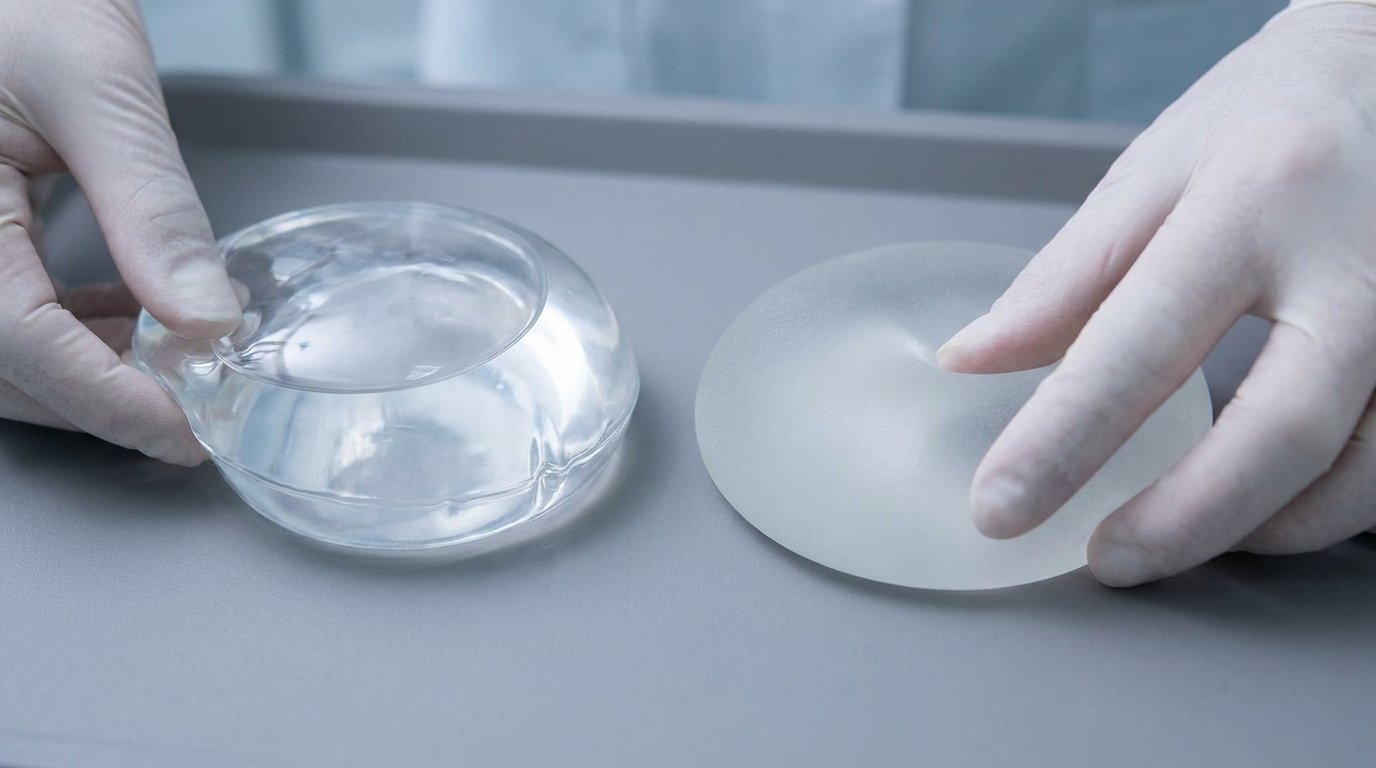
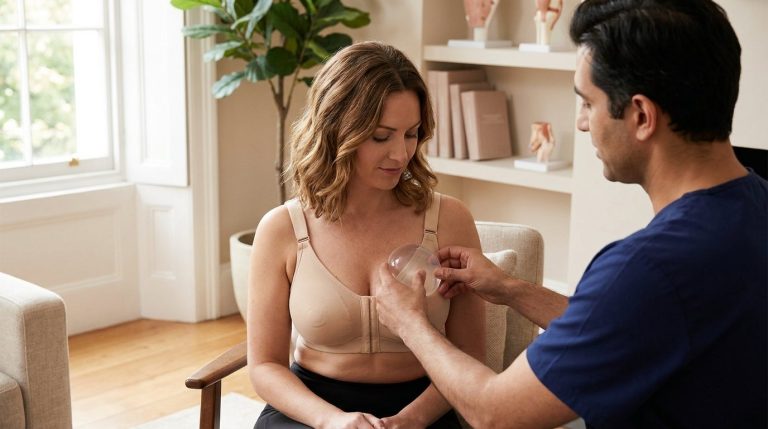
Most surgeons consider silicone gel implants closer to natural breast tissue in feel, especially in slimmer patients with less existing breast tissue to cover the implant. Saline implants can still give a good shape, but they are more likely to feel firmer and, in some bodies, show visible rippling along the edges. The American Society of Plastic Surgeons (ASPS) describes silicone implants as often feeling more like natural breast tissue, while saline implants are inserted empty and then filled after placement.
That filling method matters because it can affect incision length and small asymmetry adjustments in theatre. A saline implant may sometimes allow a slightly shorter incision because it goes in empty. A silicone implant arrives pre-filled, so the opening usually needs to accommodate the implant as it is. In practice, though, your surgeon’s chosen implant pocket, your anatomy, and whether you also need a lift often matter more than a few millimetres of incision.
The other major difference is rupture detection. If a saline implant leaks, the breast usually deflates noticeably over a short period because the body absorbs the salt water. If a silicone implant ruptures, the shape may change very little at first. That is why silicone rupture can be “silent” and why ongoing imaging follow-up enters the decision.
If you are still deciding whether you need implants at all, it helps to separate volume from position. A breast lift fixes droop; an implant mainly adds upper fullness and size. This is explained in more detail in breast lift or implants: what each one fixes.
Patients who care most about a softer, more natural feel and are comfortable with long-term follow-up imaging if advised.
Patients who want rupture to be obvious without silent gel leakage and are less concerned about firmness or rippling.
If your main issue is droop rather than lack of volume, a lift with or without fat transfer may be the better conversation to have first.
Which one usually feels and looks more natural?
For most patients, silicone wins on feel. That does not mean saline always looks artificial, but silicone gel is generally better at mimicking the softness and movement of natural breast tissue. This difference becomes more noticeable if you are naturally slim, have a tight chest wall, or start with very little breast tissue.
With saline, the implant shell is still silicone, but the inside is liquid. That can make the upper pole feel less soft and can make edge visibility more obvious in certain positions. Rippling is not guaranteed, but it is a real possibility that should be discussed before surgery rather than after it.
Implant placement also changes how obvious these differences are. An implant placed partly beneath the chest muscle usually has more tissue coverage than one placed above it, which can reduce visible implant edges. Size matters too. A very large implant on a small frame can look less natural whether it is saline or silicone.
This is one reason the material choice should never be made in isolation. It works together with size, profile, pocket placement, and whether your skin has loosened after weight change or pregnancy. If you are also choosing volume, which implant size is right for my body is the more useful next read than comparing fill material alone.
📋 Natural feel is not only about filler Body frame, skin thickness, implant size and pocket placement can matter as much as whether the implant is saline or silicone.
How do safety and rupture differ?
Both saline and silicone implants have risks, and neither is a “maintenance-free” device for life. The NHS states that breast implants may need replacement or removal in the future, and ASPS makes a similar point: implants do not necessarily last a lifetime.
The safety difference patients usually care about is what happens if the implant ruptures. With saline, the breast tends to lose volume visibly because the salt water is absorbed by the body. With silicone, rupture may stay hidden for some time. That does not automatically mean an emergency, but it does mean you may not know just by looking in the mirror.
Current follow-up advice is more specific for silicone. The US Food and Drug Administration advises periodic imaging to screen for silent rupture in people with silicone gel implants. Recommendations are not identical in every country or clinic, and the imaging method and timing can vary by regulator, surgeon, symptoms, and implant type. That is the practical point to take away: if you choose silicone, ask what long-term surveillance plan your surgeon expects you to follow in your own country after you return home.
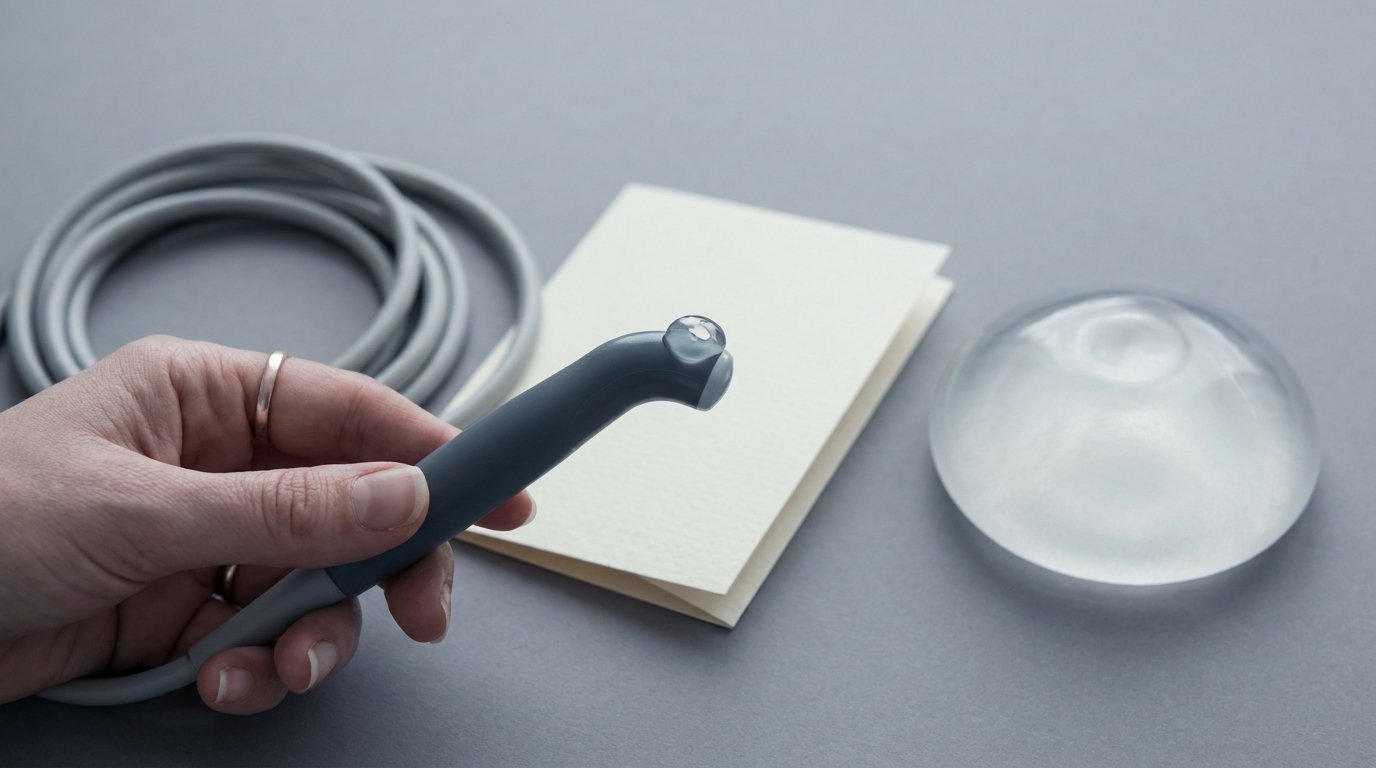
There are also broader implant-related risks that apply to both types, including capsular contracture, malposition, asymmetry, infection, and the need for revision surgery later. A rare lymphoma called BIA-ALCL has been linked mainly to certain textured implants rather than to saline versus silicone fill itself. This is a good reason to ask not only about filler but also about implant surface, manufacturer, warranty terms, and why that specific device is being recommended.
If you already have implants and are worried about firmness, shape change or discomfort, signs of capsular contracture after breast implants covers the warning signs in practical terms.
⚠️ Silicone follow-up needs a plan Because silicone rupture can be silent, ask before surgery who will arrange any future imaging, when it is advised, and what happens if you live in another country.
Does recovery feel different with saline or silicone?
Recovery is usually driven more by the operation around the implant than by whether the implant is filled with saline or silicone. Pocket placement, implant size, whether the muscle is involved, and whether you also need a lift matter more for soreness and tightness in the first days and weeks.
That said, your decision should still be made with the long view in mind. The average age at surgery among the women we see for breast augmentation is about 27, which means the implant choice has to make sense not just for this year but for decades of follow-up, life changes, and the real possibility of revision at some point. In practical terms, pick the option whose trade-offs you still feel comfortable with later, not just the one that sounds easier on surgery day.
If you are travelling for surgery, stay planning usually does not change much between saline and silicone. What matters more is whether you are having augmentation alone or combining it with another procedure. A detailed overview of recovery pacing is in healing breast augmentation week by week recovery, and travel timing is covered in how long to stay in Turkey for breast surgery.
One question that often sits quietly behind implant choice is future pregnancy or breastfeeding. If that may matter to you, raise it in the first consultation because it can influence timing, volume goals, and whether you may eventually want a lift. Breastfeeding after augmentation is often still possible, but the answer depends partly on surgical technique rather than on saline versus silicone alone.
How should I decide if I am travelling to Turkey for breast augmentation?
For medical travel, the choice is not only about the implant. It is also about logistics after you go home. Saline can feel simpler to some international patients because rupture is usually obvious. Silicone can still be an excellent option, but only if you know who will handle future imaging and any later concerns in your home country.
Ask to see the exact implant brand proposed, whether the device is smooth or textured, what the warranty covers, and what the quote includes. A serious quote should make clear whether it covers the implant itself, hospital fees, anaesthesia, garments, medicines, transfers, hotel planning and follow-up. For a more practical breakdown of how augmentation quotes are usually structured, see breast augmentation cost quote inclusions trade-offs. If you are comparing travel packages, all-inclusive surgery package Turkey: what is included helps you read the small print.
Clinic choice matters as much as implant choice. Look for a surgeon with recognised specialist training in plastic surgery, clear operating-hospital details, a willingness to discuss revision rates and limitations honestly, and a plan for follow-up once you are back home. EBOPRAS is one recognised European board to look for when reviewing credentials, and BAAPS notes that choosing a properly qualified surgeon is central to cosmetic surgery safety.
Combination surgery is common enough that you should ask whether your recommendation is shaped by your anatomy or by convenience. Around 32% of the breast augmentation bookings we see are paired with another procedure, most often a lift or rhinoplasty. That matters because the best implant for augmentation alone is not always the best plan if breast position also needs correcting.
This article is for informational purposes only and does not constitute medical advice. Always consult a qualified surgeon for personalised guidance.
🚨 A low quote is not the same as a complete plan If the implant type is named but the follow-up plan, revision policy, hospital details and package inclusions are vague, you do not yet have enough information to compare clinics safely.
- ✓Ask for the exact implant brand, surface type and why it suits your anatomy
- ✓Ask what long-term follow-up is advised in your home country if you choose silicone
- ✓Ask whether the quote includes hospital, anaesthesia, garments, medicines, transfers and aftercare
- ✓Ask whether you need augmentation alone or augmentation with a lift to correct shape properly
Frequently Asked Questions
References
- 📎Breast Augmentation and Breast Implants — ASPS
- 📎Cosmetic procedures: Breast enlargement — NHS
- 📎EBOPRAS — European Board of Plastic Reconstructive and Aesthetic Surgery
- 📎BAAPS — British Association of Aesthetic Plastic Surgeons
- 📎Satisfactions and dissatisfactions of patients with augmentation mammaplasty — Plastic and Reconstructive Surgery, 1979
- 📎Saline-filled breast implants: a Plastic Surgery Educational Foundation multicenter outcomes study — Plastic and Reconstructive Surgery, 1997
- 📎Three-dimensional imaging provides valuable clinical data to aid in unilateral tissue expander-implant breast reconstruction — Breast Journal, 2008
- 📎Bilateral TRAM flaps for the reconstruction of the post implantectomy/capsulectomy breast deformity — Aesthetic Plastic Surgery, 1996
Related Articles


You Might Also Like


Related articles


Our specialists
 Clineca SpecialistErkan PinegözPlastic & Reconstructive Surgery
 Clineca SpecialistHakan AktaşPlastic & Reconstructive Surgery
 Clineca SpecialistOrkun UzuneyüpoğluPlastic & Reconstructive Surgery
 Clineca SpecialistSalim İskenderPlastic & Reconstructive Surgery
 Clineca SpecialistEngin SelamioğluPlastic & Reconstructive Surgery
 Clineca SpecialistCem AydınPlastic & Reconstructive Surgery
 Clineca SpecialistAlperen ÖnalEar, Nose & Throat (ENT)