Have a question about Breast Augmentation?
In this article
- What is breast augmentation and what does healing involve?
- How long does it take to recover from breast augmentation?
- What does healing breast augmentation feel like week by week?
- When can you work, exercise, sleep normally, and travel home?
- What are the main risks during healing and later with breast implants?
- How much does breast augmentation cost and what is included?
- How do you choose a safe clinic and surgeon for breast augmentation abroad?
- What can help healing breast augmentation go as smoothly as possible?
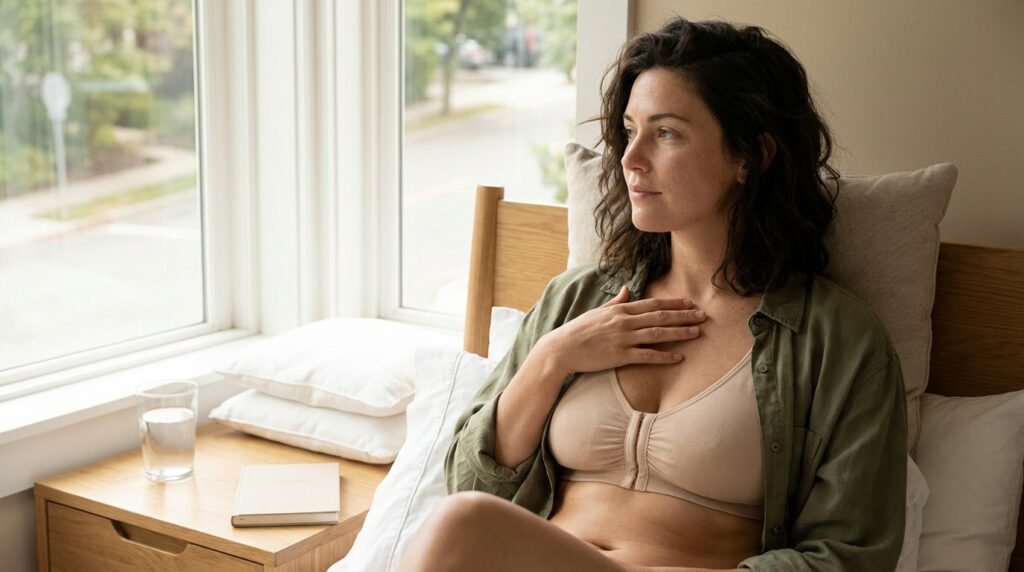
Healing breast augmentation usually takes several weeks for day-to-day recovery and several months for the breasts to soften, settle, and look more natural. Most people are up and walking the same day, but you should expect tightness, swelling, activity limits, and regular follow-up; if you are travelling for surgery, the safe plan is to build in enough time rather than rush home.
What is breast augmentation and what does healing involve?
Breast augmentation is surgery to increase breast size or change shape, usually with breast implants and sometimes with fat transfer. Healing is not only about the incision closing. It also includes swelling going down, tissues relaxing, implants settling, scars maturing, and watching for less common implant-related problems over time.
Breast augmentation surgery, often called a boob job, is an operation to add volume or improve shape. In most cases this means placing breast implants under the breast tissue or partly under the chest muscle. Some people also ask about breast expansion or implantation of breast tissue, but in everyday practice the main choice is implant breast augmentation, sometimes with a breast lift if the breasts sit low.
When people search for healing breast augmentation, they usually mean three things at once:
- ✓How sore and swollen they will be
- ✓How long they need off work and away from the gym
- ✓When the breasts will stop looking high, firm, or uneven and start to feel more like their own
That last point matters. Early healing can look strange even when everything is going normally. The breasts often sit high on the chest at first. One side may settle faster than the other. The skin can feel tight, and the nipples may feel numb or extra sensitive for a while.
According to the American Society of Plastic Surgeons (ASPS), recovery varies by technique, implant placement, and the person’s own healing pattern. According to the NHS, cosmetic breast enlargement also carries specific longer-term risks, including scar problems, hardening around the implant, rupture, and the possibility of needing more surgery later. That is why good recovery advice has to cover both the first few weeks and the bigger picture.
If you are comparing options, a procedure page such as breast augmentation surgery explains the operation itself, while healing is the part that determines how your next few months actually feel.
📋 Healing is a process, not a single date You may feel mostly normal within a few weeks, but swelling, firmness, scar changes, and implant settling can continue for months.
- ✓Skin and incision healing
- ✓Swelling and bruising settling
- ✓Chest tightness easing
- ✓Implants dropping into a more natural position
- ✓Scar fading over many months
- ✓Longer-term monitoring for implant-related issues
How long does it take to recover from breast augmentation?
Most people can manage light daily activity within a few days and return to desk-type work in about 1 to 2 weeks, but full recovery takes longer. Exercise, lifting, sleeping position, swelling, and implant settling usually improve over 6 to 12 weeks, with final softening often taking several months.
The short answer is that recovery from breast augmentation is usually measured in weeks for function and months for final appearance. If someone tells you it is over in a weekend, that is not a realistic picture for most patients.
Your own timeline depends on a few things:
- ✓Whether implants are placed over or under the muscle
- ✓Implant size and profile
- ✓Whether you also have a breast lift
- ✓How physical your job is
- ✓Your own tendency to swell, bruise, and form scar tissue
The ASPS notes that many people can return to work within a week, but that only applies to lighter work and uncomplicated recovery. If your job involves lifting, reaching, childcare, patient handling, or long periods on your feet, plan for longer.
A realistic week-by-week timeline
Days 1 to 3 are usually the tightest and most uncomfortable. The chest often feels heavy or pressured rather than sharply painful. Getting out of bed, using your arms, and sleeping can be awkward.
By the end of week 1, many people are walking around comfortably, showering, and doing basic tasks. You may still tire easily. Swelling is still very visible, and the breasts may look high and firm.
Weeks 2 to 3 are often easier physically, but this is when people get overconfident. You may feel much better before the tissues are actually ready for lifting, intense exercise, or sleeping on your side.
Weeks 4 to 6 usually bring a bigger shift. Tightness settles, movement feels easier, and many patients are cleared for more activity, depending on their surgeon’s advice.
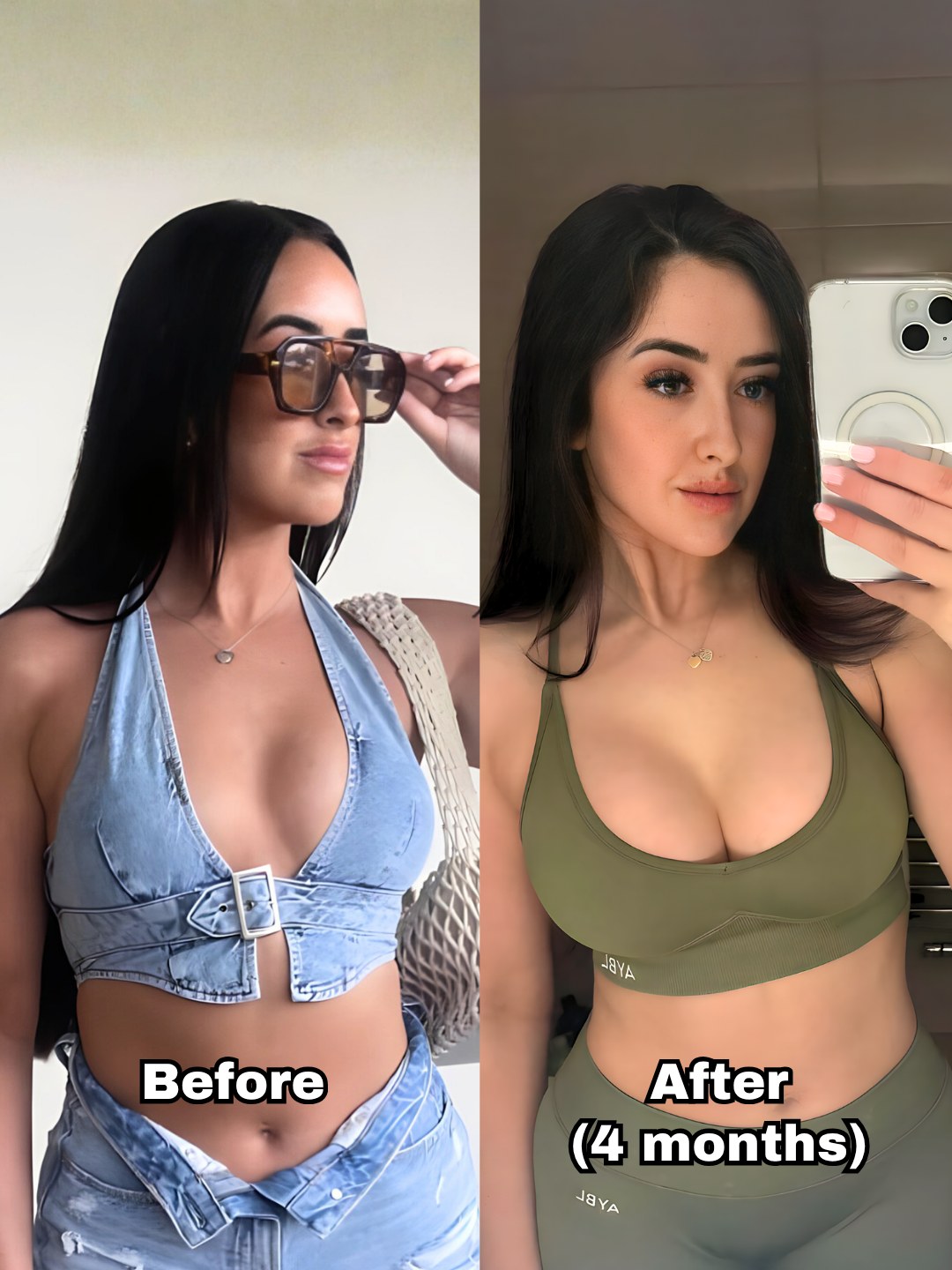
From 6 to 12 weeks, the breasts often continue to soften and sit lower. Some asymmetry in healing can still be normal.
From 3 to 6 months, scars continue to mature and implants usually look more settled. Final subtle changes may continue beyond that.
The point is simple: feeling better and being fully healed are not the same thing.
⚠️ Do not judge the final result too early High position, firmness, swelling, and mild unevenness are common early on. Final shape takes time.
What does healing breast augmentation feel like week by week?
A more honest answer is that recovery feels different at each stage.
In the first few days, the main feeling is pressure and tightness across the chest. If the implant is placed under the muscle, that tight feeling can be stronger. Your posture may also change for a few days because standing completely upright can feel uncomfortable.
In week 1, many people notice:
- ✓Heaviness in the chest
- ✓Swelling at the upper part of the breasts
- ✓Soreness when standing up or sitting down
- ✓Tingling, numbness, or sensitivity in the nipples
- ✓Sleep disruption
In weeks 2 and 3, pain often drops faster than swelling. That can be misleading. The outside may look better while the deeper tissues are still healing. It is common to feel fine at rest but sore after a longer walk, a busy day, or too much arm movement.
In weeks 4 to 6, the breasts may still feel firmer than expected. People often worry that they are “too high” or look too round at this stage. In many cases, they soften gradually as swelling settles and the tissues relax.
By 2 to 3 months, day-to-day discomfort is usually much improved, but small changes still happen. One breast may drop and soften before the other. Scar colour can also become darker before it fades, which surprises many patients.
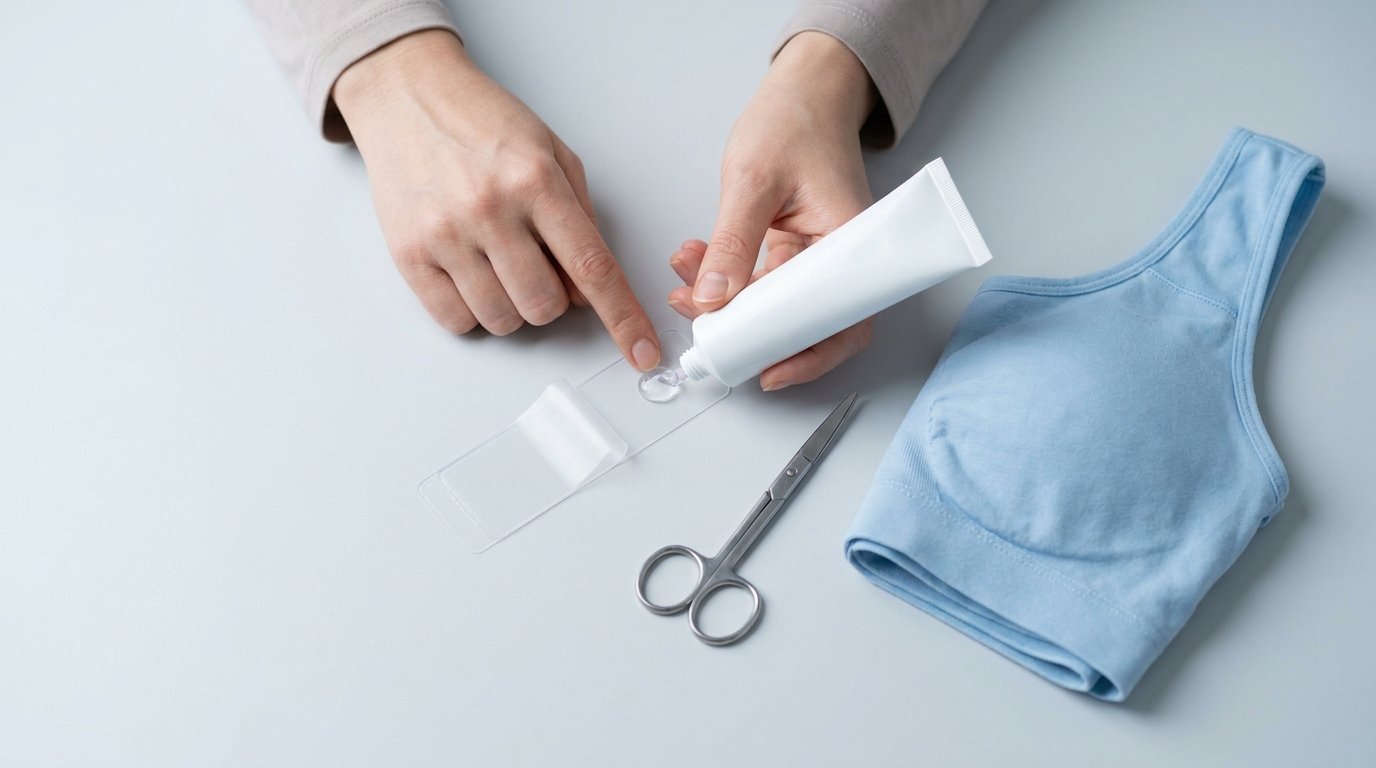
If you had both implants and a lift, expect the healing to feel more demanding than implants alone. More incisions usually mean more swelling, more scar care, and a longer period before everything feels settled.
- ✓Pressure is usually more common than sharp pain
- ✓Swelling can last longer than people expect
- ✓Nipple sensation may be reduced or heightened for a time
- ✓Asymmetry in early healing is common
- ✓Implants can look high before they settle
When can you work, exercise, sleep normally, and travel home?
Light movement starts immediately, but normal routines return in stages. Many people can do desk work in about 1 to 2 weeks, while exercise and lifting often need 4 to 6 weeks or more. If travelling for surgery, stay long enough for early checks and avoid planning a rushed return.
This is where expectations matter most, especially for international patients.
For work, the question is not only “How much pain will I have?” It is also whether your job needs lifting, fast arm movement, childcare, long commuting, or wearing a heavy backpack. Desk work may be possible sooner than hands-on work.
For exercise, walking is usually encouraged early because gentle movement helps circulation. Hard exercise is different. Running, upper-body training, yoga poses that load the chest, and anything that bounces the breasts usually need to wait until your surgeon says the tissues are ready.
Sleeping is often the most annoying part of early healing. Many people need to sleep on their back, slightly raised, for a period after surgery. If you naturally sleep on your side or front, this can be harder than the soreness itself.
For travel, give yourself time. After breast augmentation abroad, patients usually need early post-op checks before flying home. The exact length of stay depends on the surgeon’s plan and whether anything else was done at the same time, but the safe approach is not to book the shortest possible trip.
Practical travel planning
If you are arranging care in Turkey:
- ✓Ask exactly when the first wound check happens
- ✓Ask when drains, if used, would be removed
- ✓Check who reviews you if swelling looks uneven
- ✓Confirm how to contact the team after you return home
- ✓Do not carry heavy luggage yourself in the early period
A consultation page such as request a consultation can help you ask the right medical and logistics questions before making travel plans, but the final travel timing should come from the treating surgeon’s advice rather than a generic package schedule.
⚠️ Feeling better is not the same as being ready for the gym A sudden increase in lifting or exercise can worsen swelling, discomfort, and healing setbacks even after the first sore days are over.
What are the main risks during healing and later with breast implants?
Most recoveries are straightforward, but breast implants have real short- and long-term risks. These include bleeding, infection, delayed wound healing, capsular contracture, implant rupture, changes in sensation, asymmetry, and the possibility of future revision surgery. Rare implant-associated cancers have also been reported, which should be discussed clearly before surgery.
A balanced guide to healing breast augmentation has to go beyond swelling and scar cream. Implants are medical devices, and they are not lifetime devices.
The NHS lists risks of cosmetic breast enlargement that include bleeding, infection, scarring, the implant folding or rotating, rippling, hardening of the capsule around the implant, implant rupture, and changes in breast or nipple sensation. The NHS also makes the important point that many people need further surgery at some stage.
The Mayo Clinic explains that capsular contracture means the scar tissue around the implant tightens and squeezes it, which can make the breast feel firm, look less natural, or become uncomfortable. The ASPS also notes that implants may need replacement or revision over time rather than lasting forever.
There are also rare but important cancer-related warnings. The ASPS and Mayo Clinic discuss BIA-ALCL, which stands for breast implant-associated anaplastic large cell lymphoma. This is not breast cancer; it is a rare cancer of the immune system linked mainly with textured implants. They also note very rare reports of squamous cell carcinoma (SCC) and other lymphomas arising in the capsule around breast implants. These are uncommon, but they belong in informed consent.
Another practical point is breast screening. Implants can affect mammography views, so you should always tell the imaging team that you have implants. Extra views may be needed.
Warning signs that need prompt medical review
Contact your surgeon or seek urgent medical help if you develop:
- ✓Rapidly increasing swelling, especially one-sided swelling
- ✓Significant redness or heat spreading across the breast
- ✓Fever or feeling generally unwell
- ✓Worsening pain after initial improvement
- ✓A wound opening or fluid leaking from the incision
- ✓Shortness of breath or chest pain
Not every problem means a serious complication, but these are not symptoms to watch for days at home and hope away.
🚨 Implants usually mean future maintenance of some kind Breast implants do not have a guaranteed lifetime. Some people need revision because of rupture, hardening, shifting, cosmetic changes, or personal preference.
Scar tissue around the implant becomes tight, making the breast feel hard or look distorted.
An implant shell can fail over time. The signs depend on implant type and may not always be obvious right away.
BIA-ALCL and very rare SCC around the capsule should be discussed clearly as part of informed consent.
How much does breast augmentation cost and what is included?
Breast augmentation cost is usually discussed as an indicative package or treatment estimate rather than a fixed price. The final price is confirmed after consultation because implant type, surgical plan, and aftercare needs can change the quote.
Cost is usually being weighed at the same time as the healing questions. It matters, but it should never be the main way you judge safety.
For cross-border care, the most useful question is not only the headline price. Ask what the estimate actually covers, what follow-up is included, and what happens if you need review after going home.
Use any quote as indicative only. The final price is confirmed after consultation.
📋 Price should be separated from healing decisions Do not choose a shorter stay, fewer checks, or an earlier flight home just to reduce cost. Recovery planning should be based on medical advice.
How do you choose a safe clinic and surgeon for breast augmentation abroad?
Look for a qualified plastic surgeon, clear consent, named hospital accreditation, and a realistic follow-up plan. A safe provider explains limitations as well as benefits, discusses implant-specific risks in plain language, and does not push rushed travel or promise perfect results.
Choosing well matters as much as choosing the operation itself. If you are travelling abroad, your checklist should be stricter, not looser.
Look for a surgeon who performs breast surgery regularly and is open about recovery, scar placement, implant options, likely trade-offs, and the chance of revision in the future. You should know where the procedure takes place, who gives the anaesthetic, and who you contact after discharge.
A trustworthy team should be willing to show you the names and credentials of the surgeon and facility. Pages such as about the clinic or meet the doctors can help you verify who is involved, but you still need procedure-specific answers before booking.
Ask practical questions such as:
- ✓Who is my surgeon, and what is their plastic surgery training?
- ✓Which implant brands are used?
- ✓Are smooth or textured implants being discussed, and why?
- ✓What complications do you see most often in your own practice?
- ✓What support is available after I return home?
- ✓If I need revision later, what is and is not covered?
Avoid providers that brush aside risk with lines like “simple” or “painless.” Breast augmentation may be common, but it is still surgery with both short- and long-term consequences.
You receive clear written information on implant type, placement, risks, recovery limits, and follow-up.
The provider focuses on fast booking, before-and-after photos, or price, but gives vague answers about complications and aftercare.
If your main issue is droop rather than size, a breast lift may be more relevant than larger implants alone.
- →Verify the surgeon’s identity and qualifications
- →Confirm where the operation takes place
- →Ask for the exact follow-up schedule
- →Understand implant type and long-term maintenance
- →Check who manages problems after you fly home
What can help healing breast augmentation go as smoothly as possible?
The best recovery advice is usually simple and consistent rather than dramatic.
Follow your surgeon’s instructions on wound care, showering, compression or support bras, activity, and medicines. Do not copy a friend’s timeline or a social media post. Two people can have the same operation and heal at different speeds.
In practical terms, these habits usually help:
- ✓Rest without staying completely still all day
- ✓Take short walks as advised
- ✓Avoid smoking and nicotine exposure if your surgical team has warned against it
- ✓Keep follow-up appointments
- ✓Wear the recommended support garment if advised
- ✓Avoid lifting children, suitcases, or gym weights too early
- ✓Ask before restarting supplements or medicines that can affect bleeding
A home set-up also makes a real difference. Put daily items at waist height so you are not constantly reaching up. Prepare easy meals. If you have young children, arrange help for the first stretch of recovery.
If you later need treatment for a change in shape, firmness, or an older implant problem, a page such as breast implant revision explains the kind of secondary surgery some patients eventually consider.
The most useful mindset is this: healing breast augmentation is usually manageable, but it is rarely instant. Give it the time it needs, and seek medical review early if something feels off rather than waiting for it to become obvious.
📋 Set your home and travel plan up before surgery The smoother your first week is logistically, the easier it is to follow the limits that protect healing.
Frequently Asked Questions
References
- 📎Breast enlargement
- 📎How Long Is the Recovery for Breast Augmentation?
- 📎Breast implants: Saline vs. silicone
- 📎Breast Implant Safety
Related Articles

You Might Also Like

Related articles
Our specialists
 Clineca SpecialistErkan PinegözPlastic & Reconstructive Surgery
 Clineca SpecialistHakan AktaşPlastic & Reconstructive Surgery
 Clineca SpecialistOrkun UzuneyüpoğluPlastic & Reconstructive Surgery
 Clineca SpecialistSalim İskenderPlastic & Reconstructive Surgery
 Clineca SpecialistEngin SelamioğluPlastic & Reconstructive Surgery
 Clineca SpecialistCem AydınPlastic & Reconstructive Surgery
 Clineca SpecialistAlperen ÖnalEar, Nose & Throat (ENT)