Have a question about Breast Augmentation?
In this article
- How do surgeons decide which implant size is right for my body?
- Why cup size is a poor way to choose implants
- What body measurements and tissue limits matter most?
- How do implant profile and shape change the result?
- What size tends to look most natural?
- What should I expect during recovery, travel and follow-up?
- How much does implant size affect cost, and what should a quote include?
- How can I choose a safe clinic and avoid being upsold into the wrong size?
Which implant size is right for my body? The short answer is that the right breast implant size is the one your tissues can safely support, your chest can proportionately carry, and your lifestyle will still feel comfortable with after recovery. Cup size wishes matter, but they are only one part of the decision, and the safest plan usually comes from matching implant width and projection to your anatomy rather than simply choosing the biggest volume you like in photos.
How do surgeons decide which implant size is right for my body?
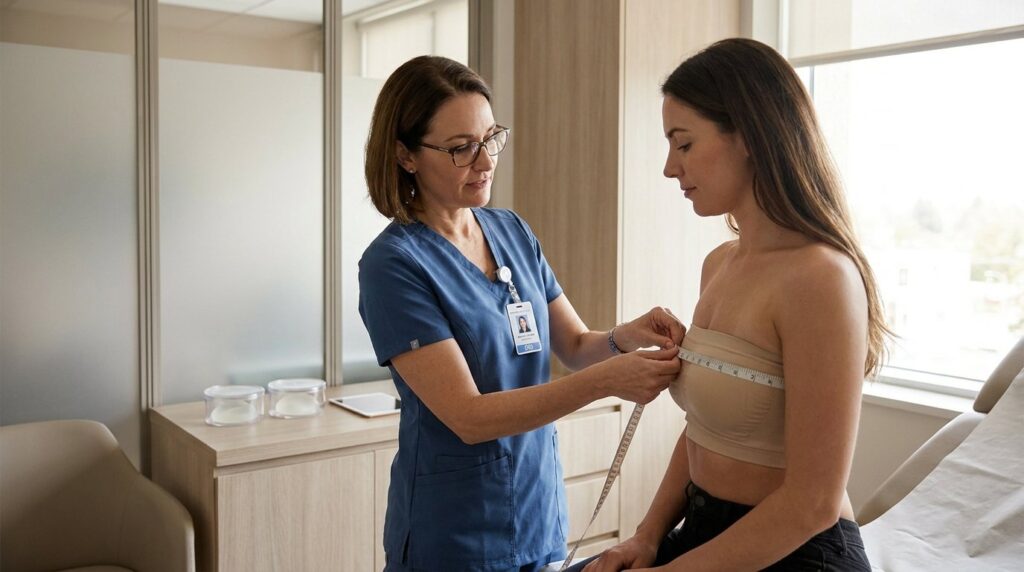
This is the part many patients do not hear clearly enough: breast implant sizing is usually a tissue-based plan, not a shopping exercise. An experienced plastic surgeon will first look at what your body can handle well over time. That means measuring the width of your natural breast footprint on the chest, checking how much breast tissue you already have, and seeing how tight or loose the skin envelope is.
In day-to-day surgical planning, the first filter is often base width. If an implant is too wide for your chest, it can push too far toward the cleavage area or the outer side of the breast. If it is too narrow, it may look less balanced and leave the breast under-filled at the sides. This is why two patients asking for the same cup size may be offered very different implants.
After width, surgeons look at projection and profile. A higher-profile implant is narrower for its volume and projects more forward. A moderate-profile implant tends to spread volume more gently across the chest. Neither is automatically better. The choice depends on your frame, your soft tissue cover and the shape you want in clothes and out of clothes.
A practical way surgeons narrow the options often looks like this:
- ✓They measure your chest and breast base width.
- ✓They assess tissue thickness and skin stretch.
- ✓They decide whether a wider or narrower implant footprint suits you.
- ✓They compare moderate, moderate-plus or high-profile shapes within that safe width range.
- ✓They use sizers or 3D-style planning tools to show what different volumes may look like on your body.
The American Society of Plastic Surgeons (ASPS) describes breast augmentation as a highly individual procedure, and that fits real-life sizing well: there is no universal “best” implant, only a best fit for your anatomy and goals. If you are still deciding whether augmentation alone is enough or whether breast position also needs correction, it can help to read about the difference between breast augmentation and a breast lift, because lift needs can change the sizing plan.
📋 A useful rule of thumb The implant should fit inside your natural breast footprint rather than forcing the breast wider than your tissues can comfortably support.
Your surgeon measures chest width, explains profile choices and gives a safe size range rather than pushing one volume.
The consultation focuses only on cup size, celebrity photos or the largest implant available, with little discussion of tissue limits.
Surgeons do not choose implant size by cup size alone. In practice, they start with your chest width, breast base width, skin stretch, existing breast tissue and nipple position, then narrow options by implant width, profile and projection. Your goal matters, but your anatomy sets the safe range.
Why cup size is a poor way to choose implants
Many patients start with, “I want to be a C or a D cup.” That is understandable, but cup size is one of the least precise ways to plan surgery. Bra sizing differs by manufacturer, padding, band size and country. A result that feels like a full C in one brand may fit as a D somewhere else.
The more useful question is: how do you want your chest to look in proportion to your shoulders, waist and hips? A subtle upper-pole fullness, a rounder cleavage look, or a soft natural slope are more meaningful goals than a letter on a label.
The Mayo Clinic notes that breast augmentation choices include implant type, size and incision plan, and those decisions affect the final result together rather than separately. In other words, the same implant volume does not create the same breast shape in every patient. If you have a narrow chest and firm tissues, an implant may look more projected. On a broader chest with looser tissue, that same implant may look softer and less prominent.
A better consultation usually includes trying implant sizers inside a bra, discussing your usual clothing, and reviewing photos of results on patients with a similar frame rather than simply naming a cup size.
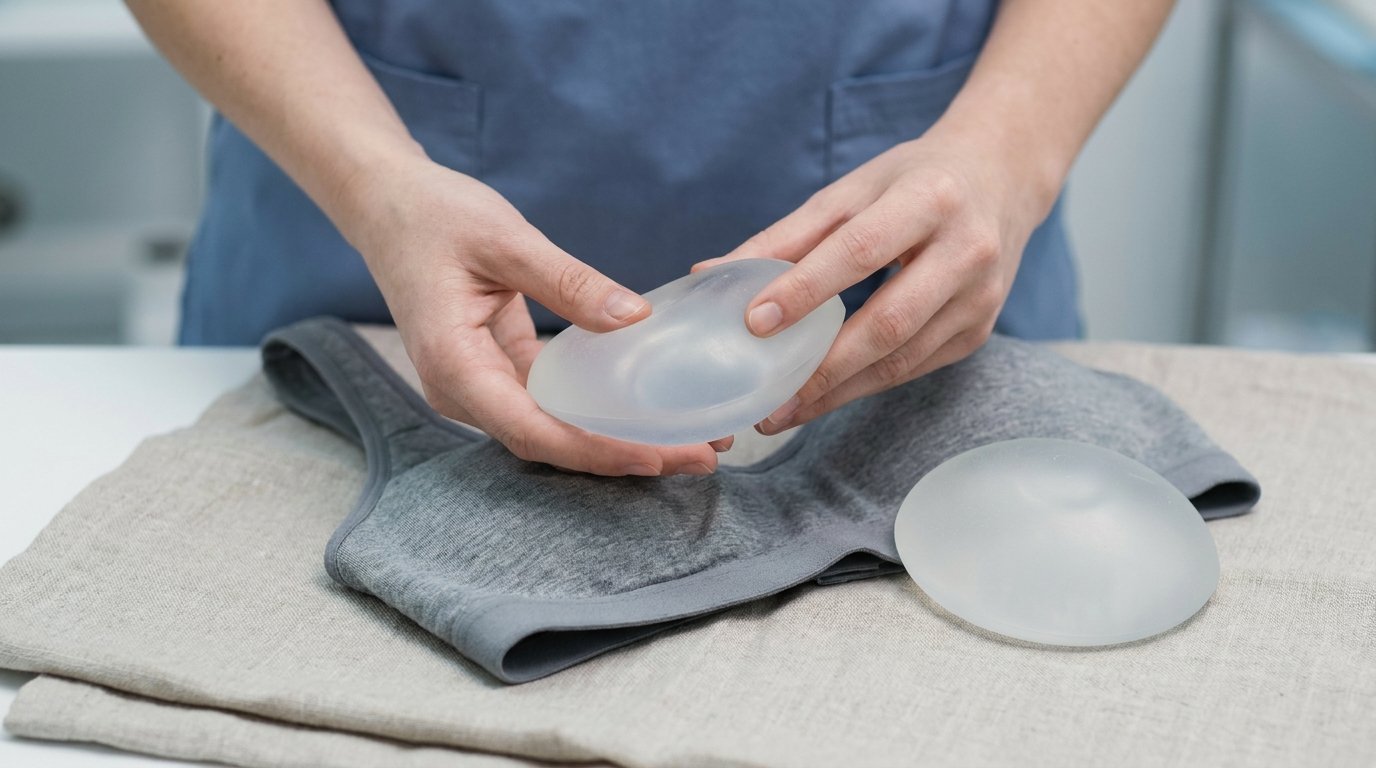
Cup size sounds simple, but it is not a reliable planning tool because bra sizing varies between brands and countries, and the same implant can look very different on two bodies. Surgeons use measurements and shape goals instead because they are more consistent than cup labels.
What body measurements and tissue limits matter most?
Patients often think volume is the main decision, but the body measurements behind that volume are what really protect the result. Breast base width is usually the most practical starting point. It helps define the implant width range that will sit neatly on your chest.
Tissue thickness matters because thinner soft tissue gives the implant less cover. That can make edges, rippling or a more artificial look easier to notice, especially in very low body-fat patients. Skin elasticity matters too. Tight skin may make even a moderate implant look fuller and rounder at first, while looser skin can accept volume differently and sometimes needs a lift to reshape the breast envelope.
Nipple position is another major factor. If the nipple sits low or the breast has dropped after weight change, pregnancy or ageing, a bigger implant alone may not “lift” the breast in the way many patients hope. In that situation, combining augmentation with a lift may produce a more balanced shape than simply increasing implant size.
A simple tissue-based example
Imagine two patients who both ask for a full, noticeable increase. One has a narrower breast footprint, firm skin and good nipple position. The safe options may include a narrower implant with more projection. The other has wider breasts, thinner tissue and mild sagging. That patient may need a broader implant, a more careful volume limit, or a lift if the goal is upper fullness without a heavy lower pole.
This is where surgeon judgement matters. Good sizing is not about talking you down from your goal. It is about finding the largest or smallest implant that still makes sense for your tissues, now and in the longer term.
- ✓Chest and breast base width
- ✓Existing breast volume
- ✓Skin tightness or looseness
- ✓Soft tissue thickness
- ✓Nipple and breast fold position
The key measurements are breast base width, chest width, skin stretch, breast tissue thickness and nipple position. These factors tell the surgeon how wide an implant can safely be, how much projection your tissues can cover, and whether adding a lift may produce a more balanced result than choosing a larger implant alone.
How do implant profile and shape change the result?
When patients compare implants, they often focus on volume because it is easy to understand. In reality, profile can change the look almost as much as volume does. A high-profile implant is not simply “bigger”; it is usually narrower and projects more. That can suit a patient with a smaller chest width who wants noticeable fullness without choosing an implant that spills too far to the sides.
A moderate or moderate-plus profile often spreads the fullness more gently. On some bodies, that gives a softer, less “push-up bra” look. On other bodies, especially narrower frames, it may not produce enough upper-pole fullness to match the patient’s goal.
Implant shape also matters, but less than many people expect once the implant is in the body and tissues settle. What usually drives the visible result most is the combination of your own breast tissue, implant width, profile and placement. The right choice is the one that fits your anatomy first and your style preference second.
Profile changes how far the implant projects forward for its width. A higher profile can create more front projection on a narrower chest, while a moderate profile often looks softer across a broader base. Shape, projection and width work together, so profile should never be chosen in isolation.
What size tends to look most natural?
The most natural-looking size is not a fixed volume. It is usually the size that stays within your breast width, respects your tissue thickness and does not overload the skin. That is why a modest-looking implant on one person may look quite full on someone with a smaller frame.
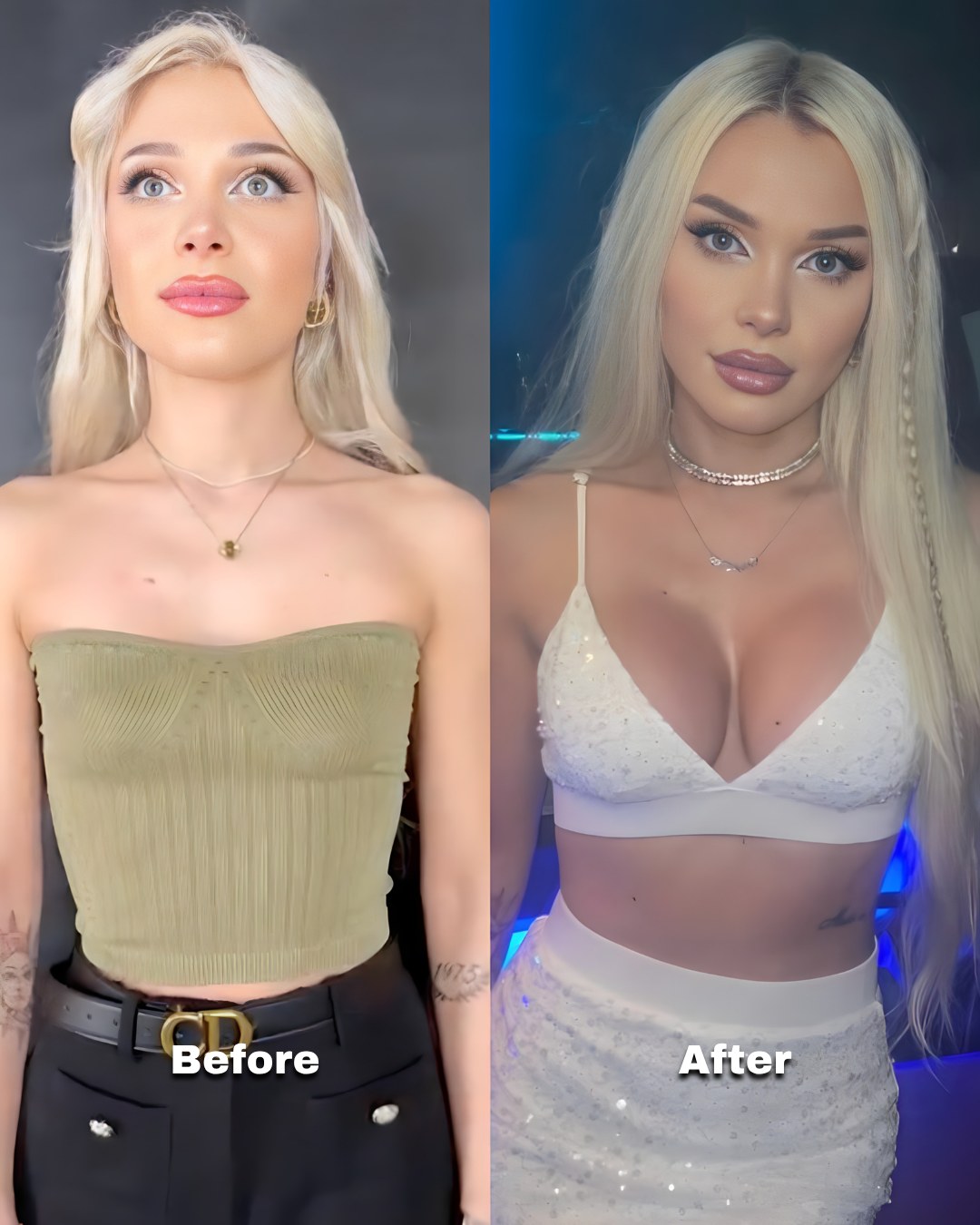
If your idea of natural means that people notice you look better but cannot immediately tell why, surgeons often lean toward a size that keeps the implant footprint close to your natural breast base and avoids excessive forward projection for your tissues. If your idea of natural still includes a clearly fuller upper breast, that can also be possible, but it has to be planned within the limits of your anatomy.
This is also where revision risk comes into the conversation. Very large implants relative to the tissues may increase the chance of bottoming out, tissue stretching, visible rippling or discomfort over time. That does not mean you should always choose smaller. It means the long-term behaviour of the tissues should be part of the decision, not just the first few weeks in the mirror.
If you already have implants and feel they are too large, too small or poorly matched to your shape, information on breast implant revision can help you understand how surgeons reassess width, position and soft tissue support.
What should I expect during recovery, travel and follow-up?
Recovery matters when choosing size because larger, tighter-feeling implants can sometimes feel heavier or more obvious early on, even when the surgery itself goes smoothly. Most patients need a short period away from strenuous activity, and the chest often feels tight, swollen and high at first. That early look is not the final shape.
The NHS explains that cosmetic breast surgery involves swelling and discomfort in the initial recovery period, and that normal activities should be resumed gradually. In practical terms, patients usually need help with lifting, overhead reaching and carrying luggage in the early phase.
For international patients, it is wise to stay long enough for consultation, surgery, early checks and a post-operative review before travel home. If you are arranging care abroad, ask exactly who will review you after surgery, what happens if swelling looks uneven, and how remote follow-up is handled once you return home. You can usually start that process through an online surgical consultation request and then confirm details after your assessment.
⚠️ Do not judge size too early Implants often sit high and feel firmer at first. Early swelling can make the breasts look larger or more projected than the settled result.
Most patients can walk around the same day, feel significantly better over the first one to two weeks, and see the breasts settle gradually over the following weeks and months. For medical travel, plan enough time for pre-op checks, surgery, early recovery and a surgeon-led review before flying home.
How much does implant size affect cost, and what should a quote include?
Patients often expect bigger implants to mean a dramatically different price, but that is not usually the main cost driver. In most clinics, the larger factors are the type and brand of implant, the complexity of the procedure, whether you need a lift at the same time, the operating facility, anaesthesia and aftercare.
For example, a straightforward first-time augmentation is usually planned differently from augmentation combined with a lift, asymmetry correction or a revision case. Those differences often matter more to the quote than the exact implant volume chosen within a suitable range.
A useful quote should explain what is included. That commonly means the implant itself, surgeon and anaesthesia fees, hospital costs, garments, routine follow-up and any local logistics that are part of a medical-travel package. You should also ask what is not included, especially medicines after discharge, extra nights if recovery needs more time, and any costs linked to unexpected assessment back home.
Implant size itself is only one small part of cost planning. The overall quote is usually shaped more by implant type, surgeon and hospital fees, anaesthesia, whether a lift or revision is needed, aftercare and travel logistics. A personalised price should be confirmed after consultation.
How can I choose a safe clinic and avoid being upsold into the wrong size?
This is where a lot of sizing mistakes start. If a consultation feels like a sales conversation rather than a medical assessment, the implant choice may be driven by marketing language instead of anatomy. A good clinic will explain why certain sizes suit you and why others may not, even if the larger option sounds appealing at first.
The NHS advises people considering cosmetic surgery to check the qualifications and registration of the practitioner and to understand risks, recovery and aftercare before committing. For a travelling patient, that also means checking who your surgeon is, where the procedure takes place, and what support you have once you leave the country.
You should feel comfortable asking direct questions. Who performs the measurements? Who performs the operation? How often does the surgeon do breast augmentation? What happens if I need review after I fly home? Reading the clinic’s about page and surgeon information on the doctors page can help you prepare those questions, but the consultation itself should still be specific and personal.
You are measured, shown realistic size ranges, advised on trade-offs and given a clear aftercare plan for both your stay and your return home.
You are pushed toward a dramatic size, risks are brushed aside, or there is no clear answer about who handles complications and follow-up.
A second consultation can be worthwhile, especially if one surgeon recommends a much larger implant than another without explaining the tissue limits.
A safe clinic should measure you properly, explain your anatomical limits, discuss implant risks honestly and give you time to decide. Be cautious if the conversation is sales-led, if only cup size is discussed, or if no clear follow-up plan is offered for international patients.
Frequently Asked Questions
References
- 📎ASPS cosmetic procedures: breast augmentation and implant planning overview
- 📎NHS cosmetic procedures guidance
- 📎Mayo Clinic tests and procedures: breast augmentation overview
- 📎PubMed search: breast implant selection tissue based planning base width
Related Articles


You Might Also Like



Related articles
Our specialists
 Clineca SpecialistErkan PinegözPlastic & Reconstructive Surgery
 Clineca SpecialistHakan AktaşPlastic & Reconstructive Surgery
 Clineca SpecialistOrkun UzuneyüpoğluPlastic & Reconstructive Surgery
 Clineca SpecialistSalim İskenderPlastic & Reconstructive Surgery
 Clineca SpecialistEngin SelamioğluPlastic & Reconstructive Surgery
 Clineca SpecialistCem AydınPlastic & Reconstructive Surgery
 Clineca SpecialistAlperen ÖnalEar, Nose & Throat (ENT)