Have a question about Breast Augmentation?
In this article
- Who is usually a candidate, who may need to wait, and when a lift is often needed
- What does a surgeon assess after major weight loss?
- How do you know if implants alone may work after weight loss?
- Why does stable weight and nutrition matter so much before surgery?
- What risks should you understand before choosing augmentation after weight loss?
- What is recovery like, and how long should you stay in Turkey?
- How are quotes prepared, and what should be included in the plan?
- How do you choose a safe clinic and surgeon for post-weight-loss breast surgery?
Losing a significant amount of weight can change your breasts in ways that are hard to predict. If you are asking, “am i a candidate for breast augmentation after weight loss,” the real answer depends less on the number on the scale and more on skin quality, breast position, nutrition, and whether your weight has been stable long enough to plan surgery safely.
Who is usually a candidate, who may need to wait, and when a lift is often needed
In practical terms, you are usually a reasonable candidate for breast augmentation after weight loss if your weight has been stable for a period of time, you are in good general health, your nutrition is adequate, and your main concern is lost upper-pole fullness rather than major drooping. That is the clearest early rule. If the breast nipple still sits in a fairly good position and the skin envelope is not too loose, implants alone may restore shape well.
You may need to wait if your weight is still changing, if you recently had bariatric surgery and are still adjusting to eating and supplement routines, or if blood tests suggest nutritional issues that could slow healing. NICE guidance on long-term follow-up after bariatric surgery highlights the importance of ongoing nutritional monitoring, and that matters here because wound healing depends on enough protein, iron, vitamin B12, folate and other nutrients.
A breast lift is often needed when weight loss has left stretched skin, a lower nipple position, or a breast shape that looks deflated and falls downward rather than simply looking smaller. In those cases, an implant can add volume, but it cannot by itself tighten loose skin or reliably move the nipple to a higher position. This is one of the most common misunderstandings after major weight loss.
A simple way to think about it is this: if your breasts feel mainly empty, implants may be enough; if they feel empty and sit lower with extra skin, augmentation with a lift is often the better match.
The NHS advises that cosmetic surgery should be approached carefully, with time to think through benefits, limits and risks. That is especially relevant after weight loss, because body contour changes rarely happen in just one area. Some patients exploring breast surgery are also comparing related procedures such as a breast lift or wider post-weight-loss body contouring such as a body lift.
📋 A quick candidate rule Implants alone usually suit volume loss with mild sagging. When nipples sit low or skin is very loose, a lift is often needed as well.
Stable weight, good skin tone, mild droop, nipples still near the centre of the breast, and the main goal being more fullness rather than a higher breast position.
Loose skin, downward-pointing nipples, the breast fold sitting high compared with the breast tissue, or a "deflated and hanging" look after major weight loss.
Recent bariatric surgery, ongoing rapid weight change, smoking, poorly controlled medical conditions, or bloodwork suggesting low iron, protein or vitamin deficiencies.
What does a surgeon assess after major weight loss?
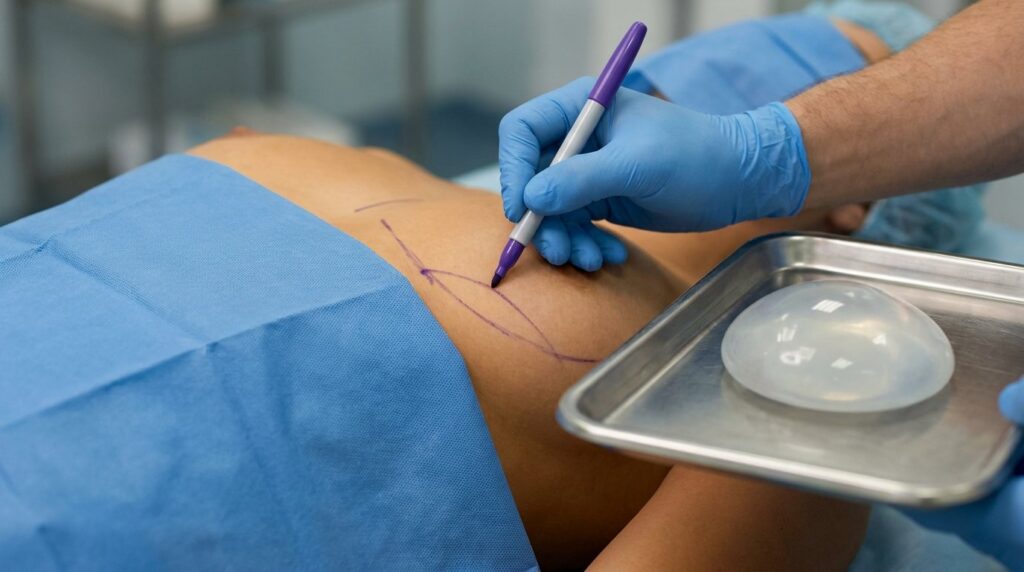
A proper assessment is more specific than simply asking what cup size you want. The surgeon will look at nipple position, the amount of extra skin, the quality and thickness of breast tissue, chest shape, stretch marks, asymmetry, and where the breast fold sits. These details help show whether implants alone can shape the breast or whether a lift is needed to rebuild support.
Skin quality matters a great deal after weight loss. If the skin has thinned and stretched, a larger implant can sometimes make the breast look heavier over time rather than firmer. That is why the right implant plan after weight loss is often more conservative than patients first imagine.
Your health history matters too. This includes whether you had bariatric surgery, how much weight you lost, whether the weight has stayed stable, whether you smoke or vape, and whether you have problems such as anaemia, reflux affecting intake, or repeated vomiting. NICE follow-up principles for bariatric patients stress ongoing nutritional review, and that is directly relevant before any elective surgery.
A consultation should also include discussion of implant type, placement, incision options, scar pattern if a lift is added, and whether you may be better served by a staged plan rather than trying to do everything in one operation. If you are still at the research stage, it helps to read a focused overview of breast augmentation and then arrange a personalised surgical consultation.
- ✓Stable body weight for a meaningful period
- ✓Enough breast tissue and skin quality to support the implant plan
- ✓Nipple position that matches the proposed technique
- ✓Good nutrition, especially protein, iron, B12 and folate after bariatric surgery
- ✓No active smoking or nicotine use around the time of surgery
- ✓Realistic expectations about scars, feel, long-term maintenance and possible revision surgery
How do you know if implants alone may work after weight loss?
This is often the main decision point. Many patients say they want augmentation, but what they really want is a higher, tighter breast shape. Those are not always the same operation.
Implants alone are more likely to work if the nipple is at or only slightly below the breast fold, the skin still has some recoil, and the breast shape is mostly flattened rather than drooped. In that setting, adding volume can improve the upper breast and overall balance.
Implants alone are less likely to give a satisfying result if the nipple sits clearly below the fold, points downward, or if there is a lot of empty lower-pole skin. In those cases, an implant may fill some space but still leave the breast looking low. That can lead to disappointment even when the operation itself goes technically well.
Surgeons also watch for a “bottomed-out” look risk after weight loss, where weak tissue support allows an implant to settle too low over time. This is one reason bigger is not always better. Careful sizing can reduce stress on skin that has already been stretched.
If your surgeon says a lift is needed, that is not upselling by itself. It may simply mean the problem is position and skin support, not just volume.
Why does stable weight and nutrition matter so much before surgery?
After major weight loss, timing matters. If you have surgery while your weight is still dropping, the breast shape can change again soon after the operation. That can affect symmetry, implant position and how much loose skin remains.
Nutrition is just as important. Healing needs enough protein and a reliable intake of vitamins and minerals. Patients who have had bariatric surgery can be more prone to low iron, vitamin B12, folate, vitamin D and other deficiencies if follow-up and supplements are not on track. NICE emphasises long-term nutritional monitoring after bariatric procedures, and this is one of the clearest reasons why: cosmetic surgery recovery is harder when the body does not have the building blocks it needs.
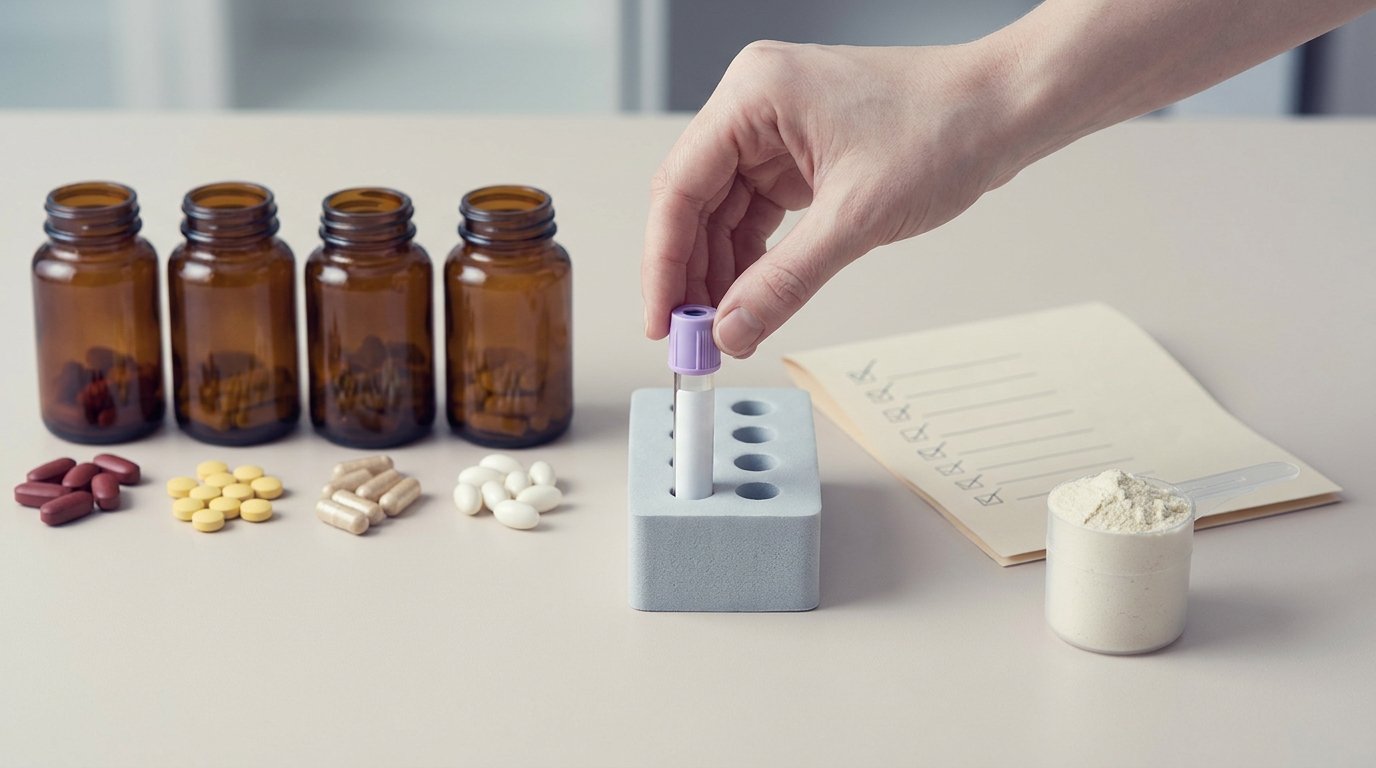
Poor nutrition can increase the risk of delayed wound healing, fatigue, more visible scarring, and a slower overall recovery. It may also affect your ability to tolerate a combined procedure such as augmentation with lift. This does not mean former bariatric patients cannot have breast surgery. It means preparation matters more.
Many surgeons will ask for blood tests and may ask you to improve protein intake or correct deficiencies before giving a date. That can feel frustrating, but it is usually a sign that safety is being taken seriously.
⚠️ Weight loss surgery changes the planning If you have had bariatric surgery, ask whether your bloodwork and supplements are fully up to date before you book breast surgery.
What risks should you understand before choosing augmentation after weight loss?
Breast augmentation is common, but it is still surgery and it carries real risks. The American Society of Plastic Surgeons, or ASPS, lists risks that include bleeding, infection, poor scarring, changes in nipple or breast sensation, implant malposition, implant rupture and capsular contracture. Capsular contracture means the scar tissue around an implant tightens and can make the breast feel firm, look distorted or become uncomfortable.
Implants are not lifetime devices. Rupture can happen over time, and some patients need further surgery later for rupture, capsular contracture, implant position changes, size change, or a different aesthetic goal. That revision point is important after major weight loss because thinner tissues can make rippling, edge visibility or settling more noticeable.
You should also know about breast implant-associated anaplastic large cell lymphoma, usually shortened to BIA-ALCL. The ASPS explains that this is an uncommon cancer of the immune system linked mainly to textured implants rather than a typical breast cancer. A careful consent process should cover the implant surface being used and the current understanding of risk. Patients may also ask about so-called breast implant illness, often shortened to BII. Symptoms reported by some patients are real and deserve discussion, but the cause and mechanism remain uncertain, so it should be presented honestly rather than as a settled diagnosis.
Other risks matter too. These include blood clots in the legs or lungs, often grouped under venous thromboembolism or VTE, delayed healing, anaesthetic complications, asymmetry, and scars that widen or heal unpredictably. The NHS advises anyone considering cosmetic surgery to make sure they understand both common side effects and uncommon but serious complications before going ahead.
Weight-loss history can shift risk in small but meaningful ways. Reduced tissue thickness may make implant edges easier to feel. A lift adds external scars. Poor nutrition can slow healing. Smoking raises the risk of wound problems and tissue loss, especially when a lift is part of the operation.
None of this means you should avoid surgery. It means your decision should be based on the shape of your breasts now, your health now, and your tolerance for future maintenance.
Revision surgery is not unusual over the life of an implant, even when the first result is good.
Thinner tissue after major weight loss can make rippling, visible implant edges or bottoming out more likely in some patients.
What is recovery like, and how long should you stay in Turkey?
Recovery depends on whether you have implants alone or augmentation with a lift. Implants alone usually involve less skin healing than a lift, while a lift adds incision care and more swelling in the first part of recovery.
Most patients need a short period in Turkey for pre-op checks, surgery, and early follow-up before flying home. The exact plan depends on the surgeon’s protocol, whether drains are used, how complex the operation is, and whether you are travelling alone or with support. It is sensible to build in enough time for at least one in-person check after surgery rather than planning the earliest possible flight.
In the first days, expect tightness, swelling, tiredness and limited arm movement. Many people can walk and do light daily tasks quite soon, but lifting, gym training and sleeping positions will be restricted for longer. If a lift is added, scar care becomes part of the routine.
Long-haul travel after surgery should be planned carefully. Early walking, hydration and following your surgical team’s advice on reducing clot risk matter, especially after longer operations. Ask what warning signs should prompt urgent review once you are back home, and who coordinates follow-up if you have concerns after travel.
A clinic should be able to explain the travel timeline clearly, including airport transfers, hotel arrangements, pre-op tests, prescriptions, and how aftercare is handled for international patients.
How are quotes prepared, and what should be included in the plan?
The cost of breast augmentation after weight loss is not just about the implants. A personalised quote usually depends on whether you need implants alone or augmentation with a lift, the complexity of your anatomy after weight loss, the hospital setting, implant choice, surgeon and anaesthetist fees, medications, garments, follow-up and travel-related logistics.
That is why a proper quote is usually confirmed after consultation rather than from photos alone. Photos can start the discussion, but they do not always show skin quality, tissue thickness or nipple position accurately enough for a final plan.
When comparing clinics, ask what is included. A clear quotation process should explain pre-op assessment, the surgical plan, hospital stay, implants, transfers if offered, accommodation if offered, medication, support bra, follow-up appointments, and what happens if you need extra review before flying home.
The cheapest-looking offer is not always the most straightforward one. What matters more is whether the plan fits your anatomy and whether aftercare is easy to access if you have concerns.
How do you choose a safe clinic and surgeon for post-weight-loss breast surgery?
Look for a surgeon who regularly performs both augmentation and breast lift surgery, not just straightforward implant cases. Post-weight-loss breasts can be more complex, and the planning should show that. You want someone who can explain why your anatomy points toward implants alone, augmentation with lift, or sometimes delaying surgery.
Ask about hospital accreditation, who provides the anaesthetic, what pre-op tests are required, and how complications are handled if you are an international patient. The NHS advice on choosing cosmetic surgery providers is broadly applicable here: know who is treating you, check qualifications, and make sure you have time to consider the decision rather than feeling rushed.
Good consultations are specific. They include discussion of scars, implant lifespan, revision risk, future mammograms or breast imaging, and what result is realistic on your frame after weight loss. Be cautious if someone agrees to a very large implant without addressing weak skin support or nipple position.
If you are travelling from abroad, it is also reasonable to check the provider background, surgeon profiles and patient coordination process before you commit. Pages such as about the clinic and meet the doctors should make it easier to understand who is involved in your care.
Your consultation covers lift versus implants, nutrition, smoking, scars, revision risk, implant safety and a realistic travel plan.
You are offered surgery before weight stabilises, your nutrition history is ignored, or no one explains why a lift may be needed.
Frequently Asked Questions
References
- 📎ASPS: Cosmetic Procedures
- 📎NHS: Cosmetic procedures
- 📎PubMed search: breast augmentation weight loss mastopexy
- 📎PubMed search: bariatric surgery nutrition wound healing elective surgery
Related Articles



You Might Also Like
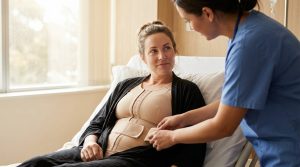

Related articles



Our specialists
 Clineca SpecialistErkan PinegözPlastic & Reconstructive Surgery
 Clineca SpecialistHakan AktaşPlastic & Reconstructive Surgery
 Clineca SpecialistOrkun UzuneyüpoğluPlastic & Reconstructive Surgery
 Clineca SpecialistSalim İskenderPlastic & Reconstructive Surgery
 Clineca SpecialistEngin SelamioğluPlastic & Reconstructive Surgery
 Clineca SpecialistCem AydınPlastic & Reconstructive Surgery
 Clineca SpecialistAlperen ÖnalEar, Nose & Throat (ENT)