Have a question about Brow Lift?
In this article
- The short answer: how are they different?
- How do surgeons tell brow ptosis from excess eyelid skin?
- Which procedure matches which concern?
- What are recovery and travel timelines like?
- What affects the cost, and what should a quote include?
- Is one safer than the other?
- Can you combine a brow lift and upper eyelid surgery?
- How should you choose a clinic if you are travelling to Turkey?
What is the difference between a brow lift and upper eyelid surgery? A brow lift raises a low or heavy eyebrow, while upper eyelid surgery removes or reshapes excess skin and fat from the upper lids. They can look similar in photos, but they treat different causes of a tired or hooded eye area, and recovery, safety, travel timing, and cost all depend on the exact technique and your anatomy.
The short answer: how are they different?
The simplest way to think about it is location. A brow lift works above the eye, at the level of the forehead and eyebrow. Upper eyelid surgery works on the eyelid itself.
That matters because the same complaint, such as “my eyes look hooded” or “I look tired,” can come from two different problems. In one person, the eyebrow has drifted lower with age and is crowding the upper lid. In another, the brow is in a reasonable position but the eyelid skin has become loose and folded.
This is why a good consultation should not start with the procedure name. It should start with the cause. If the main issue is a low brow, removing eyelid skin alone can leave the brow problem untouched. If the main issue is lid skin and puffiness, a brow lift alone may not give the change you expect.
If you are comparing options, it helps to look at both the brow lift procedure page and the eyelid surgery page before your consultation, so you can describe what bothers you more clearly.
A brow lift treats brow descent, meaning the eyebrow has dropped and is pushing tissue onto the upper eye area. Upper eyelid surgery, also called upper blepharoplasty, treats excess eyelid skin or fat on the lid itself. Some patients need one procedure, while others get the best result from combining both.
How do surgeons tell brow ptosis from excess eyelid skin?
This is the part many patients never hear explained properly. Brow ptosis means the brow has dropped. Dermatochalasis means there is extra upper eyelid skin. They often happen together, which is why the mirror can be confusing.
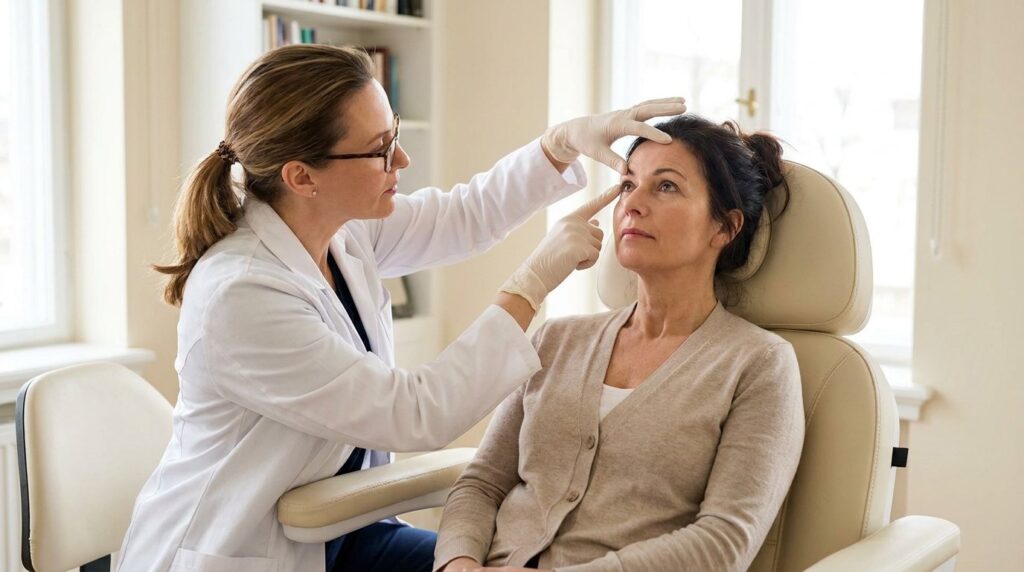
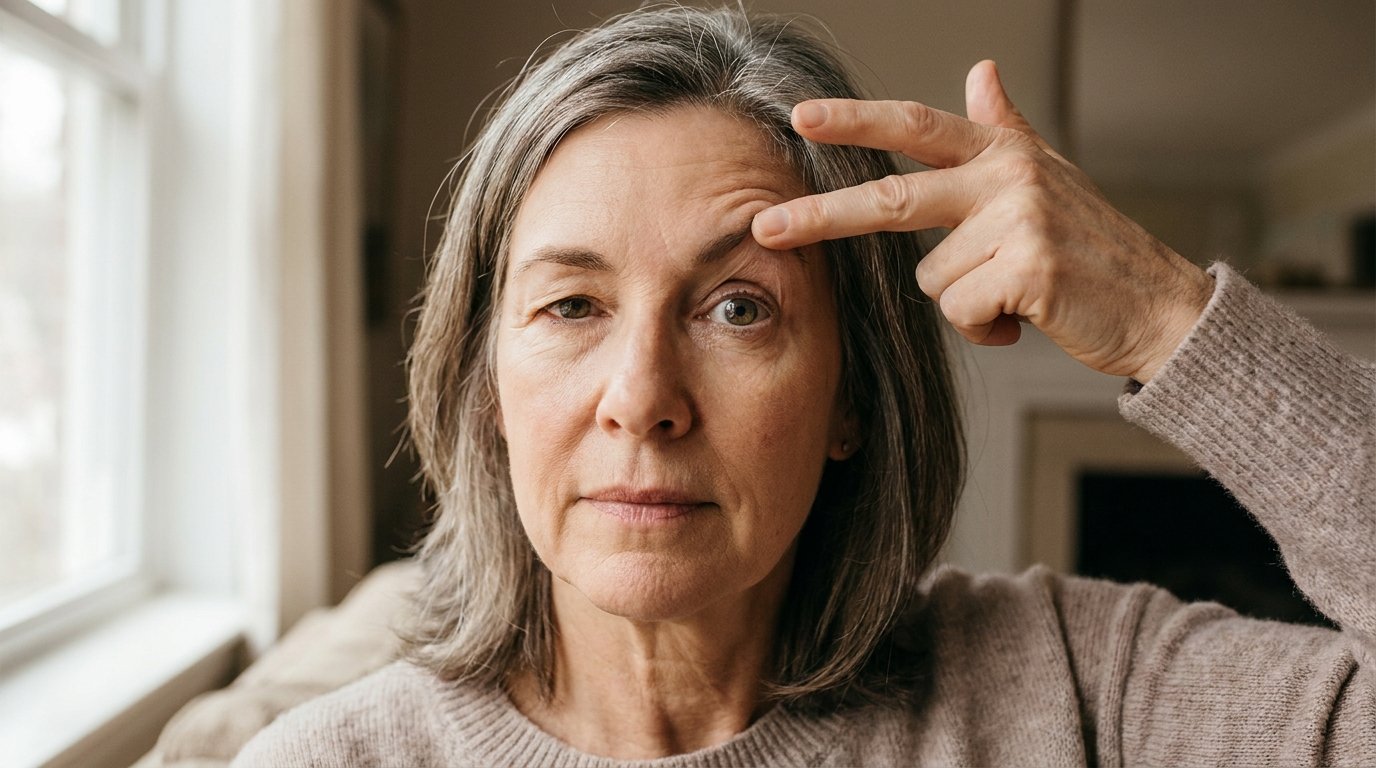
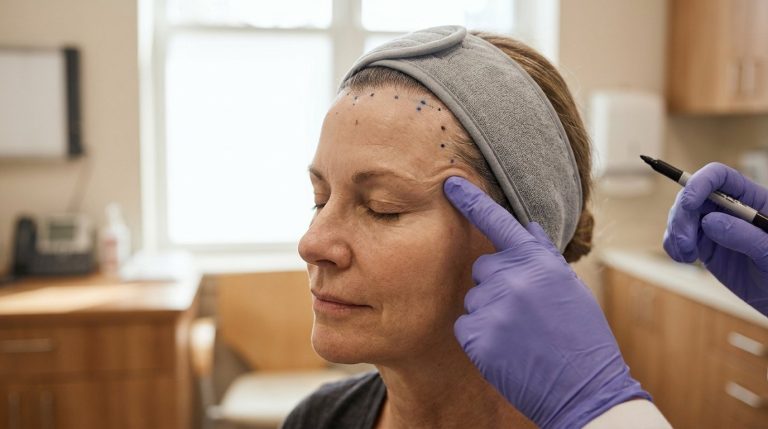
A careful examiner usually looks for a few practical clues. One is where the eyebrow sits compared with the brow bone. Another is whether you are unconsciously lifting your forehead to keep your eyes open. Many people with low brows do this without noticing; when the forehead relaxes, the heaviness over the outer upper eyelid becomes more obvious.
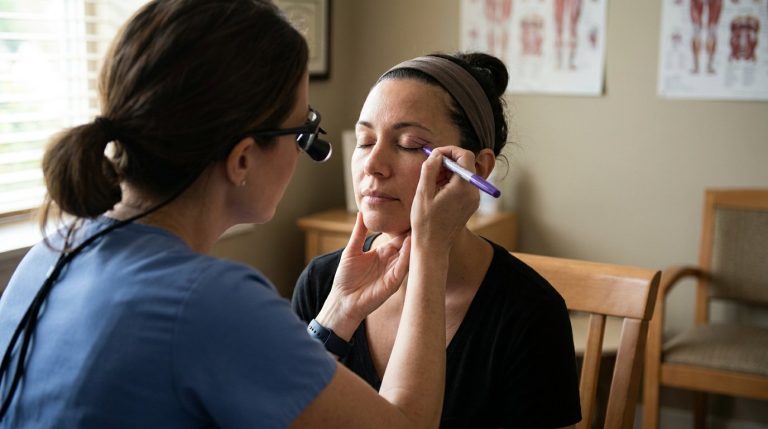
A surgeon will also look at the eyelid crease and how much true lid skin remains between the lashes and the brow. If the brow is gently lifted into a better position and much of the hooding disappears, that suggests the brow is a major part of the problem. If a fold of loose skin still hangs over the lid even after the brow is supported, upper blepharoplasty may still be needed.
Common exam findings that help separate the two
A proper consultation is more than a quick photo review. Useful decision points often include:
- ✓Whether the outer brow sits low, which often causes heaviness at the outer upper lid
- ✓Whether there is a true skin fold on the upper lid even when the brow is lifted by hand
- ✓Whether forehead lines are strong because the frontalis muscle is constantly trying to raise the brows
- ✓Whether the eyelid opening is being blocked enough to affect vision, which may need a more formal eye-area assessment
- ✓Whether the two sides are different, since asymmetry can change the plan
The American Society of Plastic Surgeons explains that brow lift surgery repositions the forehead soft tissues and can improve drooping brows and horizontal or frown lines, while blepharoplasty addresses excess eyelid tissue. Mayo Clinic also notes that eyelid surgery may be considered when sagging skin affects the natural contour of the upper eyelid or interferes with side vision. Those are different anatomical targets, even if the patient complaint sounds the same.
One more point matters: some patients have naturally fuller upper lids or a low-set brow shape rather than a true age-related drop. In that setting, the safest plan may be conservative surgery or no surgery at all. The aim is not to chase a trend, but to match the treatment to your face.
Surgeons distinguish brow ptosis from dermatochalasis by examining brow position, eyelid crease show, skin redundancy, forehead muscle overactivity, and how the eye area changes when the brow is manually lifted. The key question is whether the heaviness starts at the brow, the lid, or both.
Which procedure matches which concern?
A brow lift is usually the better fit when your eyebrow has fallen, especially at the outer edge, and this is making the upper eye area look crowded. Patients often say they look stern, tired, or heavy even when the upper lid skin itself is not the main issue.
Upper eyelid surgery is usually the better fit when the brow is already in a decent place, but there is still excess skin, a folded upper lid, or puffiness from fat bulging on the lid. In these cases, working directly on the eyelid can sharpen the lid shape without changing the brow position much.
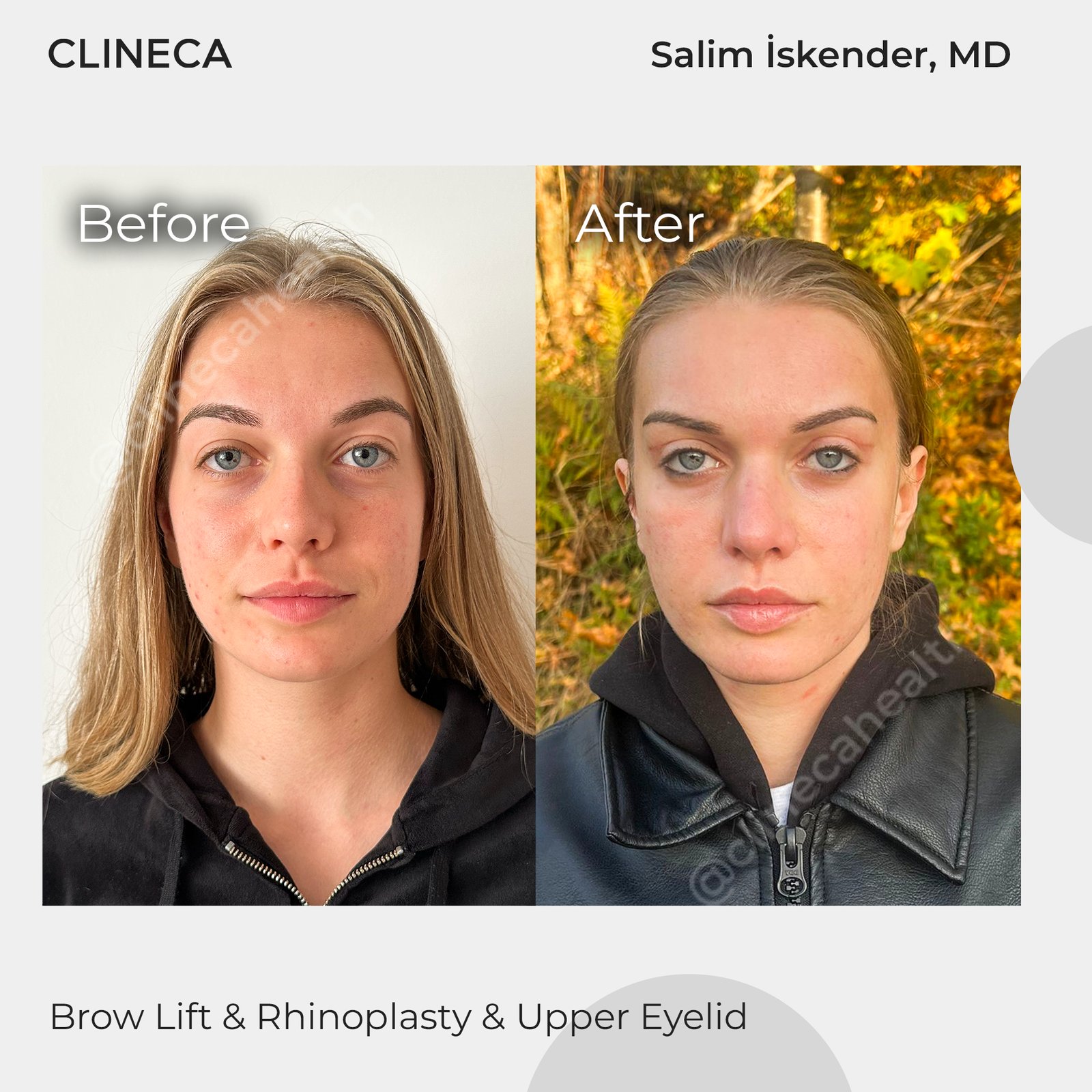
Some people genuinely need both. This is common in ageing faces, where the brow has dropped and the lid skin has also stretched. Doing only one part can improve things, but the result may look incomplete. That does not mean everyone should combine procedures. It means the plan should be tailored.
A simple comparison helps:
Choose the procedure based on the source of the heaviness. Brow lift is usually better for descended brows, especially outer brow droop and forehead compensation. Upper eyelid surgery is usually better for loose upper lid skin or fat pockets. When both are present, combining them may produce the most balanced result.
What are recovery and travel timelines like?
This is where broad promises are unhelpful. Recovery is not identical for every brow lift, and it is not identical for every blepharoplasty either. A limited upper eyelid procedure often has a shorter and simpler recovery than a brow lift, but a combined plan naturally takes more downtime.
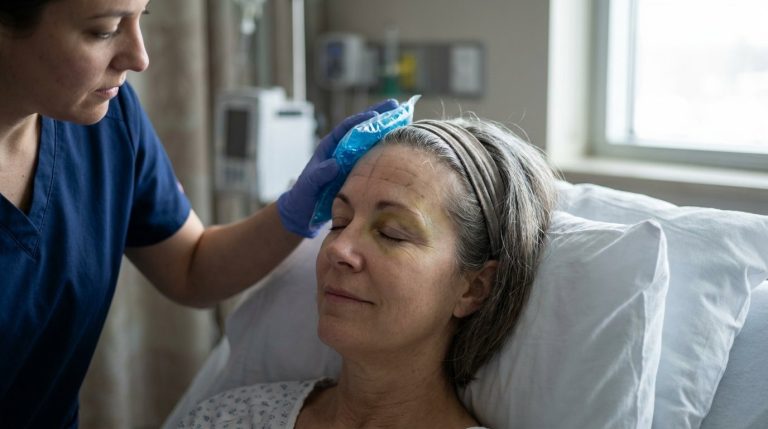
In practical terms, most patients should expect bruising and swelling around the eyes in the early phase. Eyelid surgery often produces visible bruising that improves over the first couple of weeks, while brow lift recovery can include scalp tightness, forehead numbness, or more prolonged swelling depending on whether the lift is endoscopic or uses a longer incision. These details should be discussed as part of consent.

The NHS notes that cosmetic eyelid surgery can cause temporary swelling, numbness, and bruising, and that normal recovery takes time. That lines up with real life: you may feel socially presentable before the tissues are fully settled. The final shape keeps refining after the obvious bruising has faded.
For international patients, travel planning matters almost as much as surgery planning. You should ask how many in-person checks are needed, when sutures are removed if non-dissolving stitches are used, and what signs would make the team delay your flight. There is no responsible universal “safe to fly after X days” rule for every patient, because the answer depends on the procedure details, wound healing, swelling, dry eyes, and your general medical history.
A sensible medical travel plan usually covers the surgery day, early recovery checks, and enough local stay for review before you leave Turkey. If you are arranging treatment abroad, use the consultation to clarify whether the quote includes transfers, hotel, compression or cooling advice, medicines, follow-up appointments, and remote aftercare once you return home.
⚠️ Do not book a fixed return flight too tightly Fit-to-fly timing varies by procedure, swelling, and your own healing. A flexible return plan is safer than assuming everyone recovers on the same schedule.
Recovery varies by technique, whether one or both procedures are done, and how you heal as an individual. In general, upper eyelid surgery often settles faster than brow lift surgery, but neither has one fixed timeline. Fit-to-fly timing should be confirmed by your surgeon after examining swelling, wound healing, and overall health.
What affects the cost, and what should a quote include?
Cost is not just about the operation name. Brow lift pricing can vary because there are different techniques, from smaller endoscopic approaches to more extensive lifts. Upper eyelid surgery also varies in complexity depending on how much skin or fat needs attention and whether other eye-area procedures are being combined.
For medical travellers, it is worth looking beyond the headline figure in a message thread. The important questions are what the package includes and what would create extra charges. A realistic quote should make clear whether it covers surgeon fees, hospital or theatre fees, anaesthesia, pre-op tests, medicines, follow-up visits, hotel and transfers if offered, and what happens if you need an extra in-person check before flying home.
If you are comparing clinics, ask for the same level of detail from each one. A lower starting quote is not automatically better if aftercare is limited or key items are not included. The safest approach is to get a personalised treatment plan after photo review and consultation, because the decision between one procedure and two changes the scope of treatment.
- ✓Ask whether the quote covers consultations, tests, anaesthesia, medicines, and follow-up.
- ✓Check if there is a separate charge for combined procedures or overnight stay.
- ✓Confirm what support is available once you return home.
- ✓Make sure the final personalised price is based on your anatomy, not just a generic package.
The price depends on whether you need a brow lift, upper eyelid surgery, or both; the surgical technique; the surgeon’s experience; anaesthesia; hospital standards; and aftercare. A useful quote should explain what is included, what is extra, and when a personalised final price is confirmed after consultation.
Is one safer than the other?
Both procedures carry real but different risks. Upper eyelid surgery can involve bleeding, asymmetry, dry-eye symptoms, scarring issues, or under- or over-correction. Brow lift surgery can involve visible scarring depending on technique, forehead numbness, hairline changes, asymmetry, and prolonged tightness or swelling. No ethical clinic should gloss over that.
The NHS advises anyone considering cosmetic surgery to check who will perform the procedure, what qualifications they hold, where the operation will take place, and what aftercare is provided. That advice matters even more when you are travelling abroad. You need to know not just who does the surgery, but who sees you the next day, who removes sutures if needed, and who answers if you develop increasing pain, worsening swelling, or visual symptoms.
For eye-area surgery in particular, your surgeon should ask about dry eyes, contact lens use, previous eye surgery, thyroid eye disease, blood-thinning medication, smoking, and any history of poor scar healing. These are not paperwork details. They directly affect safety and the treatment plan.
If you are researching providers, review the surgeon information on the doctors page, read about the organisation on the about page, and arrange a detailed pre-treatment discussion through the consultation page so the diagnosis is clear before you travel.
🚨 Seek urgent medical help for visual symptoms After any eye-area surgery, sudden vision change, severe increasing pain, rapidly expanding swelling, or significant bleeding needs urgent assessment.
You are told exactly whether the problem is low brows, eyelid skin excess, or both, and the surgeon explains why.
You are offered a procedure after a very brief chat, with little discussion of dry eyes, asymmetry, healing, scars, or aftercare.
If the brow position is stable, symptoms are mild, or expectations are unrealistic, a surgeon may advise delaying or avoiding surgery.
Neither procedure is automatically “safer” in every case. Both are established operations when performed on the right patient by an appropriately qualified surgeon in a suitable facility. The real safety question is whether the diagnosis is right, the plan is proportionate, and the clinic has clear standards for consent, aftercare, and complication management.
Can you combine a brow lift and upper eyelid surgery?
Yes, and in some faces that is the most logical plan. Combining them can make sense when the brow has descended and the upper eyelid also has true excess skin or fullness. Treating both levels can create a more balanced result than addressing only one.
But combined surgery is not automatically better. It can mean more swelling, a longer operation, and a recovery that feels less straightforward than a simple upper blepharoplasty alone. The right question is not “can they be done together?” but “do I need both to solve the problem I actually have?”
A conservative surgeon usually aims to avoid over-removing eyelid skin, especially if the brow is low. If too much lid skin is removed without addressing the brow position, the result can feel tight and still not fully correct the heaviness. This is one reason diagnosis matters so much.
How should you choose a clinic if you are travelling to Turkey?
Choose the team the same way you would choose for surgery at home: by the quality of the assessment, clarity of communication, transparency about risks, and strength of aftercare. Turkey offers many cosmetic surgery options, but standards are not identical across every provider.
Ask who performs the operation, where it takes place, what follow-up is included, and how complications are handled after you return home. You should also ask how long you are expected to stay locally, because that depends on whether you are having a brow lift, upper eyelid surgery, or both, and on how your early healing progresses.
A useful consultation should include photo review, discussion of brow position versus eyelid excess, likely scar location, realistic recovery, and whether your expectations match what surgery can achieve. If the plan still feels vague, it is worth slowing down and asking more questions before booking travel.
Frequently Asked Questions
References
- 📎NHS – Cosmetic procedures
- 📎ASPS – Cosmetic procedures
- 📎Mayo Clinic – Tests and procedures
- 📎PubMed search – brow lift blepharoplasty brow ptosis dermatochalasis
Related Articles
You Might Also Like

Related articles
Our specialists
 Clineca SpecialistErkan PinegözPlastic & Reconstructive Surgery
 Clineca SpecialistHakan AktaşPlastic & Reconstructive Surgery
 Clineca SpecialistOrkun UzuneyüpoğluPlastic & Reconstructive Surgery
 Clineca SpecialistSalim İskenderPlastic & Reconstructive Surgery
 Clineca SpecialistEngin SelamioğluPlastic & Reconstructive Surgery
 Clineca SpecialistCem AydınPlastic & Reconstructive Surgery
 Clineca SpecialistAlperen ÖnalEar, Nose & Throat (ENT)