
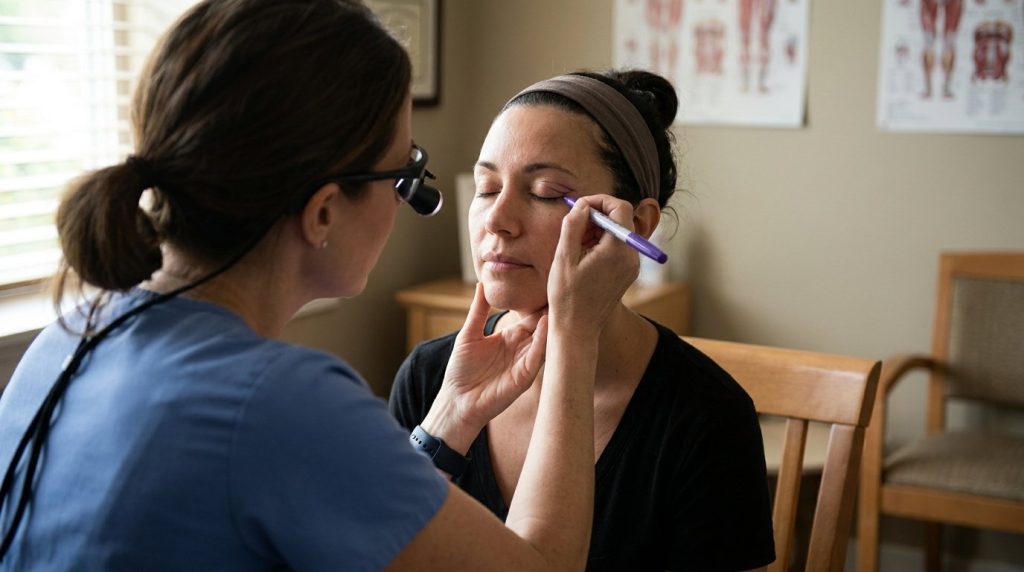
Have a question about Eyelid Surgery?
In this article
- What almond eye surgery actually changes
- Are you a candidate for almond eye surgery?
- How the procedure is performed and what it feels like
- What drives the cost of almond eye surgery in Turkey
- Recovery timeline and how long to stay in Turkey
- Risks, limits and the trade-offs worth knowing
- Choosing a surgeon and clinic for almond eye surgery
Almond eye surgery is a cosmetic eyelid operation that reshapes the outer corner of the eye, usually with a canthopexy or canthoplasty (tightening or repositioning the small tendon that anchors the outer corner) and often combined with upper or lower eyelid surgery. The aim is a slightly lifted, tapered outer corner rather than a round or downturned one. It is one of the more misunderstood procedures in facial surgery, partly because the same phrase is used for very different operations, and partly because photographs online rarely explain what was actually done.
What almond eye surgery actually changes
“Almond eye surgery” is a descriptive name for an outcome, not a single fixed technique. What sits underneath it is eyelid and canthal surgery: work on the outer corner of the eye, often together with skin, muscle or fat adjustments on the upper or lower lid.
The outer corner of each eye is held in place by a small tendon-like structure. A canthopexy tightens and supports that structure without fully detaching it. A canthoplasty releases it and re-fixes it in a new, usually higher and tighter position, which gives more control over the angle but is a bigger operation. If you want the mechanics of both compared side by side, our guide on canthopexy versus canthoplasty goes into detail.
In practice, most patients who ask for an almond shape are asking for a combination of three things: a slightly raised outer corner, a smoother transition between lid and brow, and less visible white showing under the iris. That last point often needs lower eyelid support rather than a simple “lift”.
A 2019 paper in Aesthetic Surgery Journal describing a “dynamic canthopexy” technique noted that the outer corner can be released from its original attachment and secured higher, both for patients born with a low outer corner and for those specifically requesting a more almond-shaped eye. That is a useful reminder that the cosmetic request and the reconstructive need can use overlapping techniques.
📋 It is not the same as fox eye surgery Almond eye surgery aims for a subtle taper and a natural corner angle. Fox eye work usually pushes the lift and the tail of the brow further for a more pronounced upward sweep. The comparison is explained in our article on the difference between almond eye and fox eye surgery.
Are you a candidate for almond eye surgery?
The best candidates have a round, downturned or tired-looking eye opening, healthy eyes and a clear, realistic idea of how much change the outer corner can deliver.
Eye shape is mostly determined by bone, the position of the eyeball within the socket, cheek support and the tension of the eyelids. Surgery can adjust the soft-tissue part of that equation. It cannot rebuild your orbital anatomy, so someone with very prominent eyes or a weak cheekbone will often need a more conservative plan, sometimes with lower lid support or cheek volume rather than an aggressive corner lift.
A few situations genuinely change the plan. Dry eye, previous laser eye surgery, thyroid eye disease or earlier eyelid operations all affect how much tightening is safe. Droopy outer corners that are mainly caused by loose lower lid tissue may respond better to a supportive approach — the candidacy questions are covered in our piece on canthopexy when the outer eye corners look droopy.
A 2026 study in Aesthetic Plastic Surgery classified eye shapes and lower-lid pretarsal roll types across a large patient group, and argued that lower eyelid aesthetic work should be tailored to the individual eye shape rather than applied as one standard technique. That matches what a careful consultation should feel like: measurement and mapping first, technique second.
Signs you may need a different procedure
If your main concern is heavy upper lid skin resting on your lashes, upper eyelid surgery alone may achieve more than any corner work. If your brow tail has dropped, a lateral brow or temporal lift may be the honest answer. And if you are chasing a look from a photograph that was produced by makeup, camera angle or filters, no surgeon can reproduce it reliably.
Healthy eyes, stable tear film, round or slightly downturned corners, mild lower lid laxity, non-smoker, and expectations described in millimetres rather than in celebrity photos.
Active dry eye, prominent eyes with weak cheek support, thyroid eye disease, multiple previous eyelid surgeries, or a request for a dramatic slant that would look unnatural on your face.
Upper eyelid surgery, a brow or temporal lift, lower eyelid surgery, or tear-trough and cheek volume work. Some patients get most of what they want from one of these without any canthal surgery at all.
How the procedure is performed and what it feels like
Almond eye surgery is usually done through a small incision hidden in the outer corner crease, sometimes extended into the upper lid crease or just under the lash line when eyelid work is combined. The outer corner support is then tightened or repositioned, and stitches are placed so the new angle is held while healing takes place.
Anaesthesia depends on the extent of the plan. A standalone canthopexy is often possible under local anaesthesia with sedation. When it is combined with upper and lower eyelid surgery, or with a temporal lift, general anaesthesia or deeper sedation is more common. Operating time for a combined case is typically one to two hours.
Pain is usually described as pressure and tightness rather than sharp pain, and it is normally manageable with simple pain relief. What patients tend to underestimate is the visual side of the early days: blurred vision from ointment, watery eyes, light sensitivity and a tight pulling sensation when you look sideways. None of that is unusual in the first week, but it makes reading, screens and driving unappealing for a few days.
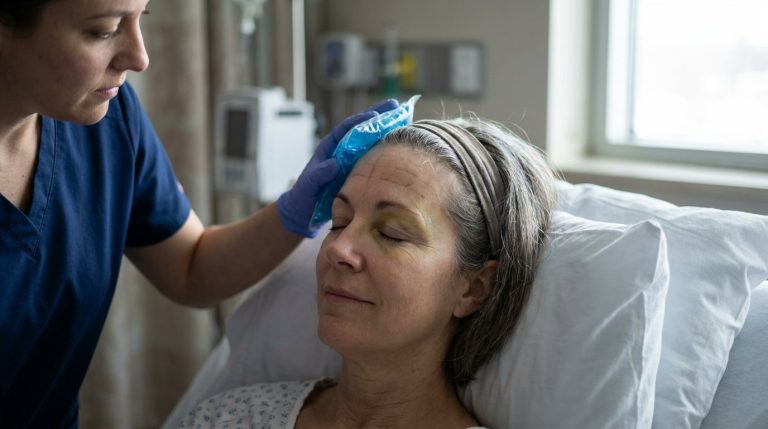
Stitches in this area are fine and are usually removed around five to seven days after surgery, or they dissolve. Bruising in the outer corner and upper cheek is common, and it often moves downwards before it fades.
⚠️ Plan your first few days around your eyes Arrange someone to help with transfers and errands for the first 48 hours, and do not plan any work calls, sightseeing or fine visual tasks in the first three to four days.
What drives the cost of almond eye surgery in Turkey
The price is set by the extent of the operation, the anaesthesia and hospital setting, the surgeon’s experience and what the package actually includes — which is why a personalised figure is only given after consultation.
Cost is the single most common question patients ask, and it is also the one where online figures mislead most. A quote for a simple outer-corner tightening under local anaesthesia and a quote for canthoplasty combined with upper and lower eyelid surgery under general anaesthesia describe two different operations, even though both may be marketed as almond eye surgery. We do not publish fixed figures for that reason: the responsible way to quote is after photographs, measurements and a review of your eye health.
When you compare offers, compare inclusions line by line rather than headline numbers. A package that looks higher may already contain the anaesthetist, the hospital stay, medication, follow-up visits and airport transfers, while a lower one may not. Our overview of what an all-inclusive surgery package in Turkey covers is a useful checklist before you commit.
It is also fair to say that price alone is a poor way to choose eyelid surgery. The eye area tolerates very little error, and revision work after over-aggressive corner surgery is harder than the original operation.
📋 Before and after photos Patients frequently ask to see results before booking. Ask specifically for cases where the same technique was used on a similar eye shape, photographed in the same lighting and at least six months after surgery — not week-two photos.
Recovery timeline and how long to stay in Turkey
Most patients look socially presentable around two weeks, but the final corner shape settles over three to six months, and a stay of roughly seven nights in Turkey is typical.
Swelling in the outer corner is asymmetric more often than not, and one side almost always calms down faster than the other. That asymmetry worries patients in week two more than anything else, so it helps to know in advance that it is usual. For a closer week-by-week account, including which changes deserve a phone call, see our almond eye surgery recovery timeline.

For travel planning, the useful marker is stitch removal and a final check with your surgeon before you fly. Flying itself is generally comfortable after that point, although cabin air is drying and you should take lubricating drops in your hand luggage.
If you are combining the procedure with other facial work, the stay lengthens and the swelling pattern changes. Our guide to blepharoplasty in Turkey covers the eyelid-specific side of that planning.
- ✓Sleep elevated: Two pillows or a wedge for the first week reduces morning puffiness noticeably.
- ✓No rubbing or pulling: Avoid rubbing the eyes, heavy eye makeup and tight goggles until cleared.
- ✓Protect from sun: Sunglasses and shade help the fine corner scar settle with less discolouration.
- ✓Keep the eyes lubricated: Drops or ointment as prescribed matter more than most patients expect in the first fortnight.
Risks, limits and the trade-offs worth knowing
Eyelid surgery is generally well tolerated, but it is not risk-free, and the eye area punishes over-correction. The NHS guidance on cosmetic procedures makes the general point plainly: any cosmetic operation carries risks, and you should be satisfied that your surgeon is properly qualified and registered before agreeing to it.
The specific risks in canthal and eyelid surgery include prolonged swelling, asymmetry between the two corners, visible scarring in the outer corner, temporary dry eye or irritation, a change in the shape of the eye opening that you did not want, and — less commonly — lower lid malposition where the lid sits lower or pulls away from the eye. Infection and bleeding are possible with any surgery.
Problems of that kind are usually correctable, but correction is its own operation. A 2017 paper in Aesthetic Surgery Journal examined repairing lower eyelid retraction without using an internal spacer graft in selected cases, which illustrates both points at once: there are established ways to fix lid position problems, and they require a surgeon comfortable with reconstructive eyelid technique, not only cosmetic technique.
The honest limits are worth stating too. An outer-corner lift is measured in a few millimetres. It will not narrow a wide-set eye, will not create a shape your bone structure does not support, and will not stop ageing — tissues continue to relax over the years, so results are long-lasting rather than permanent. Anyone promising a fixed, guaranteed shape is over-selling.
This article is for informational purposes only and does not constitute medical advice. Always consult a qualified surgeon for personalised guidance.
🚨 Contact your clinic urgently if You have sudden or increasing pain behind the eye, significant vision change, bleeding that does not stop, a rapidly swelling and hard eye socket, or fever with spreading redness. These need same-day assessment.
Choosing a surgeon and clinic for almond eye surgery
The skill gap between surgeons is wider in the eye area than almost anywhere else on the face, so this is where your research time belongs. Look for a surgeon whose routine work includes eyelids and canthal surgery — plastic surgeons with strong facial practice or oculoplastic surgeons — rather than someone who lists it as one procedure among fifty.
Ask direct questions and expect direct answers. Which technique are you planning for me, and why that one? How many millimetres of change is realistic on my anatomy? What happens if the two sides settle unevenly? Who sees me if there is a problem after I fly home, and is that follow-up written into the agreement? Vague answers at this stage tend to become vague aftercare later.
Practical organisation matters more than patients expect. Clear written scheduling, a named coordinator who answers quickly, a confirmed hospital or accredited clinic setting, an anaesthetist you will actually meet, and interpretation if you need it all reduce the stress of operating abroad. Two of the most common frustrations in medical travel are slow communication and last-minute changes to the plan, and both are avoidable with a clinic that documents everything.
Finally, be wary of the pressure to decide today for a discounted rate. Eyelid surgery deserves a consultation, a cooling-off period and a second opinion if you want one.
Specialist eyelid experience, in-person or detailed video consultation, six-month-plus result photos of similar anatomy, honest talk about limits, written quote with inclusions, accredited hospital setting, defined follow-up.
Quotes issued without photos or an eye history, promises of a specific celebrity look, one standard technique for every patient, no named surgeon before arrival, and pressure to pay immediately.
Frequently Asked Questions
References
- 📎"Dynamic Canthopexy" Drill Hole Canthal Repositioning — Aesthetic Surgery Journal, 2019
- 📎Achieving Natural Aesthetics in Lower-Lid Pretarsal Rolls Reconstruction: A Personalized Approach Based on Eye Shape — Aesthetic Plastic Surgery, 2026
- 📎Lower Eyelid Retraction Surgery Without Internal Spacer Graft — Aesthetic Surgery Journal, 2017
- 📎NHS — Cosmetic procedures
- 📎American Society of Plastic Surgeons — Cosmetic procedures
Related Articles

You Might Also Like



Related articles


Our specialists
 Clineca SpecialistErkan PinegözPlastic & Reconstructive Surgery
 Clineca SpecialistHakan AktaşPlastic & Reconstructive Surgery
 Clineca SpecialistOrkun UzuneyüpoğluPlastic & Reconstructive Surgery
 Clineca SpecialistSalim İskenderPlastic & Reconstructive Surgery
 Clineca SpecialistEngin SelamioğluPlastic & Reconstructive Surgery
 Clineca SpecialistCem AydınPlastic & Reconstructive Surgery
 Clineca SpecialistAlperen ÖnalEar, Nose & Throat (ENT)