

Have a question about Eyelid Surgery?
In this article
- What is canthopexy and what does it actually change?
- Who is a good candidate for canthopexy?
- When is canthopexy not enough or not the right choice?
- How is canthopexy different from canthoplasty?
- What happens during surgery and where are the scars?
- What is recovery like after canthopexy?
- What risks and warning signs should you take seriously?
- How long should you stay in Turkey and what should a quote include?
- How do you choose a safe clinic and set realistic expectations?
Canthopexy is a procedure that tightens and supports the outer corner of the lower eyelid to improve shape and stability rather than dramatically remove skin. Around the eyes, small changes can make a big visual difference, so it helps to understand where this operation works well, where it does not, and what recovery is really like before you make plans.
What is canthopexy and what does it actually change?
Canthopexy is a surgical tightening of the lateral canthal tendon area, which means the outer corner support of the eyelid. In practical terms, it is used to give the outer eye corner more support, reduce a slightly droopy or lax look, and help the lower lid sit in a better position against the eye. It is usually a support procedure, not a large reshaping procedure.
That distinction matters. Many patients hope canthopexy will create a dramatic almond-eye effect, erase all under-eye ageing, or replace lower eyelid surgery. Usually it does not do all of that by itself. Its main role is to improve support and modestly refine the outer eye contour. In some patients it is done alone, but very often it is combined with lower blepharoplasty or other periocular surgery to protect lid position and improve balance.
According to the American Society of Plastic Surgeons (ASPS), eyelid surgery is one of the most commonly performed facial cosmetic procedures, and safe planning depends heavily on matching the right technique to the right problem. That is especially true here, because eyelid tension, eye shape, skin quality and tear function all affect the result.
If you are still deciding whether your concern is truly a canthopexy issue, these related reads may help: what canthopexy means in plain language and whether droopy outer eye corners make you a candidate.
📋 A realistic outcome Canthopexy usually offers support and refinement, not a dramatic eye redesign.
Who is a good candidate for canthopexy?
The best candidates are people with mild to moderate lower eyelid laxity, a slightly downturned or unsupported outer corner, or those who need extra support during lower eyelid surgery. Some younger patients seek it for shape refinement. Others are older and have age-related loosening of the lower lid. In both groups, the key question is not age but anatomy.
A surgeon will usually assess how tightly the lower lid sits against the eye, whether the outer corner has dropped, how much skin excess is present, and whether dryness or watering already exists. The NHS notes that cosmetic eyelid surgery needs careful assessment because the eyelids protect the eye surface, and overly aggressive correction can cause functional problems. That is why a good consultation goes beyond photos and includes lid tone, blink function and eye comfort.
Canthopexy is often considered when a patient says the lower lids look tired, slightly saggy or pulled down at the outer edge, but the amount of excess skin is limited. It can also make sense when a surgeon wants to reduce the risk of lower lid malposition after blepharoplasty. A 2022 study in the Indian Journal of Ophthalmology described lateral canthal suspension techniques as useful for managing eyelid malposition and support problems, which reflects how central lid support is to good planning.
There are also patients who are not ideal candidates. If there is major skin redundancy, more significant lid droop, severe tendon laxity, previous scarring, thyroid eye disease, marked dry eye, or a need for stronger repositioning, another procedure may fit better. If the main concern is hollowness or dark circles rather than lid support, lower blepharoplasty, fat repositioning, fat transfer or sometimes no surgery at all may be more appropriate.
For patients comparing related options, canthopexy vs lower eyelid surgery can clarify whether support alone is enough for your goal.
Mild lid laxity, subtle outer-corner droop, or need for extra support during lower eyelid surgery.
Severe laxity, major skin excess, untreated dry eye, significant asymmetry, or expectations of a dramatic lift from a subtle support procedure.
Lower blepharoplasty, canthoplasty, fat repositioning, brow procedures, non-surgical treatment, or simple observation depending on the real cause of the concern.
When is canthopexy not enough or not the right choice?
This is one of the most important parts of the decision. Canthopexy has limits. It cannot reliably fix every droopy lower lid, remove all under-eye bags, or create a sharp, highly lifted eye shape in every face. If the support structures are too loose, a stronger operation such as canthoplasty may be needed. If the problem is mostly loose skin and fat bulging, lower eyelid blepharoplasty may be the more direct answer.
A 2020 review in the Indian Journal of Ophthalmology on lower eyelid blepharoplasty explained that different lower lid problems need different approaches, including skin removal, fat treatment and correction of lid laxity. That is useful because it shows there is no single eye-corner operation that fixes all lower eyelid ageing or shape concerns.
Sometimes the most honest answer is that surgery is not the best next step. If asymmetry is mild and not bothering you much in daily life, doing nothing may be reasonable. If the concern is largely skin quality, crepey texture, or very early ageing, non-surgical options such as skin resurfacing, careful filler in selected cases, or neuromodulators may help more than a tendon-tightening procedure. These do not replace surgery when real laxity exists, but they may fit patients who are not ready for an operation.
Contraindications and caution areas deserve attention too. Surgery may need to be postponed or avoided in people with uncontrolled eye surface disease, active infection, poor general health for elective surgery, unrealistic expectations, or smoking habits that increase healing risk. BAAPS emphasises that cosmetic surgery decisions should follow proper consultation, a cooling-off period and clear consent, not pressure or rushed travel planning.
If your goal is a more stylised lifted eye shape, you may also want to read about almond eye surgery recovery and red flags because the recovery discussion is often more relevant than the social-media look itself.
⚠️ A common mismatch Patients often ask for a dramatic shape change when their anatomy would only allow a subtle improvement with canthopexy.
How is canthopexy different from canthoplasty?
The names sound similar, but they are not the same operation. In simple terms, canthopexy usually tightens and reinforces the existing outer corner support without fully cutting and rebuilding that corner. Canthoplasty is generally a more invasive reshaping or reconstruction of the outer eyelid corner and tendon area.
That means canthopexy is often chosen for milder laxity or preventive support, while canthoplasty is more often used when the lid corner needs stronger repositioning. Recovery, swelling and the degree of change can all be greater with canthoplasty. The right choice depends on how loose the lid is, how much lift is needed and whether the aim is support or structural change.
ASPS patient information on cosmetic procedures consistently stresses that different operations address different anatomical problems, and this comparison is a good example of that principle. Choosing the less invasive option sounds attractive, but only if it is strong enough for your anatomy.
What happens during surgery and where are the scars?
The exact technique varies, but canthopexy is usually performed through a small incision hidden in a natural crease at the outer eyelid area or as part of another eyelid operation. The surgeon identifies the support structures at the outer corner and secures or tightens them to improve eyelid tension and position.
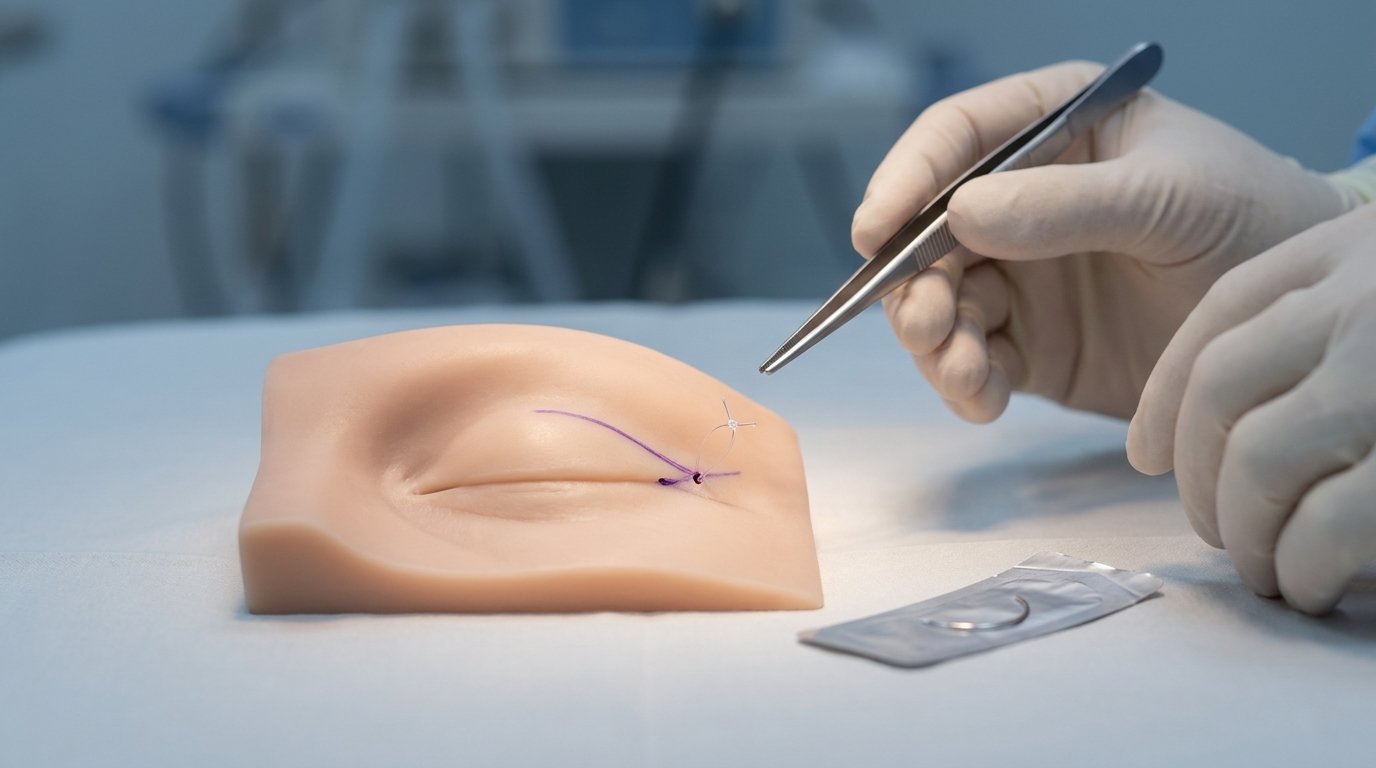
When it is combined with lower blepharoplasty, the plan may also include skin trimming, fat treatment or both. A 2008 Plastic and Reconstructive Surgery educational review on blepharoplasty highlighted how preoperative findings guide operative choices. That applies here too: the operation is tailored to whether the real issue is tendon laxity, fat prolapse, skin excess, or a mix.
Scars are usually small and placed where they tend to settle discreetly, but no surgeon should promise an invisible scar. In the early weeks, the outer corner area can look pink, firm or slightly puckered before softening. This is one reason final judgement should wait until tissues relax.
Some canthopexies are done under local anaesthetic with sedation, while others are performed under general anaesthetic, especially if combined with other facial procedures. The choice depends on the complexity of the case, patient comfort, and whether it is part of a broader surgical plan.
What is recovery like after canthopexy?
Recovery is often easier than patients fear, but the eye area is unforgiving visually. Even small amounts of swelling can make the result look uneven or sharper than intended in the first days. Bruising, tightness, mild watering, blurred vision from ointment, and tenderness near the outer corner are all common early on.
The first week is usually the most socially awkward period. Many people feel comfortable resting, using cold compresses if their surgeon advises them, sleeping with the head elevated, and limiting screens if the eyes feel dry or tired. Stitches, if non-dissolving, are often removed during the first follow-up period, depending on technique.

By the second week, much of the obvious bruising has usually improved, but the outer corner can still look tight or slightly overcorrected. That does not automatically mean the final result will stay that way. Eye-area surgery settles in stages. If canthopexy is combined with lower blepharoplasty, downtime is often closer to the recovery pattern discussed in lower eyelid blepharoplasty recovery in weeks 1 and 2.
A practical timeline looks like this:
📋 Patience matters Eye-corner tightness early on is common and often softens as swelling settles.
What risks and warning signs should you take seriously?
All surgery has risks, and around the eyes those risks deserve extra respect. Possible complications include asymmetry, under-correction, overcorrection, prolonged swelling, dry eye symptoms, discomfort, visible scarring, changes in eyelid position, infection and the need for revision. More serious eye-related complications are uncommon, but any procedure near the eyelids requires careful technique and prompt follow-up if something feels wrong.
The NHS advises patients considering cosmetic procedures to understand both common side effects and the possibility of complications before consenting. For canthopexy, one of the most important quality markers is whether the surgeon explains not only the aesthetic plan but also how they protect eye function.
Contact your surgical team urgently if you develop worsening pain rather than gradual improvement, increasing redness or discharge, fever, sudden vision changes, difficulty closing the eye, marked one-sided swelling, or significant lid malposition. Those are not symptoms to watch casually at home.
Choosing a well-qualified surgeon matters here more than chasing the fastest schedule. Look for specialist training in facial plastic surgery, oculoplastic surgery or plastic surgery relevant to eyelid procedures, and ask about experience with lower lid support techniques. EBOPRAS is one of the recognised European boards patients may see when checking specialist credentials, though board status alone should not replace a full consultation.
- ✓Ask who will perform the operation and who will see you after surgery.
- ✓Ask whether your anatomy suggests canthopexy alone or a stronger procedure.
- ✓Ask how dry eye, asymmetry and lid malposition risks are assessed before surgery.
- ✓Ask what follow-up is arranged if you are travelling internationally.
How long should you stay in Turkey and what should a quote include?
If you are travelling for canthopexy, plan around safety and follow-up rather than the shortest possible trip. Because this is eye-area surgery, you need enough time for an in-person assessment, the procedure itself, and early reviews while swelling and lid position are checked. If canthopexy is combined with blepharoplasty or another facial procedure, the stay is usually longer than for a very minor standalone treatment.
One of the questions patients ask most often is what affects the overall cost. For canthopexy, the main drivers are whether it is performed alone or combined with lower eyelid surgery, the surgeon’s experience, the setting where surgery takes place, the type of anaesthesia, the complexity of your anatomy, and what is bundled into the care pathway. A personalised price is normally confirmed after photo review and consultation.
A clear quote should explain not just the operation fee but also the practical items around it. This is especially important in health tourism, where communication speed, coordination and aftercare can shape the whole experience as much as the surgery itself. If you are unsure what package-style planning usually covers, this article on all-inclusive surgery packages in Turkey is useful background.
Ask how many in-person checks are planned before you travel back, and who you contact if you are worried once home.
How do you choose a safe clinic and set realistic expectations?
A safe decision usually feels slower than marketing suggests. Good clinics answer practical questions clearly, explain who is operating, outline the limits of canthopexy, and do not promise a dramatic transformation from a subtle support procedure. BAAPS and the NHS both emphasise informed consent, realistic expectations and understanding recovery before going ahead.
Before booking, ask for a proper consultation that reviews your goals, eye dryness, previous surgery, contact lens use, smoking, medications and any history of thyroid or ocular disease. A responsible surgeon should also tell you if your goals sound more like canthoplasty, lower blepharoplasty, brow lift or no surgery at all.
The best mindset is to treat canthopexy as a precision procedure. It can improve support and contour in the right patient, but it is not a universal solution for every tired or droopy-looking eye. Small operations around the eyelids still deserve careful surgeon choice, enough recovery time, and a plan for aftercare once you are home.
This article is for informational purposes only and does not constitute medical advice. Always consult a qualified surgeon for personalised guidance.
Clear consultation, honest limits, documented follow-up plan, and careful discussion of eye health as well as appearance.
Pressure to book quickly, vague answers about who operates, no discussion of dry eye or lid laxity, and promises of guaranteed symmetry or a dramatic fox-eye result.
Frequently Asked Questions
References
- 📎ASPS Cosmetic Procedures
- 📎NHS Cosmetic Procedures
- 📎BAAPS
- 📎EBOPRAS
- 📎Lower eyelid blepharoplasty: An overview — Indian Journal of Ophthalmology, 2020
- 📎MOC-PSSM CME article: Blepharoplasty — Plastic and Reconstructive Surgery, 2008
- 📎[Transnasal canthopexy] — Rev Stomatol Chir Maxillofac, 2010
- 📎Simplified technique for lateral canthal tendon canthopexy — Indian Journal of Ophthalmology, 2022
- 📎Precaruncular medial canthopexy — Archives of Facial Plastic Surgery, 2005

You Might Also Like



Related articles


Our specialists
 Clineca SpecialistErkan PinegözPlastic & Reconstructive Surgery
 Clineca SpecialistHakan AktaşPlastic & Reconstructive Surgery
 Clineca SpecialistOrkun UzuneyüpoğluPlastic & Reconstructive Surgery
 Clineca SpecialistSalim İskenderPlastic & Reconstructive Surgery
 Clineca SpecialistEngin SelamioğluPlastic & Reconstructive Surgery
 Clineca SpecialistCem AydınPlastic & Reconstructive Surgery
 Clineca SpecialistAlperen ÖnalEar, Nose & Throat (ENT)