
An all-inclusive package usually means your surgery, your anaesthesia, your hospital stay, your hotel nights and your airport transfers are quoted as one figure. It rarely means everything a full treatment involves. The gap between those two sentences is where most unpleasant surprises live, so this page goes through what is normally inside a Turkish package, what sits outside it, and the questions that make the difference clear before you pay anything.
What does “all-inclusive” usually cover?
Packages differ between clinics, but most quotes built for international patients are assembled from the same components. When a clinic in Istanbul says all-inclusive, you can generally expect the following to be inside the figure.
- •The operation itself — the surgeon’s fee, the operating theatre, and the surgical team.
- •Anaesthesia and the anaesthetist — including the pre-operative assessment that decides whether you are fit for a general anaesthetic.
- •Pre-operative tests — bloods, and where relevant an ECG or chest imaging, usually done the day before surgery.
- •The hospital or clinic stay — one night is typical for many procedures, longer for larger body work.
- •Accommodation — a set number of hotel nights, usually matched to the recommended minimum stay.
- •Airport and hospital transfers — arrival, departure, and the trips to your follow-up appointments.
- •First-stage supplies — dressings, and where the procedure requires it, a compression garment, nasal splints or a support bra.
- •An interpreter or patient coordinator — the person who translates during consultations and stays reachable during your stay.
- •In-country follow-up — the checks that happen before you fly home.
Two components on that list deserve attention, because they are the ones patients tend to skim. The first is the pre-operative assessment: it is not a formality, and a clinic that treats it as one is telling you something about how it handles risk. The second is in-country follow-up, because the number of checks before departure is a better signal of how a clinic works than the number of hotel nights it throws in.
It is also worth pinning down what “hospital stay” means in your quote. One overnight stay is typical for many procedures, and for larger body work it can be two. What varies is where that night is spent — a full hospital with an intensive care unit on site is not the same environment as an office-based clinic with a day-surgery room, even when the operation is identical. If the quote says only “1 night included”, ask for the name of the facility and look it up. You are allowed to ask this before you pay, and the answer should arrive without friction.
What is almost never included?
These items are usually outside the package even when the word “all-inclusive” is used. None of them is a red flag on its own — the red flag is a quote that does not say either way.
- •Flights. Almost never included, and worth booking with flexible dates, because departure can move if your surgeon wants an extra check.
- •Extra hotel nights beyond the quoted number, whether the reason is medical or personal.
- •A travel companion’s costs — sometimes the room is shared at no extra charge, sometimes it is a separate line. Ask, don’t assume.
- •Long-term medication beyond the initial prescriptions, and replacement garments if the first one no longer fits as swelling settles.
- •Treatment for a complication that begins after you land at home. This is the single most important exclusion on the list, and the one this page returns to below.
- •A revision procedure, unless the clinic states its revision terms in writing.
- •Anything added after you arrive. If a second procedure is suggested during your in-person consultation, it is a new decision with a new price and, ideally, a night to sleep on it.
How does the consultation work before you book?
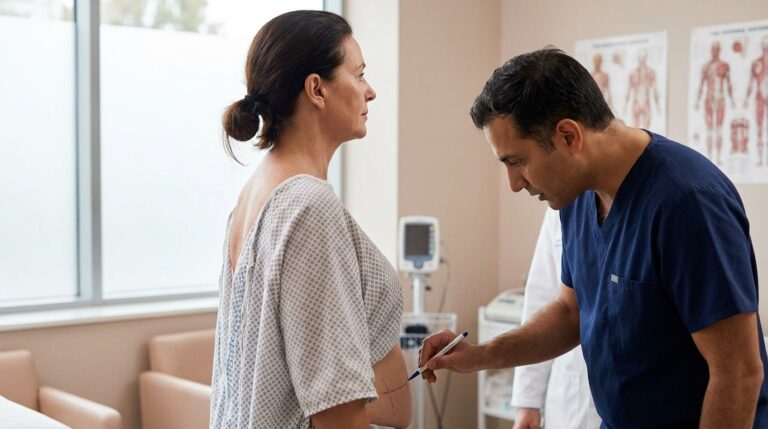
The sequence is fairly standard. You send photographs and a medical history, a surgeon reviews them, and you have a remote consultation — video or written — that produces a provisional plan and a quote. Nothing is final at this stage, and it should not be presented as final, because the plan is confirmed in person the day before surgery, when the surgeon can examine you.
Three things are worth insisting on at the remote stage. Ask which surgeon reviewed your photographs, by name, and whether that named surgeon is the one who will operate. Ask what happens if the in-person examination changes the plan — a reputable clinic will tell you the quote can move in both directions, and that you can decline. And ask for the plan in writing, including the technique proposed, so that you are comparing like with like when you look at another clinic.
A free remote consultation is normal and is not, by itself, a warning sign; it is how the whole international market works. What matters is whether the free consultation ends in a clinical opinion or in a countdown timer on a discount.
What you send shapes what you get back. For facial surgery that usually means photographs from the front, both profiles and both three-quarter views, taken in daylight, without makeup and without a smile unless you have been asked for one. For body procedures it means the area from the front, back and sides, standing relaxed rather than braced. Alongside the photographs, a surgeon needs your height and weight, any previous operations in that area, your regular medications, whether you smoke, and any bleeding or clotting problem in your family. Held-back detail here is not a small thing — it is the detail that changes whether a general anaesthetic is safe for you, and it will come out at the pre-operative assessment anyway, at a point where you have already flown.
How long do you need to stay in Turkey?
This is the question that most often breaks a travel plan, because patients book flights around the operation date rather than around the follow-up. The stay exists for the checks after surgery, not for the surgery itself. The ranges below are what clinics commonly ask international patients to plan for; your own surgeon’s instruction replaces them.
| Procedure | Commonly planned stay | What the extra days are for |
|---|---|---|
| Rhinoplasty / tip surgery | 7-10 days | Splint or packing removal and the first breathing check |
| Eyelid surgery | 7 days | Suture removal and early swelling review |
| Breast surgery | 7-10 days | Drain removal where used, dressing change, garment fitting |
| Tummy tuck | 10-14 days | Drains, wound review, and clearance to sit through a flight |
| BBL / fat transfer | 10-14 days | Positioning advice and a plan for the journey home |
| Gynecomastia | 7 days | Dressing change and compression review |
| Dental work (crowns, veneers) | 5-7 days, sometimes two visits | Preparation, laboratory time, fitting and adjustment |
Two practical points. Flying too early is not usually a matter of pain but of pressure, position and clot risk, which is why the departure date belongs to your surgeon rather than to your airline. And if your package includes a fixed number of nights, ask before booking what happens to the cost if your surgeon asks you to stay two days longer.
Who looks after you once you fly home?
Every serious plan has an answer to this, and it is the part of the package that is hardest to compare between clinics because it is rarely written down. Ask for it in writing anyway. A workable answer usually contains four things: a named person you can reach, a channel that is monitored rather than a general inbox, a schedule of remote check-ins, and a written discharge summary you can hand to a clinician at home.

That last item matters more than it sounds. If you develop an infection three weeks after surgery, the doctor treating you at home will want to know what was done, which implant or material was used, which antibiotics you were given and what the surgeon expected your recovery to look like. Without that summary, they are working blind. With it, most early problems are managed locally without drama.
Also establish who pays for what in that scenario. Local treatment for a complication is almost always yours to arrange and fund; what the clinic owes you is information, availability, and a clear position on revision. Any clinic that becomes vague at exactly this question has answered it.
The first days at home are also when you should know what is worth a message and what is worth a hospital. Ordinary healing is uncomfortable, asymmetric and slower than you expected, and it improves week by week. What does not belong to ordinary healing is a fever, spreading redness or heat around an incision, discharge with an odour, pain that increases rather than eases after the first few days, calf pain or swelling in one leg, chest pain or breathlessness. Those are reasons to seek urgent local medical care first and message the clinic second — not the other way round. Travel makes this advice more important, not less, because long flights and reduced movement are exactly the conditions clot risk likes.
Have a question about an All-Inclusive Package?
What happens if you need a revision?
Revision policies vary widely, and the honest position is that a revision is a possibility in any surgery, anywhere, performed by anyone. What separates clinics is whether they say so before you book. Ask three questions: under what circumstances a revision is offered, what the time limit is, and what remains chargeable — because even where the surgeon’s fee is waived, the theatre, anaesthesia, hotel and flights usually are not.
Ask when, too. Most revisions are not considered until tissues have settled, which for nasal surgery generally means around a year, and for body work several months. A clinic that offers to revise something at six weeks is not being generous; it is being premature.
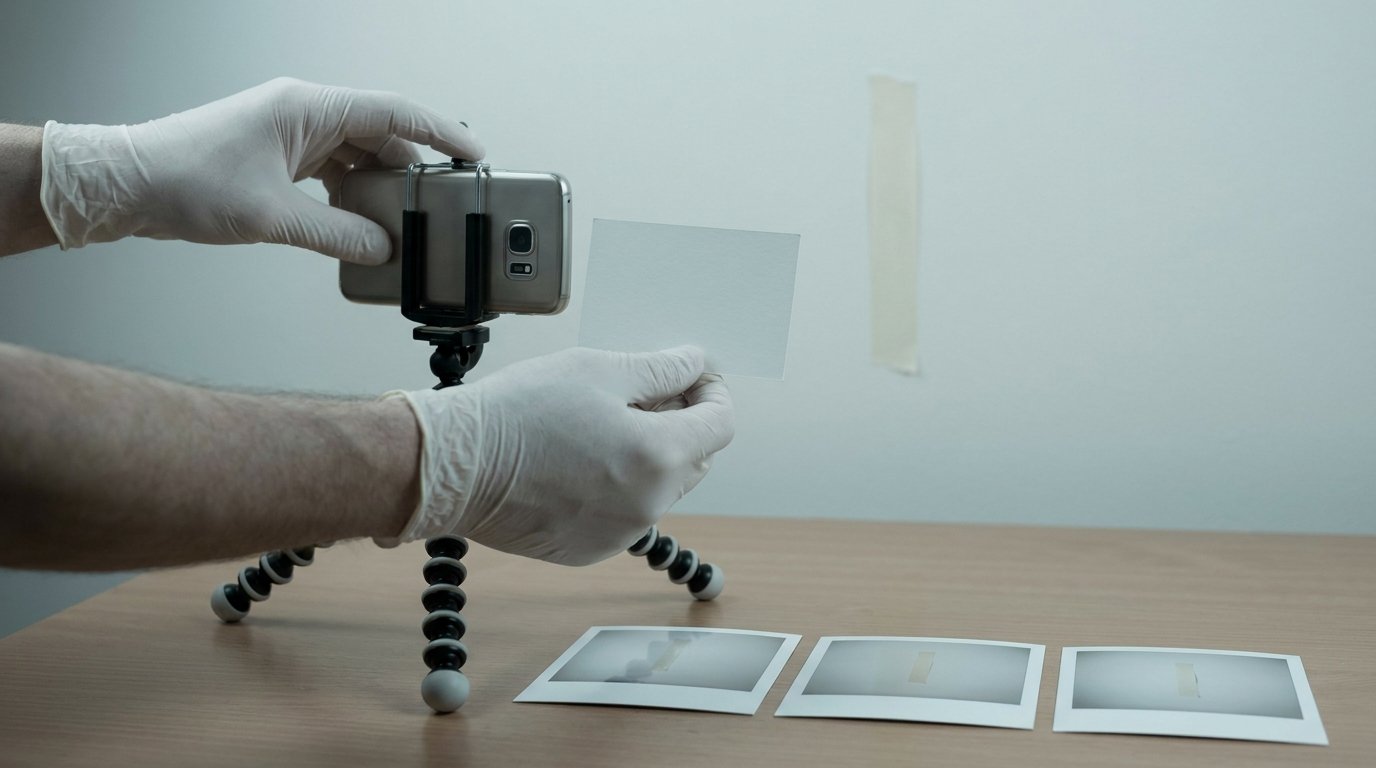
In the meantime, document. Photograph the area at fixed intervals in the same light, from the same distance and the same angles, and date the files. Write down what concerns you and when it started. If a revision conversation does happen later, this record is what turns “it looks wrong to me” into something a surgeon can assess — and if the concern turns out to be swelling that was still settling, the same record is what shows you that, month by month, better than memory does.
What makes one package cost more than another?
Comparing two quotes line by line is more useful than comparing their totals, because the same word can describe very different things. The variables that genuinely move a price are these: whether the operation is performed in a full hospital or an office-based clinic; the seniority of the surgeon and whether the named surgeon operates; the length of the surgery and the type of anaesthesia; how many nights of hospital and hotel are included; whether the technique proposed is more involved — ethnic or revision rhinoplasty against a primary case, for instance, or fat transfer combined with liposuction of several areas; and how much aftercare and how many follow-ups sit inside the figure.
Read a cheaper quote as a question rather than a bargain. Which of the variables above was reduced to get there? Sometimes the answer is reasonable — a shorter stay because the procedure is minor. Sometimes it is the hospital, the anaesthetist, or the identity of the surgeon, and those are not line items worth saving on.
Deposits deserve their own conversation. Find out how much is required to hold a date, whether it is refundable, and what happens to it if the pre-operative assessment finds you are not fit for surgery — a scenario that has nothing to do with changing your mind and should not be treated as though it does. Pay by a method that leaves a trace and gives you some recourse, ask for a receipt that names the clinic rather than an individual, and be wary of any pressure to transfer a larger sum quickly to secure a price. A surgical date is not a flash sale, and a clinic confident in its own work does not need to sell it like one.
Which questions should you ask before paying a deposit?
Print this list and use it on every clinic you speak to, including us. The answers, not the brochure, are the comparison.
- •Which surgeon will operate, and can I see their qualifications and board membership?
- •Is the surgery in a hospital or a clinic, and what is the plan if I need intensive care?
- •Exactly how many hotel nights and follow-up appointments are included?
- •What is not included? Ask for the exclusions in writing.
- •Who do I contact after I fly home, and how quickly do they reply?
- •Will I get a written discharge summary and a list of materials used?
- •What are the revision terms, and what stays chargeable?
- •What happens to the price if my surgeon asks me to stay longer?
- •Is the deposit refundable, and under what conditions?
A clinic that answers all nine in writing without hedging has told you most of what you need to know. So has one that will not.
Frequently Asked Questions
References
- 📎American Society of Plastic Surgeons — patient safety guidance on cosmetic surgery abroad
- 📎ISAPS — Global Survey on aesthetic procedures (cross-border care)
- 📎EBOPRAS — board certification and how to verify a European plastic surgeon
- 📎PubMed — peer-reviewed literature on complications following cosmetic surgery tourism

You Might Also Like



Related articles
Our specialists
 Clineca SpecialistErkan PinegözPlastic & Reconstructive Surgery
 Clineca SpecialistHakan AktaşPlastic & Reconstructive Surgery
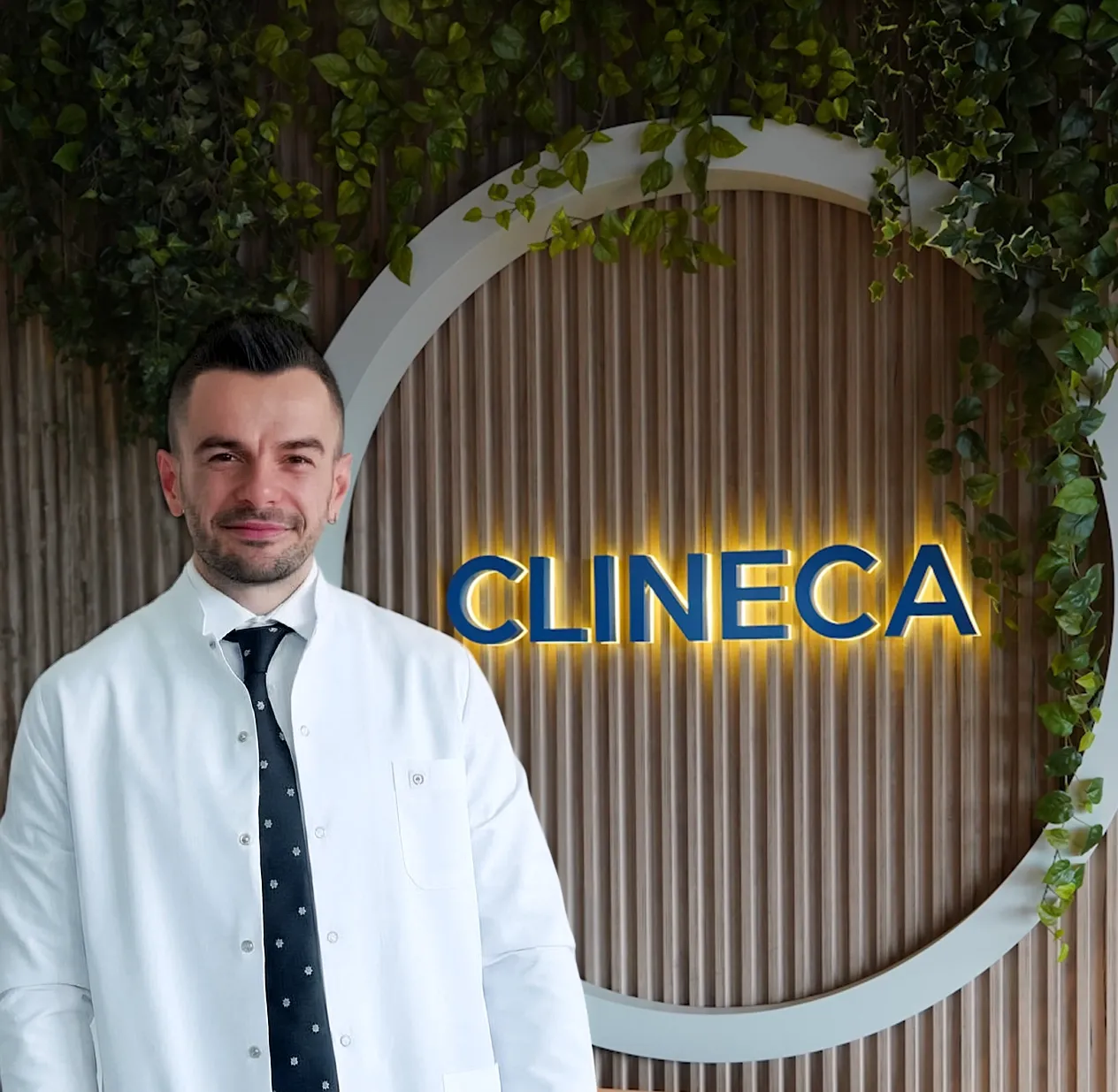 Clineca SpecialistOrkun UzuneyüpoğluPlastic & Reconstructive Surgery
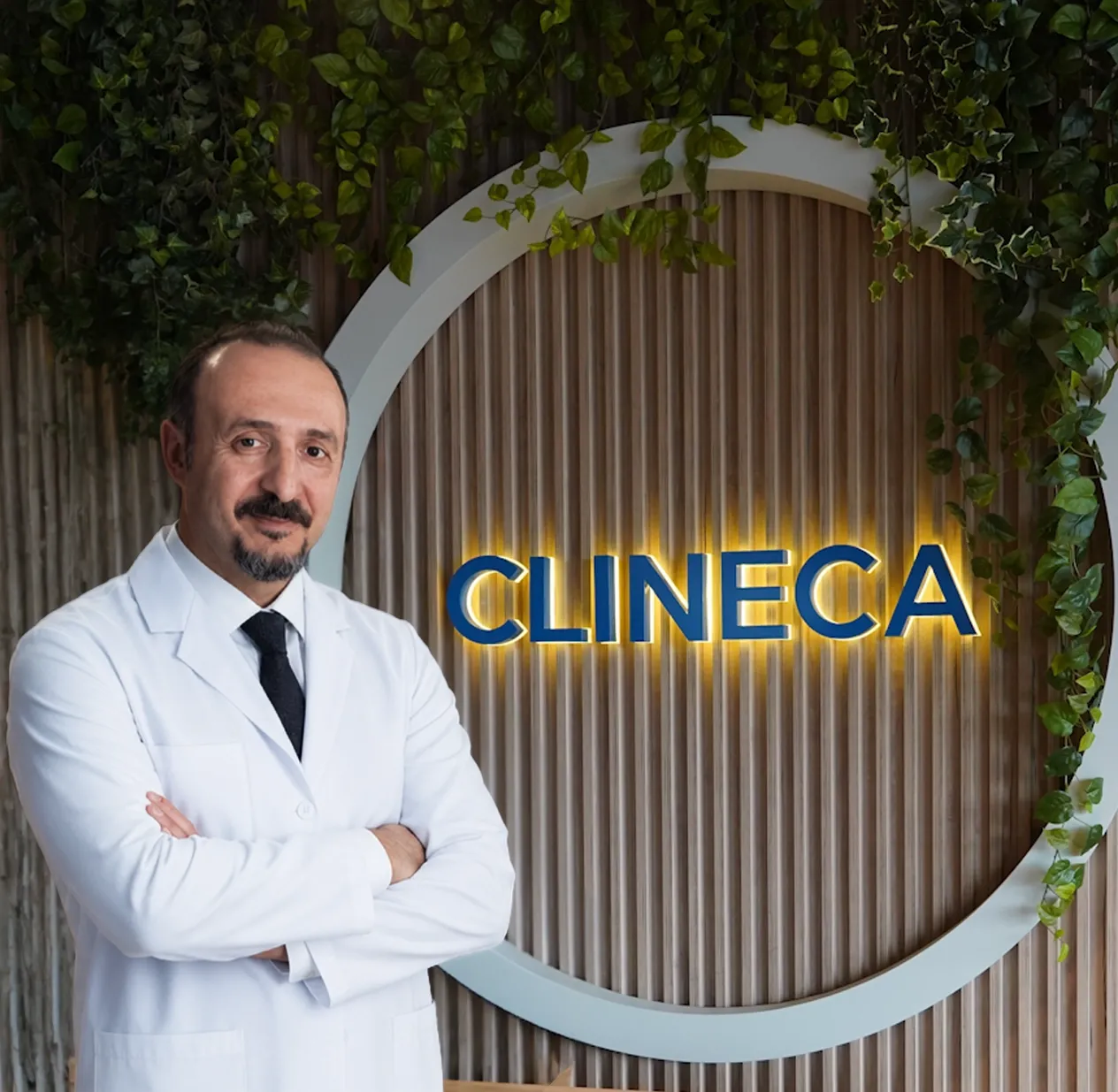 Clineca SpecialistSalim İskenderPlastic & Reconstructive Surgery
 Clineca SpecialistEngin SelamioğluPlastic & Reconstructive Surgery
 Clineca SpecialistCem AydınPlastic & Reconstructive Surgery
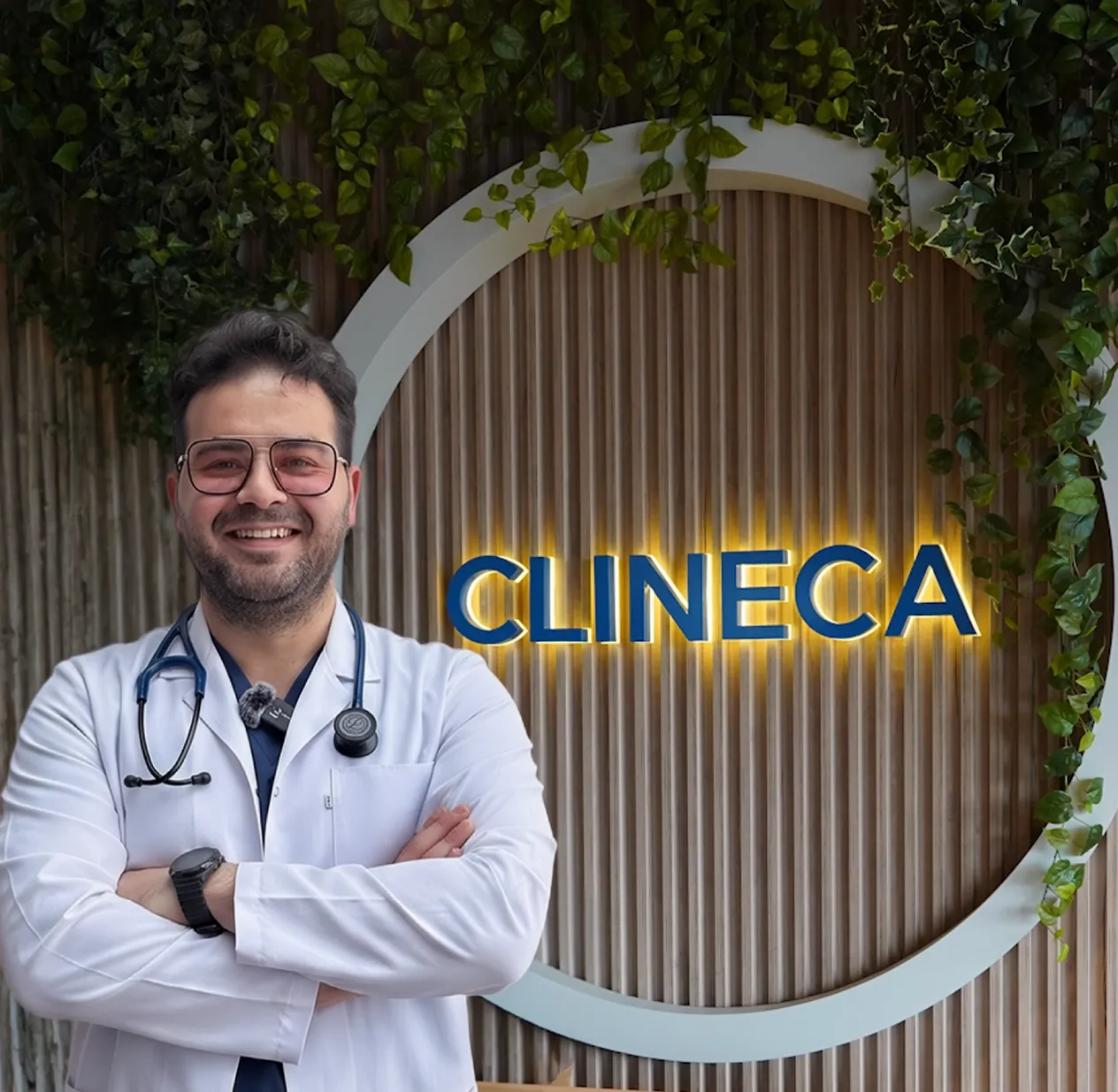 Clineca SpecialistAlperen ÖnalEar, Nose & Throat (ENT)