Have a question about Breast Fat Injection?
In this article
- Who is usually a good candidate after weight loss?
- What can make you a poor candidate or push the plan toward a lift or implants?
- How do surgeons assess candidacy safely after weight loss?
- What results are realistic after weight loss?
- What is recovery like and how long should you stay in Turkey?
- What affects the cost if no fixed price can be quoted?
- How can you choose a safer clinic and surgeon for this decision?
Am i a candidate for breast fat injection after weight loss? Possibly, if your weight has been stable, you have enough spare fat to harvest, your breast skin can still support a modest volume increase, and your screening is up to date. The main caveat is that fat transfer is not the best fit for everyone after major weight loss, because loose skin, low donor fat, and unpredictable fat retention can make a lift or implants more suitable.
Who is usually a good candidate after weight loss?
Breast fat injection, also called fat transfer or fat grafting to the breast, uses your own fat taken from another area such as the abdomen, flanks, thighs, or back. After weight loss, it can work well for women who mainly want to restore softness and upper-pole fullness rather than make a dramatic jump in cup size.
The strongest candidates usually share a few traits. Their weight has been stable for several months, they are close to a weight they feel they can maintain, and they still have enough donor fat for liposuction. They also tend to have mild or moderate breast deflation rather than a lot of empty skin and low nipple position.
That last point matters. If weight loss has left you with marked sagging, fat alone may not lift the breast. In that situation, a surgeon may discuss a breast lift with or without fat transfer, because shape and skin support often matter more than volume.
The British Association of Aesthetic Plastic Surgeons (BAAPS) notes that results from fat transfer can vary because some of the transferred fat is reabsorbed by the body. That is one reason surgeons assess candidacy carefully and set conservative expectations from the start. In published plastic-surgery literature, long-term fat survival is variable rather than fixed, and it depends on technique, blood supply, recipient tissue quality, and patient factors such as smoking and future weight change.
Your consultation should focus less on “Can fat be put there?” and more on “Will it give the shape I want, in a reliable way, on my frame after weight loss?” That is the real candidacy question.
📋 Best use after weight loss Breast fat transfer is usually better for subtle to moderate restoration than for a large size change.
- ✓Your weight has been stable for several months.
- ✓You have enough donor fat in areas such as the abdomen, flanks, thighs, or back.
- ✓You want a natural feel and a modest increase rather than a major enlargement.
- ✓Your breast skin still has reasonable elasticity and support.
- ✓You do not smoke, or you can stop well before and after surgery.
- ✓You understand that some transferred fat will not survive.
After weight loss, the best candidates for breast fat injection usually want a modest size increase, have stable weight, enough donor fat, and mild to moderate volume loss rather than severe droop. A surgeon also needs to check breast skin quality, general health, smoking status, and whether breast imaging is needed before surgery.
What can make you a poor candidate or push the plan toward a lift or implants?
After major weight loss, the biggest reason fat transfer disappoints is not usually safety. It is mismatch. The breast may need skin tightening more than extra filler.
If the nipple sits low, the skin envelope is stretched, or the breast looks empty and hangs, adding fat alone can make the lower part fuller without truly lifting it. Many women in this situation do better with a lift first, or a lift combined with fat transfer for softness at the top of the breast. Others prefer breast augmentation if they want a larger, more predictable volume increase than fat alone can usually provide.
Very low body fat can also be a problem. This surprises people after successful weight loss. You may feel you still have “stubborn fat,” but there may not be enough usable donor fat to safely harvest the amount needed for breast shaping. A surgeon has to think about both sides of the plan: what can be removed, and what can realistically survive once transferred.
Smoking is another major issue. The NHS explains that smoking increases the risk of surgical complications and delays healing. For fat grafting, blood supply matters because transferred fat needs to establish circulation in its new location. Poor circulation makes retention less reliable and raises risk.
Poorly controlled diabetes, active breast infection, untreated clotting problems, or a history that needs more breast investigation can also delay or change the plan. None of these points automatically mean “never,” but they do mean a proper medical work-up comes first.
Very little donor fat, major sagging, unstable weight, active smoking, or wanting a large size increase usually make fat transfer alone less suitable.
Depending on your anatomy, a breast lift, implants, or a combined lift plus fat transfer may create a more balanced result after weight loss.
You may be a weaker candidate if you have very little donor fat, marked sagging, unstable weight, heavy smoking, poorly controlled medical conditions, or expectations of a large size increase. In these cases, a lift, implants, or a combined plan may give a more predictable breast shape after weight loss.
How do surgeons assess candidacy safely after weight loss?
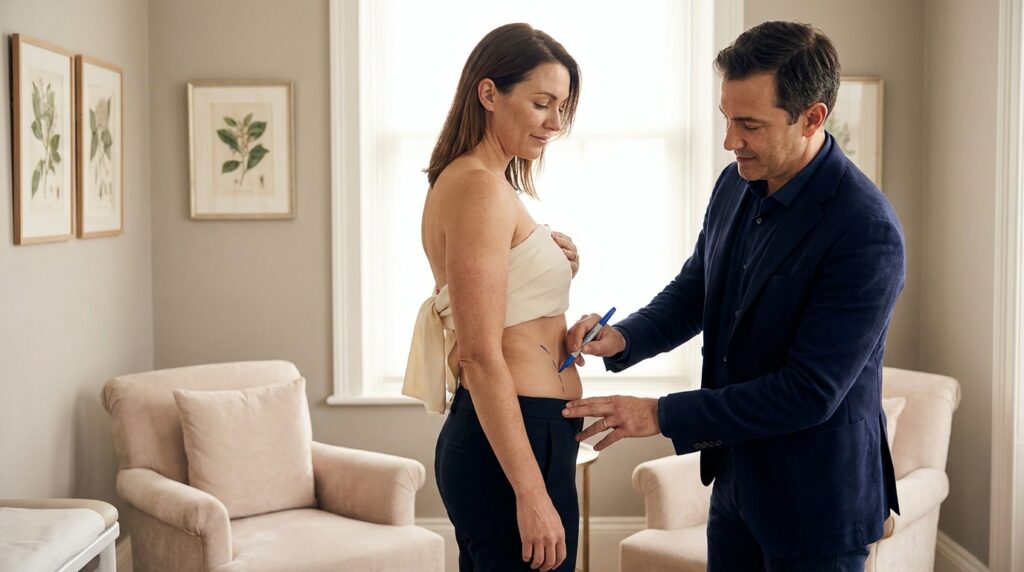
A careful consultation should be specific. The surgeon will ask how much weight you lost, how long ago, and whether your weight is still moving. They will examine breast volume, breast skin, asymmetry, stretch, and how low the nipple sits compared with the breast crease.
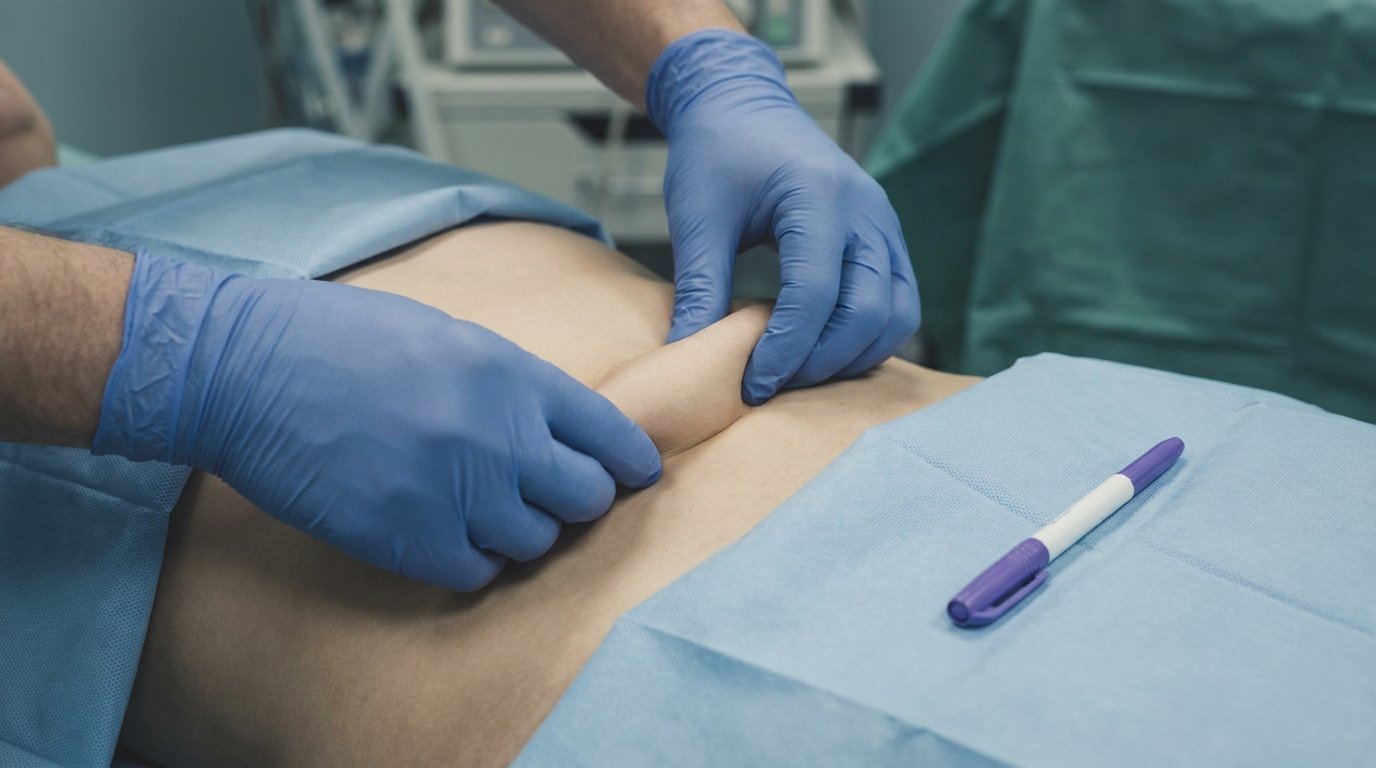
They also need to assess donor areas honestly. Good donor fat is not just about quantity. It is also about whether removing it will leave a smooth contour and whether the harvested fat quality is likely to be useful.
Screening and imaging deserve more attention than many online guides give them. The American Society of Plastic Surgeons (ASPS) advises that patients should follow normal age-appropriate breast screening and may need preoperative imaging based on age, risk factors, symptoms, or surgeon and radiologist preference. In practice, this can mean a mammogram, ultrasound, or both before surgery if there is any concern, if you are due screening, or if there is a strong family history.
That does not mean fat transfer is unsafe for the breast. Modern evidence supports that breast imaging specialists can usually distinguish typical post-fat-grafting changes from suspicious findings. Still, this is exactly why good baseline assessment matters. If you have a lump, nipple discharge, unexplained pain, recent abnormal imaging, or a significant family history, that should be reviewed properly before any cosmetic plan moves forward.
A surgeon should also explain that fat retention is variable. Some of the grafted fat survives long term, some does not, and small oil cysts or calcifications can occur. These are recognised changes in the breast after fat grafting and should be part of informed consent, not a surprise after surgery.
⚠️ Do not skip breast checks If you are due routine breast screening, have symptoms, or have a strong family history, imaging may be needed before surgery.
A proper assessment after weight loss includes your weight history, breast shape, skin quality, nipple position, donor-fat areas, smoking status, medical history, and breast screening needs. Imaging may be advised before surgery depending on your age, symptoms, family history, and local screening guidance, because baseline breast health matters as much as cosmetic planning.
What results are realistic after weight loss?
This is where expectations need to be practical. Fat transfer is often loved for the natural feel and the fact that it uses your own tissue. It can improve cleavage fullness, smooth mild asymmetry, and make the breast look less deflated after weight loss.
What it usually cannot do well on its own is create a dramatic size jump or correct significant sagging. If the breast envelope is loose, the extra fat still has to sit inside that loose envelope. That is why some patients feel fuller after surgery but still not truly “lifted.”
Retention is the part patients find most frustrating because it is not perfectly predictable. Peer-reviewed plastic-surgery studies consistently show variable volume retention over time rather than one guaranteed figure. Surgeons often slightly overcorrect within safe limits, but there are limits. Overfilling can raise the risk of fat necrosis, which is damaged fat that may feel firm or lumpy.
If your goal is refinement, softness, and subtle restoration, breast fat injection may suit you very well. If your goal is obvious enlargement in one operation, it may not be the most efficient path.
The most realistic result after weight loss is a softer, fuller breast with modest size improvement, not a major enlargement or a lift effect. Some transferred fat is reabsorbed, so surgeons often plan conservatively. If you want a larger change, repeat fat transfer or another procedure may be discussed.
What is recovery like and how long should you stay in Turkey?
Most people feel the liposuction areas more than the breasts. The chest is often tight and swollen, but the abdomen, flanks, or thighs can be more tender and bruised. Walking starts early, yet hard exercise and pressure on the breasts usually need to wait.
The NHS advises that after cosmetic breast surgery, you may need time off work and should avoid heavy lifting until your surgeon says it is safe. For fat transfer, recovery also depends on how extensive the liposuction was. A small harvest is different from contouring several areas.
For travel, there is no one-rule-fits-all answer, but early flying straight after surgery is rarely ideal. You need enough time for the first checks, drain-free monitoring if relevant, pain control, and early wound review. Clinics commonly advise staying in Turkey for several days to around a week or a little more, depending on the treatment plan and your recovery. If you have had larger-volume liposuction, feel faint easily, or are travelling long haul, a longer stay may be more sensible.
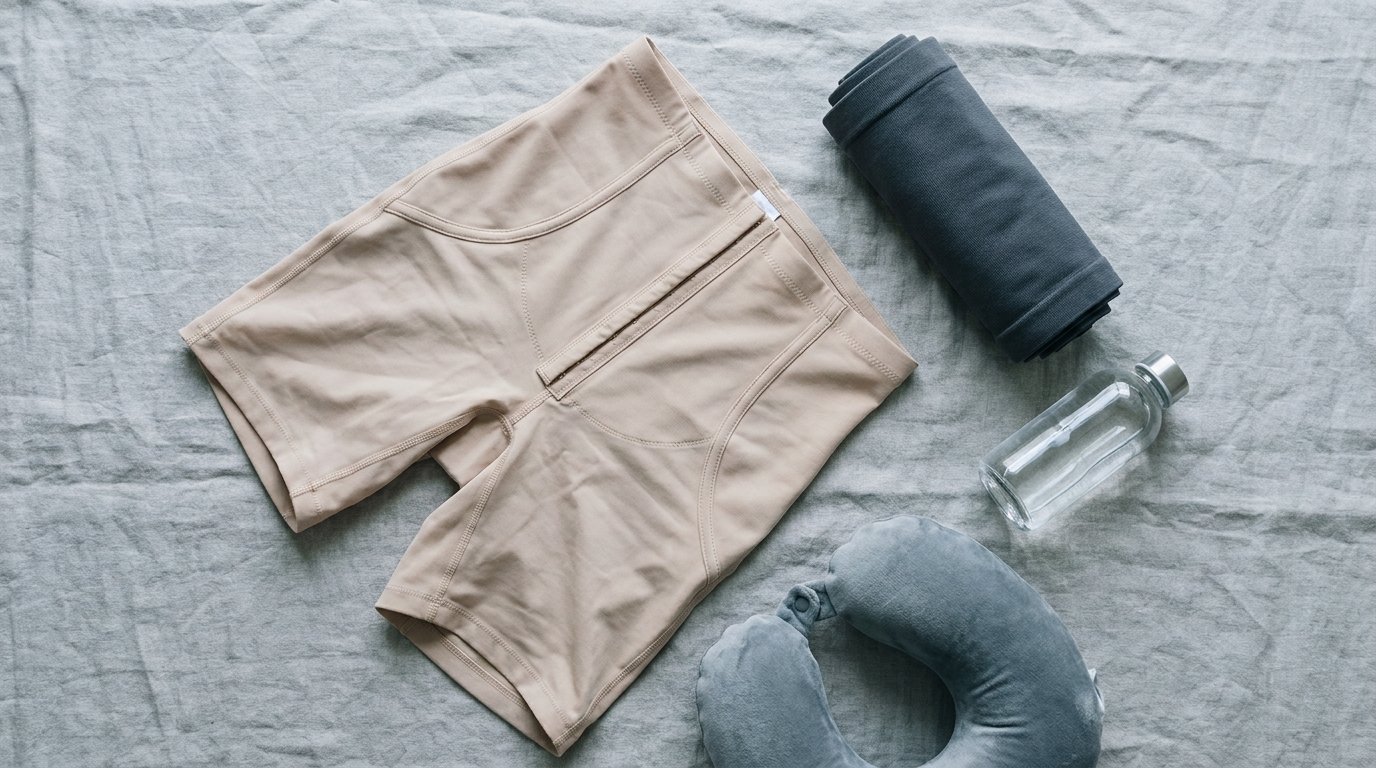
The most important point is not the flight itself but your overall condition before the journey. You should be mobile, eating and drinking normally, passing urine normally, and managing pain well. Compression garments for donor areas may still be needed while travelling, and you should follow your surgical team’s advice on walking during the journey and hydration.
A simple timeline to expect
The first week is about swelling, rest, short walks, and follow-up. In weeks two to four, bruising settles and daily life feels easier, although the body still feels tight and puffy. Final shape takes longer. Swelling fades gradually, and the transferred fat that survives becomes clearer over the following months.
📋 Travel planning For treatment abroad, build in enough time for at least one in-person postoperative review before you fly home.
Recovery is usually easier than major breast reshaping surgery, but it is still real surgery. Expect soreness in both the breast and donor areas, swelling and bruising for a few weeks, and activity limits early on. For medical travel, many patients should plan to stay around a week or longer, depending on review needs and how much liposuction was done.
What affects the cost if no fixed price can be quoted?
There is no useful single price for this topic, because candidacy changes the treatment plan. A straightforward fat transfer for mild volume loss is a different operation from fat transfer combined with a lift after major weight loss.
The main cost drivers are the complexity of the liposuction, the number of areas treated, how long the surgery is expected to take, the hospital or surgical facility, the anaesthesia plan, and whether any extra tests or imaging are needed before surgery. Recovery support, garments, medication, and follow-up arrangements also matter.
If you are comparing options, focus on what is included and why the plan differs. A cheaper quote may reflect less liposuction, fewer reviews, or a different surgical approach. The more useful question is whether the plan fits your anatomy and goals.
If you want a personalised assessment, you can request a consultation. The final quote is normally confirmed after your medical review and treatment planning.
The price is individual because the surgery is planned around your body after weight loss. Cost depends on how much liposuction is needed, how many donor areas are used, whether a breast lift is recommended, anaesthesia, hospital stay, imaging, compression garments, and follow-up. A personalised quote is normally confirmed after consultation.
How can you choose a safer clinic and surgeon for this decision?
This choice matters more than the headline procedure name. A good surgeon should be comfortable saying when fat transfer alone is not enough, because after weight loss the real challenge is often shape, not just volume.
Ask who will assess you, where the operation takes place, what kind of follow-up is included, and how aftercare works once you return home. If you are travelling, it is reasonable to ask what happens if you develop a lump, delayed healing, or asymmetry months later.
You should also expect a straightforward conversation about screening, breast history, smoking, medication, previous surgery, and the chance that you may need a staged plan. If the consultation feels rushed or avoids trade-offs, that is not a good sign.
You can review the medical team on the clinic’s doctors page and general background on the about page, but the real test is the quality of the surgical assessment, not the sales process.
The surgeon explains when a lift may be better, discusses imaging and fat-loss variability, and gives a clear travel and aftercare plan.
Promises of a large guaranteed increase, no discussion of screening, or pressure to book quickly despite recent weight changes.
Choose a surgeon with specific experience in breast surgery after weight loss, clear discussion of alternatives, proper consent, and a plan for screening and follow-up. Safer care is less about marketing and more about honest case selection, accredited facilities, and what happens if your recovery does not follow the ideal path.
Frequently Asked Questions
References
- 📎Breast enlargement with fat transfer
- 📎Cosmetic procedures – Breast enlargement
- 📎Breast Fat Grafting
Related Articles



You Might Also Like


Related articles

Our specialists
 Clineca SpecialistErkan PinegözPlastic & Reconstructive Surgery
 Clineca SpecialistHakan AktaşPlastic & Reconstructive Surgery
 Clineca SpecialistOrkun UzuneyüpoğluPlastic & Reconstructive Surgery
 Clineca SpecialistSalim İskenderPlastic & Reconstructive Surgery
 Clineca SpecialistEngin SelamioğluPlastic & Reconstructive Surgery
 Clineca SpecialistCem AydınPlastic & Reconstructive Surgery
 Clineca SpecialistAlperen ÖnalEar, Nose & Throat (ENT)