Have a question about Rhinoplasty?
In this article
One of the most common worries before nose surgery is simple and very understandable: where are the scars after open rhinoplasty and how visible are they? The concern is not vanity alone. A nose sits in the centre of the face, so even a small mark can feel like a big decision when you are choosing between open and closed techniques.
Where is the scar after open rhinoplasty?
In open rhinoplasty, the visible skin incision is usually placed across the columella, the narrow strip of skin between the nostrils. The rest of the cuts are typically hidden inside the nose. That means the scar patients are usually asking about is not along the bridge, not across the tip, and not running down the side of the nose. It sits underneath, in the central area between the nostrils.
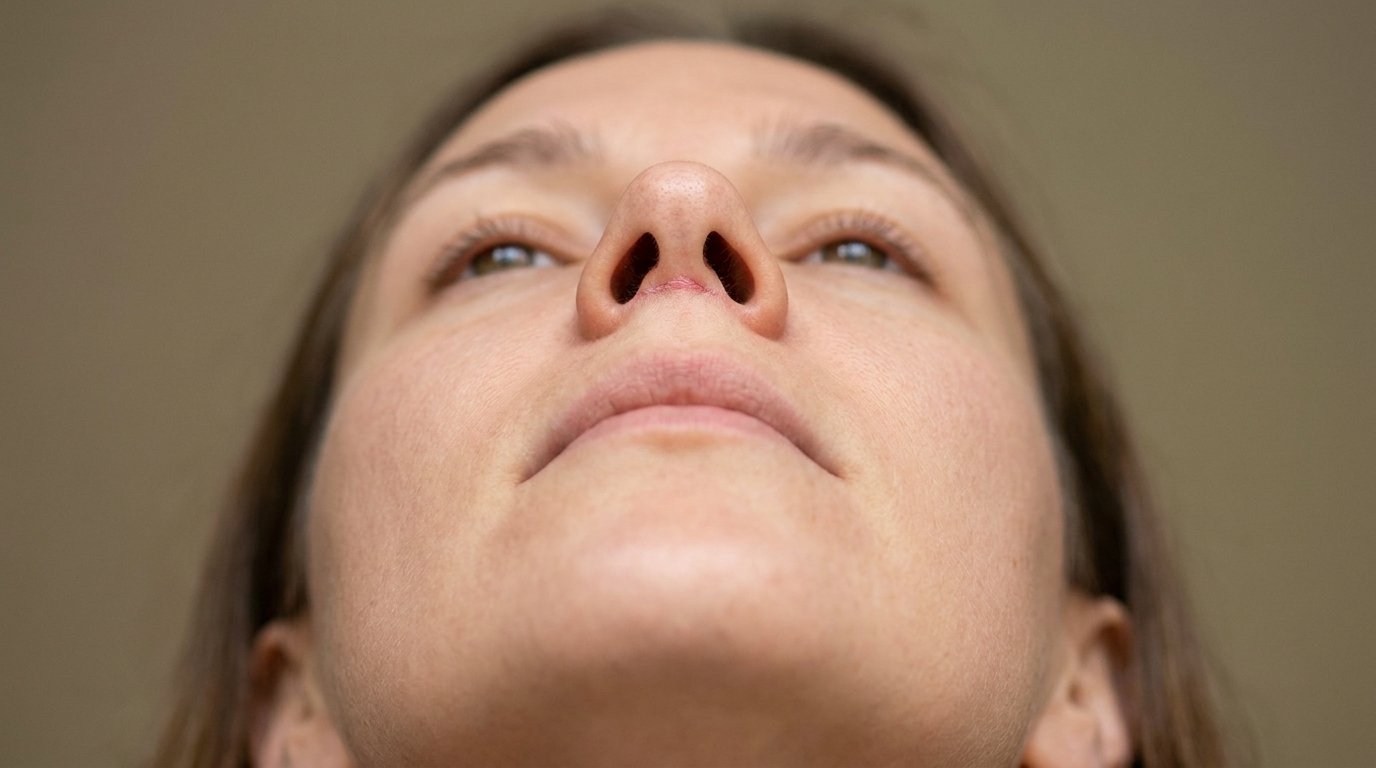
This matters because scar position affects how often other people notice it. A columellar scar is not in the main line of sight during conversation. Most people would need to be below your eye level or very close to your face to see it clearly, especially once early redness settles.
Open rhinoplasty is chosen because it gives the surgeon a wider view of the nasal structures, which can be helpful in more complex reshaping, asymmetry, tip work, thick skin cases, or revision surgery. If you are still weighing the incision trade-off against surgical access, our article on open vs closed rhinoplasty explains when each approach tends to make sense.
A scar can look more obvious in the first weeks because the area is fresh, slightly raised, pink or red, and the nose itself is still swollen. That early look is not the final look. According to the NHS and general wound-healing guidance used across cosmetic surgery, scars continue to remodel for months rather than days.
📋 What "open" really means Open rhinoplasty does not mean a large external scar. In most cases, there is one small incision on the columella and the rest are inside the nose.
How visible is the scar once it heals?
In most well-healed cases, the scar becomes a fine line that is hard to notice in normal social situations. That is the usual expectation patients are given, but it is not a guarantee. Scar quality depends on the incision design, surgical handling of the skin, how your body heals, your skin type, whether there was infection or tension on the wound, and how carefully you follow aftercare.
The honest answer is that the scar is often subtle rather than invisible. Some people heal to a line that is extremely difficult to see unless the nose is tilted upward. Others keep a faint pale line, or a line that is briefly pink before it settles. Less commonly, the scar can heal thicker, more irregular, or more noticeable than expected.
Evidence-based scar advice from plastic surgery and wound-healing literature is useful here: scars usually mature over 6 to 12 months, sometimes longer, and the colour and texture can keep changing during that time. Studies indexed in PubMed and routine clinical guidance from the NHS both support the idea that early appearance does not predict the final result very well.
If you want a realistic comparison point, think of it this way: a well-healed open rhinoplasty scar is usually less obvious than patients fear before surgery, but more noticeable in the first weeks than they hope when the cast first comes off. Those two things can both be true.
For readers who are already planning around recovery milestones, our article on when final rhinoplasty results appear helps put scar settling into the wider healing timeline.
What makes an open rhinoplasty scar more or less noticeable?
Several factors matter more than the simple fact that the surgery was open. The surgeon’s technique matters first: precise incision placement, gentle tissue handling, and careful closure all affect the final line. This is one reason board-certified training and facial surgery experience matter more than chasing one trendy method.
Your own healing pattern matters too. Some people naturally form finer scars, while others are more prone to thickened or darker marks. Skin tone can affect how long redness or pigmentation lasts. Smoking, poor wound care, picking crusts, and sun exposure can all make the scar more noticeable or slower to settle.
One point patients often miss is that swelling around the tip and columella can temporarily make the scar look worse. A line that seems raised at two or three weeks may simply be sitting in swollen tissue. That is why most surgeons ask patients to judge the scar over months, not mirror checks from day to day.
Technique questions can become bigger than they need to be. Only about one in a hundred people who contact us about nose surgery ask specifically about open versus closed or ultrasonic technique. That usually means the real decision is not the tool but whether the surgeon can explain why a certain approach suits your anatomy and goals.
If your nose surgery is being planned alongside another operation, keep the scar conversation in proportion. In the people we see having rhinoplasty, roughly 14% have it booked with another procedure, most often breast surgery or upper eyelid surgery. For you, that means the visible columellar scar may feel like the main worry before surgery, but recovery planning is often shaped more by the combined procedure than by that tiny external incision alone.
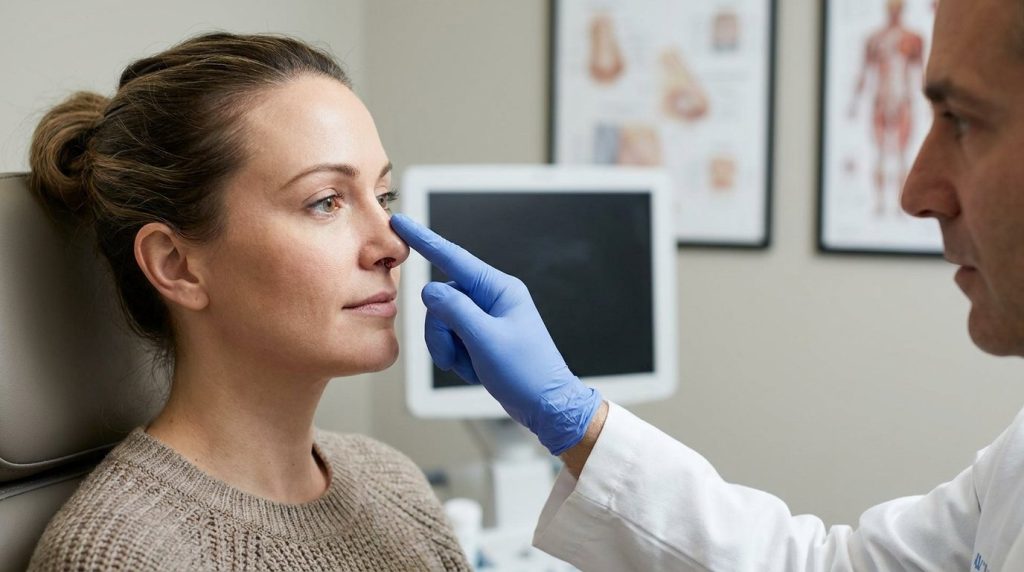
The surgeon shows where the columellar incision sits and explains why an open approach is being recommended for your anatomy.
You are promised there will be no scar at all, or that healing will look the same for everyone.
What can you do to help the scar heal well?
The best scar care starts with basic wound care, not expensive products. Follow the clinic’s cleaning instructions carefully, avoid touching the incision unnecessarily, and do not remove crusts or dried blood by force. Keeping follow-up appointments matters because small healing issues are easier to correct early.
Once the wound is fully closed and your surgeon confirms the skin is healed, they may advise scar care such as silicone gel or silicone sheeting. Some surgeons also allow gentle scar massage later on, but only when they are satisfied that the incision is completely healed. Starting silicone or massage too early can irritate the wound rather than help it.
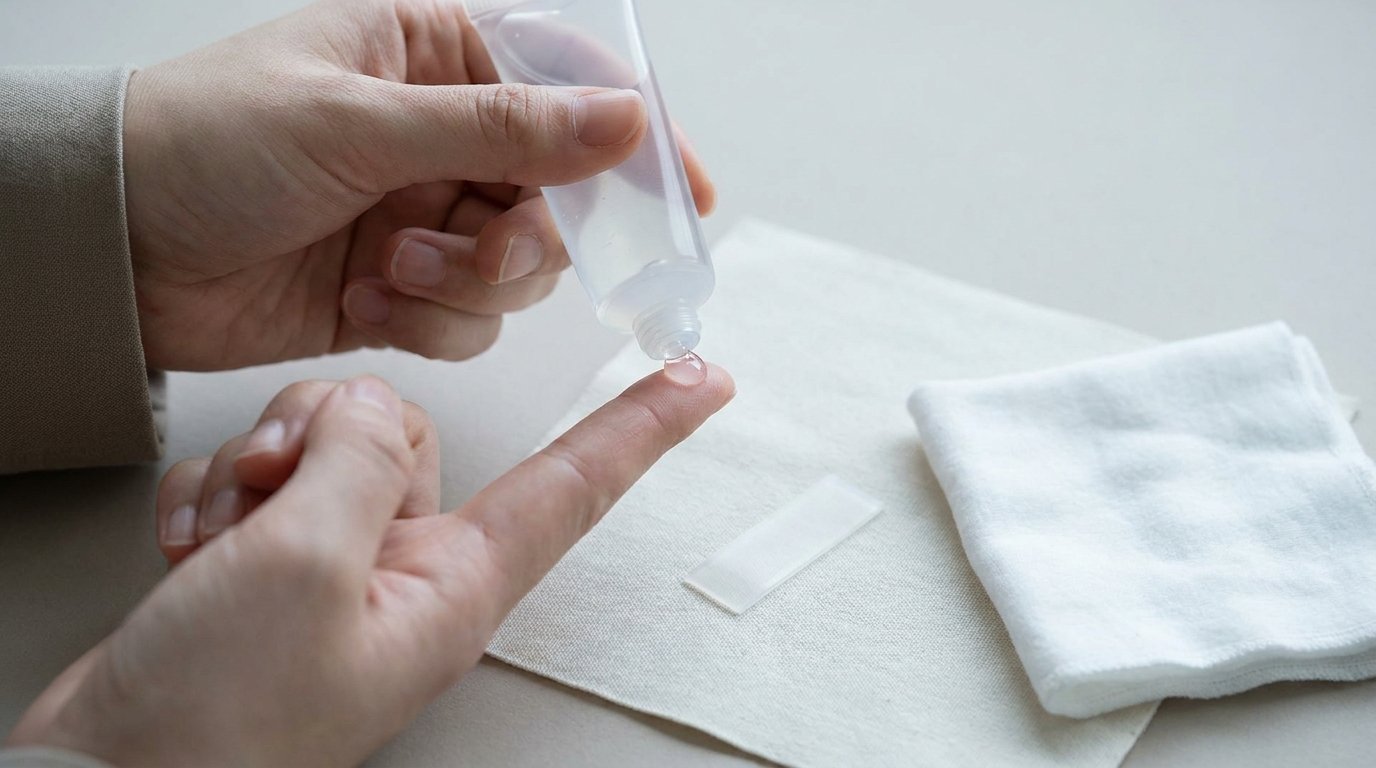
Sun protection is especially important. Fresh scars can stay darker or redder for longer if they are exposed to UV light. A hat and shade are often more practical in the early stage than putting products directly onto healing skin.
It also helps to set the right timeline in your mind. The cast coming off is not the end of healing. If you are still quite swollen or numb, that is expected, and it can change how the columella looks and feels. We cover that broader recovery pattern in our guide to numbness after rhinoplasty and our article on rhinoplasty travel, stay length, hotel and transfers, which is useful if you are coming to Turkey and trying to plan checks before flying home.
⚠️ Do not start scar products too soon Silicone gels, sheets, and massage are commonly used, but only after the surgeon confirms the wound is fully healed and the skin is closed.
- ✓Clean the incision exactly as instructed
- ✓Do not pick scabs or crusts
- ✓Avoid smoking during healing
- ✓Use silicone or massage only after your surgeon confirms full skin healing
- ✓Protect the area from sun exposure
When should you worry about the scar, and what about travel, cost and clinic choice?
A scar should be checked sooner rather than later if it becomes increasingly red, hot, very tender, starts opening, develops discharge, or looks more raised instead of gradually calmer. These can point to irritation, infection, or healing under tension. A scar that simply looks pink in the first weeks is not the same thing.
If you are travelling for rhinoplasty, timing matters. You need enough stay in Turkey for early reviews, cast or splint care, and a proper check of the incision before you fly. The stay is usually planned around the first post-operative period rather than around the scar alone, but if the wound needs closer monitoring you may be advised to stay longer.
Cost is best understood through the quote rather than a headline number. With nose surgery, the total price is usually shaped by the surgeon’s experience, whether the case is primary or revision, whether septoplasty or other nasal work is added, the hospital setting, anaesthesia, and what your package includes such as hotel, transfers, medicines, and follow-up. A personalised quote should make those parts clear. If it does not, ask what is included and what happens if you need an extra review after you return home.
For clinic choice, look for a surgeon with recognised specialist training, clear before-and-after work in noses similar to yours, and an operating facility with proper accreditation. EBOPRAS is one recognised European board in plastic surgery, and BAAPS and ASPS both emphasise informed consent and realistic discussion of risks rather than promises. The scar itself is small, but choosing well is what gives it the best chance to heal quietly.
If you are still planning surgery, our rhinoplasty in Turkey cost and safety guide covers prices, stay length and how to choose a surgeon.
Frequently Asked Questions
References
- 📎PubMed search: columellar scar open rhinoplasty
- 📎PubMed search: scar maturation wound healing silicone gel facial surgery
- 📎NHS cosmetic procedures
- 📎PubMed search: rhinoplasty recovery wound care scar management
Related Articles


You Might Also Like



Related articles


Our specialists
 Clineca SpecialistErkan PinegözPlastic & Reconstructive Surgery
 Clineca SpecialistHakan AktaşPlastic & Reconstructive Surgery
 Clineca SpecialistOrkun UzuneyüpoğluPlastic & Reconstructive Surgery
 Clineca SpecialistSalim İskenderPlastic & Reconstructive Surgery
 Clineca SpecialistEngin SelamioğluPlastic & Reconstructive Surgery
 Clineca SpecialistCem AydınPlastic & Reconstructive Surgery
 Clineca SpecialistAlperen ÖnalEar, Nose & Throat (ENT)