
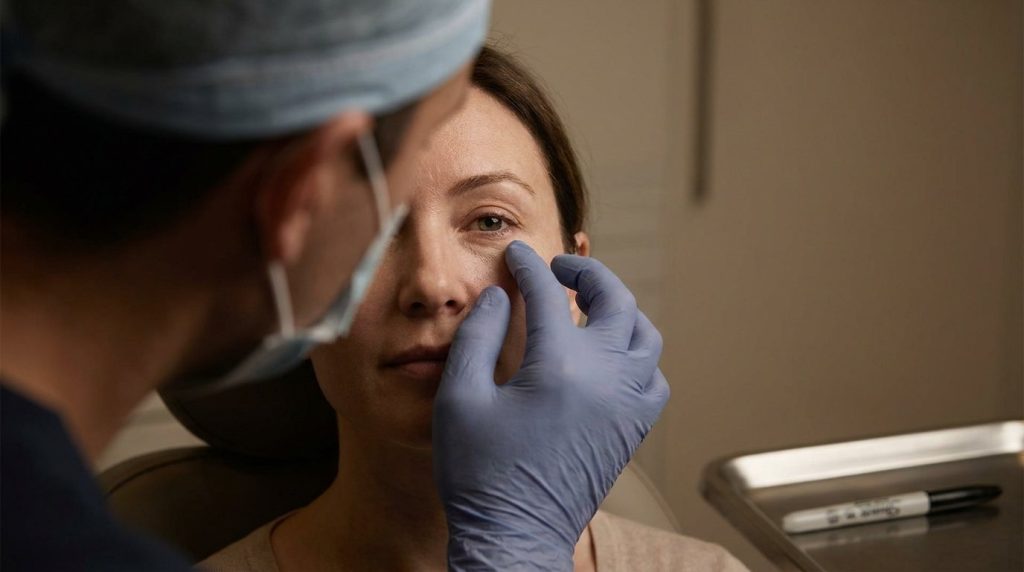
Have a question about lower eyelid blepharoplasty?
In this article
- What does lower blepharoplasty actually correct, and who is it for?
- Transconjunctival or skin-incision lower blepharoplasty: which technique fits you?
- Why fat repositioning often beats simply removing fat
- What drives the cost of lower blepharoplasty in Turkey, and what does a quote include?
- How long should you stay in Turkey, and when does it stop looking obvious?
- How safe is lower eyelid surgery, and what can go wrong?
- How do you choose a clinic and surgeon in Turkey for lower eyelid work?
Under-eye bags have a habit of making a face look tired no matter how much sleep you get, and no cream shifts a pad of fat that is pushing forward. That is why lower blepharoplasty in Turkey sits near the top of the list for facial surgery enquiries, usually as part of a trip that includes something else as well. It is also a procedure where the technique chosen matters as much as the clinic chosen, because the lower lid is far less forgiving than the upper one.
What does lower blepharoplasty actually correct, and who is it for?
Lower eyelid surgery treats the bulge of fat that sits under the eye, and in some patients the loose skin and slack muscle in front of it. The surgeon either removes a measured amount of that fat, moves it down into the hollow below (fat repositioning), or does a bit of both, then tightens only what genuinely needs tightening.
The people who get the clearest benefit are those whose bags stay put. If the puffiness is there every morning, does not change much with sleep, salt or antihistamines, and casts a shadow under the eye in overhead light, it is almost certainly structural. Gentle crepe-paper skin under the lash line responds well too, as long as the eyelid itself is still well supported.
Some under-eye complaints look similar but are not surgical at all. Brown or grey pigment in the skin, shadowing from allergy or sinus congestion, and fine lines that only appear when you smile will not be improved by removing fat. Flattening of the cheek just below the eye is another one — there the issue is lost volume rather than excess, and a comparison of lower eyelid surgery and under-eye fat transfer is the more useful starting point.
If your lower lid already sits low, so that a strip of white shows beneath the iris, or the outer corner looks rounded and droopy, fat removal alone can make that worse. In those cases the plan usually needs a corner-tightening step as well, which is why it is worth understanding the difference between canthopexy and lower eyelid surgery before you commit to one.
Persistent fat bulges that do not change day to day, mild loose skin under the lashes, a tear trough shadow, and lower lids that still sit snugly against the eye.
Dark pigment in the under-eye skin, puffiness that comes and goes with allergies or salt, and hollowing caused by lost cheek volume rather than extra fat.
Under-eye fat transfer or filler for volume loss, corner tightening for a lid that already sits low, and skin resurfacing for fine surface lines.
Transconjunctival or skin-incision lower blepharoplasty: which technique fits you?
Transconjunctival lower blepharoplasty is done through the inner surface of the eyelid, so there is no scar on the skin at all. The surgeon reaches the fat pads from behind, and because the muscle and skin in front are left undisturbed, the risk of the lid being pulled down afterwards is lower. It suits patients whose main problem is the bulge rather than the skin.
The transcutaneous route uses a fine incision just below the lash line. That gives direct access to remove or redrape skin and to tighten the muscle, which is what you need when the skin is visibly loose. The trade-off is a scar — usually hard to see once settled — and a greater demand on the surgeon’s judgement, because taking too much skin or muscle from the front of the lid is what causes most unhappy lower lids.
There are smaller variations too. A 2020 paper in the Journal of Craniofacial Surgery described a percutaneous approach in which the fat pads are removed or transferred through tiny skin incisions of around four millimetres with very little dissection, developed specifically to sidestep some of the drawbacks of both classic routes. Techniques like this exist on a spectrum, and the right one is decided by how much fat, skin and lid support you actually have — not by which method a website promotes.
In practice, many Turkish surgeons combine approaches: fat handled from inside the lid, with a conservative skin pinch below the lashes if the skin needs it. Ask at consultation which route is planned for you and why, and what the surgeon would do differently if your lid support turned out to be weaker than it looks.
📋 Ask for the plan in plain words A clear answer sounds like: "fat repositioned from inside the lid on both sides, no skin removed, corner support assessed on the table." If you only hear the procedure name, keep asking.
Why fat repositioning often beats simply removing fat
Removing every bit of fat behind the lower lid is the fastest way to flatten a bag and also the fastest way to create a hollow, shadowed eye that looks older than before. Fat repositioning takes the fat that is bulging and moves it down over the bony rim into the groove where it is missing, so the step between lid and cheek becomes a smooth slope instead of a bag above a trough.
That is why lower blepharoplasty with fat repositioning has largely replaced aggressive fat removal for patients who have a visible tear trough. It asks more of the surgeon in the operating room and tends to swell a little longer, but it addresses the shadow as well as the bulge.
How much fat is actually there varies from person to person, and it cannot be judged from a photograph. In a 2025 study in BMC Ophthalmology, researchers measured the volume of orbital fat taken out during bilateral transconjunctival lower blepharoplasty in a group of patients and examined how that volume related to body mass index — a useful reminder that the amount behind the lid differs between patients and that the plan has to be individual rather than a fixed recipe.
Swelling behaves differently after repositioning as well. The transferred fat is settling into a new position, so the under-eye area can look slightly full or firm for several weeks, and small side-to-side differences in the first month are common rather than a sign that something has gone wrong.
⚠️ Over-resection is hard to reverse A hollow created by removing too much fat usually needs a later filler or fat-grafting procedure to soften. Conservative removal, or repositioning, is the safer starting point.
What drives the cost of lower blepharoplasty in Turkey, and what does a quote include?
No honest clinic can price lower eyelid surgery from a message, which is why you will not find a figure here. The fee depends on findings a surgeon has to see in person: how much fat is present, whether skin needs removing, whether the lid corner needs support, whether fat is being repositioned, and whether anything else is being done in the same session. A personalised price is confirmed after consultation, once that plan is fixed.
The other variables are structural rather than clinical. Surgery in a fully licensed hospital with an anaesthesia team costs more than an office procedure under local anaesthetic. A surgeon with a long track record in periorbital work prices differently from a generalist. Istanbul tends to sit above smaller cities. If you want to understand why Turkish quotes land where they do compared with home, our breakdown of plastic surgery prices in Turkey versus the UK, Germany and the Netherlands explains the underlying cost structure.
What matters more than the headline number is what sits inside it. Ask for the inclusions in writing, and ask specifically what happens financially if you need a minor revision later — that single question separates serious clinics from brochure operations.
📋 Why figures are quote-only Two patients with identical photographs can need very different operations — one fat repositioning through the inner lid, the other a skin-and-muscle tightening with corner support. Quoting a number before examination would be guessing.
How long should you stay in Turkey, and when does it stop looking obvious?
Most patients having lower eyelid surgery alone are asked to plan roughly a week in the country: a day for consultation and tests, the surgery itself, and follow-up checks before the flight home. Among our eyelid surgery patients who come for the upper lids, around three in four have a second procedure in the same session — and lower eyelid surgery, rhinoplasty and a temporal lift are the usual partners. For you that matters in one practical way: if your plan grows into a combined operation, the stay and the recovery clock are set by the bigger procedure, not by the eyelids.
The first two days are the swollen, watery, blurry-vision ones. Vision usually settles as ointment and swelling clear, bruising spreads down towards the cheek before it fades, and by the end of the first week most people look like someone recovering from a minor knock rather than someone who has had surgery. Our detailed account of lower eyelid blepharoplasty recovery in weeks one and two covers that stretch day by day.
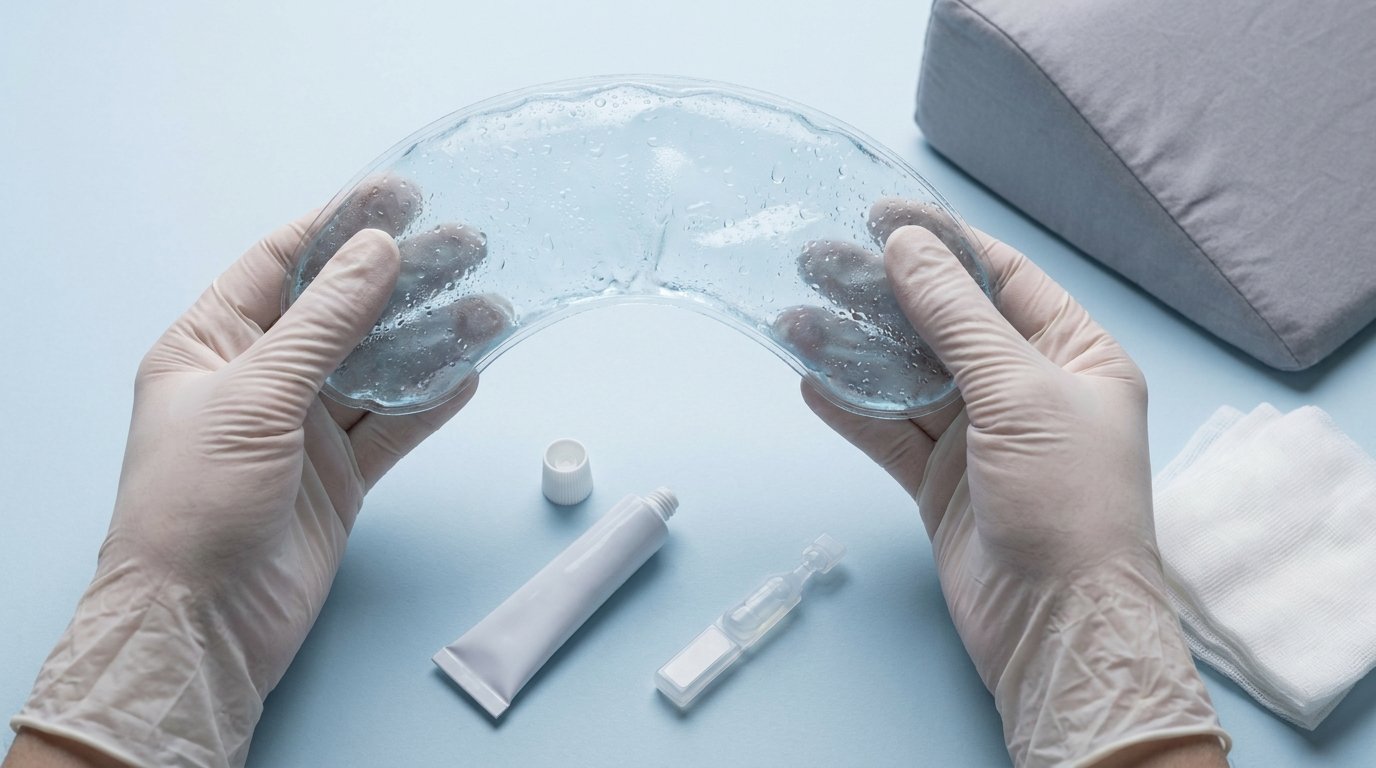
Residual puffiness and a slightly firm feeling under the eye last longer than most patients expect, particularly after fat repositioning. If you are still noticing small changes at six or eight weeks, that is normal — see our longer piece on how long swelling lasts after lower eyelid surgery for what the later months look like.
⚠️ Do not book a flight for the day after surgery Flying before your post-operative check means nobody sees your eye at the point when a problem is easiest to treat. Keep the return date flexible if your airline allows it.
How safe is lower eyelid surgery, and what can go wrong?
Lower blepharoplasty is a well-established operation with a good safety record in experienced hands, but it is genuine surgery around the eye and carries real risks. The common, temporary ones are swelling, bruising, dry or gritty eyes, watering, and a jelly-like swelling of the white of the eye that can appear for a week or two and then settles.
The complications that need an experienced surgeon to avoid are the ones affecting lid position. Removing too much skin or muscle, or operating on a lid that was already loose, can leave the lower lid sitting low, showing white beneath the iris, or turning outward. A 2024 paper in International Ophthalmology reviewed patients treated for lower eyelid retraction using cartilage taken from the ear, and prior lower eyelid blepharoplasty was among the causes behind those long-standing retractions — a reminder that correcting the problem later is a bigger undertaking than preventing it at the first operation.
Rarer issues include visible asymmetry, under-correction that leaves some bulge behind, over-correction that leaves a hollow, infection, and bleeding behind the eye, which is very uncommon but is the reason surgeons insist on no blood-thinning supplements, no straining and no heavy lifting in the early days.
Your own medical details change the risk picture. Dry eye, thyroid eye disease, previous laser vision correction, uncontrolled blood pressure and smoking all need to be on the table before surgery is planned. The NHS guidance on cosmetic procedures is a sensible neutral read on how to weigh that up before travelling.
🚨 Contact the clinic urgently Sudden or increasing pain behind the eye, rapidly worsening swelling, loss of vision or spreading redness with fever all need to be assessed the same day — not at your next scheduled check.
How do you choose a clinic and surgeon in Turkey for lower eyelid work?
Start with the surgeon rather than the package. You want someone whose routine work includes the eyelids — a plastic surgeon or an oculoplastic specialist — operating in a hospital or clinic licensed by the Turkish Ministry of Health, with a named anaesthesia team if you are having sedation or general anaesthesia. Credentials from bodies such as the Turkish Society of Plastic, Reconstructive and Aesthetic Surgeons, or European board recognition through EBOPRAS, are reasonable markers to ask about.
Then look at how the consultation is run. A proper assessment of the lower lid includes checking lid tone and support, asking about dry eye, and examining how much of the problem is fat versus skin. If nobody examines the lid’s snugness or asks whether your eyes feel gritty, the plan is being made on photographs.
Finally, pin down the aftercare. Who removes the stitches, who you call at midnight from your hotel, how follow-up continues once you are home, and what the policy is on revision. Our wider guide to blepharoplasty in Turkey goes through those arrangements in more detail for both upper and lower lids.
This article is for informational purposes only and does not constitute medical advice. Always consult a qualified surgeon for personalised guidance.
A surgeon who shows before-and-after cases with under-eye anatomy like yours, explains why one technique suits you, discusses the option of doing less, and gives you a written plan and inclusions.
A price quoted before any examination, pressure to book flights within days, one technique offered to every patient, no named surgeon, and no clear answer about who handles complications.
- ✓Ask who operates: The name and specialty of the surgeon performing your procedure, confirmed in writing before you pay a deposit.
- ✓Ask about lid support: Whether your lower lid tone was assessed and whether a corner-tightening step may be needed.
- ✓Ask about dry eye: How existing dry or gritty eyes change the plan, and what drops you will need afterwards.
- ✓Ask about revision: What happens clinically and financially if a small adjustment is needed months later.
Frequently Asked Questions
References
- 📎Percutaneous Lower Blepharoplasty: A Novel Technique in Lower Eyelid Aesthetics — Journal of Craniofacial Surgery, 2020
- 📎Association of body mass index with orbital fat volume in lower eyelid blepharoplasty — BMC Ophthalmology, 2025
- 📎Lower eyelid retraction repair using autologous auricular scapha cartilage — International Ophthalmology, 2024
- 📎NHS — Cosmetic procedures
Related Articles



You Might Also Like



Related articles



Our specialists
 Clineca SpecialistErkan PinegözPlastic & Reconstructive Surgery
 Clineca SpecialistHakan AktaşPlastic & Reconstructive Surgery
 Clineca SpecialistOrkun UzuneyüpoğluPlastic & Reconstructive Surgery
 Clineca SpecialistSalim İskenderPlastic & Reconstructive Surgery
 Clineca SpecialistEngin SelamioğluPlastic & Reconstructive Surgery
 Clineca SpecialistCem AydınPlastic & Reconstructive Surgery
 Clineca SpecialistAlperen ÖnalEar, Nose & Throat (ENT)