

Have a question about Lower Eyelid Surgery?
In this article
- What is the normal swelling timeline after lower eyelid blepharoplasty?
- What affects how long the swelling lasts?
- When is swelling no longer normal?
- What can help swelling go down faster?
- When can you fly, exercise, and return to normal activities?
- How long until you see the final lower eyelid result?
Swelling after lower eyelid blepharoplasty usually peaks in the first few days, improves a lot over 2 to 4 weeks, and then continues to settle gradually over several months. If you are asking how long does swelling last after lower eyelid blepharoplasty, the short answer is that most people look socially presentable within a few weeks, but small residual puffiness can last longer depending on the technique used, your healing pattern, and whether any irritation or complication develops.
What is the normal swelling timeline after lower eyelid blepharoplasty?
Lower eyelid blepharoplasty works on one of the thinnest, most delicate areas of the face, so swelling is expected. The key point is that the swelling you notice early on is not the same as your final result. In the first week, the lower lids often look puffy, tight, and sometimes uneven from side to side. That does not usually mean anything has gone wrong.
A common pattern looks like this: the first 48 to 72 hours are the puffiest, bruising and swelling are often still obvious through the first week, and then the area starts to look better quite quickly during the second week. By the end of week 2, many people feel comfortable seeing friends or going out with a little concealer or glasses. By weeks 3 to 4, much of the swelling has settled, but the skin and deeper tissues may still be healing.
Small amounts of residual swelling can last much longer than patients expect. That last 10 to 20 percent often fades slowly rather than all at once. It may be more visible first thing in the morning, after salty meals, after crying, or when you are tired.
The NHS notes that after cosmetic eyelid surgery, bruising and swelling are expected and recovery takes time. The American Society of Plastic Surgeons (ASPS) also advises patients to expect temporary swelling and bruising after eyelid surgery. Mayo Clinic guidance on blepharoplasty similarly describes swelling, bruising, and gradual improvement as part of normal recovery.
📋 Why the lower lids heal slowly The lower eyelid area has thin skin and very visible soft tissue. Even small amounts of fluid can look dramatic there, which is why minor swelling can seem to last longer than expected.
For most patients, swelling is most obvious during the first 3 to 5 days, starts to come down in the second week, and is much better by weeks 2 to 4. Mild puffiness, firmness, or asymmetry can still improve for several months, especially in delicate lower eyelid tissue.
What affects how long the swelling lasts?
Not every lower eyelid blepharoplasty creates the same recovery. A transconjunctival approach, where the cut is made inside the lower lid, may cause a different pattern of swelling than an external skin incision just below the lashes. If skin tightening, fat repositioning, muscle support, or laser treatment is added, swelling may last longer than it would after a smaller procedure.
Your own body matters too. People who bruise easily, have sensitive eyes, allergies, dry eye symptoms, high salt intake, or a tendency to retain fluid may look more swollen for longer. Smoking can delay healing. So can poor sleep. Even normal habits, such as spending hours looking down at a phone or rubbing the eyes, can make the lower lids look puffier.
There is also a difference between swelling in the skin and swelling deeper in the tissues. Skin swelling often improves fairly quickly. Deeper firmness or a slightly full look under the eye may take longer to settle. That is one reason some patients worry at week 3 even though they are still within a normal recovery window.
If you had lower eyelid surgery together with another facial procedure, such as a eyelid surgery procedure page describes more broadly, recovery can be influenced by the overall treatment plan rather than the eyelids alone.
- ✓Technique used: inside-the-lid approach versus external incision
- ✓Extent of surgery: skin removal, fat removal, fat repositioning, or muscle support
- ✓Personal factors: age, smoking, allergies, dry eyes, fluid retention
- ✓Aftercare: cold compresses, head elevation, avoiding rubbing, and taking medicines as directed
Healing time varies because lower eyelid swelling depends on the surgical approach, how much fat or skin was treated, your age and skin quality, your general health, and how closely you follow aftercare. Dry eyes, irritation, allergies, and sleeping flat can also make swelling hang on longer.
When is swelling no longer normal?
Normal swelling tends to follow a steady pattern: it peaks early, then gradually settles. It can fluctuate a bit, especially in the morning, but the overall direction should be improvement. If the area becomes more swollen after it had been settling, that deserves attention.
The warning signs matter more than the exact number of days. Severe pain is not typical. A sudden change in vision is not typical. One eye becoming much tighter, more swollen, or more prominent than the other can be a red flag. Infection after eyelid surgery is not common, but increasing redness, warmth, pus-like discharge, and fever need urgent review.
According to Mayo Clinic, patients should seek urgent medical advice after blepharoplasty if they have shortness of breath, chest pain, unusual heart rate, severe new eye pain, bleeding, or vision problems. ASPS patient guidance also stresses that worsening pain, increasing swelling, and visual symptoms should be reported immediately.
Even milder issues can still be worth checking if they are persistent. Ongoing dryness, inability to close the eye properly, marked asymmetry, or swelling that barely changes over time may not be an emergency, but they should still be discussed with your surgeon.
🚨 Get urgent medical help Seek urgent assessment if you have worsening vision, severe pain, sudden one-sided swelling, significant bleeding, shortness of breath, chest pain, or an eye that seems to bulge or become very tight.
Puffiness that is worse in the morning, yellow bruising, tightness, mild watering, and slow week-by-week improvement.
Rapidly increasing swelling, marked redness, discharge, severe pain, vision change, or one eye becoming much more swollen than the other.
Some swelling is expected, but it should slowly improve, not suddenly get worse after initial recovery. Call your surgeon promptly if one side becomes much more swollen, pain increases, vision changes, the eye bulges, or you develop marked redness, discharge, fever, or bleeding.
What can help swelling go down faster?
The first priority is to follow the instructions from your own surgical team, because aftercare can vary by technique. In general, patients are often advised to use cool compresses in the early period, keep the head elevated even during sleep, and avoid bending, heavy lifting, and eye rubbing. Those simple steps reduce fluid build-up and protect the healing tissues.
Dryness and irritation can make swelling seem worse, so lubricating drops or ointment are often part of recovery if your surgeon prescribes them. Sun and wind can also irritate the area. Sunglasses are not just cosmetic in the first couple of weeks; they can be genuinely helpful.
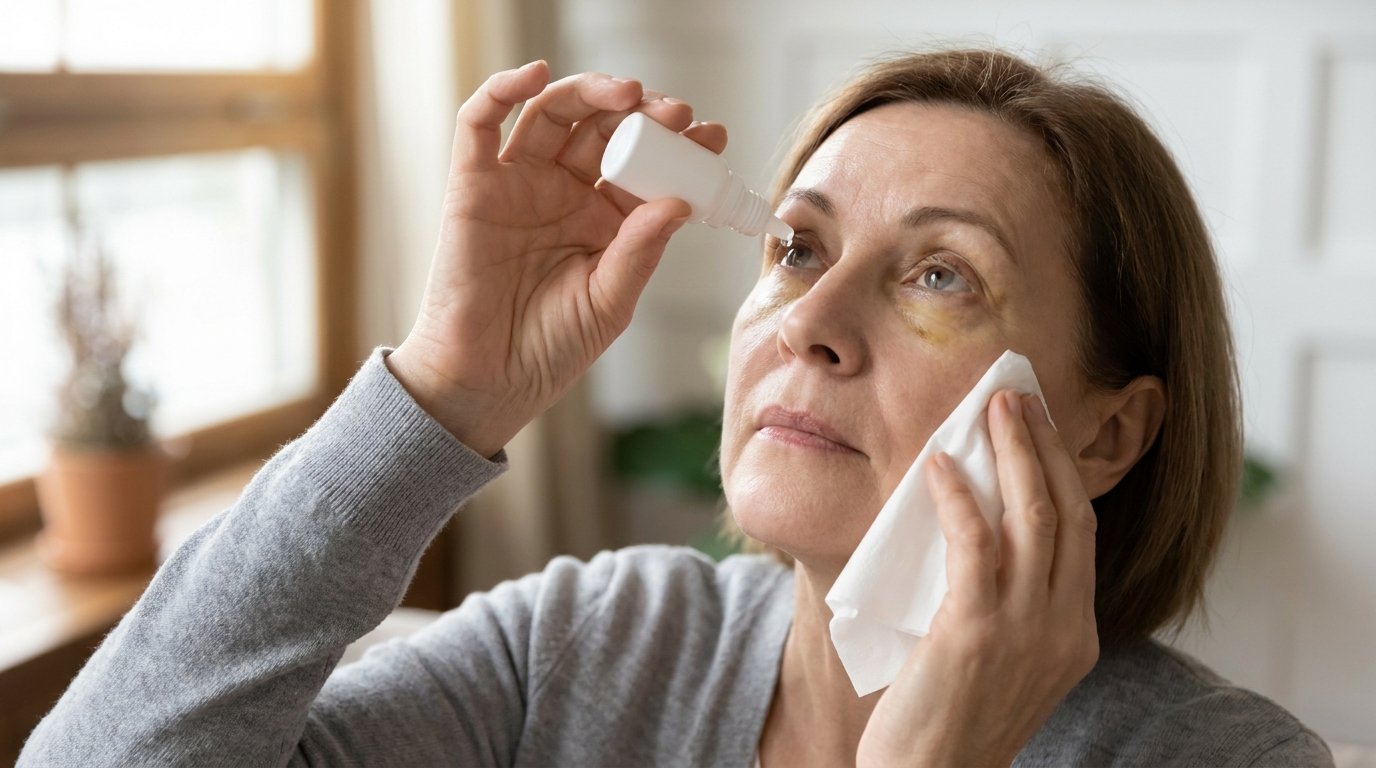
It also helps to keep expectations realistic. There is no proven trick that makes all swelling vanish quickly. Herbal remedies, lymphatic massage, or internet hacks can irritate healing eyelids if they are used too soon. If you are considering anything outside your written aftercare plan, ask your surgeon first.
Simple habits that usually help
- ✓Sleep on your back with your head raised higher than your chest.
- ✓Use cold compresses only as advised, especially in the first couple of days.
- ✓Take prescribed drops, ointment, or pain relief exactly as directed.
- ✓Avoid salty meals, smoking, and alcohol early on if your surgeon advises this.
- ✓Do not wear contact lenses until you are told it is safe.
- ✓Protect the eyes from sun, wind, dust, and screen strain.
The NHS and Mayo Clinic both emphasise practical recovery measures after eyelid surgery, including protecting the eyes, limiting strain, and allowing time for swelling and bruising to settle.
You cannot remove post-op swelling overnight, but careful aftercare can help it settle normally. The basics are cold compresses if your surgeon recommends them, sleeping with your head raised, protecting the eyes, staying hydrated, avoiding smoking, and not restarting strenuous activity too early.
When can you fly, exercise, and return to normal activities?
This is where recovery advice needs nuance. There is no single rule that fits every patient, because your surgeon will base advice on the exact procedure, your healing, and whether you have any eye symptoms.
For work, many people feel ready for non-physical, desk-based activity after about 7 to 14 days, especially once bruising and swelling are less obvious. If your job is public-facing, dusty, physically demanding, or needs long hours of screen use, you may need longer.
For exercise, gentle walking is often encouraged early because it supports circulation. Strenuous exercise is different. Running, gym sessions, yoga inversions, heavy lifting, swimming, and contact sports are usually delayed until your surgeon says the tissues are stable enough. Restarting too soon can worsen swelling or raise the risk of bleeding. In practice, many patients resume light exercise first and heavier training later, often over several weeks rather than all at once.
Flying also depends on more than the calendar. Short flights may be possible once you are medically stable, comfortable, and past the earliest risk period, but many surgeons prefer patients not to travel immediately after surgery in case they need review, dressing changes, or help with a complication. Dry cabin air can also irritate healing eyes. If your lower eyelid blepharoplasty was done as part of medical travel, it is sensible to confirm the flight plan in advance and not assume a standard timeline.
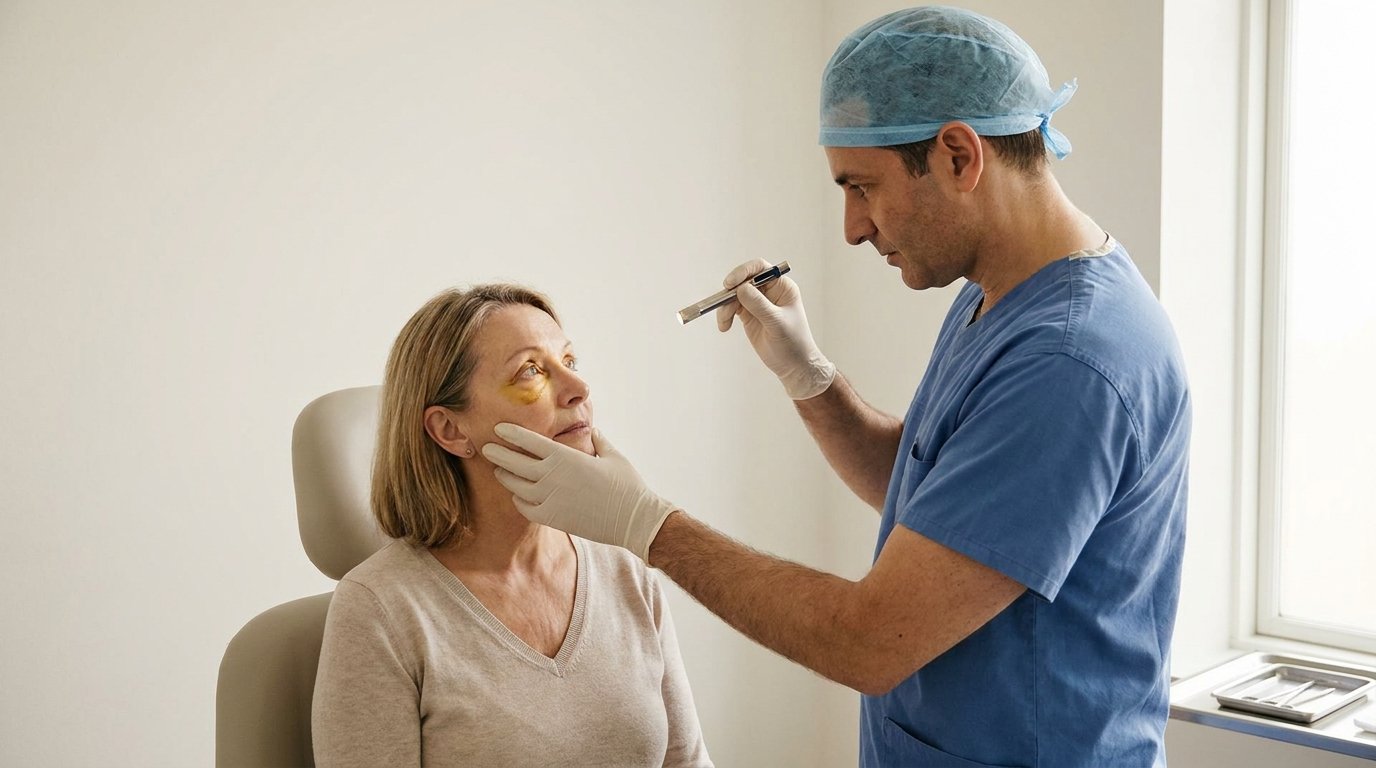
A practical rule is this: if swelling is still marked, your eyes are dry or irritated, or you have not yet had your early review, it is often too soon to make firm travel or exercise plans. The safest answer comes from the surgeon who examined your eyelids, not from a generic timetable online.
⚠️ Do not treat travel timing as routine Flight plans after eyelid surgery should be confirmed with your surgeon. The right timing depends on your exam findings, not just how many days have passed.
Many patients can take short walks almost immediately, return to desk-type work in about 1 to 2 weeks, restart light exercise after the early healing phase, and fly once they are stable and reviewed if needed. Exact timing depends on swelling, dryness, bruising, and the surgeon’s assessment.
How long until you see the final lower eyelid result?
Patients often look in the mirror at two weeks and try to decide whether the surgery has worked. That is usually too early for a fair judgment. The lower eyelid is slow to reveal its final shape because swelling can hide contour changes and make the under-eye area look fuller than it will later.
A better way to think about recovery is in layers. By 2 to 4 weeks, most of the obvious swelling is usually down. By 6 to 8 weeks, the area often looks more natural. Then there is a slower phase where fine puffiness, firmness, and tiny differences between the two sides continue to settle.
If you are worried that the under-eye area still looks puffy, ask whether you are seeing swelling, healing stiffness, or the baseline anatomy that surgery could improve only to a point. Lower eyelid blepharoplasty can smooth bags and tighten the area, but it does not stop ageing or guarantee a perfectly shadow-free under-eye. An honest follow-up discussion is more useful than comparing yourself to edited recovery photos online.
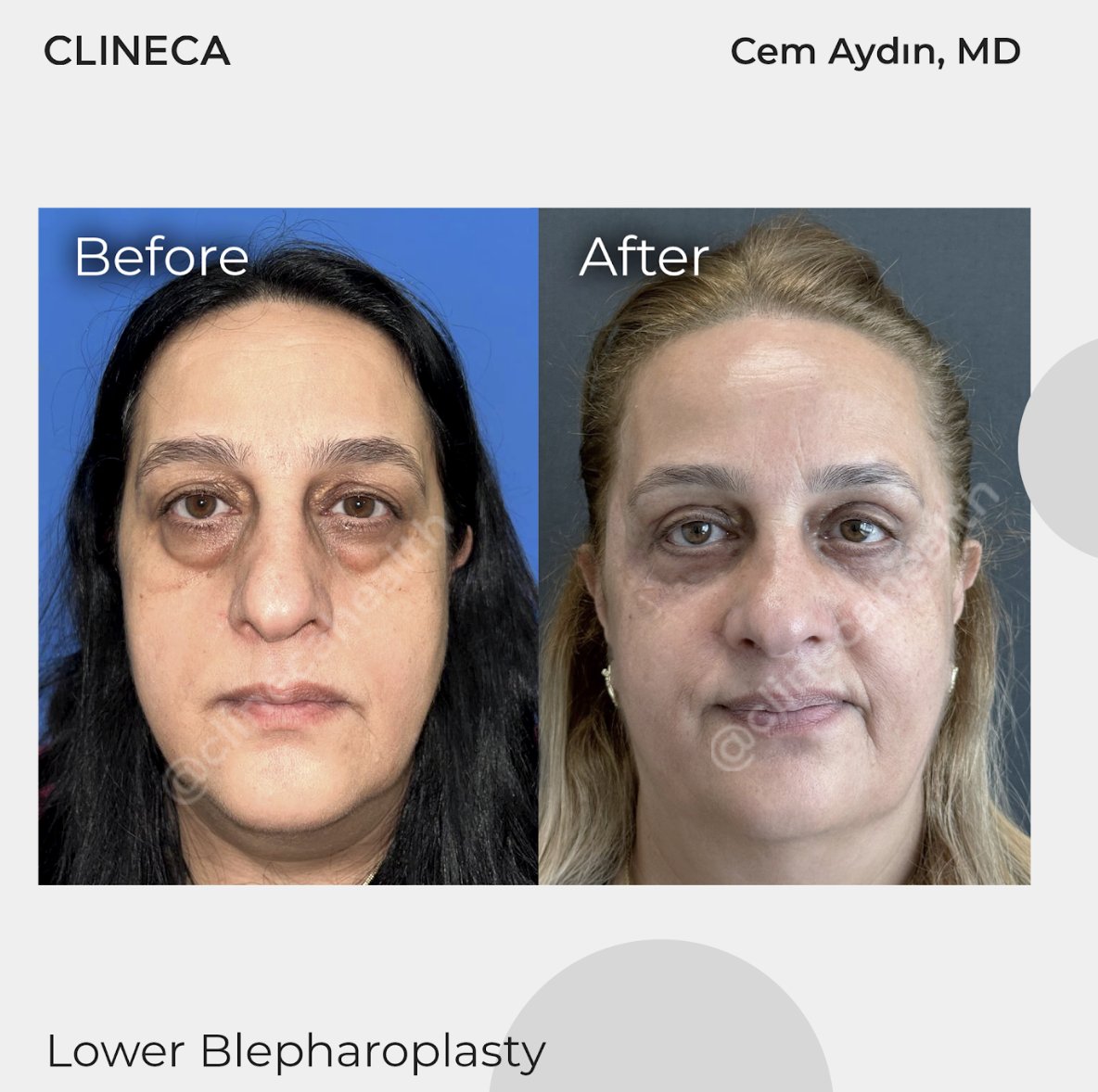
Most people can judge the broad result within a few weeks, but the final refined outcome takes longer. Minor swelling, tissue stiffness, scar softening, and subtle asymmetry can continue to improve for several months before the lower lids look fully settled.
Planning eyelid surgery abroad? Our blepharoplasty in Turkey cost and safety guide covers prices, stay length and surgeon selection.
Frequently Asked Questions
References
- 📎NHS – Cosmetic procedures
- 📎ASPS – Cosmetic procedures
- 📎Mayo Clinic – Tests and procedures
- 📎PubMed search – lower blepharoplasty postoperative edema recovery
Related Articles

You Might Also Like


Related articles

Our specialists
 Clineca SpecialistErkan PinegözPlastic & Reconstructive Surgery
 Clineca SpecialistHakan AktaşPlastic & Reconstructive Surgery
 Clineca SpecialistOrkun UzuneyüpoğluPlastic & Reconstructive Surgery
 Clineca SpecialistSalim İskenderPlastic & Reconstructive Surgery
 Clineca SpecialistEngin SelamioğluPlastic & Reconstructive Surgery
 Clineca SpecialistCem AydınPlastic & Reconstructive Surgery
 Clineca SpecialistAlperen ÖnalEar, Nose & Throat (ENT)