Have a question about Brow Lift?
In this article
- Why the forehead swells the way it does
- The week-by-week swelling timeline
- Does the technique change how long swelling lasts?
- If you are combining it with eyelid surgery, plan for the longer timeline
- What genuinely helps the swelling settle faster
- When swelling is not normal
- Travel, length of stay and what shapes the cost
- When you can judge the result honestly
Of all the questions that come up before a forehead rejuvenation, how long swelling lasts after a brow lift is one of the most practical — it decides when you can go back to work, see family, or face a camera. Swelling in the forehead and around the eyes behaves differently from swelling anywhere else on the body, partly because gravity drains it straight down into the eyelids. The honest answer has two halves: the part other people notice, and the part only you notice.
Why the forehead swells the way it does
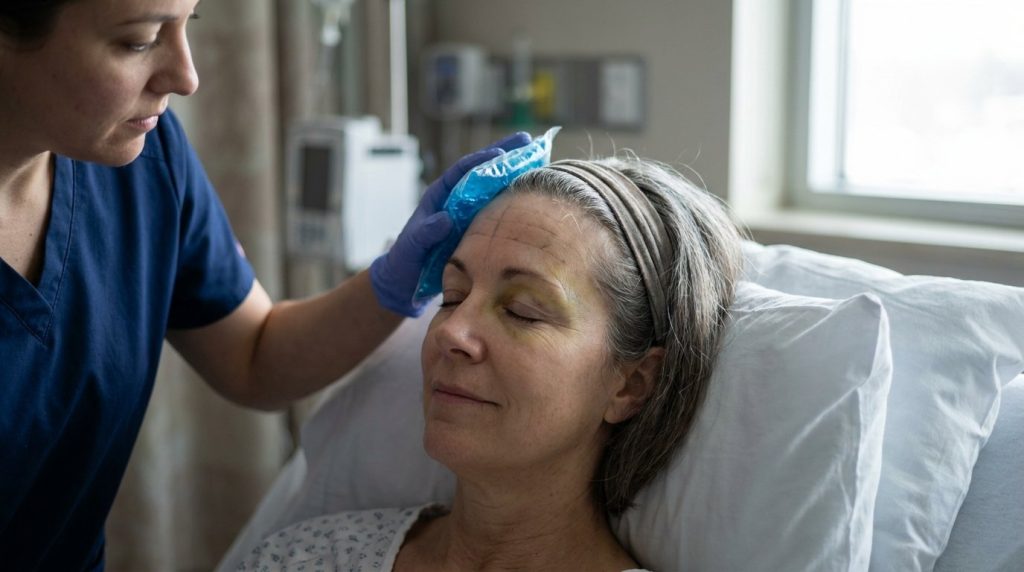
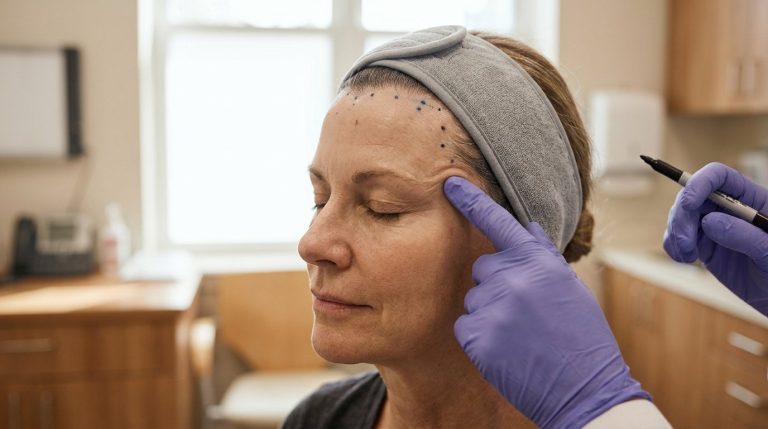
A brow lift releases and repositions the soft tissue of the forehead — skin, muscle and the fibrous layer underneath. Wherever tissue is lifted off the bone or muscle is adjusted, fluid collects in that space while the body repairs it. That fluid is not static. It follows gravity, so forehead swelling from an upper-face lift very often shows up as puffy upper eyelids and shadowed, bruised-looking under-eyes within two or three days.
This catches patients off guard. They expect a swollen forehead and instead see swollen eyes, sometimes with the bruising tracking down towards the cheekbones. It is a normal drainage pattern, not a sign that something went wrong with the eyelids.
The second thing worth understanding early is that swelling comes in two layers. The obvious, visible kind peaks in the first few days and settles fast. Underneath it sits a much subtler deep swelling that keeps the brows sitting a little higher and the forehead a little smoother than their final shape — and that one takes months, not weeks, to resolve. Almost every patient who worries that their brows look “too lifted” in week two is looking at this second layer.
📋 Expect the swelling to move Forehead swelling drains downward into the eyelids and under-eye area. Puffy eyes and yellow-green bruising below the brows in the first week usually reflect gravity, not a problem with the surgery itself.
The week-by-week swelling timeline
Most patients follow a fairly predictable curve. Swelling peaks at around 48 to 72 hours, drops steeply through the first week, and then tapers off slowly for several months. The table below reflects the pattern we talk patients through before surgery, assuming a straightforward recovery and good head elevation in the early days.
The practical milestone most people care about is the “nobody would ask” point. For a limited or endoscopic brow lift, that tends to land somewhere between two and three weeks, once bruising has faded and makeup can cover what is left. The point where the brows look settled and natural in photographs is later — usually somewhere in the second or third month, with the last few percent of refinement arriving quietly after that.
⚠️ Morning puffiness lingers longest Lying flat lets fluid pool overnight, so the eyelids can look puffier before breakfast than at bedtime for several weeks. It usually settles within an hour or two of being upright.
Does the technique change how long swelling lasts?
Yes, and sometimes considerably. The more tissue that has to be released to achieve the lift, the more fluid the body produces in response. A small lateral or temporal lift that only addresses the outer brow swells less and for less time than a lift that releases the whole forehead.
If you are still weighing approaches, our comparison of endoscopic and traditional brow lift techniques goes into how incision choice affects both the recovery and the kind of lift you get. A 2013 study in JAMA Facial Plastic Surgery surveyed patients after endoscopic brow lift about their recovery, cosmetic outcome and satisfaction, and also recorded improvement in headaches among some patients — a reminder that the forehead release has effects beyond appearance.
There is also a non-surgical end of the spectrum. A 2025 study in Aesthetic Plastic Surgery assessed resorbable coned PLLA/PLGA threads for brow lifting in patients with mild to moderate brow droop, performed as an outpatient procedure. Thread lifting involves far less swelling and downtime than surgery, but it suits mild cases and does not last the way surgery does — our piece on how long endoscopic brow lift results tend to last is a useful comparison point.
If you are combining it with eyelid surgery, plan for the longer timeline
This matters more than most patients expect. A brow lift is rarely done on its own: around nine in ten of our brow lift patients have it as part of a wider plan, most commonly alongside upper eyelid surgery. That is not an add-on being pushed — the two areas sit on top of each other, and lifting the brow without addressing loose eyelid skin often leaves the result half-finished. Our article on the difference between a brow lift and upper eyelid surgery explains which problem each one actually solves.
The practical consequence for swelling is simple: your recovery is paced by the whole plan, not by the brow lift alone. When eyelid surgery is included, the eyelids themselves swell on their own account, on top of the fluid draining down from the forehead. Most people in that situation should budget closer to three weeks before they feel presentable rather than two, and should expect eyelid asymmetry to come and go for a while. The upper eyelid healing timeline is worth reading alongside this one, and if you are undecided, whether to combine a brow lift with eyelid surgery covers the trade-offs.
Brow lift with rhinoplasty is another pairing patients ask about. It is feasible in one anaesthetic, but it changes the swelling picture noticeably — nasal swelling has its own long tail, and the mid-face puffiness in the first two weeks is more pronounced. If facial balance is your goal rather than a single feature, discuss the sequencing at consultation rather than assuming everything should happen on the same day.
What genuinely helps the swelling settle faster
There is no trick that halves the timeline, but there are a handful of habits that make a real difference to how fast the first two weeks pass. Sleeping with the head and shoulders raised is the single most useful one, because it stops fluid pooling around the eyes overnight.
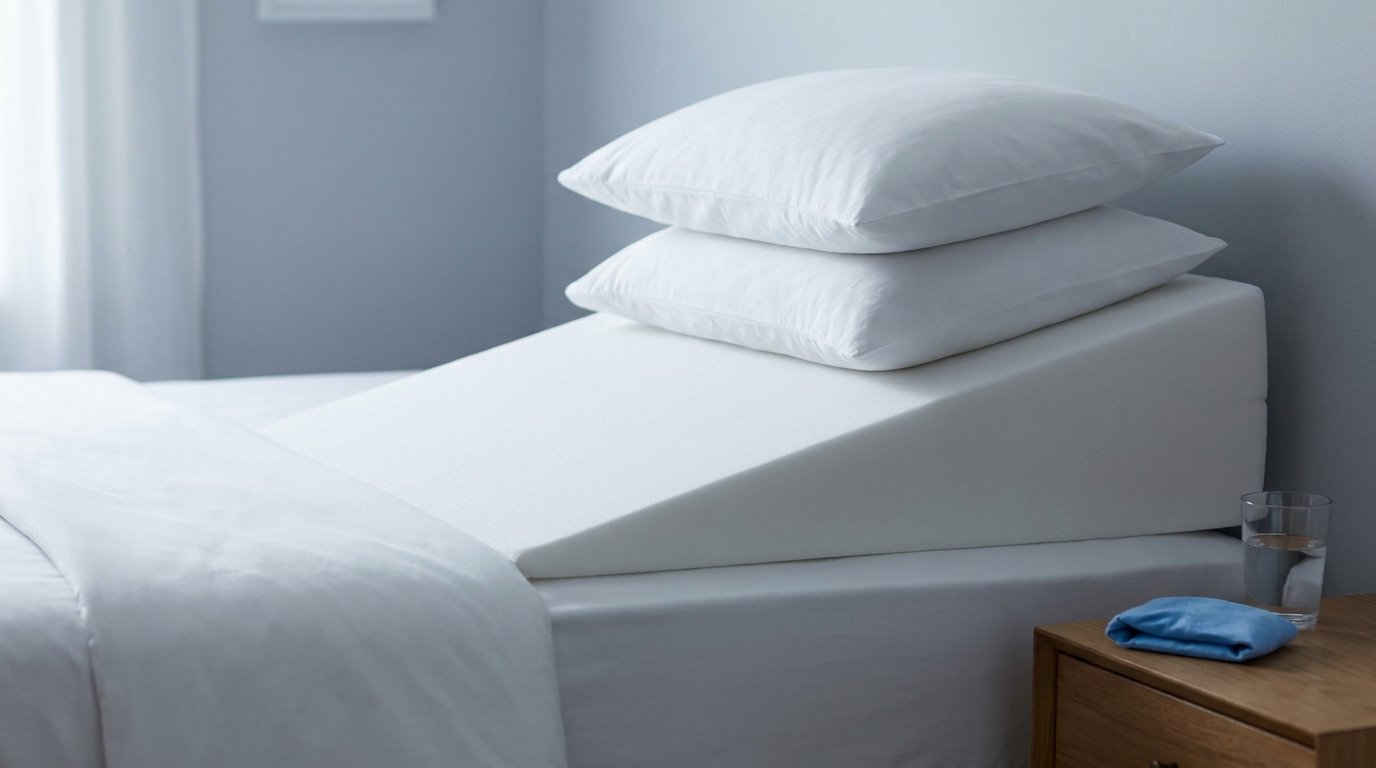
The rest is mostly about not provoking the tissue while it heals: no bending forward with the head below heart level, no heavy lifting, no hot showers aimed at the forehead, and no returning to the gym on the basis that you feel fine.
📋 Ask before taking anything Some painkillers, supplements and herbal products increase bruising. Check with your surgical team before adding anything to what they prescribed.
- ✓Sleep elevated for at least 10-14 days: Two pillows or a wedge. Side-sleeping on a swollen brow tends to make one eye puffier than the other.
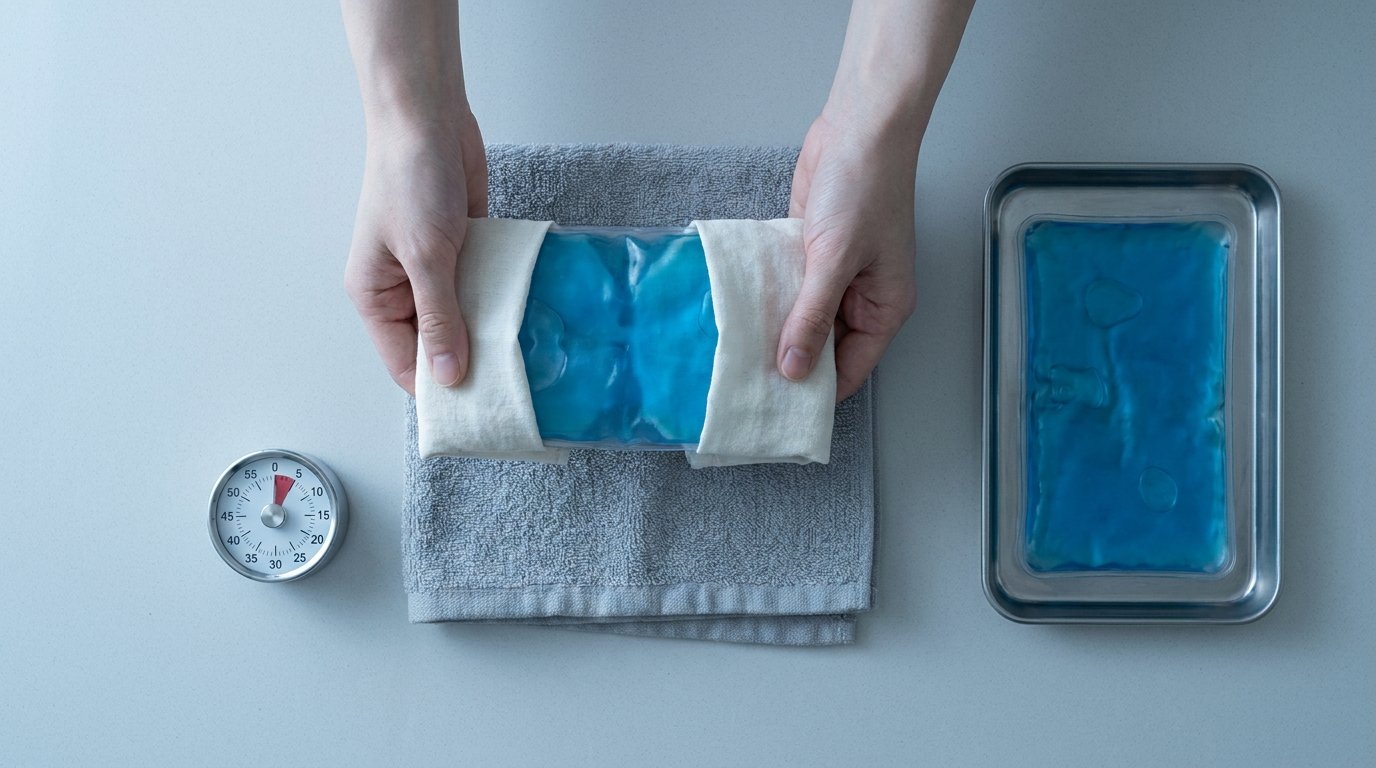
- ✓Cold compresses only in the first 48-72 hours: Short intervals, never pressed hard onto the incision line, and only if your surgeon has approved it.
- ✓Keep salt and alcohol down for the first week: Both encourage fluid retention, which shows up quickly in the eyelids.
- ✓Walk gently, every day: Light movement helps circulation and lymphatic drainage without raising blood pressure the way exercise does.
- ✓Protect the forehead from sun: Fresh scars and healing skin discolour easily. A hat and high-factor sunscreen matter for months, not weeks.
When swelling is not normal
Normal swelling is symmetrical-ish, peaks early and improves steadily. The pattern that should prompt a call is swelling that goes the other way — getting worse after day three or four, especially on one side only, or coming with increasing pain, spreading redness, heat, fever or fluid leaking from an incision.
Sudden one-sided swelling and tightness in the first 24 to 48 hours can indicate a collecting pocket of blood that needs attention. It is uncommon, but it is treated easily when reported early and much less easily when ignored for a week. Any change in vision, or swelling so severe that you cannot open an eye, needs same-day medical assessment.
If you have travelled for surgery, make sure you know before you fly home who you contact, how fast they respond, and which local clinic your team would send you to if something needed to be looked at in person.
🚨 Contact your surgeon the same day if Swelling increases after day three, is clearly worse on one side, or comes with severe pain, fever, spreading redness, discharge, or any change in your vision.
Travel, length of stay and what shapes the cost
If you are coming to Turkey for a brow lift, build the trip around the swelling curve rather than the surgery date. Most patients are asked to stay roughly seven to ten days so that the early peak passes under supervision and sutures or clips can be removed before departure. When eyelid surgery or another procedure is included, the stay is set by the bigger operation, not the brow lift.
Flying with fresh facial swelling is usually fine once your surgeon clears it, but cabin pressure and a long flight can make the eyelids puffier for a day or two afterwards. Keep hydrated, get up and walk, and do not plan a wedding for the week you land.
On cost, the sensible expectation is that your quote reflects a plan rather than a procedure name. Price is driven by the technique chosen, the complexity of the lift, whether eyelid surgery or anything else is combined in the same session, the anaesthesia and theatre time required, the surgeon’s experience, and the hospital standard. A good quote should also spell out what is included — consultation, operating theatre and anaesthesia, overnight stay if needed, follow-up visits, medication, and hotel and airport transfers where the clinic arranges them. Because most brow lifts are part of a combined plan, comparing a single-procedure headline figure against someone else’s package tells you very little. A personalised price is confirmed only after a consultation and assessment of your photographs and medical history.
Choosing a surgeon for this specifically
Brow position is unforgiving. A millimetre or two of asymmetry, or a lift placed too medially, reads as a permanently surprised expression — which is why the surgeon’s judgement about vector and height matters more here than the brand of equipment.
A surgeon with recognised plastic surgery or facial plastic credentials, a hospital or fully licensed surgical facility, a consultation that discusses brow shape and vector rather than just "lifting", and before-and-after photos of patients with a similar starting brow position to yours.
A fixed price quoted before anyone has seen your photographs, pressure to decide within a day, no named surgeon, no written aftercare plan, or promises about an exact result or recovery length.
Botulinum toxin for the outer brow or resorbable thread lifting involve minimal swelling and almost no downtime. They are shorter-lived and less powerful than surgery, but reasonable first steps for mild cases or for patients who cannot commit to a recovery period right now.
When you can judge the result honestly
The temptation is to assess the brows in week two, when the swelling has mostly gone but the deep tissue is still holding things high. That is the stage at which patients send worried messages about looking startled. In most cases it softens on its own as the forehead relaxes over the following weeks.
A fair assessment comes at around three months, and the truly final shape closer to six. Numbness, itching over the incisions and odd tingling along the scalp can persist into that window too, and generally fade gradually rather than disappearing one morning.
If something still looks genuinely asymmetrical at six months — not puffier on one side, but shaped differently — that is the point to raise it with your surgeon and discuss whether a small refinement makes sense. Raising it at week three rarely produces a useful answer.
This article is for informational purposes only and does not constitute medical advice. Always consult a qualified surgeon for personalised guidance.
Frequently Asked Questions
References
- 📎Patient outcomes, satisfaction, and improvement in headaches after endoscopic brow-lift — JAMA Facial Plast Surg, 2013
- 📎Brow Lifting with Poly-L-Lactic Acid (PLLA) and Polylactide/Glycolide (PGA), Resorbable and Coned Threads — Aesthetic Plast Surg, 2025
- 📎ASPS: Cosmetic Procedures
Related Articles
You Might Also Like


Related articles
Our specialists
 Clineca SpecialistErkan PinegözPlastic & Reconstructive Surgery
 Clineca SpecialistHakan AktaşPlastic & Reconstructive Surgery
 Clineca SpecialistOrkun UzuneyüpoğluPlastic & Reconstructive Surgery
 Clineca SpecialistSalim İskenderPlastic & Reconstructive Surgery
 Clineca SpecialistEngin SelamioğluPlastic & Reconstructive Surgery
 Clineca SpecialistCem AydınPlastic & Reconstructive Surgery
 Clineca SpecialistAlperen ÖnalEar, Nose & Throat (ENT)