
Have a question about Double Chin Liposuction?
In this article
- What double chin liposuction actually treats — and what it cannot fix
- What drives the cost of double chin liposuction in Turkey
- Is it safe, and what are the real risks?
- Recovery timeline: what the weeks actually look like
- How long should you stay in Turkey?
- Alternatives worth considering before you commit
A soft, full area under the chin is one of those features that photographs worse than it looks in the mirror, and it rarely responds to dieting the way people hope. That is why double chin liposuction in Turkey has become such a common add-on for patients already travelling for facial surgery — and why questions about cost, safety and recovery come up long before anyone books a flight. The honest answers depend less on the technique itself and more on what is actually causing the fullness under your jaw.
What double chin liposuction actually treats — and what it cannot fix
Submental liposuction (the medical term for liposuction under the chin) removes the layer of fat that sits between the skin and the muscle in that small pocket beneath your jawline. Through one or two tiny openings, usually hidden in the crease under the chin, the surgeon uses fine cannulas to thin that layer evenly. When excess fat is the only problem, the change in profile can be striking for a procedure this small.
The catch is that not every double chin is made of fat. Some are caused by loose, inelastic skin. Some by fat sitting deeper, underneath the muscle. Some by a weak or set-back chin bone, which shortens the distance between the chin and the neck and makes a normal amount of fat look like a pad. And in some people, loose bands of the platysma muscle in the neck create the heaviness.
A 2018 review in Clinical Plastic Surgery on neck lift planning made this point bluntly: removing fat under the chin and tightening skin over unaddressed anatomy does not correct those other problems, and each one has to be looked for before a surgical plan is made. This is the single most useful thing to understand before your consultation. If a clinic offers you chin liposuction after looking at one photograph and asking nothing else, you are being sold a procedure rather than assessed for one.
Skin quality matters too. Younger skin with good elasticity usually redrapes well after the fat is removed. Skin that has already lost tone may need tightening as well, which moves you toward a neck lift rather than liposuction alone.
📋 Ask this at your consultation Ask your surgeon to tell you, specifically, how much of your double chin is fat, how much is skin laxity, and whether your chin projection plays a role. The answer determines whether liposuction alone is the right operation for you.
What drives the cost of double chin liposuction in Turkey
Turkey’s price advantage for facial contouring is real and comes down to lower clinic running costs, lower staff costs and a favourable exchange rate for most international patients — not to a cheaper operation. What varies from quote to quote is the complexity of the plan and the standard of care around it. A personalised price can only be confirmed after a consultation and a look at your photographs or an in-person assessment.
Here is what genuinely moves the number, and what a serious quote should already contain.
| Cost driver | Why it changes your quote |
|---|---|
| Anaesthesia type | Local anaesthesia with or without light sedation costs less than a general anaesthetic with a full theatre team |
| Scope of the plan | Fat under the chin alone versus liposuction combined with a chin implant, neck tightening or a lift |
| Technique used | Standard liposuction versus ultrasound- or laser-assisted devices, which add equipment cost |
| Surgeon’s field | A facial plastic or maxillofacial surgeon (jaw and face specialist) with a long submental caseload prices differently from a general practitioner |
| Hospital standard | Accredited private hospital with overnight capability versus a small day-surgery clinic |
| Package inclusions | Hotel nights, airport and clinic transfers, interpreter, compression garment, medication and follow-up visits |
| Combined procedures | Sharing one anaesthesia and one trip reduces the cost per procedure compared with two separate journeys |
That last line is not theoretical. Among the people who come to us for work under the chin, roughly four in five have it done alongside another operation in the same session, most often a rhinoplasty. For you as a reader that means the figure you see quoted for “double chin liposuction” in isolation is probably not the figure you will end up budgeting — most patients are pricing a two-procedure plan, a single recovery and a slightly longer stay, so compare quotes on the whole plan rather than on the chin alone.
If you are weighing a combined facial plan, our notes on what an all-inclusive surgery package in Turkey actually includes are worth reading before you compare two quotes line by line. A cheap headline price that excludes transfers, garments, medication and follow-up is not cheap.
⚠️ Treat an unusually low quote as a question, not a bargain If one quote sits far below every other, ask what is missing: the surgeon’s qualification, the anaesthetist, the hospital accreditation, or the follow-up. Price differences in facial surgery almost always correspond to something concrete.
Is it safe, and what are the real risks?
Liposuction under the chin is one of the smaller operations in facial surgery. The treated area is tiny, the volume of fat removed is small, and in suitable patients it can be done without a general anaesthetic. A 2024 report in the Indian Journal of Plastic Surgery described ultrasound-assisted chin liposuction performed under local anaesthesia as an effective facial slimming option with a quick recovery, which reflects how many surgeons now approach straightforward cases.
That said, it is still surgery in a region crowded with important structures. The realistic risks include prolonged swelling, temporary numbness, bruising, small irregularities or dents if fat is removed unevenly, fluid collecting under the skin, infection, and — uncommonly — a temporary weakness of the nerve branch that moves the lower lip, which can make a smile look uneven for a while. Scars are small and usually hidden in the natural crease, but they exist.
The things that genuinely reduce risk are unglamorous: an accredited hospital or licensed surgical clinic, a qualified anaesthetist present if you are sedated, a surgeon who operates on faces regularly rather than occasionally, and a clear plan for what happens if something does not heal as expected. Ask who will see you at follow-up, and who you contact once you are home.
Safety also depends on honesty about your own health. Blood-thinning medication, smoking, uncontrolled blood pressure and some supplements all affect bleeding and healing, and they need to be disclosed well before surgery rather than on the morning of it.
🚨 Contact your clinic urgently if You develop spreading redness, fever, a sudden increase in swelling on one side only, worsening rather than easing pain after the first few days, or difficulty swallowing or breathing. These need assessment, not waiting.
A named, board-certified surgeon you can verify; an accredited facility; a consultation that assesses skin, fat and chin position rather than just selling; written aftercare and a reachable contact once you fly home.
Guaranteed results, pressure to book during the first message exchange, no named surgeon until arrival, a price that only holds "today", or no answer about what happens if you need a revision.
Recovery timeline: what the weeks actually look like
Downtime is short compared with most facial surgery, but the final result is slow. The area under the chin holds swelling stubbornly, and people are often surprised that their jawline looks less defined in week one than it did before surgery. That is fluid, not a failed operation.
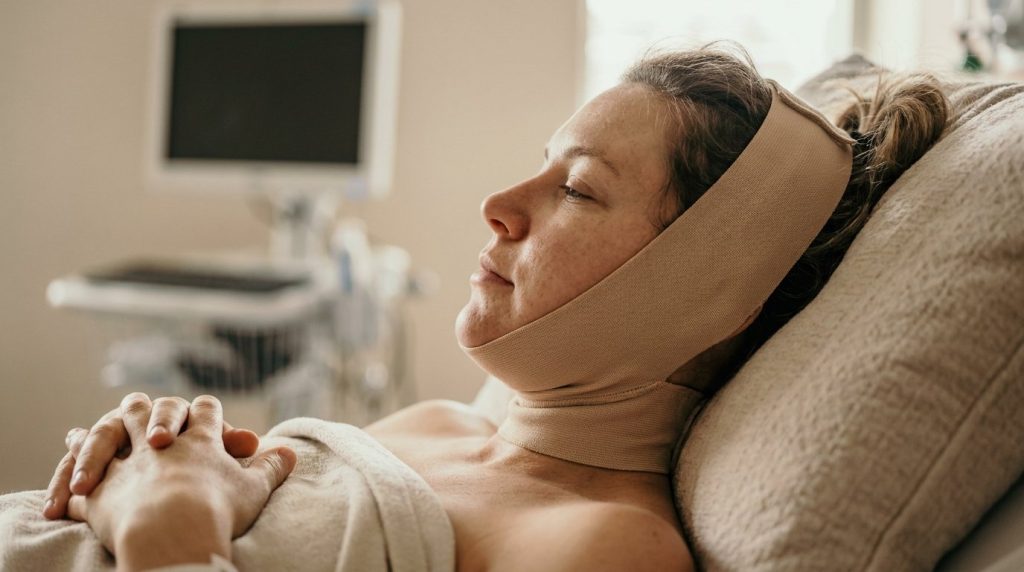
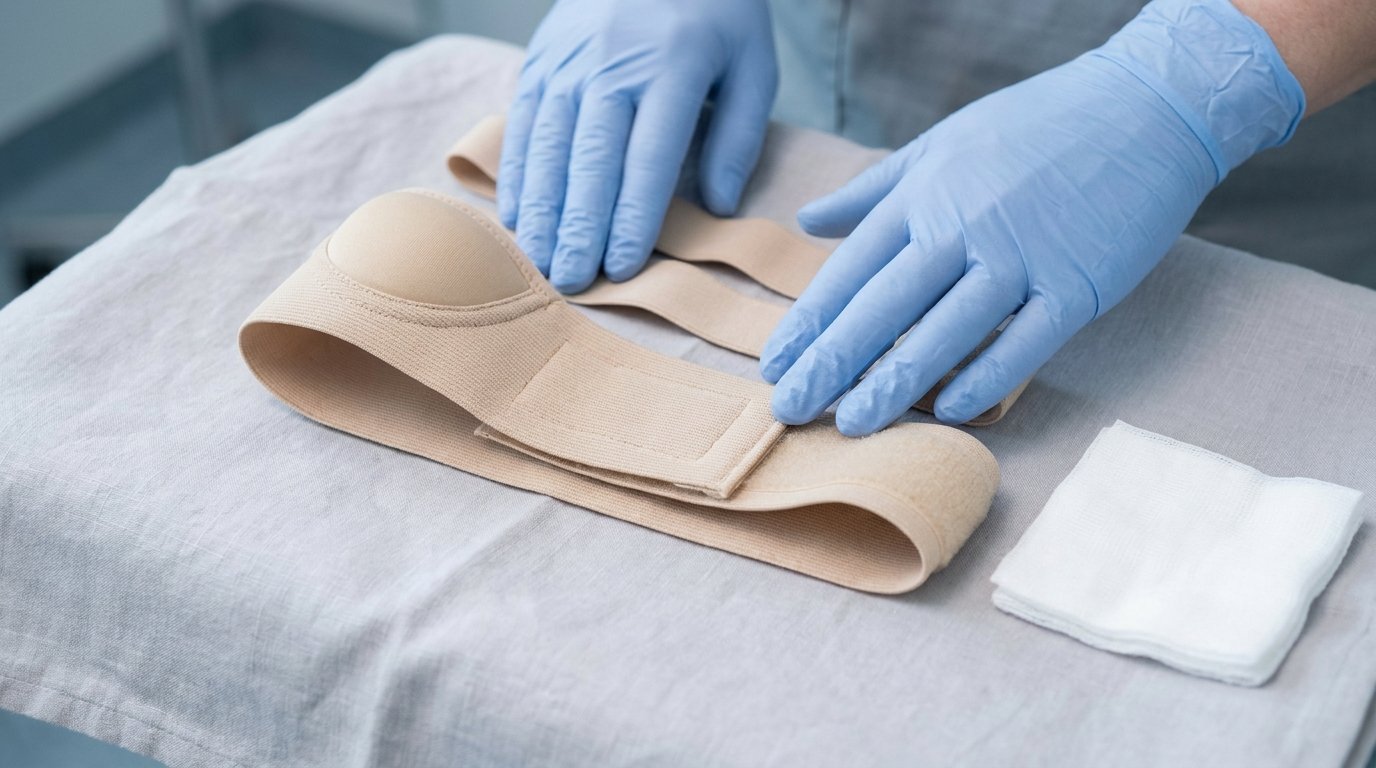
Most patients wear a compression garment or chin strap for the first week or two, almost continuously at first and then mainly at night. It feels odd rather than painful. Discomfort is usually described as tightness and soreness rather than sharp pain, and simple painkillers are generally enough.
| Stage | What to expect |
|---|---|
| Days 1–3 | Swelling, bruising and tightness peak; garment worn most of the day; soft foods are easier |
| Days 4–7 | Bruising starts to fade; most desk work and light daily activity feel manageable |
| Weeks 2–3 | Looks presentable to people who don’t know you had surgery; numbness and firmness remain |
| Weeks 4–6 | Jawline definition becomes visible; light exercise usually resumed on your surgeon’s advice |
| Months 2–3 | Firm lumpiness under the skin softens; contour settles noticeably |
| Months 3–6 | Residual swelling resolves and the final shape appears |
If you want the detail day by day, we cover the first week after double chin liposuction and the full swelling and recovery timeline separately.
One caveat on timing that catches combined-surgery patients out: recovery runs at the pace of the bigger operation. If your chin liposuction is done alongside a rhinoplasty, plan around the nose timeline, not the chin one.
- ✓Sleep slightly elevated: Propping your head up for the first week or so helps fluid drain away from the treated area.
- ✓Wear the garment as instructed: It is the cheapest and most effective thing you control, and skipping it tends to prolong swelling.
- ✓Keep salt low and water high: Salty meals visibly worsen facial swelling in the early weeks.
- ✓Delay heavy lifting and hot saunas: Both increase blood flow and swelling before healing has settled.
- ✓Expect numbness to come and go: Odd tingling and patchy numbness under the chin is normal and usually fades over weeks to a few months.
How long should you stay in Turkey?
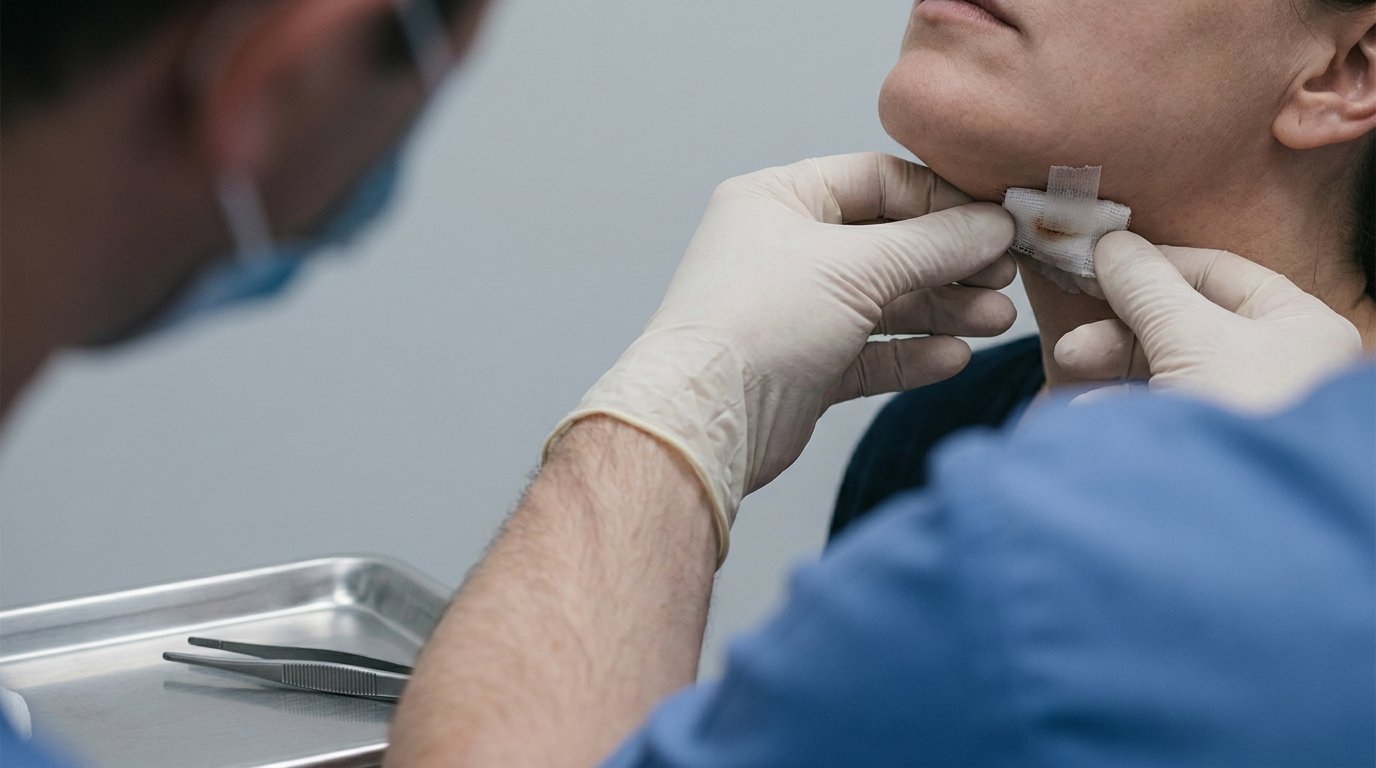
For liposuction under the chin alone, a short trip is usually enough. Most patients plan arrival a day before surgery for consultation and tests, then a few days afterwards so the surgeon can check the area, remove dressings and confirm you are fit to fly. A stay of roughly five to seven nights gives comfortable margin without rushing the first check.
Combined plans need longer. If a rhinoplasty, chin implant or neck lift is added, your stay is set by that procedure, and a week to ten nights becomes more realistic. Trying to compress a combined facial plan into a long weekend is the most common planning mistake we see.
Flying itself is not usually a problem once your surgeon clears you, though cabin pressure and the dry air can make swelling feel worse for a day or two. Book a flexible return ticket if you can. Timing concerns — fitting surgery around work, holidays or a wedding — are worth raising at the consultation stage rather than afterwards, because the surgeon can tell you honestly when you will look photograph-ready as opposed to merely healed.
Practical logistics matter more than people expect when your face is swollen and you are in an unfamiliar city. A clinic that arranges airport and hospital transfers, a hotel within a short drive, and an interpreter for appointments removes most of the friction. Our guide to accommodation and transfers for facial surgery patients covers how this usually works in practice.
Alternatives worth considering before you commit
Liposuction is not the only route to a sharper jawline, and it is not always the right one. The best choice depends on what is causing the fullness and on how much downtime you are willing to accept.
Injectable fat-dissolving treatment is one non-surgical option. Deoxycholic acid injections (marketed as ATX-101) were reviewed in Expert Review of Clinical Pharmacology in 2016 as a treatment for reducing fat under the chin, as an alternative to surgical contouring and targeted liposuction. It avoids an operation, but typically needs several sessions, causes significant temporary swelling and is less predictable for larger volumes.
Chin position is the other factor people overlook. A 2025 randomised trial in the Journal of Craniofacial Surgery compared advancement genioplasty — surgery to move the chin bone forward — with and without liposuction under the chin in patients who had both a double chin and a set-back chin, specifically to see what each contributed to the aesthetic result. The practical lesson is that when the chin itself is weak, addressing fat alone may not deliver the profile change you are picturing. Our comparison of a chin implant versus chin reduction for facial balance is a useful starting point if that sounds like your situation.
This article is for informational purposes only and does not constitute medical advice. Always consult a qualified surgeon for personalised guidance.
No surgery and no garment, but multiple sessions, marked temporary swelling and a more modest, less predictable reduction than liposuction.
The better answer when loose skin or muscle banding, not fat, is creating the heaviness. Longer recovery and visible but well-hidden scars.
If your chin sits back, bringing it forward can sharpen the whole profile — sometimes alongside liposuction, sometimes instead of it.
If your weight is still changing significantly, results are easier to judge and more stable once it has settled.
Frequently Asked Questions
References
- 📎Neck Lift: Defining Anatomic Problems and Choosing Appropriate Treatment Strategies — Clinics in Plastic Surgery, 2018
- 📎Ultrasound-Assisted Chin Liposuction under Local Anesthesia: An Effective Tool for Facial Slimming — Indian Journal of Plastic Surgery, 2024
- 📎Aesthetic Outcome of Isolated Advancement Genioplasty With and Without Submental Liposuction in Double Chin Patients — Journal of Craniofacial Surgery, 2025
- 📎ATX-101 (deoxycholic acid injection) for reduction of submental fat — Expert Review of Clinical Pharmacology, 2016
- 📎NHS — Cosmetic procedures
You Might Also Like


Related articles


Our specialists
 Clineca SpecialistErkan PinegözPlastic & Reconstructive Surgery
 Clineca SpecialistHakan AktaşPlastic & Reconstructive Surgery
 Clineca SpecialistOrkun UzuneyüpoğluPlastic & Reconstructive Surgery
 Clineca SpecialistSalim İskenderPlastic & Reconstructive Surgery
 Clineca SpecialistEngin SelamioğluPlastic & Reconstructive Surgery
 Clineca SpecialistCem AydınPlastic & Reconstructive Surgery
 Clineca SpecialistAlperen ÖnalEar, Nose & Throat (ENT)