Have a question about Double Chin Liposuction?
In this article
- What is normal in the first week after double chin liposuction?
- What should you do and avoid in the first seven days?
- How much pain, swelling, bruising, and numbness is typical day by day?
- When should you worry and call your surgical team?
- How long should you stay in Turkey after under-chin liposuction?
- When can you go back to work, social plans, and flying?
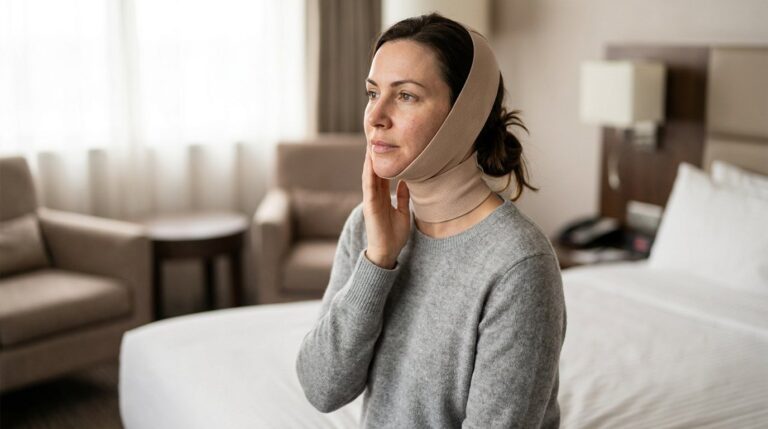
What to expect during double chin liposuction recovery in the first week is usually swelling, tightness, mild to moderate soreness, a compression garment, and a face that looks worse before it looks better. Most people feel presentable at home within a few days, but the first week is still an early healing phase, and your timeline can vary depending on the technique used, the anaesthetic, and whether liposuction was combined with another procedure.
What is normal in the first week after double chin liposuction?
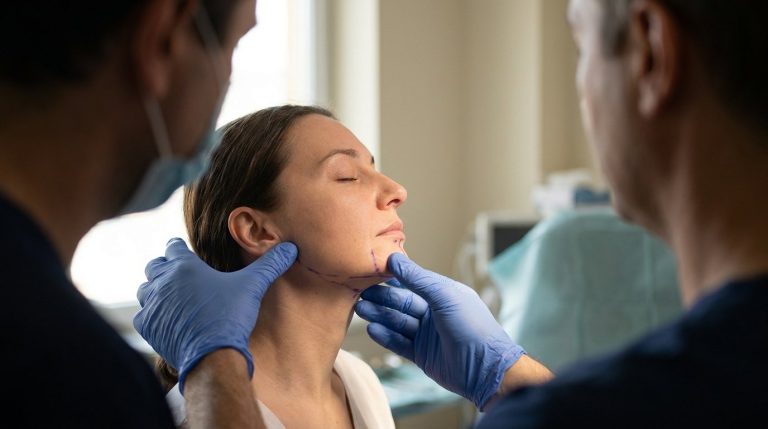
The first week is mostly about inflammation and fluid shift, not the final cosmetic result. Under-chin liposuction is a smaller-area procedure than abdominal or thigh liposuction, but the neck is visible and moves constantly when you talk, swallow, turn your head, or sleep. That is why the area can feel more noticeable than patients expect.
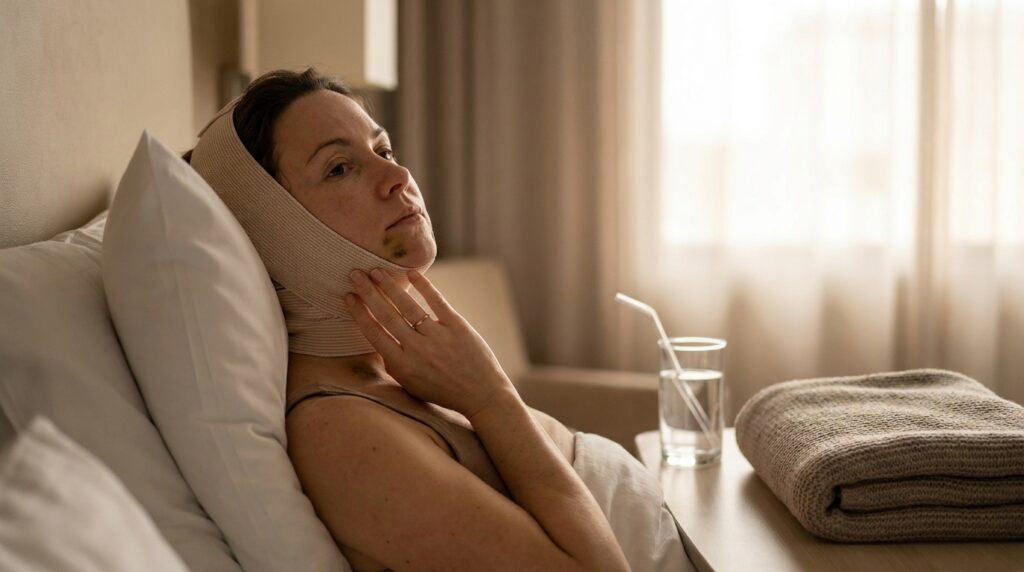
During the first 24 to 72 hours, swelling is usually the main issue. The area may feel puffy, warm, tight, and tender. Some patients also notice a feeling of pressure rather than sharp pain. Bruising can be mild or more obvious depending on how easily you bruise, whether you take blood-thinning medicines, and the extent of suctioning.
By days 4 to 7, bruising may begin to fade while swelling can still come and go. It is also common to feel firmness or small lumpy areas under the skin. That does not automatically mean something is wrong. After liposuction, tissues can feel hard before they soften. According to the American Society of Plastic Surgeons, swelling and bruising are expected after liposuction, and recovery speed varies from person to person.
Numbness is another common early symptom. The skin under the chin or along the jawline can feel strange, less sensitive, or slightly “wooden.” That can improve gradually over weeks to months. A small amount of pink-tinged drainage from incision sites can happen at the start if fluid was left to drain.
Because this is a recovery-first question, it helps to say the uncomfortable part plainly: in the first week, your neck contour may not look better yet. In fact, it may look fuller or more irregular because of swelling. That is a normal reason patients worry too soon.
Why timelines vary
Your first week can look a bit different if the surgeon used local anaesthetic rather than general anaesthetic, if more fat was removed, or if the procedure was combined with something like a neck lift or chin augmentation. Combined procedures often mean more swelling, more bruising, and a longer social recovery. If skin tightening energy devices were used at the same time, tenderness and firmness can also feel different from liposuction alone.
📋 Early swelling can hide the result A fuller-looking chin in the first week does not mean the procedure failed. Swelling often makes the area look worse before it starts to look more defined.
In the first week, it is typical to have swelling, bruising, numbness, firmness under the chin, and some unevenness. Mild drainage from tiny incision sites can happen early on. Most people improve day by day, but final contour does not show this soon because swelling can hide the result.
What should you do and avoid in the first seven days?
Simple habits make a real difference in the first week. Most surgeons ask patients to wear a compression garment around the chin and neck for a set number of days, sometimes continuously at first. The exact schedule varies, so your own post-op instructions matter more than general advice online.
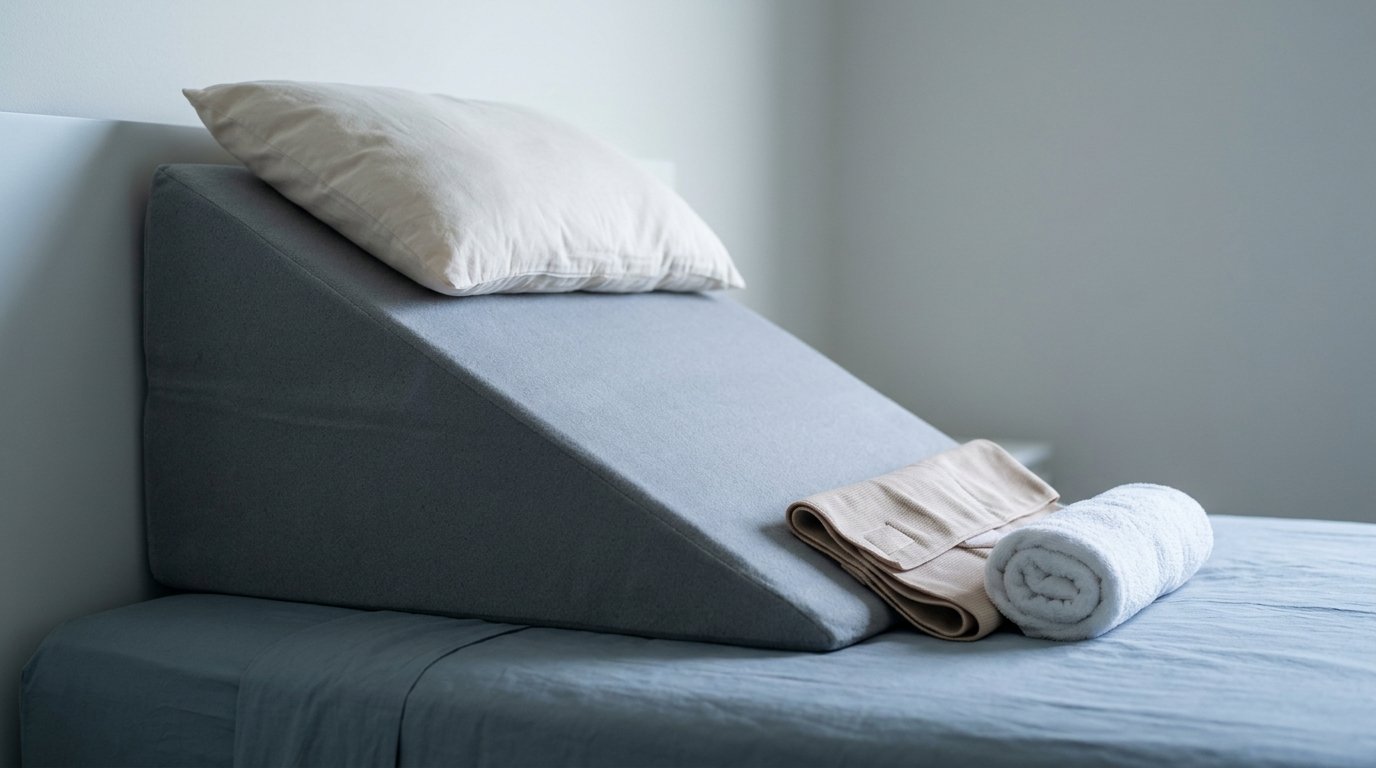
Sleeping with your head raised can help limit swelling. Many patients do better with two pillows or a wedge pillow so the neck stays supported and they are less likely to roll onto the side. If you wake up more swollen, that is common in the morning and often settles as the day goes on.
Short, gentle walks are usually encouraged after surgery because light movement helps circulation. Hard exercise is different. Gym sessions, running, heavy lifting, and anything that raises blood pressure too much can make swelling worse and may increase the risk of bleeding. The NHS advises that people should understand recovery restrictions before cosmetic procedures, and this is one of the key practical ones.
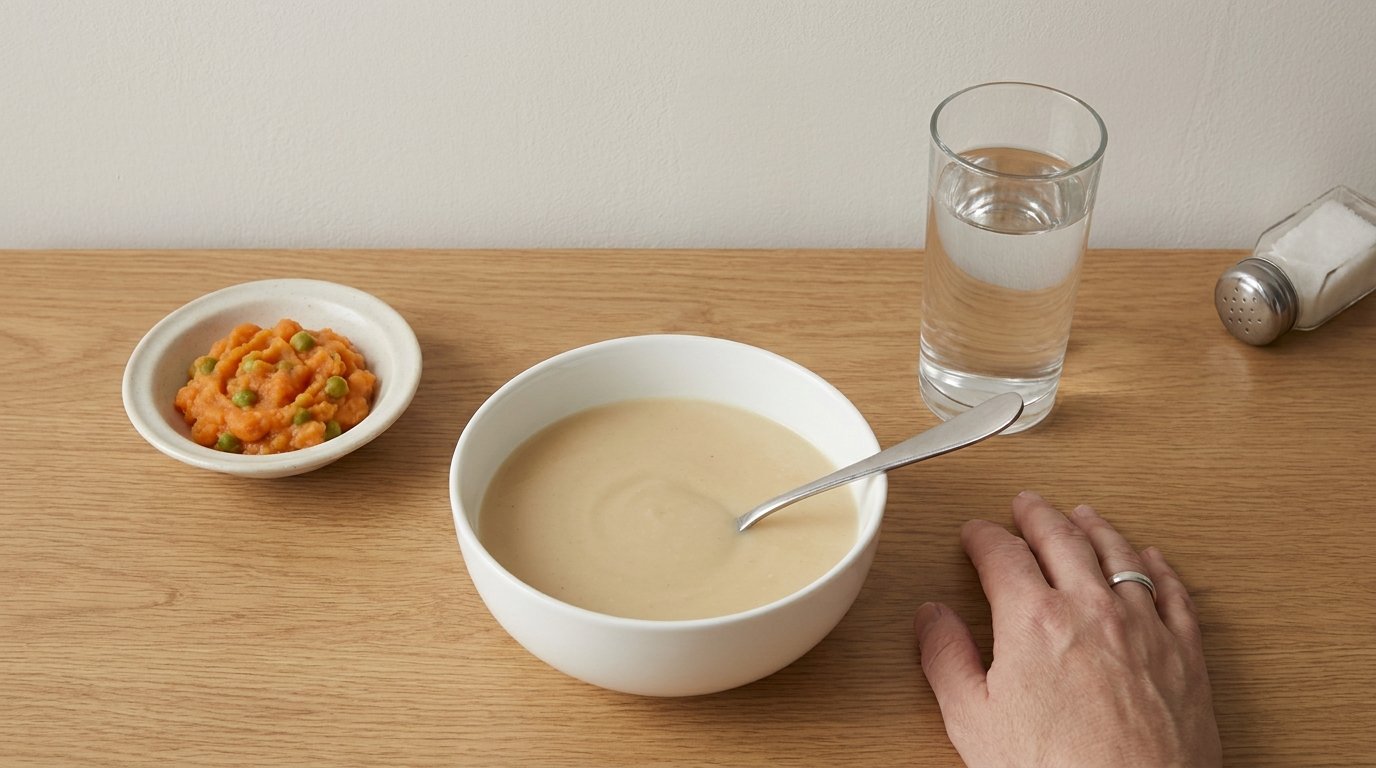
Food and drink matter more than most people expect. Staying hydrated and eating soft, lower-salt meals for the first days can be more comfortable when chewing and swallowing feel tight. Smoking is especially unhelpful because it reduces blood flow and can impair healing.
Doctors also usually ask patients not to massage the area unless they have specifically been told to do so. Some people think rubbing out lumps will help, but early, unsupervised massage can irritate healing tissue.
First-week do and don’t summary
Use this as a general guide, but always follow your own surgeon’s instructions if they differ.
⚠️ Your own aftercare sheet comes first Compression, showering, sleeping position, and return-to-work advice can differ by technique, anaesthetic, and whether another procedure was done at the same time.
- ✓Do wear compression as instructed: The schedule varies by surgeon and technique. Some want near-constant wear at first.
- ✓Do sleep with your head elevated: This can help limit swelling and makes accidental pressure on the neck less likely.
- ✓Do take short walks: Gentle movement is usually fine and may help you feel better overall.
- ✓Do take medicines exactly as prescribed: That includes pain relief, antibiotics if given, and advice on what to avoid.
- ✓Don’t do intense exercise: Heavy effort in the first week often makes swelling and throbbing worse.
- ✓Don’t smoke or vape nicotine if told to stop: Nicotine can slow healing and increase wound problems.
- ✓Don’t press, massage, or stretch the area unless instructed: Early healing tissues are easily irritated.
- ✓Don’t judge the contour in week one: Swelling and firmness can hide the real result.
The first week is mainly about rest, compression, short walks, sleeping with your head elevated, and following the surgeon’s written aftercare exactly. Avoid smoking, alcohol if your team advises against it, hard exercise, heavy lifting, and judging the result too early while swelling is still high.
How much pain, swelling, bruising, and numbness is typical day by day?
Pain is often manageable with prescribed or surgeon-approved pain relief, but the sensation is not the same for everyone. Some people feel soreness similar to a deep bruise. Others mainly notice tightness, pressure, or a pulling feeling when turning the head.
Swelling often peaks in the first few days. This is the stage when the lower face can look rounder than expected. If a drain was not used, or if the surgeon used fluid infiltration as part of the technique, the area may stay quite puffy early on.
Bruising can spread a little lower into the upper neck. The colour may darken before it lightens. That can be unsettling if you were expecting a tiny-area procedure to leave almost no marks.
Numbness and firmness tend to outlast pain. Small ridges or a slightly uneven feel under the skin are common early healing features. They often settle gradually as swelling comes down and tissue softens.
The table below is only a typical pattern, not a promise. A person having isolated submental liposuction under local anaesthetic may feel quite different from someone who had chin liposuction plus a neck lift under general anaesthetic.
Most patients describe the first week as more awkward than severely painful. Days 1 to 3 are often the most swollen and tight. Bruising may become more visible before it fades. Numbness, firmness, and mild asymmetry can last longer than pain, even when healing is going normally.
When should you worry and call your surgical team?
Most first-week symptoms are expected, but there are warning signs that should not be brushed off. The NHS advises that people considering cosmetic procedures should know the risks and aftercare in advance, and liposuction is no exception. Mayo Clinic also notes that liposuction carries risks such as fluid buildup, infection, and contour irregularities, even though many patients recover without serious problems.
You should contact your surgical team promptly if swelling suddenly increases instead of gradually improving, especially if one side becomes much larger, harder, or more painful. A growing collection of blood or fluid can need assessment. Heat, redness that keeps spreading, fever, or discharge with a bad smell can suggest infection.
Breathing difficulty, chest pain, or calf pain are not routine recovery symptoms and need urgent medical attention. Those are not common after a small-area facial liposuction procedure, but serious post-operative problems should never be self-diagnosed online.
Another reason to call is pain that feels out of proportion. If prescribed medicine is not touching it, or if the pain is getting worse rather than better, it is worth asking to be reviewed.
If you are travelling for surgery, make sure you know exactly who to contact after hours, how to send photos securely, and where you would be assessed locally if your team is not immediately nearby.
🚨 Get urgent help for breathing trouble or chest pain These are not normal first-week symptoms. Seek urgent medical care rather than waiting for a routine reply.
Swelling, bruising, tightness, numbness, firmness, mild drainage, and a contour that still looks uneven in week one.
Sudden worsening swelling, strong redness, fever, heavy bleeding, foul-smelling fluid, severe pain, or one side becoming markedly harder and larger.
Mild swelling, bruising, numbness, and soreness are common. Fast-rising swelling, severe pain that is not settling, fever, foul-smelling discharge, heavy bleeding, trouble breathing, or one-sided worsening needs prompt medical advice. If you feel something is clearly not right, contact your surgical team rather than waiting it out.
How long should you stay in Turkey after under-chin liposuction?
For a small-area procedure such as under-chin liposuction, patients travelling from abroad are often told to remain in Turkey for the early post-op review and for basic monitoring during the first days. That is less about comfort and more about practical safety. If dressings need changing, fluid needs checking, or the compression fit needs adjusting, it is easier to deal with that before flying home.
If the liposuction was done on its own, the stay may be shorter than for a combined facial surgery plan. If it was paired with a neck lift, facelift, or chin implant, expect a more involved first week and a longer stay recommendation.
The key point is not the exact number of nights. It is whether you have been examined, understand your aftercare, and have a clear remote follow-up plan once you leave. A personalised quote and itinerary are normally confirmed after consultation rather than assumed in advance.
For medical travel, patients are often advised to stay long enough for early checks and the most reactive swelling phase to pass. The exact length depends on whether the treatment was liposuction alone or combined with another operation, plus how your first days of healing are going.
When can you go back to work, social plans, and flying?
Many patients are physically functional before they are socially ready. That is worth planning for if your work involves meetings, video calls, or being on camera. If you can work remotely and keep your compression garment on, the return often feels easier.
If your job is physical, the timeline is different. Repeated bending, lifting, and straining can increase swelling and discomfort. A quieter first week is usually easier on the neck.
Flying is also a practical concern for health-tourism patients. Airlines do not set cosmetic-surgery fitness rules for healing itself, so this should come from your treating surgeon. The question is not only the flight. It is whether you have passed the point where early bleeding, fluid collection, or pressure problems are likely enough that your team would still want to review you in person.
For social events, it is sensible not to book anything important in the first week if you can avoid it. Even if you feel fine, visible swelling, bruising, and the need for compression can make you feel less presentable than expected.
Some people feel able to do desk-based work within a few days, but visible swelling and bruising often make a full social return slower than a physical return. Flying and work timing depend on your surgeon’s advice, the anaesthetic used, and whether you had liposuction alone or a combined procedure.
Frequently Asked Questions
References
- 📎American Society of Plastic Surgeons: Liposuction
- 📎NHS: Cosmetic procedures
- 📎Mayo Clinic: Liposuction
- 📎PubMed search: submental liposuction recovery complications

You Might Also Like



Related articles

Our specialists
 Clineca SpecialistErkan PinegözPlastic & Reconstructive Surgery
 Clineca SpecialistHakan AktaşPlastic & Reconstructive Surgery
 Clineca SpecialistOrkun UzuneyüpoğluPlastic & Reconstructive Surgery
 Clineca SpecialistSalim İskenderPlastic & Reconstructive Surgery
 Clineca SpecialistEngin SelamioğluPlastic & Reconstructive Surgery
 Clineca SpecialistCem AydınPlastic & Reconstructive Surgery
 Clineca SpecialistAlperen ÖnalEar, Nose & Throat (ENT)