Have a question about Double Chin Lift / Liposuction?
In this article
- What does recovery usually look like after double chin liposuction?
- How long does swelling last after under-chin liposuction?
- What is normal during healing, and what is not?
- When can you work, exercise, sleep normally, and fly home?
- What helps swelling go down, and what can make it worse?
- How do you choose a clinic and plan a safe recovery in Turkey?
- When will you see the final jawline result?
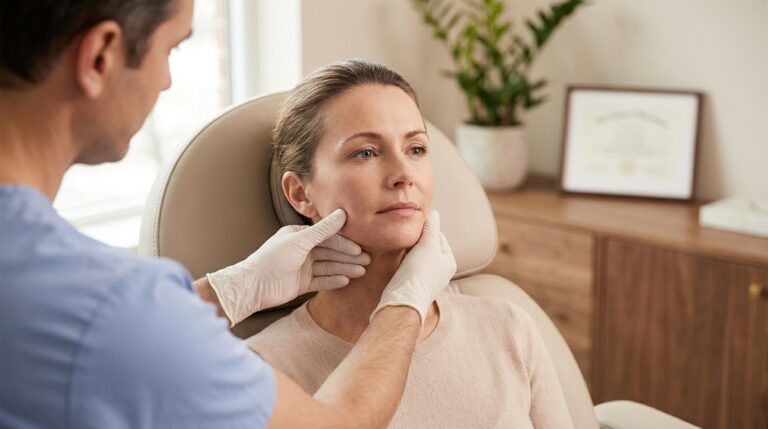
If you are researching double chin liposuction, the part most people really want to picture is the recovery: how swollen you will look, how long that puffy or tight feeling lasts, and when the result starts to look more like your own jawline again. The double chin liposuction swelling and recovery timeline is usually manageable, but it is not instant, and knowing the usual stages can make the first few weeks much less stressful.
What does recovery usually look like after double chin liposuction?
Double chin liposuction is a small-area fat removal procedure, but the neck and under-chin area can still swell quite noticeably because the skin is thin and the tissues are compact. Many patients expect a quick bounce-back because the treatment area is small. In practice, the first phase is often more obvious than expected, especially during the first several days.
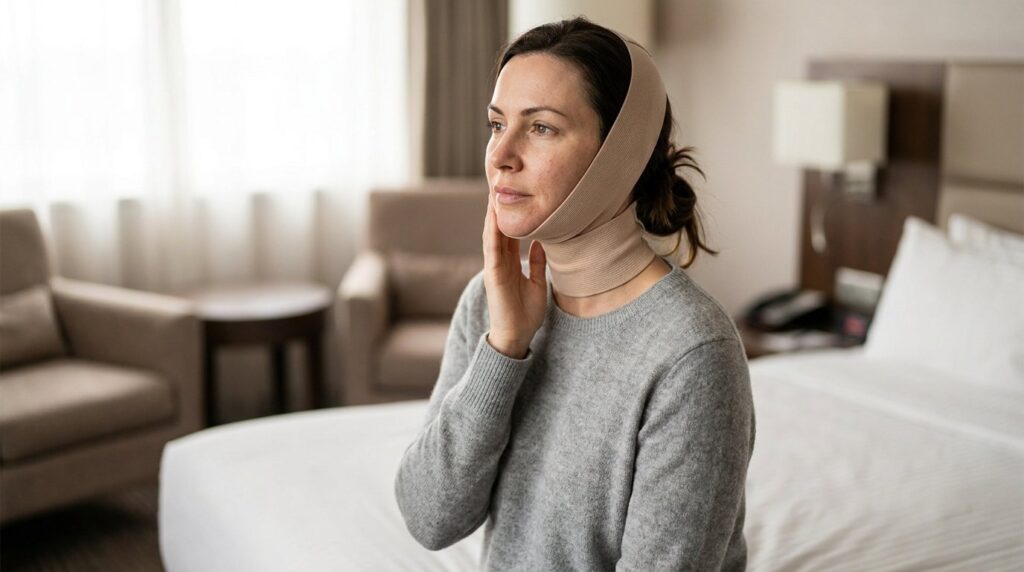
According to the NHS, bruising and swelling are common after cosmetic surgery, and the exact recovery pattern varies from person to person. That is particularly true under the chin, where even mild fluid build-up can change the shape of the neck and jawline for a while. The result you see in the mirror during week one is not the final result.
A typical pattern looks like this: the first two to three days are often the most swollen or tight; bruising can become more visible over several days rather than immediately; then the area gradually softens over the next few weeks. Many people feel socially presentable before the swelling is fully gone, but the finer definition usually takes longer.
If liposuction is combined with another procedure, such as a neck lift or facelift, recovery is usually longer and the swelling pattern is different. A standalone under-chin liposuction procedure often settles faster than combination surgery, but it still needs patience.
📋 A normal early result can look uneven One side may look puffier than the other in the first days or weeks. Small asymmetries are often related to swelling, compression, sleeping position, or bruising rather than the final contour.
How long does swelling last after under-chin liposuction?
The short answer is that most of the obvious swelling improves within the first few weeks, but subtle swelling can last longer. This is one of the most important points to understand before treatment. The area may look much better well before it is fully healed.
Plastic surgery guidance from the American Society of Plastic Surgeons notes that healing continues over time after liposuction, and that post-operative swelling is part of the normal process. In the chin and neck area, that often means there are two timelines happening at once: the visible swelling that improves fairly early, and the deeper tissue settling that takes longer.
For many patients, the timeline feels roughly like this:
- ✓First 48 to 72 hours: swelling and tightness are usually at their strongest, and the area may feel firm, numb, or awkward when turning the head.
- ✓Days 4 to 7: bruising may become more obvious before it starts to fade; swelling can still look quite noticeable, especially in the morning.
- ✓Weeks 2 to 3: a clear improvement is common, and many patients feel comfortable returning to work or light social activity if bruising is minimal.
- ✓Weeks 4 to 6: a more refined jawline often starts to show, though mild puffiness or firmness can remain.
- ✓Several months: final settling continues as tissues soften and skin adjusts to the new contour.
That does not mean every patient follows the same calendar exactly. Age, skin quality, the amount of fat removed, smoking, whether energy-based tightening was added, and how consistently you wear your compression garment can all affect how quickly the neck settles.
What is normal during healing, and what is not?
Normal healing after double chin liposuction can look stranger than many people expect. Mild lumpiness, a firm or wooden feeling under the skin, numb patches, tenderness, and a pulling sensation when swallowing or extending the neck can all happen early on. These symptoms often improve gradually as swelling settles and the tissues loosen.
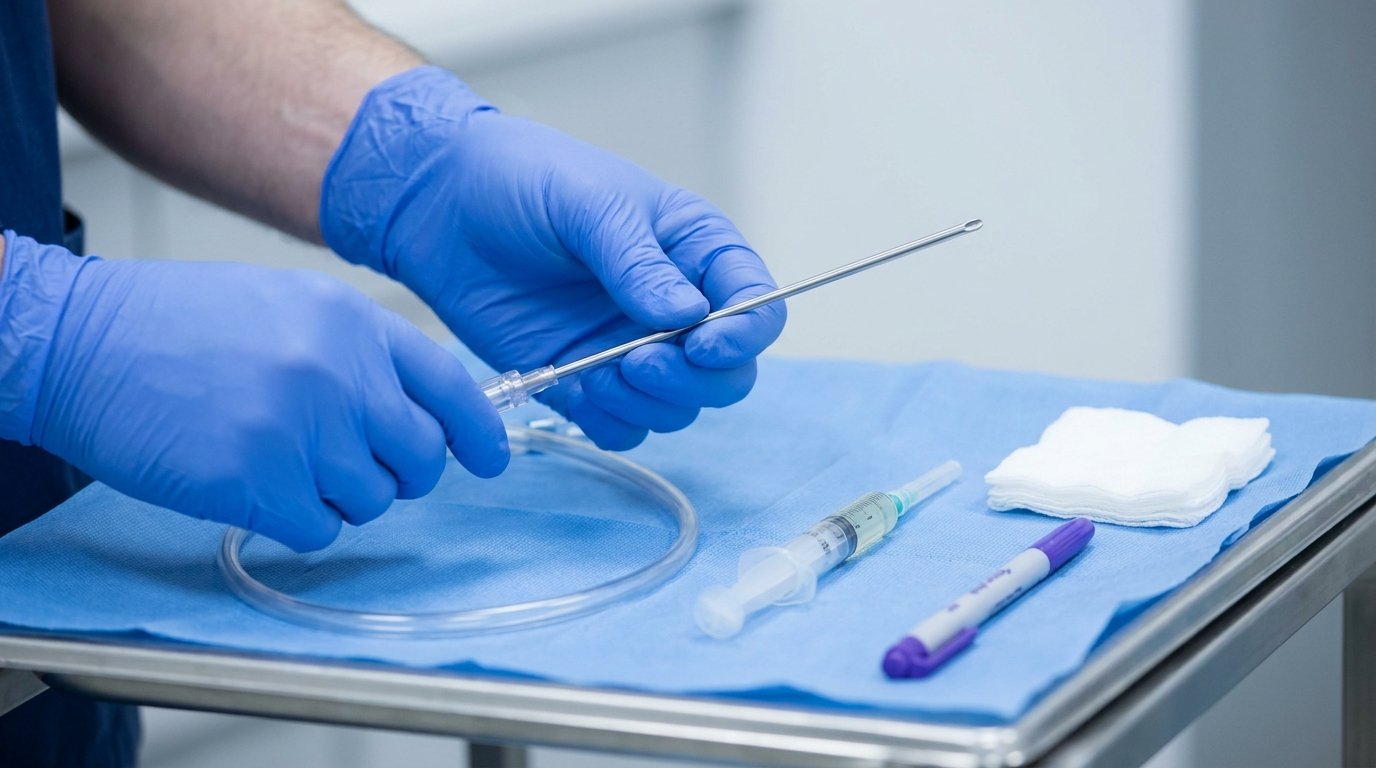
A small amount of drainage from the incision sites in the first day or so can also be normal, depending on the technique used. Compression garments may leave temporary marks, and the chin can feel more swollen first thing in the morning.
What should make you more cautious is not simple puffiness, but a change that feels severe, sudden, or progressive. The NHS advises seeking urgent medical help after cosmetic procedures if you have symptoms that suggest infection or a blood clot. For a small-area facial liposuction case, contact your surgical team promptly if you notice:
- ✓Rapidly increasing swelling rather than slow improvement
- ✓One side becoming much larger, harder, or more painful than the other
- ✓Spreading redness, heat, or pus-like discharge
- ✓Fever or feeling generally unwell
- ✓Severe pain not controlled by prescribed medication
- ✓Shortness of breath, chest pain, calf pain, or marked leg swelling
Shortness of breath or chest pain is especially important. Those are not routine recovery symptoms. They need urgent assessment.
⚠️ A hard swelling can sometimes be a fluid or blood collection A sudden tense swelling, especially if it is painful or makes one side look clearly larger, should be reported quickly. It may need review rather than simple watchful waiting.
🚨 Breathing symptoms are never a ‘wait and see’ issue Chest pain, faintness, shortness of breath, or coughing blood needs urgent medical attention, even after a smaller cosmetic procedure.
When can you work, exercise, sleep normally, and fly home?
Returning to daily life happens in stages, not all at once. Desk-based work is often possible sooner than exercise or long travel, but timing depends on bruising, swelling, the type of anaesthetic used, and whether this was a standalone procedure or part of a larger plan.
Many patients feel able to do computer-based work within several days to about a week if they can tolerate wearing a compression garment and their job is not physically demanding. More public-facing work may need a little longer if visible bruising matters. Exercise is different. Gentle walking is usually encouraged early because it supports circulation, but strenuous exercise, heavy lifting, and anything that spikes blood pressure are often delayed until your surgeon says the tissues are stable enough.
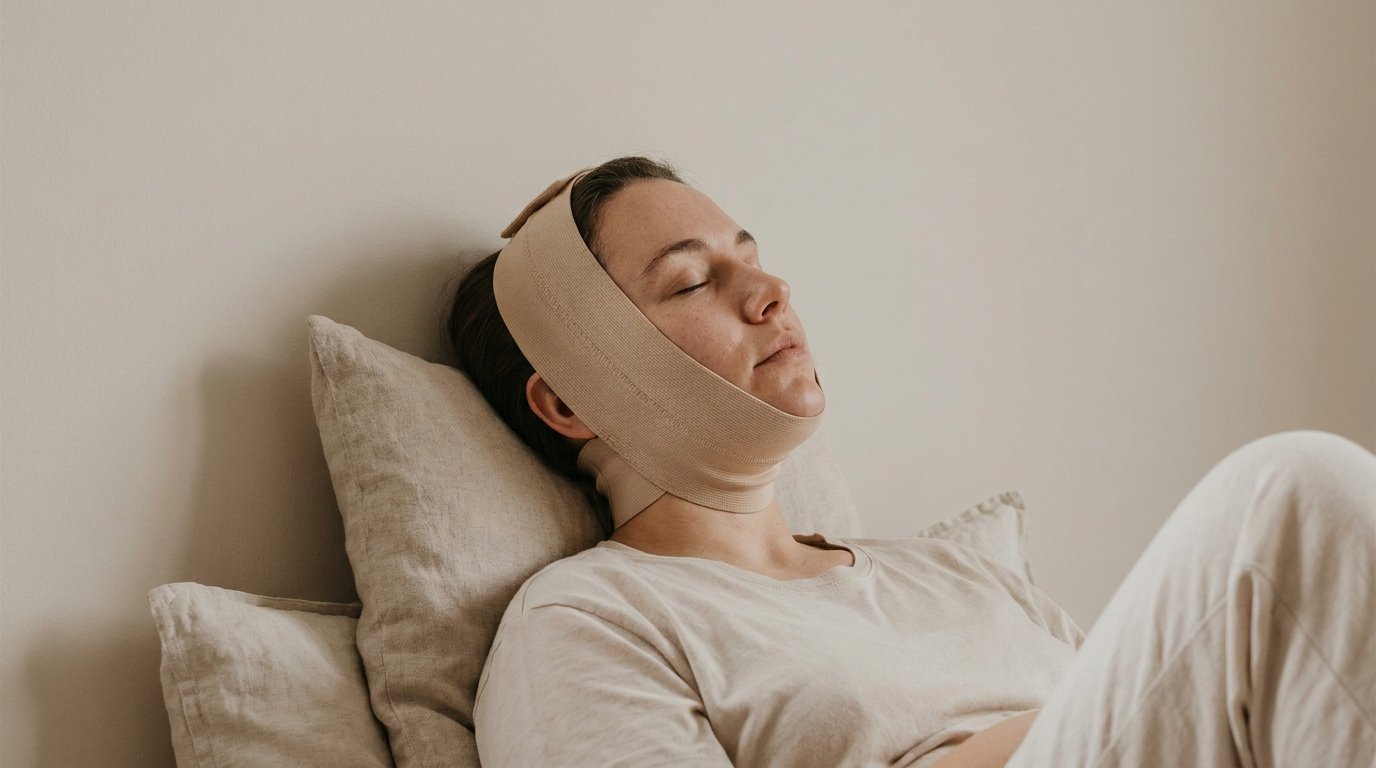
Sleeping slightly elevated can help during the early stage. Back-sleeping is usually easier on the neck than side-sleeping, especially while swelling is active and compression is being used.
Flying home needs more caution than many people realise. There is no one-size-fits-all rule. Clearance is individual and should come from the treating surgeon, because travel advice depends on your clot risk, the length of the flight, whether you had local anaesthetic or general anaesthetic, how mobile you are, whether you had combined surgery, and whether there were any recovery concerns such as bleeding, infection, or unusual swelling. The NHS notes that long periods of immobility raise the risk of deep vein thrombosis, and that matters in cosmetic travel planning.
For that reason, it is better to think in terms of surgeon clearance plus a safe recovery window, not simply counting days on a calendar. If you are travelling from abroad, ask in advance how long you are expected to stay for checks, garment review, and early aftercare. If your treatment is arranged through a provider, this should be part of the planning before you book flights.
A sensible plan leaves time for the first follow-up, gives room for unexpected swelling, and avoids booking the earliest possible return flight simply for convenience.
Flying home before you have been reviewed, or while you still have unusual pain, active bleeding, or worsening swelling, can make a manageable problem harder to treat.
What helps swelling go down, and what can make it worse?
The basics matter more than miracle products. Compression, light walking, keeping your head elevated when resting, staying hydrated, and following the medication and wound-care plan exactly are usually the most useful steps. Your surgeon may recommend a specific compression schedule for the first days and then a reduced schedule after that. It is worth following closely, because inconsistent use is a common reason patients feel they are staying swollen longer than expected.
Swelling often looks worse after salty meals, poor sleep, alcohol, smoking, or intense activity too soon. Even a very busy day with lots of talking, bending, carrying luggage, or rushing through airports can make the neck feel tighter by evening.
Massage should never be started just because it was mentioned online. Some surgeons recommend gentle lymphatic massage at a certain stage; others prefer no massage early on. The right timing depends on technique, skin quality, and whether there is any concern about bleeding or uneven healing.
If you are also considering broader body contouring, it can help to compare recovery patterns with more general liposuction treatment information, but the under-chin area still has its own quirks. Because it is always visible, small amounts of swelling feel bigger emotionally than they would on the abdomen or thighs.
- ✓Wear the compression garment exactly as directed.
- ✓Sleep with your head elevated in the early phase.
- ✓Walk gently and regularly rather than staying still for long periods.
- ✓Avoid smoking and delay intense exercise until cleared.
- ✓Ask before using massage, skin tools, or over-the-counter scar products.
How do you choose a clinic and plan a safe recovery in Turkey?
When patients travel for facial contouring, logistics matter almost as much as the procedure itself. A good plan is not just about the treatment day. It should cover the consultation process, who performs the surgery, what aftercare checks are included, how complications are handled, and how long you should remain locally before travelling.
For surgeon credentials, look for clear information about specialist training and registration. In plastic surgery, European board certification such as EBOPRAS can be one useful sign of formal training, though it should be considered alongside local licensing, experience in facial procedures, and the quality of the consultation. If you want to review the clinical team and ask detailed pre-travel questions, start with the provider’s surgeon information page and a formal consultation request rather than relying on social media messages alone.
Cost should also be approached carefully. The right question is not just what the procedure quote is, but what it includes. For international patients, a personalised quote is usually confirmed after consultation and review of photos or examination. What changes the quote is often the complexity of the case, whether liposuction is done alone or combined with a neck-tightening procedure, the anaesthetic plan, facility standards, aftercare visits, garments, medication, and transfer or accommodation arrangements if they are part of the package.
📋 A personalised quote is normal Under-chin fullness can come from fat, loose skin, muscle banding, or a small chin structure. The most suitable plan is not always liposuction alone, so the final quote usually follows consultation.
When will you see the final jawline result?
Most patients see an early improvement before the result is final. That can be encouraging, but it can also be misleading, because the contour may sharpen, blur, and sharpen again as swelling shifts. This is one reason surgeons often advise judging the outcome over months, not days.
Final definition depends not only on the fat removed, but also on how well the skin retracts. If the skin is firm and elastic, the neck can tighten nicely as swelling settles. If the skin is looser, the improvement may still be real but less crisp than some before-and-after photos suggest. In those cases, a surgeon may discuss whether a different approach, such as a chin augmentation procedure or neck-tightening surgery, would better match the goal.
A balanced expectation is usually the healthiest one: double chin liposuction can improve contour, but the best-looking result is often the one that suits your own anatomy rather than chasing an ultra-sharp online trend.
Frequently Asked Questions
References
- 📎NHS: Cosmetic procedures
- 📎American Society of Plastic Surgeons: Cosmetic procedures
- 📎Mayo Clinic: Liposuction overview and recovery information
- 📎EBOPRAS: European Board of Plastic Reconstructive and Aesthetic Surgery
Related Articles

You Might Also Like



Related articles


Our specialists
 Clineca SpecialistErkan PinegözPlastic & Reconstructive Surgery
 Clineca SpecialistHakan AktaşPlastic & Reconstructive Surgery
 Clineca SpecialistOrkun UzuneyüpoğluPlastic & Reconstructive Surgery
 Clineca SpecialistSalim İskenderPlastic & Reconstructive Surgery
 Clineca SpecialistEngin SelamioğluPlastic & Reconstructive Surgery
 Clineca SpecialistCem AydınPlastic & Reconstructive Surgery
 Clineca SpecialistAlperen ÖnalEar, Nose & Throat (ENT)