Have a question about J-Plasma?
In this article
- Who is usually a good candidate for J-Plasma after weight loss?
- When is J-Plasma not enough after major weight loss?
- What evidence and safety guidance matter for J-Plasma?
- How do surgeons decide between J-Plasma and skin-removal surgery?
- What is recovery like, and how long should you stay in Turkey?
- What affects the price if no standard cost can be quoted?
- How do you choose a safe clinic and surgeon for J-Plasma abroad?
Maybe — am i a candidate for j-plasma skin tightening after weight loss depends mainly on how loose your skin is, where it sits, and whether the problem is mild crepey laxity or heavier hanging folds. In general, J-Plasma may suit people with modest loose skin after weight loss, but it is not a substitute for body-lift surgery when skin excess is significant, and recovery is usually shorter than open skin-removal surgery, though the right option has to be decided case by case.
Who is usually a good candidate for J-Plasma after weight loss?
J-Plasma, often discussed under the Renuvion brand name, is a device-based treatment that uses helium plasma and radiofrequency energy under the skin to create tissue contraction. After weight loss, that matters because not all looseness is the same. Some people have a fine, crepey looseness that may tighten to a useful degree. Others have true extra skin that has physically stretched beyond what energy-based tightening can reasonably pull back.
A good candidate is usually someone whose weight has been stable for several months, whose main concern is moderate looseness rather than large hanging folds, and who understands that improvement is real but not unlimited. In practical terms, it tends to work better on areas such as the upper arms, abdomen, flanks, back, or inner thighs when the skin still has some ability to recoil.
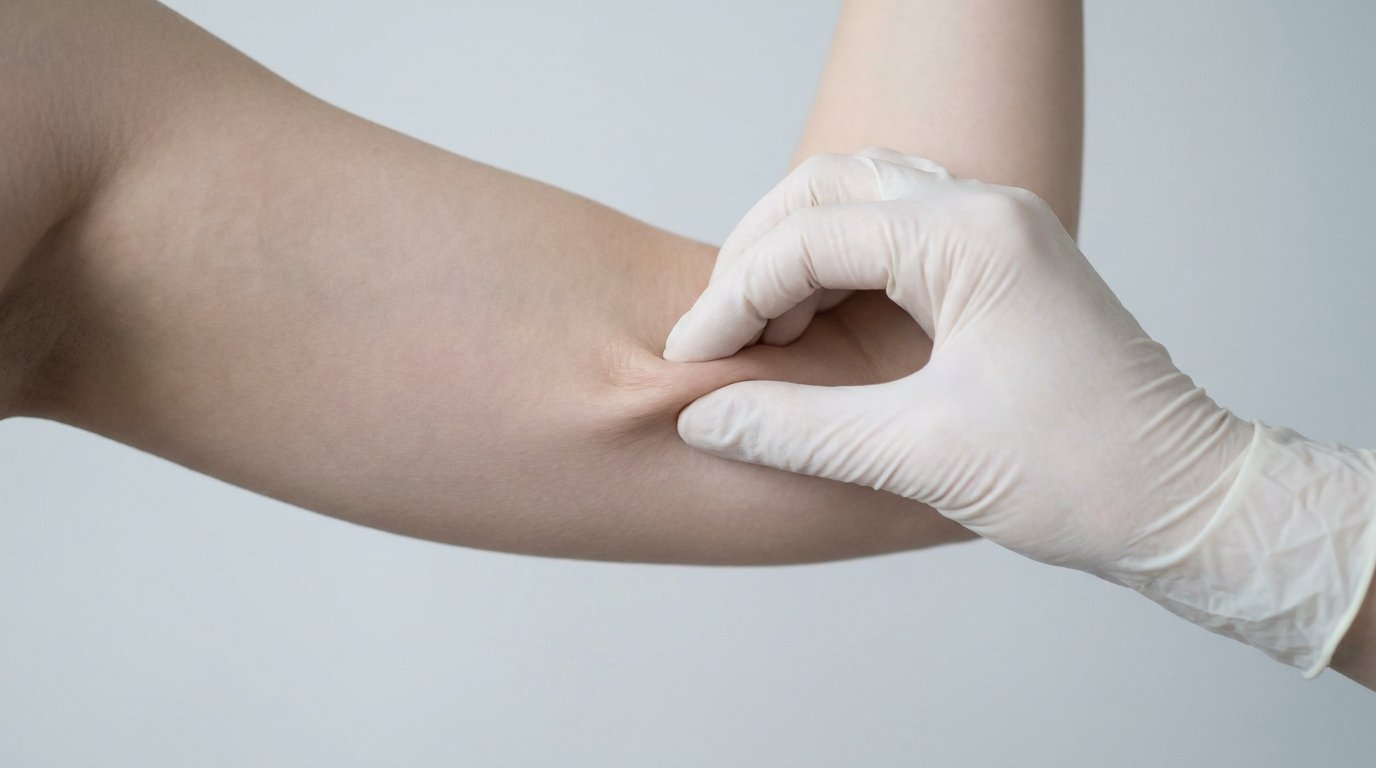
The most important limit is this: J-Plasma tightens skin, but it does not remove skin. If your weight loss has left an apron of abdominal skin, a low-hanging arm fold, or broad circumferential laxity around the waist, treatments such as an abdominoplasty, arm lift, or body lift may give a more reliable result.
Patients are usually assessed on these points:
- ✓Degree of skin laxity: Mild to moderate looseness may respond better than heavy folds or large amounts of redundant skin.
- ✓Weight stability: You are generally a better candidate if your weight has been stable rather than still changing.
- ✓Treatment area: Small or medium areas with moderate laxity are usually more suitable than circumferential or severe laxity.
- ✓Skin quality: Better elasticity often gives better contraction than very thin, damaged, or stretched skin.
- ✓Scarring tolerance: Some people prefer a less invasive option even if the tightening is more limited than surgery.
- ✓General health: Smoking, poor wound healing, uncontrolled diabetes, or active skin infection may make treatment less suitable.
- ✓Expectations: You should be looking for improvement, not the same level of correction as a full skin-removal operation.
The best candidates usually have mild to moderate skin laxity after weight loss, stable weight, realistic expectations, and enough skin quality to contract after treatment. If you have heavy overhanging skin, skin irritation in folds, or major tissue descent, surgery is often more appropriate than J-Plasma alone.
When is J-Plasma not enough after major weight loss?
This is where many people save time and disappointment by being very honest about what they see in the mirror. If you can pinch a lot of empty skin, if clothes bunch under a fold, or if you get irritation where skin rubs on skin, the issue is usually not just laxity. It is excess skin volume.
That matters because energy devices can only contract tissue to a point. They cannot recreate the result of removing a strip of skin and redraping the area. This is especially true after large weight loss from bariatric surgery, pregnancy combined with weight change, or years of weight fluctuation.
In those cases, surgery may be the more proportionate option. A surgeon might still combine liposuction and skin tightening in selected patients, but the discussion should be framed around likely limits, not best-case photos.
Signs that surgery may be more suitable
If one or more of these points sounds familiar, J-Plasma alone may be too limited:
- ✓You have a clear overhang of abdominal skin.
- ✓Your upper arms have a hanging fold rather than mild looseness.
- ✓You get recurrent rash, moisture, or rubbing in skin creases.
- ✓Your skin laxity goes all the way around the trunk or lower back.
- ✓You want a dramatic one-step tightening result.
For some people, the real choice is not J-Plasma versus doing nothing. It is J-Plasma versus accepting a smaller change, or choosing a scar-based operation that can do more.
J-Plasma is often not enough when there is a large volume of excess skin, skin-on-skin rubbing, recurrent rashes, or marked drooping of tissue. In those cases, body-contouring surgery usually addresses the problem more directly because it removes skin rather than trying to contract it.
What evidence and safety guidance matter for J-Plasma?
If you are researching this treatment seriously, it helps to know the difference between marketing language and regulatory language. Renuvion is a device platform that combines radiofrequency energy with helium plasma. In the United States, the FDA has issued communications about its aesthetic use, including a 2022 update noting clearance for specific subcutaneous dermatological and aesthetic procedures to improve the appearance of loose skin in the neck and submental area under the chin. That is useful information, but it also means you should ask very clearly whether your planned body area is being treated within the current approved or locally permitted use in the country where you are having treatment.
The FDA also previously warned against the use of Renuvion/J-Plasma for certain cosmetic skin procedures when safety and effectiveness had not been established for those uses. That is not a reason to panic, but it is a reason to ask better questions. Which area is being treated? What technique is being used? What training does the surgeon have with this exact device? What complications have they personally managed?
Published evidence is growing, but it is still more limited than for established skin-removal surgery. Small clinical series and retrospective studies have reported visible improvement in skin laxity in selected patients, often when J-Plasma is used after liposuction or in mild to moderate laxity rather than severe post-weight-loss redundancy. The key word is selected. These studies do not support the idea that everyone with loose skin after weight loss is a suitable candidate.
Complications reported in the literature and safety communications include burns, prolonged swelling, contour irregularity, nerve irritation, infection, fluid collection, and thermal injury to deeper tissues if energy is not used carefully. In a body area with thin tissue, poor skin quality, prior surgery, or scarred planes, the margin for error may be narrower.
Recognised bodies do not treat J-Plasma as a simple beauty treatment. The NHS advises that all cosmetic procedures carry risk and that patients should make sure the clinician is appropriately qualified and the setting is suitable. ASPS information on body contouring after major weight loss also reflects a broader principle: when skin excess is significant, excisional surgery is often the standard route because tightening alone will not remove the redundant tissue.
⚠️ Important safety point Ask whether your planned treatment area is being treated within the device’s cleared or locally authorised use, and who will perform the procedure.
📋 What the evidence suggests Published studies generally support J-Plasma more strongly for selected patients with mild to moderate laxity than for severe post-weight-loss excess skin.
The strongest safety point is that J-Plasma should be used only for cleared indications and by appropriately trained surgeons. The FDA has issued safety communications about certain aesthetic uses of Renuvion, and published studies suggest improvement is possible, but evidence is still narrower than for established excisional body-contouring surgery.
How do surgeons decide between J-Plasma and skin-removal surgery?
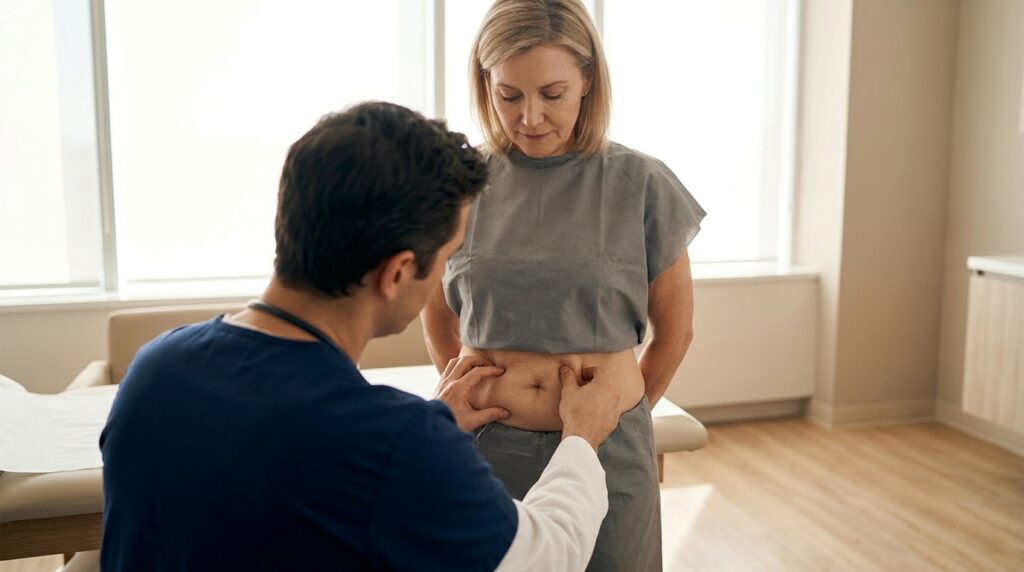
A careful consultation is less about the device and more about the anatomy. Surgeons usually look at the amount of pinchable skin, whether there is fat under it, whether the looseness is local or widespread, and how much correction you actually want.
If you are trying to avoid a long scar, J-Plasma may sound appealing. That is understandable. But the trade-off is straightforward: less invasive usually means less corrective power. A treatment that leaves tiny entry points instead of a long incision cannot remove the same amount of tissue.
This is also why some patients end up with a combined plan. For example, liposuction with J-Plasma may help refine shape and tighten modest loose skin, while a different area with severe laxity may still need excision. The right plan is not always one treatment everywhere.
A tummy tuck may address the problem more directly because it removes skin and can reshape the abdominal wall.
A lower body lift is often considered when looseness extends around the waist or lower back after major weight loss.
The decision usually comes down to how much extra skin you have, how far tissues have dropped, and whether a scar-based operation would solve the problem more predictably. J-Plasma may suit smaller corrections; surgery is often better for major excess skin and structural droop.
What is recovery like, and how long should you stay in Turkey?
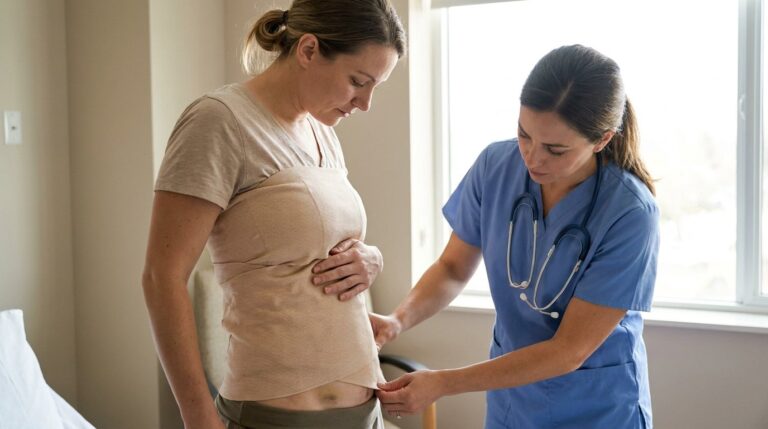
Recovery varies with the size of the treatment area, whether liposuction is done at the same time, and how aggressively the area is treated. Most people should expect swelling, tightness, bruising, and tenderness rather than a completely easy recovery. Compression garments are often part of the aftercare when body areas are treated.
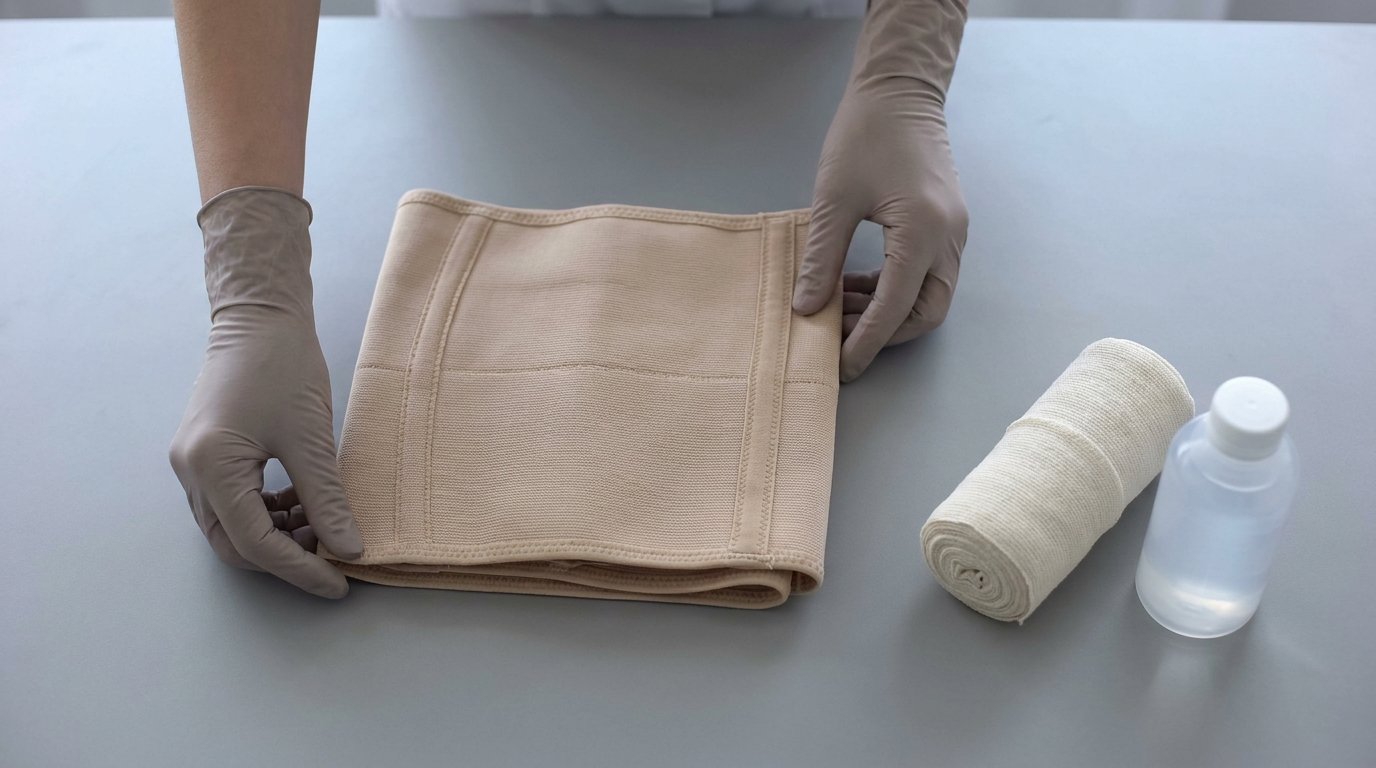
You may feel presentable before you feel fully settled. That distinction matters for travel planning. The skin can continue to change over weeks and months as swelling eases and contraction develops. A short stay that works for a tiny treatment area may be too rushed for larger body work.
If you are coming from abroad, ask how many in-person checks are planned and what support is available once you are home. It is sensible to arrange a consultation before travel through the clinic’s consultation page, then confirm how long you should remain locally based on the areas treated and whether liposuction is combined.
📋 Travel planning Do not book a very early return flight without checking your review schedule, mobility, compression needs, and whether combined liposuction changes the timeline.
Recovery is usually easier than after major skin-removal surgery, but it is still a real procedure with swelling, soreness, and follow-up needs. If you are travelling to Turkey, plan enough time for assessment, treatment, and early review before flying home, especially if larger body areas are treated.
What affects the price if no standard cost can be quoted?
For this topic, a fixed figure is not very useful because candidate selection changes the treatment plan so much. Someone with mild upper-arm laxity may need a very different approach from someone considering the abdomen, flanks, back, and thighs after major weight loss.
The main cost drivers are the size and number of areas, whether another procedure is combined, the operating environment, the anaesthesia plan, compression garments, and follow-up arrangements. A surgeon may also decide that J-Plasma is not the right endpoint and recommend a different operation altogether, which changes the quote completely.
That is why a personalised assessment matters more here than a headline price. If you are comparing clinics, compare like with like: exactly which areas are included, whether liposuction is included, who performs the procedure, where it is performed, and what aftercare is covered.
The cost is usually driven by the number and size of areas treated, whether liposuction is added, the hospital setting, anaesthesia, surgeon experience, and aftercare needs. Because suitability varies a lot after weight loss, a personalised quote is normally confirmed only after consultation.
How do you choose a safe clinic and surgeon for J-Plasma abroad?
This is one of the most important parts of the whole process. The best consultation may end with a recommendation against J-Plasma if your skin excess is too advanced. That is usually a sign of a more honest assessment, not a worse one.
Ask for the surgeon’s name, specialty background, and experience with post-weight-loss body contouring. Also ask where the procedure takes place, what type of anaesthesia is used, and who handles complications if you need urgent review after leaving Turkey. A transparent provider should be comfortable answering those points.
You can also review the clinic’s medical team on the doctors page and general background on the about page, but the key step is still a proper clinical assessment rather than choosing from photos alone.
The surgeon explains when J-Plasma is too limited and discusses scar-based alternatives without pressure.
You are told exactly who performs the procedure, where it takes place, and what aftercare is included.
You are promised surgery-like skin removal with almost no downtime and no meaningful trade-offs.
No one can clearly explain the device, the planned treatment area, or what happens if a complication develops.
Look for a clinic that is transparent about surgeon identity, hospital setting, device use, risks, and realistic results. Be cautious if you are promised dramatic skin removal without scars, rushed into treatment, or given vague answers about who performs the operation and what happens if complications occur.
Frequently Asked Questions
References
- 📎PubMed search: Renuvion J-Plasma skin tightening body contouring
- 📎PubMed search: post weight loss body contouring excess skin surgery
- 📎NHS cosmetic procedures
- 📎ASPS cosmetic procedures
You Might Also Like

Related articles
Our specialists
 Clineca SpecialistErkan PinegözPlastic & Reconstructive Surgery
 Clineca SpecialistHakan AktaşPlastic & Reconstructive Surgery
 Clineca SpecialistOrkun UzuneyüpoğluPlastic & Reconstructive Surgery
 Clineca SpecialistSalim İskenderPlastic & Reconstructive Surgery
 Clineca SpecialistEngin SelamioğluPlastic & Reconstructive Surgery
 Clineca SpecialistCem AydınPlastic & Reconstructive Surgery
 Clineca SpecialistAlperen ÖnalEar, Nose & Throat (ENT)