
Have a question about Rhinoplasty?
In this article
- What makes a thick-skin nose harder to refine?
- How do surgeons actually refine a thick-skin nose in rhinoplasty?
- Can thick skin be made thinner, and does that improve the result?
- What result is realistic, and what is not?
- How long is recovery for a thick-skin rhinoplasty patient travelling to Turkey?
- How should you choose a surgeon and understand the quote?
If you are asking how do surgeons refine a thick skin nose in rhinoplasty, you are usually trying to answer a very practical concern: can the nose really look slimmer and more defined when the skin itself is heavy, oily, or less elastic. This matters because thick skin changes both the surgical plan and the recovery timeline, especially around the tip, where small changes under the skin can be slow to show.
What makes a thick-skin nose harder to refine?
A thick-skin nose is not simply a “big nose”. In rhinoplasty, the challenge is that the skin and soft tissue covering the nose can act like a heavy blanket over the new framework underneath. If the skin is thicker, more sebaceous, or less elastic, fine cartilage shaping may not show as sharply as it would in a thin-skinned nose.
That is why surgeons do not usually approach these noses by just removing tissue and hoping the tip will look smaller. According to a study in Aesthetic Surgery Journal from 2010, the amount of visible tip narrowing depends not only on the manoeuvre used on the cartilage but also on the thickness of the overlying skin. In plain terms, what is built underneath matters, but the skin still decides how much detail can be seen from the outside.
This is also where expectations need to become more precise. Among the people who contact us about their nose, a slimmer-looking nose comes up roughly one in six times, more often than requests for a straighter bridge or a smaller tip. That matters in consultation, because “slimmer” can mean bridge narrowing, tip definition, nostril change, or all three, and thick skin does not respond to each goal in the same way.
In a thick-skinned nose, the main limits are usually at the tip. The bridge can often be narrowed or straightened clearly, but tip refinement tends to be slower and more modest. A careful surgeon will explain that the aim is definition and balance, not a pinched or very sharp result.
📋 Expectation setting matters more with thick skin Thick skin does not prevent rhinoplasty, but it usually reduces how sharply the tip can show fine detail. A natural improvement is more realistic than an ultra-sculpted result.
How do surgeons actually refine a thick-skin nose in rhinoplasty?
The short answer is that surgeons usually create stronger support underneath the skin rather than removing too much from the outside. A thick-skinned nose often needs structure, not aggressive reduction.
That usually means reshaping and reinforcing the cartilage framework, especially in the tip. Instead of weakening the tip to make it smaller, the surgeon may use sutures and cartilage grafts to build a cleaner outline that can hold its shape under heavier skin. This is one reason an open approach is often preferred in difficult tip cases, although the choice between open and closed rhinoplasty still depends on the anatomy and the surgeon’s judgement. If you want a broader explanation of approach differences, our article on open or closed rhinoplasty is useful background.
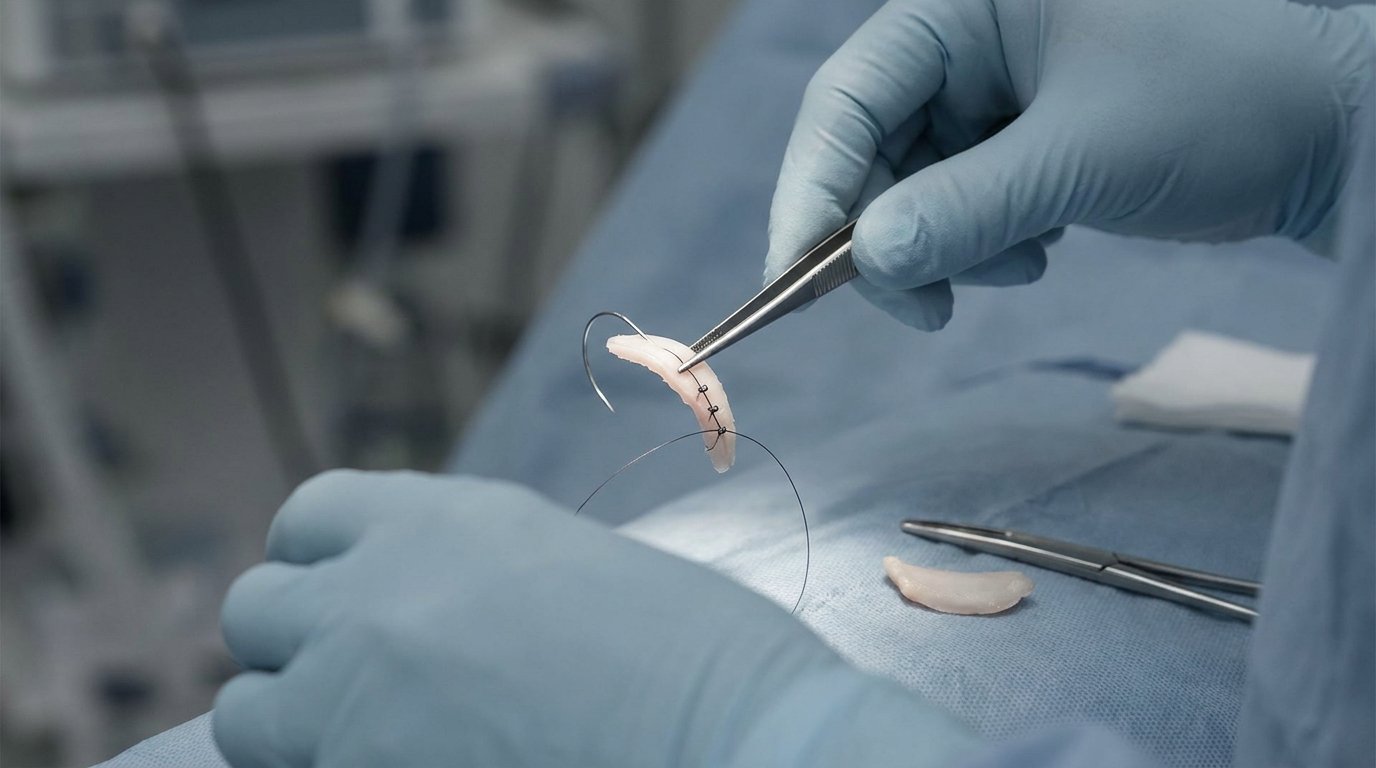
Surgeons may also reduce extra soft tissue in selected cases, but this has limits. They cannot safely thin the skin indefinitely. Over-thinning risks irregularities, poor healing, and a nose that looks operated on rather than refined. The goal is a smoother skin envelope over a stronger nasal framework.
A 2020 paper in Journal of Craniofacial Surgery described a ligament-based flap technique aimed at preventing supratip deformity, the fullness that can appear just above the tip after rhinoplasty. That does not mean every thick-skinned patient needs that exact method, but it supports an important principle: controlling the soft tissue transition above the tip can be as important as shaping the tip itself.
Common surgical moves in thick-skin rhinoplasty
In practice, the plan may include several of these steps together:
- ✓Strengthening the tip with cartilage grafts rather than simply cutting cartilage away
- ✓Narrowing and defining the tip with sutures placed in a controlled way
- ✓Adjusting the bridge if width or a hump makes the nose look heavier overall
- ✓Managing the tissue above the tip carefully to reduce the risk of persistent fullness
- ✓Reducing nostril width only when the nostrils themselves are part of the problem
That last point matters. Some patients feel the whole nose is thick when the real issue is wide nostrils, a broad bridge, weak tip support, or a combination. Good planning separates those parts instead of treating the nose as one single problem.
Builds support, defines the tip carefully, and explains which part of the nose can realistically look slimmer.
Promises a very tiny, sharply carved tip in thick skin without explaining the limits of the skin envelope.
Can thick skin be made thinner, and does that improve the result?
Sometimes the surgeon can do limited thinning of soft tissue, but this is not the main answer and it is not suitable in every case. The skin of the nose has blood supply that must be respected, and too much thinning can create healing problems or visible unevenness.
What usually improves the result more is better support under the skin and patience during recovery. Thick skin tends to hold swelling for longer, especially at the tip. That means a nose can look rounded for months before the definition starts to show properly.
This is one reason thick-skinned patients can feel disappointed too early. The operation may be technically sound, but the skin needs time to contract and settle over the new shape. If you are trying to judge progress, our article on when final rhinoplasty results appear and our guide on how long swelling can last after revision rhinoplasty help explain why tip definition often arrives late.
Some surgeons also use medical aftercare strategies such as taping or, in selected cases, steroid injections to control stubborn swelling. These are not routine for everyone, and they need proper follow-up. They are used to manage healing, not to replace good surgical technique.
⚠️ Skin thinning has limits If a consultation focuses heavily on removing soft tissue without discussing support, healing, and risks, ask for a clearer explanation of how the tip will stay stable long term.
What result is realistic, and what is not?
A realistic result in thick-skin rhinoplasty is a nose that looks better defined, better balanced with the face, and less bulbous or heavy than before. The bridge may look slimmer, the tip cleaner, and the profile smoother. What is usually not realistic is a very narrow, sharply etched tip with thin-skin detail.
The NHS guidance on cosmetic procedures stresses the importance of understanding likely outcomes and limits before surgery. In thick-skinned noses, that discussion is especially important because the final result depends on healing as much as on the operation itself.
Revision cases need even more caution. If too much support was removed in an earlier rhinoplasty, the skin may remain thick while the framework underneath is weaker. In that situation, refinement often means rebuilding structure first. It is usually harder than primary surgery, and the trade-off is that support and breathing stability come before aggressive narrowing.
If breathing is also part of the problem, functional work may be planned alongside the cosmetic changes. That can include septoplasty or turbinate surgery when appropriate, because a nose that looks neater but functions worse is not a good result.
- ✓Clearer tip shape rather than a razor-sharp tip
- ✓Better balance between bridge, tip, and nostrils
- ✓A slower reveal of the final result because swelling lasts longer
- ✓The need to prioritise both appearance and nasal airflow
How long is recovery for a thick-skin rhinoplasty patient travelling to Turkey?
The early recovery is similar to other rhinoplasty patients, but the late swelling phase is often longer. Most people are presentable for light social contact after the first couple of weeks, although the nose still looks swollen, especially from the front. Thick skin usually makes that front view settle more slowly than the side profile.
For travel planning, the practical issue is not just the operation day. You need enough time for the first examination, surgery, early checks, and at least one post-op review before flying home. A thicker-skinned tip does not always require a longer stay in Turkey than standard rhinoplasty, but it does require closer attention to follow-up instructions once you return. Our article on rhinoplasty travel plans, stay length, hotel and transfers goes into the logistics in more detail.
If you are considering combining rhinoplasty with another procedure, that changes recovery more than thick skin itself. In the rhinoplasty cases we see, about 14% are booked with another procedure, most often breast surgery or upper eyelid surgery. For you, that means the trip and healing plan should be built around the slowest procedure, not the nose alone.
Below is a realistic planning view rather than a promise, because healing varies from person to person.
How should you choose a surgeon and understand the quote?
With thick skin, surgeon choice matters because this is a planning problem as much as a technical one. You want a surgeon who can explain how the framework will be supported, where the limits are, and how swelling will be managed over time. Membership, board certification, and recognised training standards matter here. EBOPRAS is one recognised European benchmark in plastic surgery training and examination, and BAAPS and ASPS both emphasise informed consent and realistic expectations in cosmetic surgery.
Ask to see before-and-after cases that resemble your anatomy, not just attractive final photos from thin-skinned noses. You are looking for cleaner definition without collapse, pinching, or an artificial tip. Also ask how the clinic handles communication after you return home, because slow replies during the swelling phase are a common source of anxiety for international patients.
Cost should be discussed carefully but qualitatively, not as a shopping exercise. A quote for this kind of rhinoplasty may vary depending on whether the case is primary or revision, whether breathing work is added, whether grafting is likely, the surgeon’s experience, the hospital setting, and what the travel package includes. Good questions are whether the quote includes hospital fees, anaesthesia, hotel, transfers, medication, and follow-up arrangements after you leave Turkey. If you want a fuller breakdown of what affects a nose surgery quote, see what affects a rhinoplasty cost quote, stay, and recovery.
This article is for informational purposes only and does not constitute medical advice. Always consult a qualified surgeon for personalised guidance.
The surgeon explains what can improve, what may stay softer, and how long the tip may take to settle.
Some patients asking for tip change only may be better assessed for tip-focused surgery rather than full rhinoplasty, depending on the rest of the nose.
If you are still planning surgery, our rhinoplasty in Turkey cost and safety guide covers prices, stay length and how to choose a surgeon.
Frequently Asked Questions
References
- 📎Nasal tip refinement: analysis of surgical technique, efficacy, and secondary effect of skin thickness — Aesthetic Surgery Journal, 2010
- 📎Pitanguy Ligamentous Flap: A New Method to Prevent Supratip Deformity in Rhinoplasty — Journal of Craniofacial Surgery, 2020
- 📎ASPS Cosmetic Procedures
- 📎NHS Cosmetic Procedures
Related Articles



You Might Also Like



Related articles



Our specialists
 Clineca SpecialistErkan PinegözPlastic & Reconstructive Surgery
 Clineca SpecialistHakan AktaşPlastic & Reconstructive Surgery
 Clineca SpecialistOrkun UzuneyüpoğluPlastic & Reconstructive Surgery
 Clineca SpecialistSalim İskenderPlastic & Reconstructive Surgery
 Clineca SpecialistEngin SelamioğluPlastic & Reconstructive Surgery
 Clineca SpecialistCem AydınPlastic & Reconstructive Surgery
 Clineca SpecialistAlperen ÖnalEar, Nose & Throat (ENT)