
Have a question about Rhinoplasty?
In this article
- Can the two operations be performed in the same session?
- Why the nose and the upper lids are often treated as one problem
- One session or two separate trips?
- Is combining them safe, and who should not?
- What the combined recovery actually feels like
- How long to stay in Turkey for both procedures
- What drives the cost of a combined nose and eyelid plan
- Choosing a surgeon and clinic for a combined facial operation
One of the questions that comes up most often in consultations is whether rhinoplasty and upper eyelid blepharoplasty can be done together, usually from someone who has been quietly unhappy with both their profile and their heavy upper lids for years. The nose and the eyes sit in the same small area of the face, so it feels logical to treat them in one go — but logic and surgical planning are not always the same thing. What follows is how surgeons actually decide, what the shared recovery looks like, and where the honest limits are.
Can the two operations be performed in the same session?
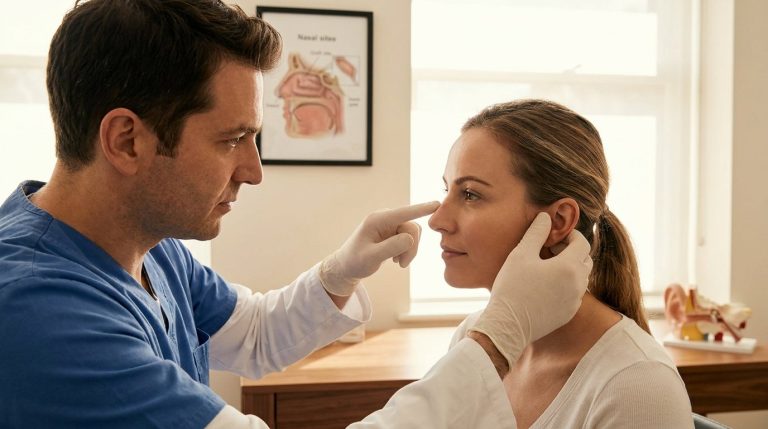
In most healthy patients, yes. Nose reshaping and upper eyelid surgery (removing the excess skin and a little fat from the upper lid) are a well-established pairing because they work on neighbouring structures without competing for the same tissue. The surgeon does not need to reposition you on the table, there is no second surgical field on the other side of the body, and both procedures are done through small, planned incisions.
The practical appeal is that you go under anaesthesia once, bruise once, and take one block of time off work instead of two. Since the swelling from a rhinoplasty already spreads into the lower lids and under-eye area for the first week or two, adding eyelid work rarely extends the visible recovery as much as people fear.
There is a sequencing logic too. Many surgeons prefer to do the eyelids first, while the face is still untouched and the skin markings are precise, then move on to the nose. Others reverse it. Either way, the two parts are planned as one operation with one anaesthetic, not as two surgeries squeezed into one day.
📋 Function matters as much as appearance If heavy upper lids are blocking your side vision, or if you also have breathing difficulty from a deviated septum, say so early. Functional concerns change the surgical plan and sometimes the order in which things are done.
Why the nose and the upper lids are often treated as one problem
Faces are read as a whole. A prominent dorsal hump pulls attention to the centre of the face, while tired, hooded upper lids pull attention to a lack of openness in the eyes. Correct one and the other can look more obvious than before, which is why some patients who only planned a nose job come back a year later asking about their eyes.
Addressing both at once lets the surgeon balance the result against a single plan rather than guessing how the face will look after a change they have not made yet. It also means you only live through one adjustment period, when the face in the mirror does not quite look like yours yet.
A 2009 review in Current Opinion in Otolaryngology & Head and Neck Surgery made a point worth repeating here: Asian upper eyelid surgery is not a Westernising operation. The same thinking applies to the nose. Refinement and erasing your ethnic features are two different goals, and a good surgeon will ask which one you actually want — the same conversation we describe in our article on ethnic rhinoplasty and keeping your natural features.
You have clear, separate concerns about both the nose and the upper lids, you are in good general health, and the surgeon can explain how each change supports the other.
Eyelid surgery is added to your quote during a quick message exchange, before anyone has examined your brow position, lid crease or tear film.
One session or two separate trips?
Both routes are legitimate, and this is a genuine personal decision rather than a test with a right answer. Among the patients who come to us wanting two procedures, roughly one in ten chooses to separate them into two trips, while the rest have everything in a single stay. For you that mostly means the one-session route is the usual path, but asking to split is not an odd request and will not be treated as one.
Splitting makes sense if you want to judge the nose result before deciding anything about your eyes, if your time away from home is tightly limited, or if you simply feel calmer facing one operation at a time. The cost is a second flight, a second hotel stay and a second recovery window.
Combining makes sense if your main constraint is time off work and travel, and if your health assessment comes back clean. The trade-off is a longer single operation and a heavier first week, when your nose is splinted and your eyelids are swollen at the same time.
Is combining them safe, and who should not?
The main safety variable in any combined operation is total time under anaesthesia, not the number of procedures on the list. Upper eyelid surgery is relatively quick, so adding it to a rhinoplasty usually extends the session modestly rather than doubling it. That is quite different from pairing a nose job with a long body procedure, where the cumulative time and blood loss become the real conversation — something we cover in more detail in our overview of combined surgery in Turkey.
Even so, approval is never automatic. Before the plan is confirmed you should expect blood tests, an anaesthetist’s review, and questions about blood pressure, clotting history, diabetes and medications. Smoking matters more than most people expect, because it affects healing in both the nasal skin and the delicate eyelid tissue.
There are also reasons specific to the eyelids. Significant dry eye, previous eyelid or laser eye surgery, thyroid eye disease and a low brow position all change what upper eyelid surgery can safely achieve, and sometimes the honest answer is that a brow assessment comes first. If your eyes feel gritty or water constantly, mention it before surgery rather than after.
For an interesting detail on the eyelid side: a 2022 preliminary report in the Israel Medical Association Journal looked at topical treatment aimed at reducing tissue swelling after eyelid surgery — a reminder that post-operative swelling is still an active research question, and that no surgeon can promise you a swelling-free week.
⚠️ Tell the team about every medication and supplement Blood thinners, high-dose fish oil, vitamin E and some herbal supplements increase bruising around both the nose and the eyelids. Stopping anything should be agreed with your own doctor and the surgical team, never decided alone.
🚨 Seek urgent advice for these symptoms Sudden pain behind the eye, rapidly worsening swelling on one side, loss or blurring of vision, heavy bleeding or fever after surgery all need immediate contact with the clinic or local emergency care — do not wait for your scheduled check.
What the combined recovery actually feels like
Recovery is set by the slower of the two procedures, and that is almost always the nose. Eyelid stitches are usually removed within about a week and the scars sit hidden in the natural lid crease; the nose keeps refining for many months. So plan your diary around the rhinoplasty timeline, not the eyelid one.
The first two or three days are the strangest part. You are breathing through your mouth, your eyelids are puffy, and bruising may drift down towards the cheeks. Sleeping propped up on two pillows genuinely helps both areas, which is why we always insist on sleeping elevated after rhinoplasty.

One combined-surgery detail catches people out: glasses. Eyelid surgery does not stop you wearing them, but a healing nose does, so if you depend on glasses rather than contact lenses, read our guidance on when you can wear glasses again after rhinoplasty before you travel. Contact lenses are usually paused for a couple of weeks after eyelid surgery, so you may need a short-term plan for both.
How long to stay in Turkey for both procedures
For a combined nose and upper eyelid operation, most patients plan a stay of roughly a week to ten days. That window covers your pre-operative tests and consultation, the surgery itself, the first review, splint and stitch removal, and a final check before you fly. Booking a flight home two days after surgery is the single most common travel mistake.
The stay length is dictated by the nose, not the eyelids, so combining the two rarely adds days to the trip. Our article on rhinoplasty travel plans, stay length and transfers goes through the practical side — airport transfers, hotel choice, how far the accommodation should be from the clinic.
A few sensible travel habits: choose a hotel with a lift and air conditioning, bring loose button-up tops so nothing has to be pulled over your face, pack sunglasses and a hat because healing eyelid skin dislikes strong sun, and build in a flexible return date in case your surgeon wants an extra review.

What drives the cost of a combined nose and eyelid plan
We do not publish figures, because a meaningful price only exists once someone has looked at your photos, your history and your goals. What we can be transparent about is what moves the number, and what a proper quote should already contain.
Combining usually costs less than booking the two procedures as separate trips, since the operating theatre, anaesthesia and hospital stay are shared and you only travel once. It is not, however, half price — each procedure still carries its own surgical time and its own follow-up.
Treat any quote that cannot tell you who is operating, where, and what happens if a revision is needed as incomplete, no matter how attractive it looks. Our breakdowns of what affects rhinoplasty cost and blepharoplasty in Turkey go deeper on each side.
📋 What a complete quote should spell out The named surgeon, the hospital, which procedures are included, the anaesthesia type, how many nights are covered, the follow-up schedule and the written revision policy. Your personalised price is confirmed only after consultation and a review of your medical history.
For the rhinoplasty half of the plan, our rhinoplasty in Turkey cost and safety guide explains what shapes the quote and the recovery timeline.
Choosing a surgeon and clinic for a combined facial operation
The person operating on your nose and your eyelids should be comfortable with both, and should be able to show you results from patients with a similar starting point rather than a general gallery of their best cases. Facial plastic surgery and eyelid surgery sit in slightly different training traditions, so it is a fair question to ask directly: how many combined nose and upper eyelid cases do you do in a typical month?
It is also worth asking who else is in the room. A combined session should involve a dedicated anaesthetist and an accredited hospital theatre, with the facility to keep you overnight if needed. Credentialing bodies such as EBOPRAS and national plastic surgery societies are a reasonable starting point for checking that a surgeon’s qualifications are real.
Finally, judge the clinic on how it communicates before you pay anything. Slow, vague answers at the enquiry stage tend not to improve after surgery, and aftercare is exactly when you need replies quickly. A clinic that insists on photographs, a medical history and a proper consultation before quoting is behaving correctly, even if it feels slower than a one-line price by message.
If you are also weighing up heavier facial work, our piece on combining a facelift with rhinoplasty explains where the safety calculation changes.
This article is for informational purposes only and does not constitute medical advice. Always consult a qualified surgeon for personalised guidance.
- ✓Ask for same-indication before and after photos: Patients with a comparable nose shape, skin thickness and lid heaviness — not just the clinic’s most dramatic results.
- ✓Confirm the hospital, not only the surgeon: Accredited theatre, dedicated anaesthetist, and the ability to admit you overnight after a longer session.
- ✓Get the revision policy in writing: Who pays for what, over what time period, and whether travel is included.
- ✓Check who follows you up at home: A named contact, a realistic response time, and a plan for reviews once you have flown back.
Frequently Asked Questions
References
- 📎Aesthetic surgery in Asians — Current Opinion in Otolaryngology & Head and Neck Surgery, 2009
- 📎Reduced Tissue Response with Topical Khat Leaves after Eyelid Surgery: Preliminary Findings — Israel Medical Association Journal, 2022
- 📎ASPS — Cosmetic Procedures
- 📎EBOPRAS — European Board of Plastic, Reconstructive and Aesthetic Surgery
Related Articles



You Might Also Like

Related articles

Our specialists
 Clineca SpecialistErkan PinegözPlastic & Reconstructive Surgery
 Clineca SpecialistHakan AktaşPlastic & Reconstructive Surgery
 Clineca SpecialistOrkun UzuneyüpoğluPlastic & Reconstructive Surgery
 Clineca SpecialistSalim İskenderPlastic & Reconstructive Surgery
 Clineca SpecialistEngin SelamioğluPlastic & Reconstructive Surgery
 Clineca SpecialistCem AydınPlastic & Reconstructive Surgery
 Clineca SpecialistAlperen ÖnalEar, Nose & Throat (ENT)