Have a question about Rhinoplasty?
In this article
- Why rhinoplasty needs cartilage grafts at all
- Septal cartilage: the usual first choice, and where it runs out
- Ear cartilage: soft, curved and useful in the right places
- Rib cartilage: when it is genuinely needed
- How the three compare side by side
- What the graft choice changes about recovery, your stay and the quote
- Choosing a surgeon who will tell you the truth about grafts
Somewhere between the consultation photos and the surgery date, most patients discover that modern nose surgery is not only about removing tissue — a good part of it is rebuilding. That is where the question of whether your rhinoplasty should use septal, ear or rib cartilage grafts appears, usually with very little explanation attached to it. It sounds like a technical detail for the surgeon, yet it quietly affects your breathing, your profile, how long you stay, and how sore you feel afterwards.
Why rhinoplasty needs cartilage grafts at all
A nose has to do two jobs: look balanced and move air. Once the surgeon reduces a hump, narrows a wide tip or straightens a crooked bridge, the framework that held the skin up has been changed. Grafts are the small, carefully shaped pieces of cartilage used to give that framework back its support.
In practice, grafts do very specific things. They can hold the tip at a stable height, stop the nostril walls collapsing when you breathe in hard, widen a narrow internal valve, smooth a visible edge under thin skin, or rebuild a bridge that has lost height. None of this is decoration — a tip with no support tends to drop as healing pulls it down.
How much cartilage you need depends heavily on technique. A 2023 review in Facial Plastic Surgery on open preservation rhinoplasty makes the point that keeping native nasal structures intact brings both aesthetic and functional benefits, and that preservation ideas can now be applied inside open approaches too. Put simply: the less structure that has to be dismantled, the less has to be replaced.
📋 Grafting is normal, not a warning sign Being told your nose needs cartilage grafts does not mean your case is unusually difficult. It is how most structural rhinoplasty is done today, and it is often what keeps the result stable years later.
Septal cartilage: the usual first choice, and where it runs out
If there is enough of it, the septum — the partition inside the nose — is almost always the first place a surgeon looks. It is straight, firm, easy to carve into thin struts, and it sits in the same surgical field, so there is no second incision anywhere on your body and nothing extra to recover from.
There is a functional reason it comes first as well. A 2011 paper in Facial Plastic Surgery describes how septal surgery generally precedes the other steps of a rhinoplasty, because a straight, stable septum strongly shapes both the look and the breathing result that follows. Fixing the septum and harvesting graft material from it are often the same stage of the operation. If your breathing is already a problem, it is worth reading how septoplasty and rhinoplasty are planned in one session.
The limits are real, though. The surgeon must leave an intact L-shaped strut of septum behind for support, so only part of it can be taken. A badly deviated, thin or previously operated septum may yield very little usable cartilage. Septal deviation itself is one of the most common causes of blocked nasal airflow — a 2025 review in Ugeskr Laeger lists trauma, congenital differences and age-related change among its causes, with snoring and poor sleep among the symptoms. A septum that has already been treated, or crushed by an old injury, frequently cannot supply enough for a full rebuild.
Ear cartilage: soft, curved and useful in the right places
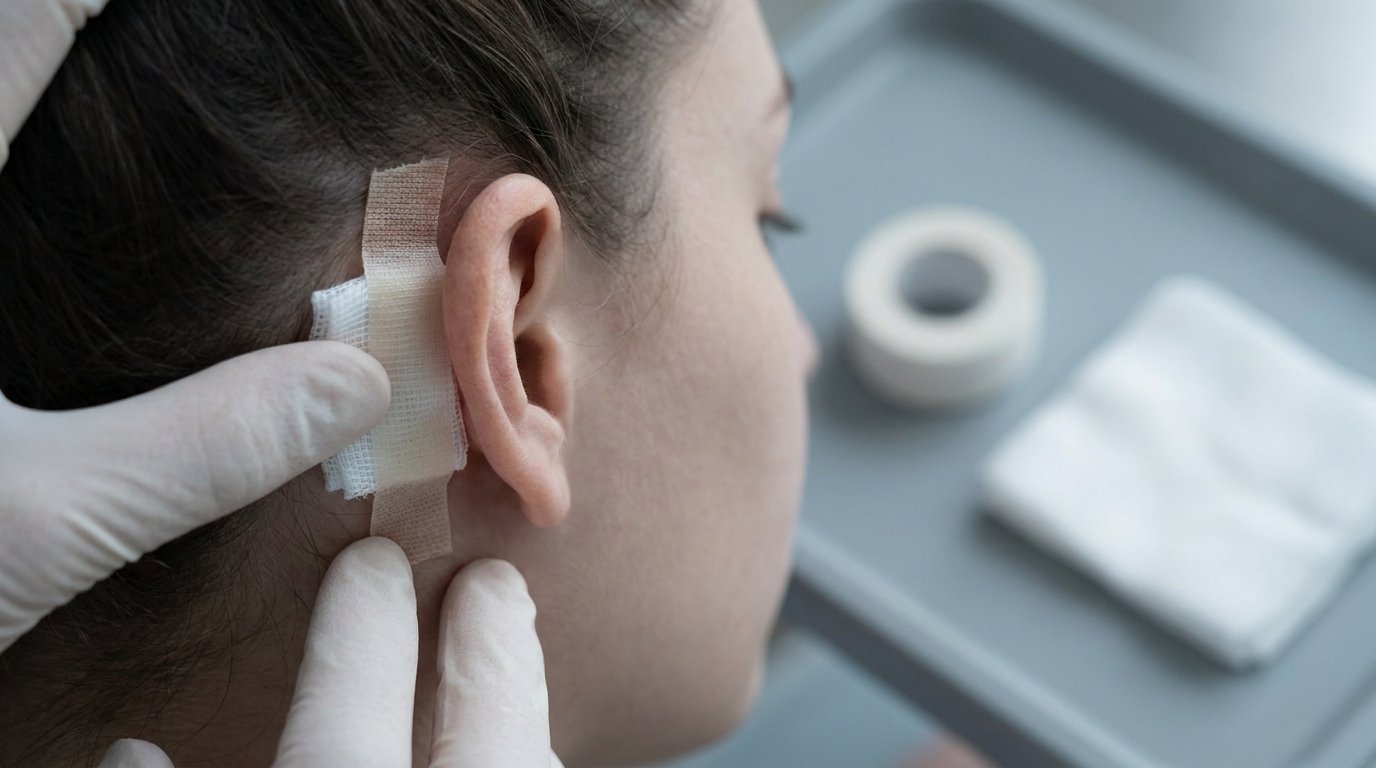
Ear cartilage is taken from the bowl of the ear, through an incision usually placed in the crease behind it. It is thinner and springier than septal cartilage and it has a natural curve, which makes it genuinely useful for some jobs and a poor fit for others.
It works well as tip grafts, as a batten to stop a weak nostril wall collapsing, and as a camouflage layer to soften a visible edge. What it does not do well is carry load. A long, straight support under the bridge or a tall tip-support strut needs stiffness and straightness that a curved ear graft cannot reliably provide, so surgeons rarely use it alone for major rebuilding.
The donor site is modest but not invisible. Expect some tenderness and swelling around the ear for a week or two, and a dressing for the first days. The visible shape of the ear is usually unchanged when the harvest is done correctly, because cartilage is taken from the hidden bowl rather than the outer rim, and the incision sits in a natural crease and normally fades well over months.
⚠️ Ask what the ear graft is for Ear cartilage used as support where real strength is required is a common reason for a tip that drops or a bridge that becomes uneven later. If ear cartilage is proposed, ask specifically which part of the nose it will support.
Rib cartilage: when it is genuinely needed
Rib cartilage gives the largest volume and the greatest strength of the three, and it is the honest answer when the nose needs substantial rebuilding. Typical situations include revision surgery after a previous rhinoplasty used up the septum, a saddle (collapsed) bridge, significant augmentation of a low dorsum, or a tip that needs to be projected a long way against thick skin.
Anatomy drives this more than preference. A 2025 review in Facial Plastic Surgery on Asian augmentation rhinoplasty describes a nasal pattern that often combines a lower bridge, limited septal cartilage and thicker soft tissue cover, and discusses diced cartilage wrapped in fascia as one of the mainstay augmentation techniques. Thick skin needs more underlying structure to show any definition at all, which is covered in more detail in our piece on how surgeons create definition in a thick-skinned nose.
Age quietly matters here too. Rib cartilage gradually calcifies — it becomes harder and more brittle — which changes how it can be carved, and the surgeon needs to know this in advance. Among the people who come to us about nose surgery, ages run from the late teens to the mid-sixties, and roughly one in seven is over 40, so a mature rib is a routine part of planning rather than an obstacle; it simply means the harvest site and carving plan should be discussed openly before you commit.
The trade-offs are the most significant of the three options. The chest incision leaves a scar, usually a few centimetres long and often placed in a crease or under the breast fold. Chest soreness is the part patients underestimate — deep breaths, laughing and getting out of bed can be uncomfortable for one to two weeks. Carved rib can warp as it heals, which is why surgeons use techniques such as balanced carving, internal splinting with a suture, or dicing the cartilage. There is also a small risk of breaching the lining around the lung during harvest, which, although uncommon, is a recognised complication and a reason rib work belongs in a properly equipped hospital.
Instead of a single carved block, cartilage can be diced small and wrapped in the patient’s own fascia to build up a bridge. It tends to look and feel smoother under the skin and reduces visible edges, but it is less suited to load-bearing support.
Processed cartilage from a tissue bank avoids a chest incision and chest pain entirely. The trade-offs are variable resorption over years and cost, and availability differs by country and clinic. Ask how the tissue is sourced and processed.
Silicone or similar implants can add height without any donor site, but carry a long-term risk of infection, movement, extrusion through the skin and capsule problems — particularly in revision cases. Many surgeons reserve them for carefully selected patients only.
How the three compare side by side
Looking at the options together usually makes the logic clear: surgeons work from the least invasive adequate source upwards, rather than from a favourite technique downwards.
- ✓How much support does the nose actually need — tip only, or bridge and tip?
- ✓Has the septum already been operated on or badly injured?
- ✓How thick is the skin, and how much projection is being asked of the graft?
- ✓Is this a first operation or a revision?
- ✓Is the patient willing to accept a chest or ear donor site and its recovery?
What the graft choice changes about recovery, your stay and the quote
The nose itself heals on broadly the same schedule whichever graft is used — splints and dressings early, the bulk of swelling settling over the first weeks, and fine refinement continuing for a year or more, as set out in our week-by-week rhinoplasty recovery timeline. What changes is the donor site and the length of the operation.
Septal and ear harvests usually fit within a standard rhinoplasty plan and a standard trip. Rib harvest lengthens the surgery, often means an overnight stay in hospital, and makes the first days less comfortable — flying with chest soreness is manageable but unpleasant, so surgeons commonly ask rib patients to allow extra days before travelling home. If you are planning dates, our notes on stay length, hotels and transfers for rhinoplasty are a practical starting point. Revision cases, which are the ones most likely to need rib, also tend to swell for longer; we cover that in swelling after revision rhinoplasty.
On cost, the graft source is one of the genuine price drivers rather than a marketing upgrade. Operating time, whether an overnight hospital bed is needed, the complexity of a revision, and — for banked tissue — the cost of the graft material itself all feed into the figure. A proper quote should make clear what is included: surgeon and anaesthesia fees, hospital time, splints and dressings, follow-up checks, and transfers or accommodation if these are part of the package. Any realistic price can only be confirmed after a consultation where photographs and your breathing history have been reviewed, because that is the point at which the graft plan is known.
For a full breakdown of prices, packages and safety checks, see our rhinoplasty in Turkey cost and safety guide.
Choosing a surgeon who will tell you the truth about grafts
The clearest signal of a well-planned case is a surgeon who can explain, before surgery, which graft they expect to use, what their backup is if the septum turns out to be thinner than the scan suggested, and why. Rib work in particular should never be a surprise discovered after the fact.
It is also fair to ask about combining procedures, because a fair number of nose patients travel with a second operation in mind — eyelid surgery or breast surgery most often. That is workable, but the graft plan should be settled first: a rib harvest adds chest soreness, and stacking it with a procedure that also restricts your upper-body movement is worth thinking through carefully with the surgical team.
Look for a surgeon with recognised specialist training in facial plastic or ear, nose and throat surgery, a hospital or clinic licensed for general anaesthesia, and honest photographic examples of cases similar to yours rather than only easy primary noses. Ask how revisions are handled if the result needs refinement, and get the answer in writing.
This article is for informational purposes only and does not constitute medical advice. Always consult a qualified surgeon for personalised guidance.
A named surgeon you speak with before booking; a written plan that states the likely graft source and the backup; photographs of comparable cases; clarity on hospital licensing and what the quote covers.
A fixed price quoted with no photographs or breathing assessment; no mention of grafts at all; pressure to decide within hours; a promise that no cartilage will be needed before anyone has examined your septum.
Frequently Asked Questions
References
- 📎Septal surgery in rhinoplasty — Facial Plastic Surgery, 2011
- 📎[Septal deviation] — Ugeskrift for Laeger, 2025
- 📎Asian Augmentation Rhinoplasty — Facial Plastic Surgery, 2025
- 📎Open Preservation Rhinoplasty — Facial Plastic Surgery, 2023
Related Articles



You Might Also Like

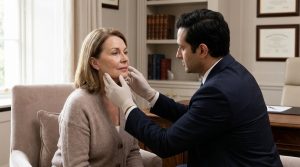
Related articles



Our specialists
 Clineca SpecialistErkan PinegözPlastic & Reconstructive Surgery
 Clineca SpecialistHakan AktaşPlastic & Reconstructive Surgery
 Clineca SpecialistOrkun UzuneyüpoğluPlastic & Reconstructive Surgery
 Clineca SpecialistSalim İskenderPlastic & Reconstructive Surgery
 Clineca SpecialistEngin SelamioğluPlastic & Reconstructive Surgery
 Clineca SpecialistCem AydınPlastic & Reconstructive Surgery
 Clineca SpecialistAlperen ÖnalEar, Nose & Throat (ENT)