

Have a question about Facelift?
In this article
- What is the usual facelift recovery timeline?
- When will I look normal enough to go out or return to work?
- How much pain, swelling, bruising, and numbness is normal?
- When can I fly home after a facelift in Turkey?
- What helps facelift recovery go more smoothly?
- What affects how long facelift recovery takes?
- How should I choose a surgeon and plan recovery safely?
How long does facelift recovery take? Most people need around 2 to 3 weeks before they feel comfortable returning to normal daily life, but swelling, tightness, numbness, and subtle healing can continue for several weeks or months. The exact timeline varies with the type of facelift, your general health, whether a neck lift or eyelid surgery is done at the same time, and the recovery plan set by your surgeon.
What is the usual facelift recovery timeline?
The short answer is that facelift recovery happens in layers. You recover enough for basic daily life first, then enough to go out without feeling self-conscious, and only later do you reach the more settled stage where lingering swelling and tightness continue to fade.
According to the American Society of Plastic Surgeons (ASPS), bruising and swelling are expected after facelift surgery, and recovery instructions matter because they help lower the risk of complications and support healing. The NHS also advises that cosmetic surgery recovery can take time and that you should follow your surgeon’s aftercare closely.
A typical timeline often looks like this:
- ✓Days 1 to 3: swelling, bruising, drainage, and a feeling of tightness are usually at their strongest. You will need rest and help with simple tasks.
- ✓Days 4 to 7: dressings may be reduced or changed, discomfort usually becomes easier to manage, and short walks are often encouraged.
- ✓Week 2: many people feel noticeably better, though visible bruising and puffiness can still be present.
- ✓Weeks 3 to 4: a lot of people feel ready for work, social activities, or video calls, especially with makeup if their surgeon allows it.
- ✓Weeks 6 to 8: most routine activities feel more normal, but numbness, firmness, and mild swelling can still linger.
- ✓Several months: scars soften, the skin settles, and the final result becomes clearer.
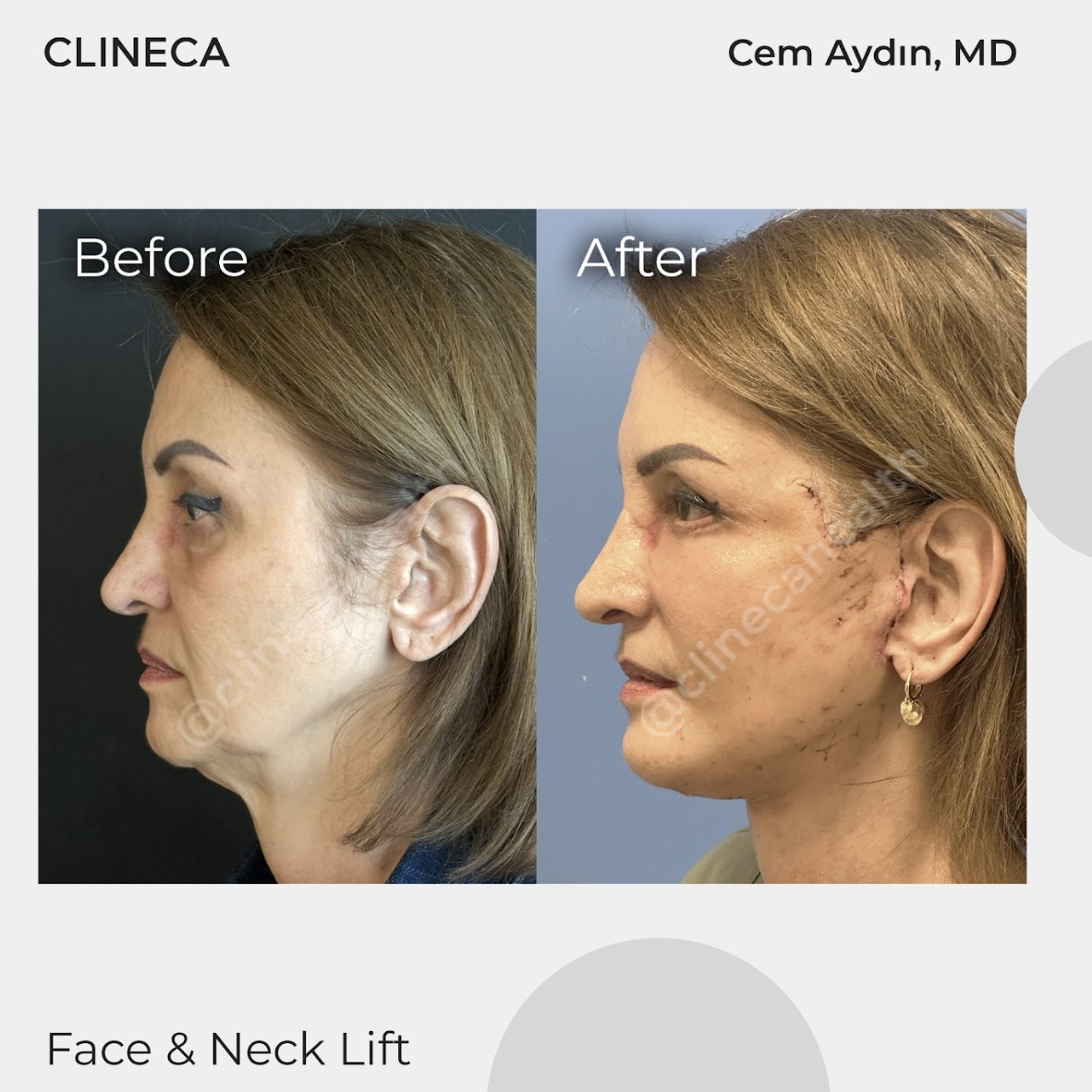
This is a typical range, not a promise. A deep-plane facelift, a combined facelift and neck lift procedure, or surgery that includes the eyelids can mean a longer recovery than a more limited lift. On the other hand, some healthy patients with smaller procedures feel presentable a bit sooner.
The main point is simple: you may look much better before you feel fully healed, and you may feel fine before your face has fully settled.
📋 Typical does not mean universal Recovery varies by technique, age, smoking status, skin quality, other procedures done at the same time, and how closely aftercare instructions are followed.
A typical facelift recovery has stages. The first week is the most intensive for swelling and bruising. By about 2 weeks, many people are back to light daily routines. Around 3 to 4 weeks, most feel more socially presentable, but final settling takes longer and varies by person.
When will I look normal enough to go out or return to work?
This is usually the question people care about most. In practice, the answer depends less on pain and more on visible signs of surgery.
Many people with desk-based work plan for around 2 weeks off. That is often enough to get through the early swelling phase and attend early follow-up appointments. Still, if your job is public-facing, involves meetings, or you simply do not want people to notice that you had surgery, 3 weeks can be a more realistic buffer.
The phrase “look normal” can be misleading, because recovery is not all-or-nothing. At 10 to 14 days, you may feel well enough to go out for a quiet lunch, but still have puffiness around the jawline or bruising near the ears or neck. By 3 to 4 weeks, many patients feel more comfortable socially, but that remains a typical range rather than an expectation for everyone.
If your work is physical, recovery is slower from a practical point of view. Jobs that involve lifting, bending, heat exposure, or long hours on your feet may require more time away. Your treating surgeon should advise when you are fit to resume your usual duties.
Makeup may help cover residual bruising once your surgeon says the skin is ready, but it does not speed healing. Hairstyles, scarves, and avoiding major events too soon are often more useful than trying to force a fast return.

Often possible at around 2 weeks in straightforward cases, if swelling and bruising are acceptable to you.
Many people prefer closer to 3 weeks, because early healing can still be visible.
Lifting, straining, and long active shifts may need a longer break, depending on your surgeon’s advice.
Many patients take about 2 weeks away from work, and some prefer closer to 3 weeks if they want bruising and swelling to be less noticeable. Being medically recovered and feeling socially ready are not the same thing, so plan with some flexibility rather than a fixed public deadline.
How much pain, swelling, bruising, and numbness is normal?
Most patients do not describe facelift recovery as intense pain. Tightness around the cheeks, jawline, ears, and neck is often more noticeable than pain itself. You may also feel tired, emotionally flat, or simply frustrated during the first week, which is common after surgery.
Swelling usually peaks in the first few days and then slowly improves. Bruising often tracks down the neck because of gravity, so it can look worse before it looks better. Numbness around the ears, along the jaw, or in the neck area is also common early on, because small nerves are disturbed during surgery. That numbness often improves gradually over weeks to months.
Firmness under the skin can be surprising if you were expecting the face to feel soft straight away. In reality, tissues are healing, fluid is settling, and scars are maturing beneath the surface. That is why the result often changes month by month.
The NHS advises that cosmetic procedures carry risks such as bleeding, infection, and problems with healing. ASPS also notes that patients should be aware of risks including haematoma, nerve injury, skin loss, poor scarring, and infection. Those risks are not common in every case, but they matter because early warning signs should never be ignored.
Seek urgent advice from your surgeon if you develop increasing one-sided swelling, heavy bleeding, worsening pain rather than improving discomfort, fever, pus, sudden facial weakness, shortness of breath, or skin that looks very dark, pale, or blistered.
⚠️ Call your surgeon urgently if symptoms suddenly worsen A facelift should gradually improve after the first few days. Sharp deterioration, major asymmetry, or signs of infection need prompt medical review.
A facelift is usually described as more tight and uncomfortable than sharply painful, but swelling and bruising are expected in the first 1 to 2 weeks. Mild numbness, firmness, and a pulling feeling can last longer. Severe pain, rapidly expanding swelling, or skin colour change needs urgent medical review.
When can I fly home after a facelift in Turkey?
If you are travelling for surgery, this part matters as much as the operation itself. People often focus on the procedure day, but the harder part is usually managing the first week away from home.
After a facelift, you may need drain removal, dressing changes, wound checks, or simple monitoring for swelling and bleeding. That is why same-day or next-day flights are usually impractical. Even if travel feels physically possible, it may not be wise from a medical point of view.
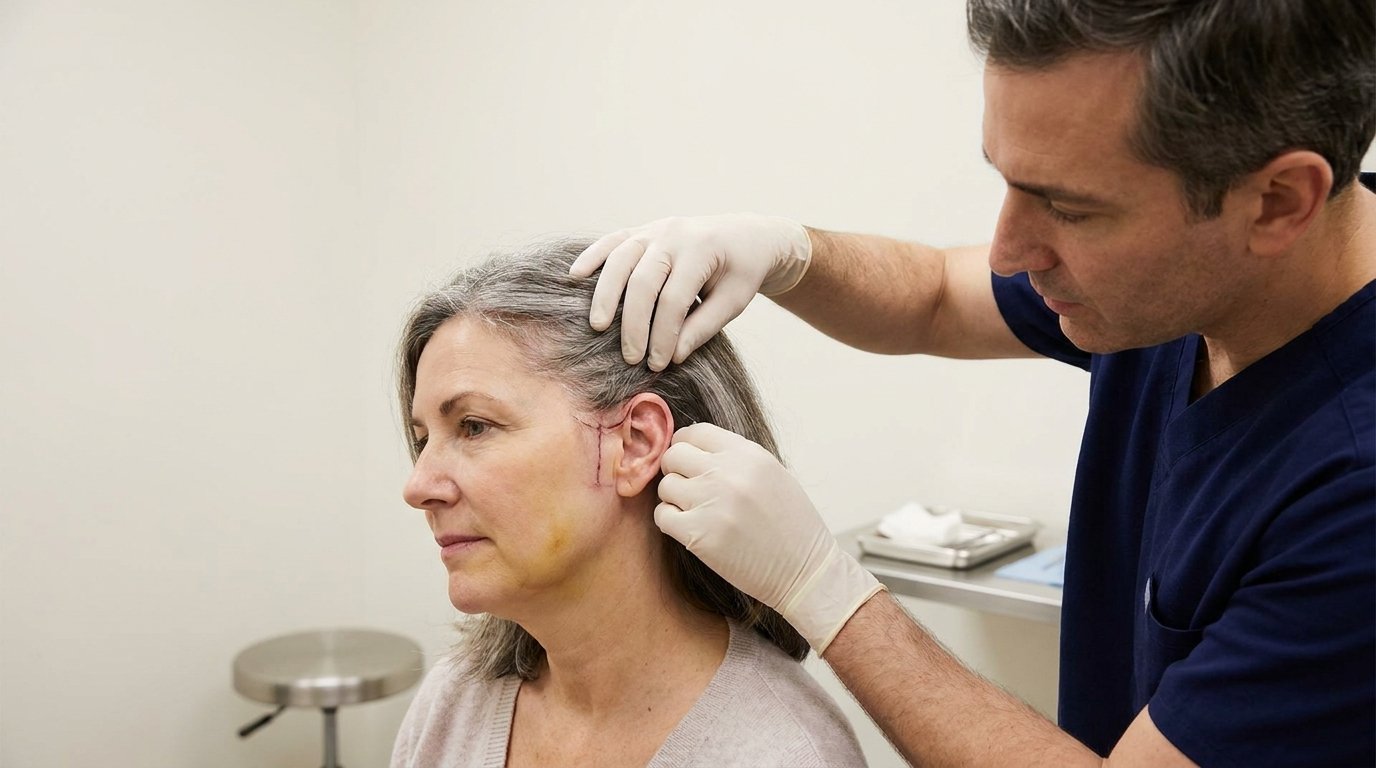
There is no universal rule for flying after facelift surgery. The right timing depends on the extent of surgery, whether you had a combined procedure, how much swelling you have, whether drains are still in place, and whether your surgeon is happy with your early recovery. Fitness to fly must be confirmed by the treating surgeon on an individual basis.
For many patients coming to Turkey, the stay is often planned around the early review period rather than just the surgery date. In practical terms, that usually means allowing enough time for immediate aftercare, with extra flexibility in case swelling, bruising, or blood pressure issues delay travel clearance. If you are comparing options, it is worth reading the general details on facelift treatment information before you make travel plans.
Long flights also bring comfort issues. Sitting upright for hours can increase swelling, and travelling while tired, bruised, and wearing dressings is not pleasant. A realistic travel plan is safer than trying to leave as early as possible.
⚠️ Flying home is a medical decision, not just a travel decision Your own surgeon should decide when you are fit to fly. General timelines online are only rough guides.
- ✓Do not book a fixed early return flight unless your ticket can be changed.
- ✓Ask who will review you before travel and what happens if swelling delays your flight.
- ✓Check whether you will need drains removed or dressings changed before leaving.
- ✓Confirm your surgeon’s written advice on medicines, compression, sleeping position, and emergency contact after you return home.
There is no single safe day that applies to everyone. Many international patients are advised to stay in Turkey for at least several days after surgery so early checks can be done, but fitness to fly and the exact travel date must be decided individually by the treating surgeon.
What helps facelift recovery go more smoothly?
The basics matter more than most people expect. Good recovery is usually not about a special cream or a clever trick. It is about reducing pressure on healing tissues and giving your body time to settle.
Sleep with your head raised if your surgeon advises it. Avoid bending, straining, lifting, and anything that pushes your blood pressure up in the first phase of recovery. Take short, gentle walks, stay hydrated, and avoid smoking or nicotine, which can reduce blood flow and make healing more difficult.
Alcohol is also worth limiting in early recovery because it can worsen swelling and dehydration. If you take blood-thinning medicines or supplements, only restart them when your surgeon says it is safe.
Skin care should stay simple. The skin can feel numb, sensitive, or tight, so aggressive facials, massage tools, and strong active products are usually not a good idea early on. If you have had another facial procedure at the same time, such as eyelid surgery or a brow lift, the aftercare plan may be more specific.
Perhaps the most helpful step is to keep your social calendar light. A calm two to three weeks is often easier than trying to fit recovery around events, work pressure, and travel stress.
Rest, head elevation if advised, gentle walking, good hydration, and careful follow-up support recovery.
Smoking, heavy lifting, early strenuous exercise, alcohol excess, and ignoring swelling changes can make recovery harder.
What affects how long facelift recovery takes?
Two patients can have the same operation on paper and still heal differently. That is normal. Age plays a role, but so do blood pressure control, skin quality, general fitness, nutrition, sleep, and whether you bruise easily.
The biggest factor is often the extent of surgery. A limited lift may settle faster than a full facelift with neck work, liposuction under the chin, or combined facial surgery. Revision surgery can also be less predictable because tissues have been operated on before.
Smoking and nicotine matter more than many patients realise. Reduced blood flow can increase the risk of delayed healing and skin problems. High blood pressure also matters because it can raise the chance of postoperative bleeding or haematoma, which is one of the best-known early facelift complications.
Expectation management matters too. Online recovery videos are often filmed in flattering light, at a distance, and after makeup. They can make the third week look like the final result when it is not. A more honest approach is to expect early improvement by 2 to 3 weeks, but final refinement over the following months.
Recovery is usually longer when surgery is more extensive, when several procedures are combined, or when healing is affected by smoking, blood pressure, diabetes, or poor sleep. A shorter-looking recovery on social media can be misleading because hidden swelling and internal healing often continue long after photos suggest otherwise.
How should I choose a surgeon and plan recovery safely?
For international patients, safe recovery is partly about surgical skill and partly about logistics. You need to know who is operating, where the surgery takes place, who will see you after the operation, and what happens if you need help once you are back home.
Ask direct questions. Who does the follow-up checks? What signs of trouble should prompt an urgent review? When is it usually safe to shower, work, exercise, and travel? How often does the surgeon perform facelift surgery, and what type of facelift is being recommended in your case?
You should also ask for a personalised quote after consultation rather than relying on generic prices. There is no single standard price for facelift surgery, and the total cost depends on the surgical plan, hospital or clinic fees, anaesthesia, aftercare needs, and whether other procedures are done at the same time. If you want to understand who you are dealing with before arranging an assessment, it is reasonable to review the surgeon information on the doctors page and the general background on the about page.
If you are still at the planning stage, a proper medical review matters more than marketing language. A written treatment plan and recovery plan should be clearer than any promise of a quick transformation.
🚨 Be cautious with very short travel plans A rushed itinerary may leave too little time for early checks, dressing changes, or delayed swelling. Recovery should drive the travel plan, not the other way around.
Safe planning starts before surgery. Choose a properly qualified surgeon, make sure the facility is appropriately accredited, ask who provides aftercare, and build enough time for review before flying home. Clear answers about complications, follow-up, and travel timing matter more than a rushed schedule.
Frequently Asked Questions
References
- 📎NHS: Cosmetic procedures
- 📎American Society of Plastic Surgeons: Cosmetic procedures
- 📎PubMed search: facelift recovery hematoma complications rhytidectomy
- 📎Mayo Clinic: Tests and procedures
Related Articles
You Might Also Like


Related articles

Our specialists
 Clineca SpecialistErkan PinegözPlastic & Reconstructive Surgery
 Clineca SpecialistHakan AktaşPlastic & Reconstructive Surgery
 Clineca SpecialistOrkun UzuneyüpoğluPlastic & Reconstructive Surgery
 Clineca SpecialistSalim İskenderPlastic & Reconstructive Surgery
 Clineca SpecialistEngin SelamioğluPlastic & Reconstructive Surgery
 Clineca SpecialistCem AydınPlastic & Reconstructive Surgery
 Clineca SpecialistAlperen ÖnalEar, Nose & Throat (ENT)