
Have a question about Rhinoplasty?
In this article
- What actually makes up a nose shape
- The main nose shapes, described plainly
- What is a Roman nose, and is it a problem?
- Roman nose rhinoplasty: how a convex bridge is changed
- Bulbous, boxy and drooping tips
- Crooked and deviated noses: shape and breathing in one operation
- Non-surgical nose reshaping and where it stops
- Naming what you actually want before the consultation
- What drives the price, and planning a trip
- Choosing a surgeon for your particular nose shape
Patients rarely walk into a consultation talking about cartilage and bone. They talk about shapes — a Roman profile inherited from a grandfather, a tip that looks round in photographs, a bridge that leans one way. Putting a name to the shape you see in the mirror is a useful starting point, because each pattern has its own anatomy underneath, and that anatomy decides what surgery can realistically change.
What actually makes up a nose shape
A nose shape is the sum of four things: the bridge (the line running from between your eyes down to the tip), the tip itself, the nostrils and the base where the nose meets the lip. Skin thickness sits over all of it and quietly controls how much of the underlying structure you can see.
The bridge is bone in its upper third and cartilage below that. A convex bridge — a hump — is usually a mix of extra bone and extra cartilage, which is why a surgeon talks about reducing both rather than simply “filing it down”. The tip is held up by two curved cartilages, and their size, strength and angle decide whether a tip reads as round, boxy, pointed or drooping.
Skin matters more than most people expect. Thin skin shows every edge and graft, which can look crisp but is unforgiving of small irregularities. Thick skin hides fine definition, so refinement takes structural work underneath and a longer wait for swelling to settle — we cover that in more detail in our guide to rhinoplasty on a thick-skinned nose.
One more point worth making early: profile and front view are almost separate problems. A nose can look perfectly straight from the front and still show a strong hump in profile, or look smooth in profile while appearing wide and round head-on. Judging your own nose honestly means looking at both, ideally in photographs rather than a mirror.
The main nose shapes, described plainly
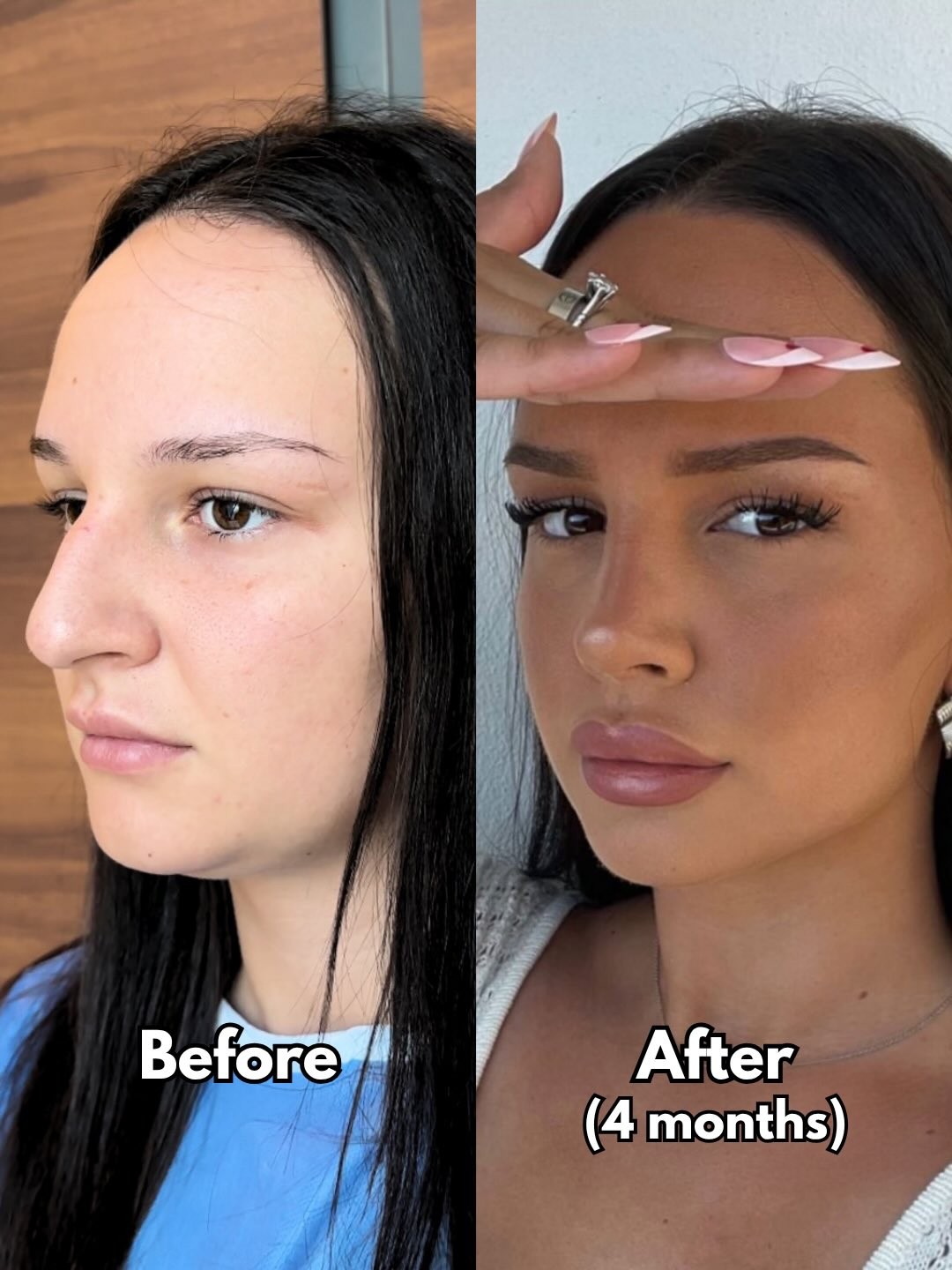
Nose shape names are descriptive, not diagnostic. They come from art history and everyday language rather than medicine, but surgeons still use them in conversation because they communicate quickly. A Roman or aquiline nose has a convex bridge with a downward-sloping tip. A Greek nose runs almost perfectly straight from brow to tip. A snub or button nose is short and slightly upturned. A Nubian nose is longer with a wider base and a tip that sits low. A hawk nose is a more pronounced version of the Roman profile, with a sharply curved bridge and a hooked tip. A bulbous nose is defined by a rounded, undefined tip, and a deviated or crooked nose leans off the midline.
The table below pairs each shape with the structure that creates it and the kind of surgical work usually discussed. It describes typical patterns, not promises — what suits your face is decided in person.
It is also worth saying something about ethnicity. Bridge height, tip support, skin thickness and nostril width vary enormously between family backgrounds, and none of these variations is a flaw. The goal in modern practice is balance within your own face, not conversion to a single template; our article on whether ethnic rhinoplasty can refine a nose without erasing your features goes into how surgeons plan that.
📋 Shape names are shorthand No surgeon operates on a label. Two people with what they both call a Roman nose can need very different plans, because one has mostly bone and the other mostly cartilage, with different tip support and skin thickness.
What is a Roman nose, and is it a problem?
A Roman nose is a strong, convex profile: the bridge rises above the straight line you would draw from the root of the nose to the tip, and the tip often sits a little low. It is usually inherited, appears or sharpens during the teenage growth years, and is simply one of the more common European and Middle Eastern profiles rather than anything abnormal.
Medically, it causes no trouble on its own. Breathing problems that happen to appear alongside a Roman profile come from the septum — the wall inside the nose — or from narrow internal valves, not from the hump itself. That distinction matters, because a nose can be straightened cosmetically and still breathe badly if the inside was never addressed.
Aesthetically, whether the shape bothers you depends on the rest of your face. A convex bridge looks stronger when the chin is set back, and softer when the chin and jaw are well projected. This is why some patients weighing a profile change end up discussing the chin as well as the nose; the eye reads the line from forehead to chin as a whole, not the nose in isolation.
A small nuance that saves disappointment later: humps sometimes look as if they come back. Most of the time what the patient is seeing is scar tissue, swelling settling unevenly or a small residual ridge rather than new bone growth, and the pattern is explained in our piece on dorsal hump regrowth after rhinoplasty.
Roman nose rhinoplasty: how a convex bridge is changed
Reshaping a Roman nose means lowering the bridge, then rebuilding the support that was lowered along with it. Taking the hump down opens the roof of the nose, so the side walls have to be repositioned with precise bone cuts and the middle of the nose supported, or the result can look pinched and breathe worse than it did before.
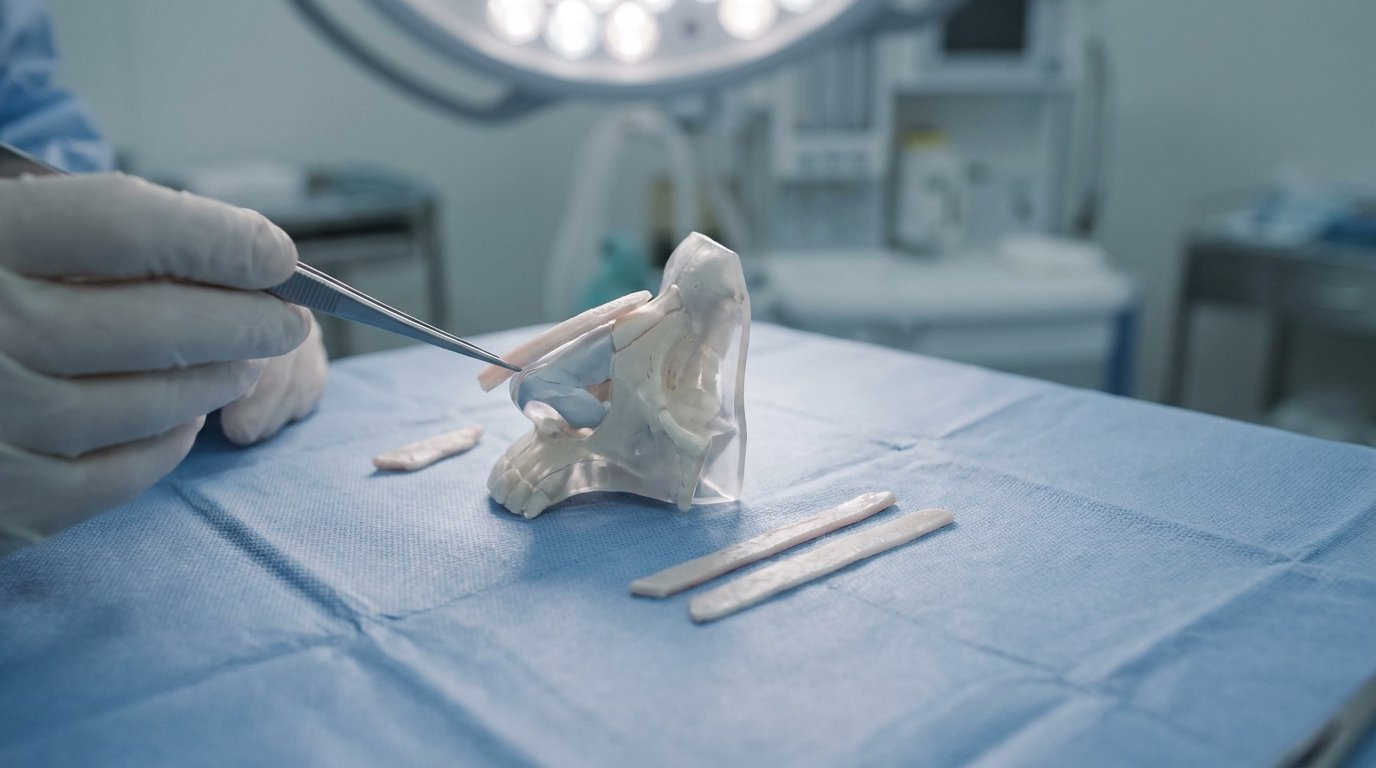
That principle is now standard thinking rather than opinion. A 2025 paper in Facial Plastic Surgery describing reduction structured rhinoplasty makes the point directly: reducing the size of a nose without replacing the support structures that were disrupted has historically produced poor long-term results, which is why grafts — spreader grafts along the bridge, a columellar strut or a septal extension graft for the tip — are used to keep the shape and the airway stable over decades.
There is also a less reductive route, often called preservation rhinoplasty, where the bridge is lowered by adjusting the structures beneath it rather than shaving the surface down. It can give very smooth profiles in suitable noses, particularly smaller humps with straight bones, but it is not a universal substitute for reduction with grafting. Which approach suits you depends on the size of the hump, the straightness of your nasal bones and your septum.
Tip work is almost always part of a Roman nose plan. Lowering the bridge alone can leave the tip looking heavy or droopy by comparison, so surgeons usually rotate and support the tip at the same time to restore the balance between bridge and tip.
What a realistic result looks like
A straight profile, a tip that sits slightly above the line of the bridge, and a nose that still looks like it belongs to your face. What it is not is a nose borrowed from a photograph: bone thickness, skin thickness and healing all put limits on how fine the final definition can be, and those limits are set by your anatomy rather than by the surgeon’s ambition.
⚠️ Over-reduction is hard to undo A bridge taken down too far, or tip cartilage removed rather than reshaped, can lead to a scooped profile, pinched nostrils and noisy breathing. Revision surgery for this usually needs cartilage from the ear or rib, so conservative, structured reduction is the safer first operation.
Bulbous, boxy and drooping tips
A bulbous nose is defined at the tip, not the bridge: the tip reads as round and undefined, with no clear light reflection on either side. Underneath, the cause is usually wide or strongly curved lower cartilages, sometimes combined with thick skin and a generous layer of soft tissue over them.
Modern tip surgery leans on sutures far more than on cutting cartilage away. A 2026 review of tip suture techniques in Facial Plastic Surgery describes the tip as an interplay between the lower cartilages, the soft tissue and septal support, with projection, rotation and definition judged together while the airway is kept intact. In practice that means narrowing and reshaping existing cartilage into a better position rather than removing the structures that hold the tip up.
If the bridge genuinely does not bother you, a tip-only operation is sometimes an option — but the honest answer is that it suits fewer people than hope for it, because changing the tip alters how the whole profile reads. Thick skin again sets the pace of the result: definition appears gradually over many months as deep swelling resolves, not in the first few weeks.
Drooping tips are a related but separate issue. Some tips point down at rest, others only when the person smiles, and the cause can be weak cartilage support, a long septum or an overactive muscle pulling the tip down. These are treated differently, which is why your surgeon will ask you to smile and will press on your tip during the examination.
Crooked and deviated noses: shape and breathing in one operation
A crooked nose leans off the facial midline, and it is the shape most likely to come with genuine breathing complaints. The deviation can sit in the bone, the cartilage, the septum or all three, and it is frequently the legacy of an old injury that seemed minor at the time.
Surgeons classify the pattern before planning. A 2023 multicentre study in the European Review for Medical and Pharmacological Sciences, reviewing 300 crooked nose cases, grouped the deformities into I-shaped, C-shaped, reverse C-shaped and S-shaped deviations — a reminder that the direction of the bend, not just its presence, drives the technique chosen.
Straightening a crooked nose usually means working on the septum as well as the outside, because a deviated septum both pushes the nose off-centre and blocks airflow. Correcting both in a single operation is routine; our article on whether septoplasty and rhinoplasty can be done together explains how that is sequenced and what it means for your stay.
It is fair to expect improvement rather than mathematical symmetry. Faces are not symmetrical to begin with, cartilage has memory and can drift slightly as it heals, and the visible result is judged after swelling settles over months rather than weeks.
Non-surgical nose reshaping and where it stops
Injectable filler can camouflage a small hump by lifting the bridge above and below it, lift a tip slightly, or balance a mild irregularity. It takes minutes, needs no recovery and is temporary — which is its advantage and its ceiling.
What it cannot do is make a nose smaller. Filler adds volume, so a prominent nose becomes marginally larger overall even when the profile looks straighter. It will not narrow a wide bridge, refine a genuinely bulbous tip, straighten a structurally crooked nose or improve breathing.
The risk profile also deserves plain language rather than reassurance. The nose has a dense blood supply, and injecting filler into or around a vessel can block it, which in rare cases causes skin loss or visual problems. It is a recognised complication of non-surgical nose jobs, not a theoretical one, and it is the main reason this treatment should only be done by an experienced medical injector who can manage complications immediately.
🚨 Vascular occlusion is the serious risk Blocked blood flow after nasal filler can cause skin damage or, rarely, vision loss. Sudden blanching, severe pain or any visual change after an injection needs emergency assessment the same day.
Reasonable for a minor bridge irregularity or a slightly low radix in someone who is not ready for surgery. Temporary, repeatable, and reversible in the case of hyaluronic acid products.
Using injections to ‘avoid’ rhinoplasty on a large or strongly convex nose tends to add bulk and delay the decision, and repeated filler can make the tissue planes harder to work with later.
If a set-back chin is exaggerating your profile, discussing chin projection alongside the nose sometimes reduces how much nasal change you actually want.
Naming what you actually want before the consultation
The single most useful thing you can do before a consultation is turn your dislike into a description. “I hate my nose” gives a surgeon nothing to plan with; “my bridge bumps out in profile and my tip looks round in photos” gives them two specific targets.
Among the people who write to us about their nose, the wish that comes up most often — roughly one in six — is for a slimmer or thinner nose, ahead of asking for a smaller nose, a straighter bridge or a more refined tip. That split matters for you, because slimmer and smaller lead to different operations: narrowing works through bone position and tip cartilage, while making a nose smaller means reducing the bridge and often rebuilding support. Deciding which word fits your goal changes the plan you are quoted for.
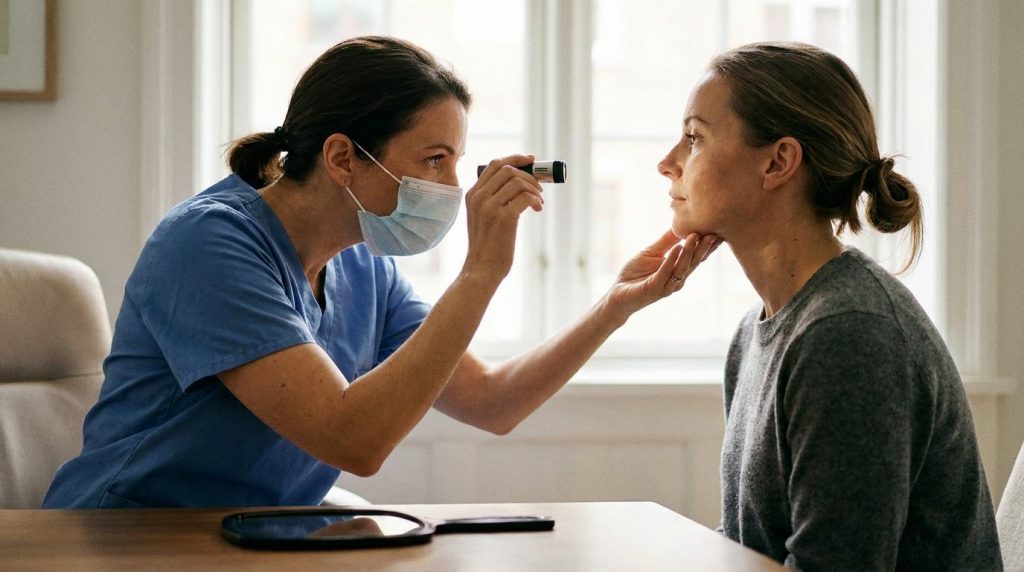
It is also worth bringing photographs of yourself rather than of other people. A good surgeon will take standard views, assess your airway, press on your tip to test its support and tell you which parts of your wish list are realistic. Simulation software can help the conversation, but an edited image is a discussion tool and never a commitment to a result.
Be explicit about the breathing side too. If you snore, block on one side, or have had an injury years ago, say so at the first appointment — functional correction is easier to build into the original plan than to add later.
- ✓Describe the view that bothers you: Profile, front, smiling or all three — surgeons plan these differently.
- ✓Separate shape from function: List breathing symptoms alongside cosmetic wishes rather than instead of them.
- ✓Name your non-negotiables: For many patients it is keeping a family resemblance or avoiding an obviously ‘done’ look.
- ✓Ask what your skin allows: Thick skin changes how much definition is achievable and how long it takes to appear.
- ✓Ask about the airway plan: What support grafts are planned, and what happens to your breathing after reduction.
What drives the price, and planning a trip
Rhinoplasty is not one operation with one price. A primary nose job on straight bones with good cartilage is a different piece of work from straightening a crooked nose, rebuilding a previously operated one, or harvesting rib cartilage — and quotes reflect that difference in theatre time, materials and follow-up.
We keep all figures out of articles on purpose, because a number quoted without knowing your anatomy is close to meaningless. What a serious quote should do is tell you exactly what is included, and what would change it. Expect a personalised price only after a consultation in which your photographs and breathing history have been reviewed.
For travel planning, most international rhinoplasty patients are asked to stay in the country for around a week: surgery early in the trip, a review a few days later for splint or cast removal, then clearance to fly. Swelling is at its worst in the first week, bruising around the eyes usually fades within two to three weeks, and the refined final shape takes a year or more to declare itself — longer in thicker skin.
One scheduling note: if you are considering combining procedures in the same trip, the length of your stay is set by the bigger operation, not the nose. That is a common conversation, and it should be planned at the quoting stage rather than added once you have arrived.
📋 Ask what a quote excludes Medication, splints, post-operative reviews, revision policy and the cost of an extra night if you are not cleared to fly are the items most often left out of a headline figure.
Choosing a surgeon for your particular nose shape
Nose surgery rewards specialisation more than almost any other cosmetic operation. A surgeon who performs rhinoplasty weekly, and who can show you before-and-after photographs of noses similar to yours — same shape, same skin thickness, same ethnic features — is giving you far more useful evidence than a general portfolio.
Check credentials in a way that can be verified. In Turkey that means a surgeon registered in plastic, reconstructive and aesthetic surgery or in ear, nose and throat surgery, operating in a licensed hospital with an anaesthetist present, and happy to tell you who will see you if something goes wrong after you fly home. Our guide on how to choose a rhinoplasty surgeon in Turkey sets out the questions worth asking in writing.
Be wary of certainty. Anyone who promises a specific look, dismisses your breathing symptoms, cannot explain how they will support the nose after reducing it, or pushes you to book before a proper assessment is telling you something useful about how they practise.
This article is for informational purposes only and does not constitute medical advice. Always consult a qualified surgeon for personalised guidance.
Photographs of noses like yours at one year rather than one month, a written plan naming the techniques, an airway examination, and a clear revision policy.
Guaranteed results, heavy discounting with a deadline, no named surgeon until arrival, simulated images presented as the promised outcome, and no answer on who manages complications.
Frequently Asked Questions
References
- 📎Reduction Structured Rhinoplasty — Facial Plastic Surgery, 2025
- 📎Applied surgical methods and outcomes in crooked nose rhinoplasty — European Review for Medical and Pharmacological Sciences, 2023
- 📎Tip Suture Techniques — Facial Plastic Surgery, 2026
- 📎NHS — Cosmetic procedures
- 📎ASPS — Cosmetic procedures
Related Articles


You Might Also Like



Related articles



Our specialists
 Clineca SpecialistErkan PinegözPlastic & Reconstructive Surgery
 Clineca SpecialistHakan AktaşPlastic & Reconstructive Surgery
 Clineca SpecialistOrkun UzuneyüpoğluPlastic & Reconstructive Surgery
 Clineca SpecialistSalim İskenderPlastic & Reconstructive Surgery
 Clineca SpecialistEngin SelamioğluPlastic & Reconstructive Surgery
 Clineca SpecialistCem AydınPlastic & Reconstructive Surgery
 Clineca SpecialistAlperen ÖnalEar, Nose & Throat (ENT)