

Have a question about face lift?
In this article
- Why the face and neck are usually assessed as one area
- One trip or two? How patients actually decide
- What drives the cost of a combined face and neck lift in Turkey
- Recovery week by week after a face and neck lift
- How long to stay in Turkey and what the trip looks like
- Safety, real risks and choosing the right clinic
Most people who start researching a facelift and neck lift together in Turkey didn’t begin with two procedures in mind. They noticed a softening jawline in photographs, then realised the skin under the chin had changed too, and suddenly one operation looked like two. How surgeons actually approach that combination — and what it means for your trip, your budget and your calendar — is worth understanding before you send off a single photo.
Why the face and neck are usually assessed as one area
Ageing doesn’t stop politely at the jawline. The same tissue that sags into jowls continues down into the neck, and the thin muscle sheet under the chin — the platysma — loosens at the same time, which is what creates those vertical bands some people see when they speak or swallow.
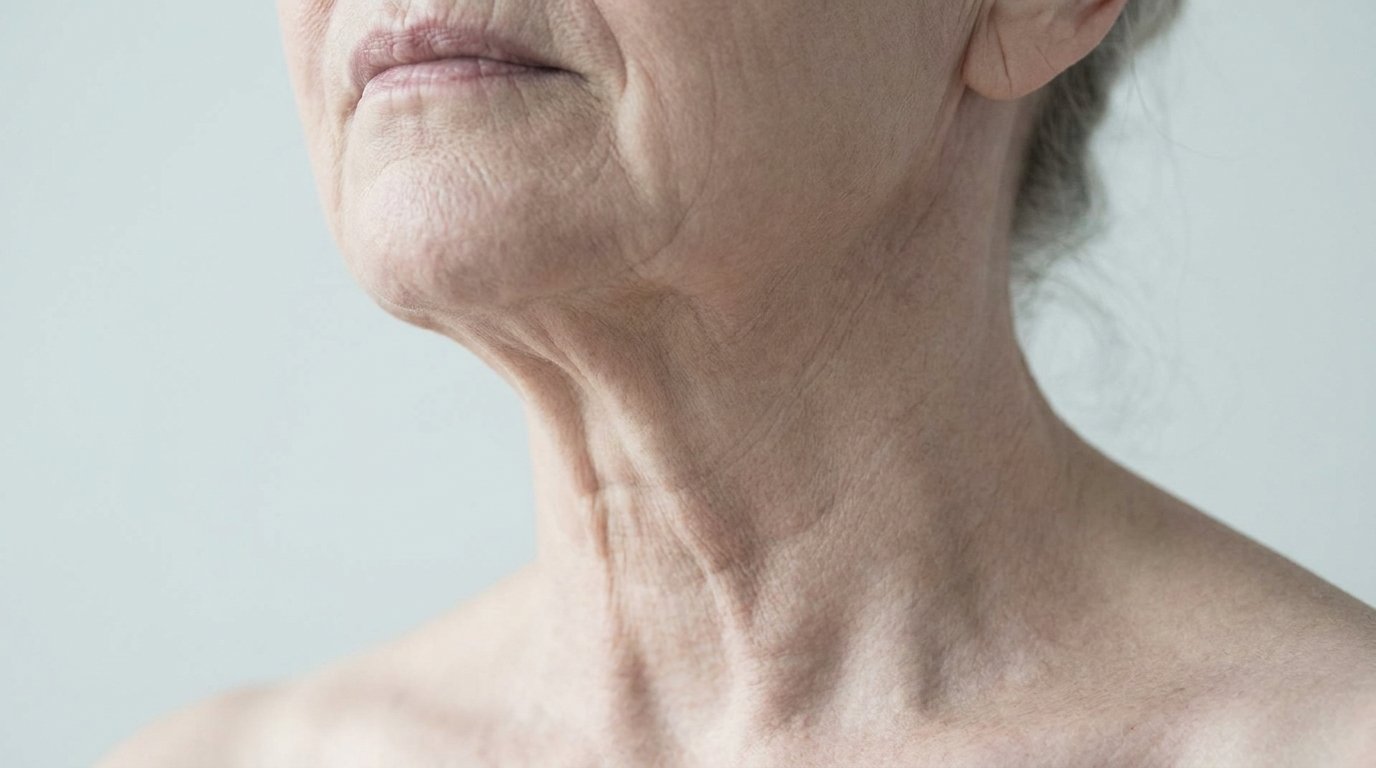
That anatomy is why many surgeons treat the lower face and neck as one continuous surface rather than two separate jobs. A lift that tightens the cheeks and jawline but leaves the neck untouched can look unbalanced from the side, because the eye reads the jawline and the neck together. Correcting one without the other is sometimes the right call, but it is a decision made on examination, not a default.
A 2018 review of face-neck lift cases published in Medicine (Baltimore) illustrates how individual that planning is: alongside the main lift, the surgeons added tailored extras in selected patients — reshaping the chin bone (genioplasty), fat injections, buccal fat reduction, earlobe reduction — chosen case by case rather than as a fixed package. Expect a good consultation to work the same way, adding or leaving out steps based on your own anatomy.
If you are still unsure where one procedure ends and the other begins, our explainer on whether the neck is included in a facelift or needs a separate neck lift goes through the overlap in more detail.
📋 Two names, often one operation In practice, a combined face and neck lift is usually performed through a continuous set of incisions in front of and behind the ear, sometimes with a small hidden incision under the chin to tighten the neck muscle. It is planned as one surgical session, not two operations stacked on the same day.
One trip or two? How patients actually decide
This is the question that keeps people awake: is it safer to separate the two and come back later? Splitting is a legitimate choice, and some patients prefer it for their own reasons — shorter time under anaesthesia, less time away from work in one block, or simply wanting to see how the first result settles.
It is also the minority route. Among our patients who want two procedures, roughly one in ten choose to split them across two separate trips, while the rest have everything done in a single stay. The ones who do return for a second visit most often come back for something unrelated to the face, such as a breast lift, a rhinoplasty or an implant replacement. For your decision, that means combining is common and well-rehearsed, but choosing two trips will not make you an awkward exception — it is a normal conversation to have with your surgeon.
What should steer the decision is medical, not logistical. Your general health, blood pressure, smoking history, medications and total planned operating time all matter far more than convenience. If a surgeon tells you a combination is too long or too much for you, that is a sign of good judgement rather than a sales problem.
- →Reasons surgeons lean towards one session: A single anaesthetic, one recovery period, one trip, and a jawline-to-neck result that is planned as a whole from the start.
- →Reasons to consider two stages: Significant medical history, a very long combined operating plan, limited leave from work, or a strong personal preference to take it step by step.
- →Reasons that should not decide it: A package discount, a limited-time offer, or pressure to add procedures you did not ask about.
What drives the cost of a combined face and neck lift in Turkey
Turkey’s appeal is straightforward — lower clinic overheads, lower staffing costs and a favourable exchange rate mean a combined facelift and neck lift usually costs considerably less than the equivalent surgery in the UK, Western Europe or North America. What that figure is for you depends entirely on your plan, and a clinic cannot responsibly quote before a surgeon has seen your photographs or examined you. Prices are quoted in Turkish lira, euros, pounds or US dollars depending on the clinic, so always confirm which currency and which exchange date applies.
The table below sets out the factors that genuinely move a quote up or down.
Most reputable clinics quote a single all-inclusive figure rather than an itemised bill, and our guide to what an all-inclusive surgery package in Turkey includes is a useful checklist to hold a quote against. Ask specifically what happens if you need an extra night in hospital, and whether revision policy and follow-up are written down.
⚠️ Treat a fixed online price with caution A number published before anyone has assessed your face is a marketing figure, not a quote. A personalised price should follow a proper consultation, once the surgeon knows what your face and neck actually need.
Recovery week by week after a face and neck lift
Combining the two does not double the recovery, because it is one healing area rather than two. It does, however, mean more swelling and bruising low on the face and along the neck than a facelift alone, and the neck is usually the part that feels tight and odd for the longest.
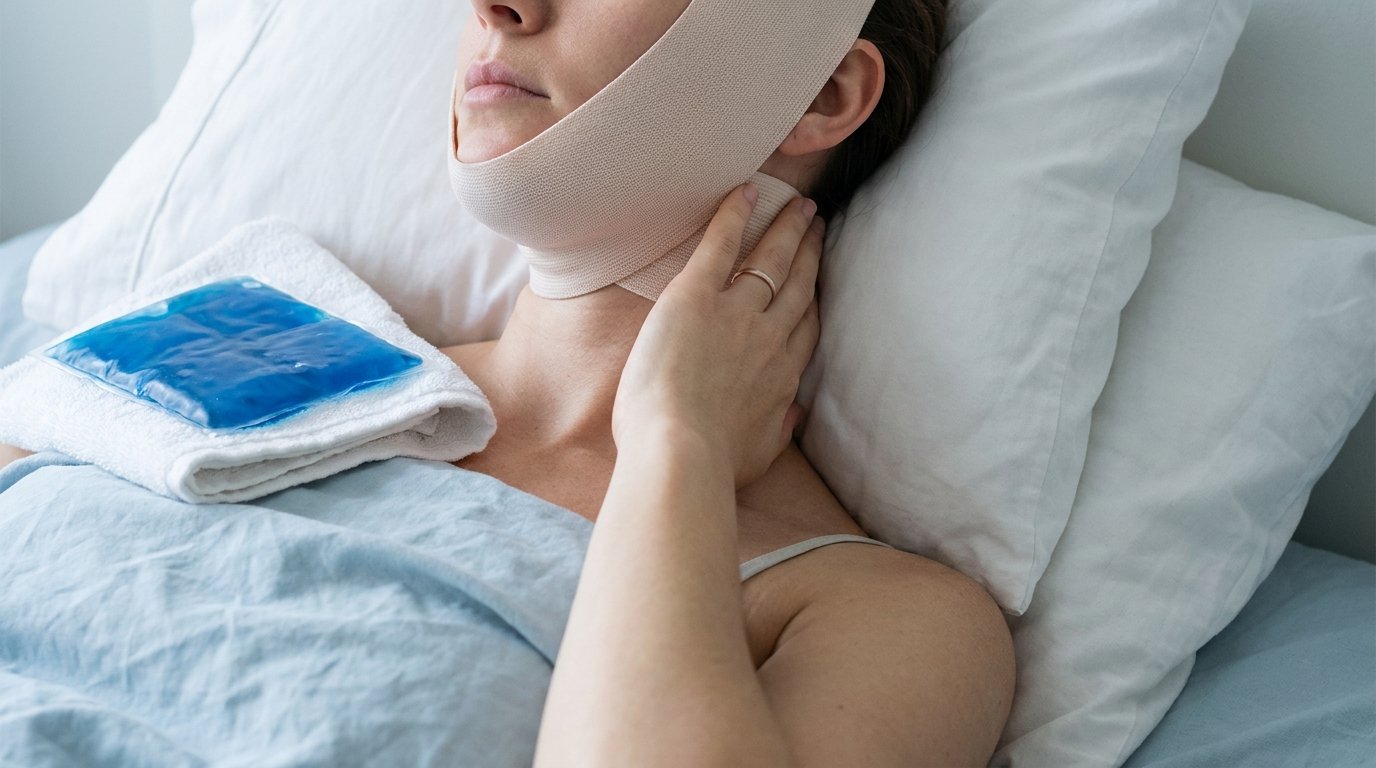
The timeline below is a general pattern, not a promise — healing speed varies with technique, age, skin quality and how closely you follow aftercare.
Swelling in the neck can be stubborn and asymmetric for longer than people expect, which is normal and not a sign that something has gone wrong. Our week-by-week guides to swelling after a neck lift and facelift recovery go into the day-to-day detail.
🚨 Contact your clinic immediately if One side swells rapidly or becomes hard and painful, you develop a fever, a wound opens or discharges, or you have breathing difficulty or chest pain. Rapid one-sided swelling can signal bleeding under the skin and needs urgent review, not a wait-and-see approach.
How long to stay in Turkey and what the trip looks like
Plan for a longer stay than you would for body surgery. Most facial surgeons want patients within reach for roughly ten to fourteen days, which covers the first dressing change, drain removal if one is used, stitch removal and a final check before flying.
Flying too early is the most common mistake. Cabin pressure and long periods of sitting still are not ideal in the first week, and if a problem such as a collection of blood under the skin appears, you want to be a taxi ride from your surgeon rather than a flight away. Build a buffer of a couple of extra days into your return booking in case your surgeon wants to see you again.
Practically, the trip usually involves an overnight hospital stay after surgery, then a quiet hotel recovery with transfers to and from the clinic for reviews. A companion makes a real difference in the first few days, when turning your head, washing your hair and getting in and out of bed are all awkward. Confirm before you travel how aftercare continues once you are home — who answers questions at week six, and what happens if you have a concern at month three.
- ✓Book a hotel with air conditioning, a lift and room service rather than stairs and a long walk to breakfast
- ✓Pack button-front or zip tops so nothing has to go over your head
- ✓Bring a long phone charger cable — you will be propped up in bed more than you think
- ✓Arrange a written aftercare plan and a direct contact channel for the weeks after you fly home
Safety, real risks and choosing the right clinic
A combined face and neck lift is major surgery under general anaesthesia and carries genuine risks, whichever country you have it in. The 2018 Medicine (Baltimore) series of face-neck cases reported complications that give a realistic picture of what can happen: bleeding under the skin, problems with skin healing, abnormal or widened scars, temporary weakness of the nerve branch that controls the lower lip, and temporary numbness. Most of these settle, but they are not rare curiosities to be waved away in a consultation.
Risk goes up with smoking, uncontrolled blood pressure, diabetes, certain blood-thinning medications and supplements, and very long combined operating times. Being honest about your full medical and medication history is the single most useful thing you can do for your own safety.
On the clinic side, judgement matters more than marketing. The surgeons we work with tend to see the strongest need for a combined lift in patients in their late fifties and sixties, when the jawline and the neck have changed together — and they are equally willing to say that a younger patient needs less. For a wider look at standards, hospital licensing and what to verify, see our overview of whether plastic surgery in Turkey is safe and the facelift in Turkey guide.
📋 Technique is a conversation, not a brand Deep-plane, SMAS, composite and mid-face variations all have their advocates, and the right one depends on your tissue rather than a trend. Our comparison of [deep plane versus standard facelift](https://www.clineca.com/blog/deep-plane-or-standard-facelift-which-fits-you-best/) explains the trade-offs in plain terms.
This article is for informational purposes only and does not constitute medical advice. Always consult a qualified surgeon for personalised guidance.
You speak directly to the operating surgeon before booking; the surgeon is a board-certified plastic surgeon or ENT/maxillofacial specialist with a facial caseload; surgery is in a licensed hospital with an anaesthetist; before-and-after photos show patients with your anatomy and age; risks, scars and revision policy are discussed without being asked twice.
A fixed price quoted before anyone looks at your photos; a coordinator who answers clinical questions instead of the surgeon; pressure to add procedures or decide today; no named surgeon until you land; guaranteed results or promises of no visible scars; a stay of a few days deemed ‘plenty’ for facial surgery.
A neck lift on its own suits people whose main concern is under the chin, while a shorter-scar mini lift can suit earlier jawline changes. Non-surgical options such as energy-based skin tightening or injectables can soften early changes, but they do not reposition tissue the way surgery does.
Frequently Asked Questions
References
- 📎Face-neck lifting and ancillary procedures: A series of 203 cases — Medicine (Baltimore), 2018
- 📎ASPS: Cosmetic Procedures
Related Articles



You Might Also Like



Related articles



Our specialists
 Clineca SpecialistErkan PinegözPlastic & Reconstructive Surgery
 Clineca SpecialistHakan AktaşPlastic & Reconstructive Surgery
 Clineca SpecialistOrkun UzuneyüpoğluPlastic & Reconstructive Surgery
 Clineca SpecialistSalim İskenderPlastic & Reconstructive Surgery
 Clineca SpecialistEngin SelamioğluPlastic & Reconstructive Surgery
 Clineca SpecialistCem AydınPlastic & Reconstructive Surgery
 Clineca SpecialistAlperen ÖnalEar, Nose & Throat (ENT)