Have a question about Breast Lifting?
In this article
- What is the usual breast lift recovery timeline?
- What should you expect in the first week after a breast lift?
- What happens during weeks 2 to 4?
- When do you feel normal again after a breast lift?
- What warning signs are not normal during recovery?
- How long should international patients stay after breast lift surgery?
- How can you make breast lift recovery easier?
What to expect during breast lift recovery week by week is usually this: the first week is the hardest, weeks 2 to 4 are more manageable but still restrictive, and most people feel broadly back to normal by 6 weeks, although swelling and scar changes continue for longer. Recovery is rarely perfectly linear, so your own surgeon’s aftercare plan matters more than any general timeline.
What is the usual breast lift recovery timeline?
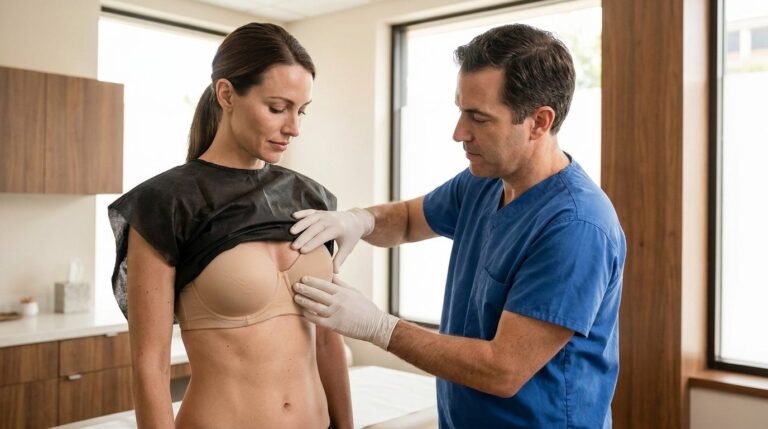
A breast lift, also called mastopexy, reshapes and raises the breasts by removing extra skin and moving the nipple to a higher position. That changes how the chest feels for a while. Expect swelling, pressure, pulling, and a sense of heaviness rather than sharp pain all the time.
If you are also having implants, reduction, or liposuction at the same time, recovery can be slower or more uncomfortable. Combined surgery changes the timeline. A straightforward lift on its own is often easier than patients fear, but it still needs real downtime.
The NHS notes that after a breast lift you may need pain relief for a few days, usually wear a surgical bra, and may need to take 1 to 2 weeks off work depending on your job. That matches what many patients experience in practice: you can often walk around the next day, but you are not ready for normal life immediately.
For patients travelling for surgery, the key question is not only when you can walk, shower, or go out for dinner. It is whether you can manage wound care, follow-up checks, limited arm movement, and the tiredness that often appears a few days after the operation. If you are exploring a breast lift procedure, build your trip around recovery rather than only around the surgery date.
📋 A normal recovery is not a perfectly smooth line Swelling often shifts through the first few weeks. One breast may settle faster than the other, and some days feel better than others.
Most breast lift recovery follows a clear pattern: discomfort, tightness, swelling, and low energy are most noticeable in the first 7 days; daily life gets easier over weeks 2 to 4; and exercise, lifting, and final shape take longer. Many patients feel socially presentable before they feel fully recovered.
What should you expect in the first week after a breast lift?
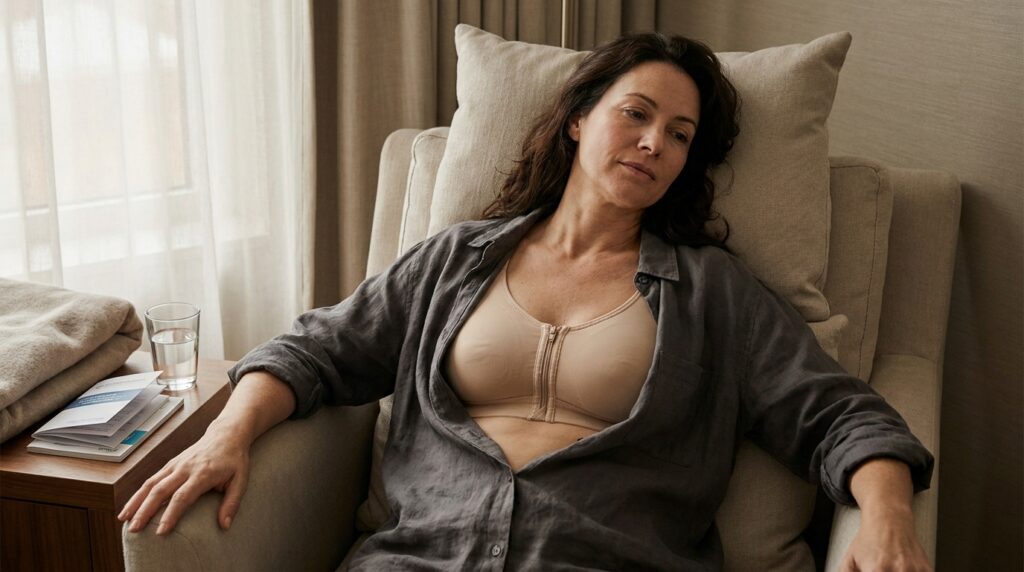
The first 24 to 72 hours are the most intense. You will usually feel sleepy, stiff, and sore across the chest. Many patients describe the feeling as pressure, tightness, and tenderness when standing up, lying down, or using the arms to push themselves out of bed.
You will normally go home in a surgical bra or support garment. Your dressings may stay in place for a few days, or you may be shown how to change them. Some patients have drains, though not everyone does. If drains are used, they are often removed early in recovery depending on output and the surgeon’s plan.
Bruising and swelling are common in this first week. The breasts can sit high, look very firm, and appear oddly shaped at first. That does not mean the final result will look unnatural. Early post-op shape is temporary.
Sleeping is usually easier on your back with your upper body slightly raised. Reaching up, lifting bags, driving, and sudden chest movements are usually restricted. Even simple tasks such as washing your hair or opening heavy doors can feel harder than expected.

The NHS advises contacting your surgical team urgently if you have symptoms such as increasing redness, unusual discharge, severe pain, or fever after surgery. Those signs may point to infection or another complication and should not be brushed off as “just part of healing.”
⚠️ Travel patients should not rush the first week The first week is when dressing changes, wound checks, and practical help matter most. Staying long enough for early follow-up is usually the safer plan.
Week 1 is usually about rest, swelling control, gentle walking, and protecting the incisions. You may feel tight, sore, tired, and emotionally up and down. Drainage, bruising, and limited arm movement can be normal, but worsening redness, fever, or sudden swelling need prompt medical advice.
What happens during weeks 2 to 4?
This is the stage where many people feel better and then accidentally do too much. You may be comfortable enough to go for meals, work on a laptop, or move around normally, but the tissues are still healing underneath. Looking better from the outside does not mean the inside is fully stable.
Around week 2, bruising often fades and pain becomes more of an ache or sensitivity. The breasts may still feel hard or swollen, especially along the lower pole and around the incisions. Nipple feeling can change too. Some people notice numbness, tingling, or brief “zaps” as the nerves wake up.
By weeks 3 and 4, many patients can manage normal daily life with fewer problems. That said, lifting children, carrying suitcases, doing upper-body exercise, or sleeping on the front is often still off limits. If your job is physical, recovery may take longer than someone who works at a desk.
Scar care often starts during this period if the incisions are closed and your surgeon says it is safe. Do not apply creams, silicone products, or massage too early without being told to do so.
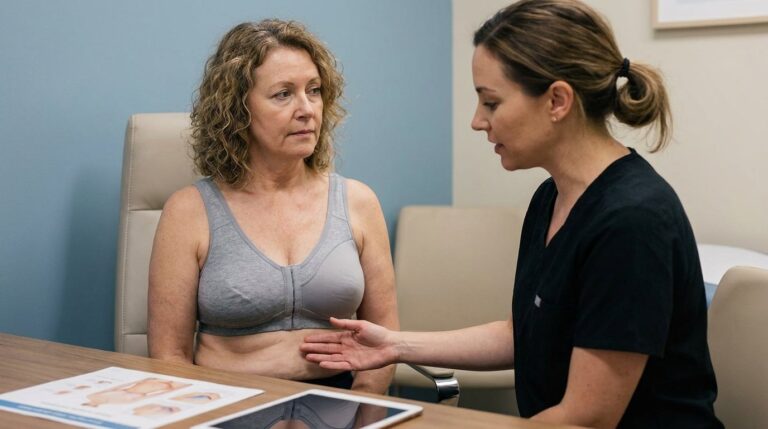
If you are travelling from abroad, this middle phase is why aftercare planning matters. Before booking, ask how wound reviews are handled, who answers messages out of hours, and whether your local doctor will receive a summary. A proper surgical consultation should cover those details before you commit.
- ✓Light walking is usually encouraged quite early because it supports circulation and helps you feel less stiff.
- ✓Desk work may be possible in 1 to 2 weeks, but only if pain is controlled and you are not taking sedating medication.
- ✓Support bras are usually still needed through this stage, often day and night at first.
- ✓Swelling can make cup size look larger before the breasts settle.
Weeks 2 to 4 are often the transition stage. Pain usually drops, but swelling, firmness, numbness, and pulling sensations can continue. Many patients return to desk work and light routine tasks, though heavy lifting, gym exercise, and underwire bras are still commonly restricted.
When do you feel normal again after a breast lift?
At around 4 to 6 weeks, many surgeons allow a gradual return to more activity if healing is going well. That may include longer walks, easier lower-body exercise, and a careful return to normal routines. High-impact exercise, chest training, and intense stretching may still need more time depending on the exact surgery.
By this point, the breasts often look less high and less tense than they did early on. They begin to soften and settle into a more natural position. Small asymmetries in swelling are still common.
Scar change is slower than most people expect. Early scars may look pink, raised, shiny, or firm. That alone does not mean the scar will stay that way. Scar maturation usually takes many months.
Emotionally, this is often the stage when expectations become more realistic. The first reveal can be exciting, but also confusing, because swelling and scar lines are still obvious. Give the result time before judging it too quickly.
If you are comparing a lift alone with a combined procedure such as breast lift with implants or breast reduction, remember that recovery demands can differ. More extensive surgery usually means more swelling, more support needs, and sometimes a longer pause before strenuous exercise.
Many patients feel mostly normal by 6 weeks, but that does not mean the final result has fully settled. Swelling can linger for months, scars mature slowly, and breast shape softens over time. Feeling well enough for social life usually comes before feeling completely finished with recovery.
What warning signs are not normal during recovery?
Most breast lift recoveries are uncomplicated, but there are warning signs that deserve quick action. An operation site can become infected, collect blood, or heal poorly. Those issues are easier to manage when picked up early.
The NHS advises seeking urgent help for possible blood clot symptoms after surgery, including chest pain, coughing blood, or difficulty breathing. Mayo Clinic also explains that pulmonary embolism, a blood clot in the lung, needs emergency care and can cause sudden shortness of breath, chest pain, or a fast heartbeat. These symptoms are not routine post-op discomfort.
Less urgent, but still important, are wound concerns such as spreading redness, warmth, yellow or foul-smelling discharge, opening incision lines, or one breast becoming much more swollen than the other. It is always better to ask early than to wait and hope.
Signs that should prompt immediate contact
- ✓Sudden one-sided breast swelling or tightness
- ✓Fever or feeling unwell with increasing wound pain
- ✓Redness that is spreading rather than fading
- ✓Pus, unpleasant-smelling fluid, or opening of the incision
- ✓Chest pain, shortness of breath, coughing blood, or calf swelling
If you are travelling home after surgery, make sure you know exactly who to contact and what to do if symptoms start after you leave. That plan should be clear before your operation, not figured out in a panic later.
🚨 Emergency symptoms should not wait for a message reply Chest pain, breathing difficulty, coughing blood, fainting, or severe rapid swelling need urgent medical care straight away.
Call your surgeon promptly if you have sudden swelling, worsening redness, increasing pain after initial improvement, fever, pus, wound opening, chest pain, or shortness of breath. Some problems are local wound issues, while others can point to urgent complications that should never wait for a routine follow-up.
How long should international patients stay after breast lift surgery?
A breast lift is not a same-day sightseeing procedure. Even when the operation itself goes smoothly, the first week can involve dressing care, support garments, medication, tiredness, and limited movement. That matters more if you are recovering in a hotel rather than at home.
The sensible approach is to stay for surgeon-approved follow-up and only travel when you are mobile, stable, and comfortable enough to manage the journey. Long transfers, lifting luggage, and sitting still for hours too early after surgery are not ideal.
Your clinic should explain who will review you before you fly, what documents you will take home, and when you should arrange your next check once back in your own country. If you are still deciding where to go, review the surgeon profile, credentials, and support system rather than choosing on price alone. Pages such as the clinic’s doctor information and about page can help you start the right questions.
Cost for a breast lift is personal and variable. It depends on the surgeon, hospital, anaesthesia, whether implants or another body procedure are added, how complex the lift is, and how much aftercare is included. A reliable team will give a personalised quote after consultation rather than treating every case as the same.
You receive a written aftercare plan, follow-up dates, emergency contacts, and clear travel guidance.
You are pushed to book quickly without a proper review of your health, surgical goals, and recovery logistics.
For medical travel, staying long enough for early recovery checks is usually wiser than flying home as soon as you can walk. The exact stay depends on your operation and healing, but most patients should plan for several days of local aftercare and review before travel is considered.
How can you make breast lift recovery easier?
A smoother recovery usually comes from simple habits done consistently. Rest properly, take your prescribed medicines as directed, wear the recommended bra, and walk gently every day unless your surgeon tells you otherwise. Try not to test your limits too soon.
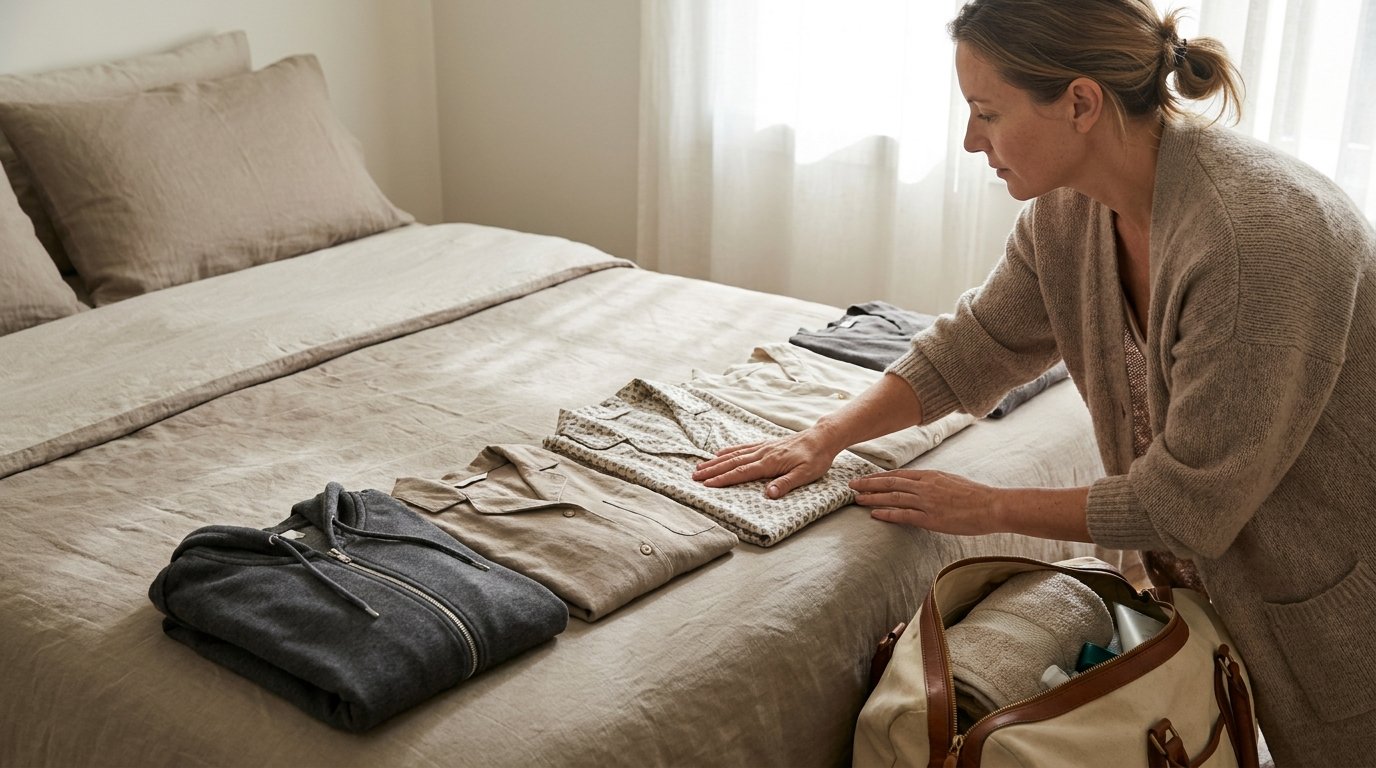
Prepare your space before surgery. Put essentials at waist height, arrange help for children or pets, and choose loose tops that fasten at the front. Small practical details make the first week much easier.
Nicotine is a major issue. The NHS states that smoking increases the risk of problems with wound healing after cosmetic surgery. If you smoke or vape nicotine, be honest about it before surgery and follow the stop-smoking guidance you are given.
It also helps to expect a temporary emotional dip. Swelling, bruising, sleep disruption, and the stop-start pace of healing can make people feel worried even when recovery is on track. Knowing that this is common makes it less unsettling.
If you want the broadest view of preparation and aftercare, start with a proper consultation and written plan, not only photos. Recovery is where good surgery is protected.
⚠️ Do not judge the result too early Breast position, softness, swelling, and scars all change over the first weeks and months. Early appearance is not the final outcome.
Frequently Asked Questions
References
- 📎NHS – Cosmetic surgery – Breast uplift
- 📎NHS – Cosmetic procedures
- 📎Mayo Clinic – Pulmonary embolism
Related Articles

You Might Also Like

Related articles
Our specialists
 Clineca SpecialistErkan PinegözPlastic & Reconstructive Surgery
 Clineca SpecialistHakan AktaşPlastic & Reconstructive Surgery
 Clineca SpecialistOrkun UzuneyüpoğluPlastic & Reconstructive Surgery
 Clineca SpecialistSalim İskenderPlastic & Reconstructive Surgery
 Clineca SpecialistEngin SelamioğluPlastic & Reconstructive Surgery
 Clineca SpecialistCem AydınPlastic & Reconstructive Surgery
 Clineca SpecialistAlperen ÖnalEar, Nose & Throat (ENT)