
Have a question about Dental?
In this article
- What dental treatment in Turkey usually covers
- Why patients travel to Turkey for dental work
- What drives the cost of a dental package in Turkey
- How long do you need to stay in Turkey?
- What the treatment process looks like, step by step
- Is dental treatment in Turkey safe?
- How to choose a clinic and dentist you can trust
- Aftercare, guarantees and what happens when you fly home
Few health-tourism decisions get discussed as loudly as dental treatment in Turkey. For every patient who comes home with a result they are delighted with, there is a cautionary thread online about rushed work or healthy teeth that were filed down unnecessarily. Both stories are real, and the difference between them usually comes down to the treatment plan you agreed to, the clinic you chose and how much time you allowed yourself on the ground.
What dental treatment in Turkey usually covers
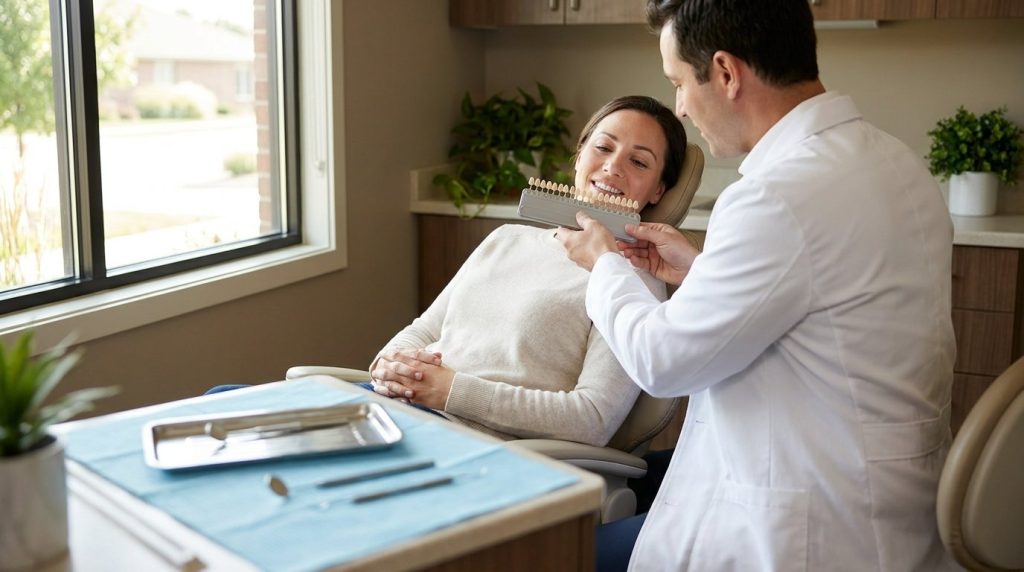
Dental tourism in Turkey is not one procedure. It is a whole range of work, and the planning, the stay and the quote change completely depending on which part of that range you need.
At the simpler end sit cosmetic treatments on teeth that are basically healthy: whitening, edge reshaping, composite bonding and veneers. These are mostly about the visible front teeth, and some of them can be finished inside a few days. At the more involved end sit implants, bone grafting and full-arch restorations, where biology sets the pace and no amount of travel planning can speed healing up.
In the middle is restorative work — crowns, bridges, inlays and onlays, root canal treatment and extractions. This is the category most international patients underestimate. Someone arrives expecting a cosmetic veneer case and the examination finds an old failing root canal or early gum disease that has to be treated first. A plan that ignores those findings is not a cheaper plan; it is a shorter-lived one.
If you already know roughly which route you are on, our detailed pages on dental implants in Turkey, dental veneers and dental crowns go deeper into each one.
📋 Veneers and crowns are not the same thing A veneer is a thin facing bonded to the front of a tooth, so less of the natural tooth is removed. A crown covers the whole tooth and needs more preparation. If a clinic quotes you "veneers" but the plan describes full coverage of every tooth, ask which one is actually being proposed and why.
Why patients travel to Turkey for dental work
The honest answer is a combination of price, speed and capacity. Lower clinical overheads, lower lab costs and a large number of dentists concentrated in cities like Istanbul, Izmir and Antalya mean a full treatment plan can cost noticeably less than the same plan quoted in the UK, Ireland, Germany or the Netherlands. On top of that, many clinics can schedule a multi-tooth case within days rather than spreading appointments over several months.
There is also an aesthetic pull. Turkey has a well-developed market in smile design, with in-house laboratories, digital scanning and technicians who work on cosmetic cases every day. Volume builds skill, and for straightforward cosmetic work that experience shows.
The trade-offs deserve equal airtime. You are compressing treatment that would normally be spread out, which leaves less room for the small adjustments a dentist would otherwise make over weeks. Follow-up is harder once you fly home, and if something needs correcting you are either travelling again or paying a local dentist to manage it. Language, record-keeping and the route for making a complaint are not the same as they are at home. None of this makes travelling wrong — it just means the plan has to be realistic before you book anything.
Patients who need several teeth treated at once, who have a clear diagnosis already, who can take a full week or two away and who have a dentist at home willing to handle routine checks afterwards.
Single-tooth problems that a local dentist can fix in one visit, unstable gum disease that needs months of monitoring, or a trip booked so tightly that there is no spare day for an adjustment.
What drives the cost of a dental package in Turkey
We do not publish figures, because a dental quote that is not based on an examination and X-rays is a guess rather than a price. What we can be precise about is what moves that number up or down, and what a proper quote should contain.
The biggest driver is simply how many teeth are being treated and what is being done to each one. Beyond that, material choice matters: zirconia, layered porcelain, e-max and monolithic options all behave and cost differently, which is why our comparison of zirconia versus porcelain crowns is one of the most read pages we have. Implant cases add further variables — the implant brand, whether bone grafting or a sinus procedure is needed, and whether the final teeth are screwed into the implants or sit on a removable framework.
Packages are common in dental tourism, and they are useful as long as you know where the edges are. Ask in writing which items are inside the package and which are billed separately if the examination reveals something unexpected. Quotes are usually presented in euros, pounds or US dollars, so confirm the currency, the exchange basis and the payment stages too.
⚠️ Treat a pre-examination price as provisional A figure quoted from photographs can change once X-rays are taken. Your personalised price is confirmed only after a clinical examination and imaging, and any clinic worth choosing will say so rather than locking you into a number they have not justified.
How long do you need to stay in Turkey?
This is where most planning mistakes happen. Cosmetic cases can often be completed in one trip, while implants almost always need two, separated by a healing period that your jaw decides, not your calendar.
For crowns and veneers, a working week is a sensible minimum. The first days cover examination, imaging, preparation and temporary teeth; the laboratory then makes the final units; the last days cover try-in, shade and bite adjustments and fitting. Squeezing that into three days is possible but leaves no margin for a remake if the shade or fit is not right first time.
Implants work differently. Fixtures are placed on the first trip, and the bone needs to integrate with them before the final teeth go on. Some cases allow immediate temporary teeth, others do not. Our guide to dental implant recovery week by week sets out what that healing phase actually feels like, and our page on All-on-4 implants in Turkey covers full-arch planning in more detail.
Whatever the plan, build in one spare day before your flight home. A loose temporary or a bite that feels high is a five-minute fix in the clinic and a genuine problem at 30,000 feet.
What the treatment process looks like, step by step
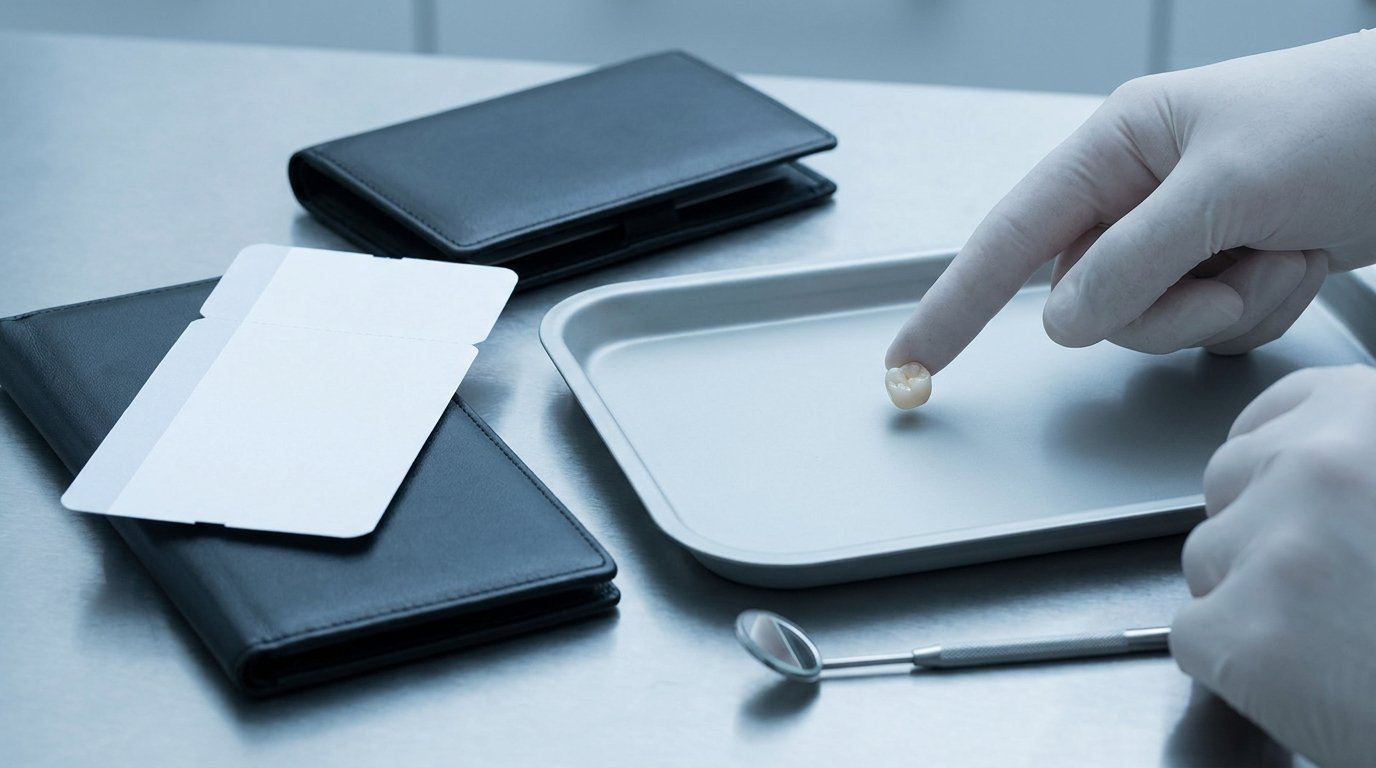
A well-run case follows a recognisable sequence, and knowing it helps you spot when corners are being cut.
It starts before you fly, with photographs, any existing X-rays and a medical history, including medication. Blood thinners, bisphosphonates, diabetes and heavy smoking all affect implant and gum healing, so this is not box-ticking. The plan you receive at this stage should be treated as a working proposal.
On arrival, the examination and imaging come first — usually a panoramic X-ray and, for implants, a 3D scan. This is the point where the plan can legitimately change. Then come the clinical stages: any extractions or gum treatment, preparation of the teeth being restored, digital or conventional impressions, and temporary teeth while the laboratory works.
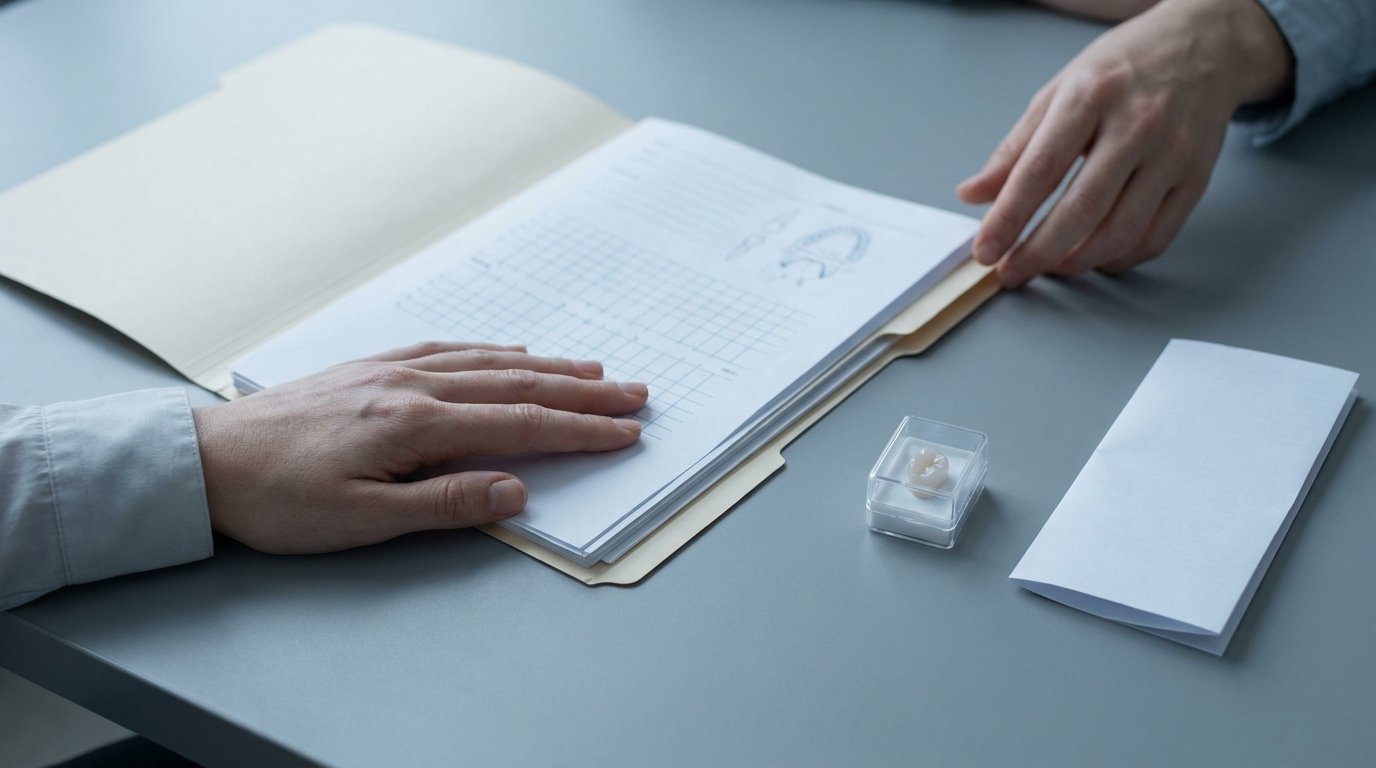
The try-in appointment is the one patients rush and regret. This is where shape, length, shade and bite get checked while changes are still easy. Speak up here, even if it feels awkward. After final fitting, you should leave with written records: what was done to each tooth, the materials and implant brands used, the laboratory details and your post-treatment instructions. A dentist at home cannot look after work they have no documentation for.
For what the first days after fitting feel like, our notes on sensitivity after a dental crown cover the normal settling period and the signs that need a review.
Is dental treatment in Turkey safe?
Turkey has excellent dental clinics and some poor ones, which is exactly the situation in every country with a large private dental market. Safety is therefore less about the destination and more about the plan and the clinician.
The risk that generates most of the negative publicity is not infection or implant failure. It is irreversible over-treatment: healthy teeth prepared down for crowns when thinner veneers, bonding or orthodontics would have achieved a similar look while keeping more natural tooth. Enamel does not grow back. Once a healthy tooth has been reduced for a crown, it needs a crown for life, with the maintenance and replacement cycle that implies.
The clinical risks are the same ones that exist anywhere: post-operative infection, nerve irritation and numbness after lower implant placement, sinus complications in the upper back jaw, implants that fail to integrate, bite problems after extensive restorative work, and crowns or veneers that chip or debond. Good planning lowers these risks; nothing removes them.
For full-arch implant work, the design choices genuinely matter. A 2018 ITI consensus report in Clinical Oral Implants Research examined the evidence on questions such as how many implants are needed to support fixed full-arch restorations, whether deliberately tilted implants perform differently from upright ones, loading protocols, and zirconia compared with metal-ceramic implant crowns and bridges. Those are precisely the decisions a dentist should be able to explain to you in plain language before you agree to a full-mouth plan.
If you are travelling from the UK, the NHS publishes general guidance on having treatment abroad and on checking who is treating you, and the General Dental Council keeps the public register of dentists licensed to practise in the UK — useful both for lining up aftercare before you fly and for understanding that a Turkish clinic sits outside UK regulation. Turkish clinics are licensed by the Turkish Ministry of Health, and some hospitals also hold international accreditation such as JCI.
🚨 Say no to a plan that crowns healthy teeth for cosmetic reasons If the proposal involves preparing a large number of sound teeth purely to change their appearance, ask what a more conservative option would look like and why it was ruled out. If no conservative alternative is ever offered, get a second opinion before you commit.
⚠️ Gum health comes before cosmetics Placing new crowns or veneers over untreated gum disease hides a problem rather than solving it. Bleeding gums, loose teeth or bone loss on an X-ray need treating first, even if that delays the cosmetic result.
How to choose a clinic and dentist you can trust
Spend your research time on the clinician and the plan rather than on the gallery. Photographs tell you what a clinic’s best day looks like; the treatment plan tells you what your case will involve.
Ask who will actually be doing the work, and whether the same dentist handles implants, the restorative stages and the bite. Ask how many cases like yours that person treats, what materials and implant brands they use and why, and what the written policy is if a crown debonds or an implant fails six months later. Ask whether the laboratory is in-house, because that affects how quickly a remake can be turned around while you are still in the country.
Then look at the responses themselves. A clinic that answers in specifics, puts limits in writing and is willing to tell you that part of your plan is a bad idea is behaving like a clinical provider. One that promises a finished result from a selfie, pressures you to pay a deposit the same day or adds teeth to the plan without a clinical reason is behaving like a sales channel.
A named dentist with a clear scope of practice; imaging before any final plan; a written itemised quote with exclusions; a conservative option discussed alongside the cosmetic one; full records and material details handed over at the end.
A fixed price quoted from photos with no examination; identical treatment plans for very different mouths; no written aftercare or remake policy; a schedule with no spare day; refusal to name the treating dentist.
For purely aesthetic concerns, bonding, whitening, edge reshaping or orthodontics may achieve a similar improvement without permanently reducing healthy teeth — often with a shorter trip and a simpler maintenance future.
Aftercare, guarantees and what happens when you fly home
Dental work is not a one-off purchase; it is the start of a maintenance relationship. The question that matters most is who maintains it once you are back home.
Before you travel, speak to a local dentist and confirm they will take you on for routine checks, hygiene visits and emergencies after treatment abroad. Most will, provided they receive proper records. Bring back your X-rays, scans, the implant brand and reference numbers, the crown materials and the clinic’s contact details. Implant components are system-specific, and a dentist who does not know which system is in your jaw cannot easily replace a screw or an abutment.
Take written guarantees at face value and read what triggers them. Many cover manufacturing or material failure but not accidental damage, grinding without a night guard, smoking or missed hygiene appointments. Check whether a remake requires you to return to Turkey, and who pays for that travel. A guarantee that exists only in a WhatsApp message is worth very little.
In the first weeks, mild sensitivity, tender gums and the odd awkward bite point are normal and usually settle. Spreading pain, swelling, a persistent bad taste, a crown that keeps coming loose or an implant that feels mobile are not — contact the treating clinic and have a local dentist examine you promptly rather than waiting for your next trip.
This article is for informational purposes only and does not constitute medical advice. Always consult a qualified dentist or implant dentist for personalised guidance.
- ✓Records to bring home: Pre- and post-treatment X-rays or 3D scans, a tooth-by-tooth summary of what was done, implant brand and reference numbers, crown and veneer materials, and the laboratory used.
- ✓Aftercare arranged in advance: A named local dentist who has agreed to see you for checks, hygiene and emergencies once you are back.
- ✓Written warranty terms: What is covered, for how long, what voids it, and whether a remake requires travel back to Turkey.
- ✓Daily maintenance plan: Interdental cleaning around crowns and implants, a night guard if you grind, and a realistic recall interval.
Frequently Asked Questions
References
- 📎Group 2 ITI Consensus Report: Prosthodontics and implant dentistry — Clinical Oral Implants Research, 2018
- 📎NHS — Cosmetic procedures
Related Articles


You Might Also Like


Related articles

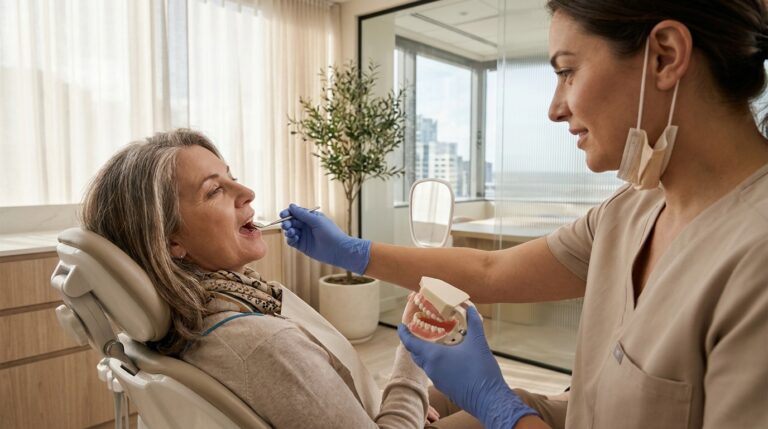

Our specialists
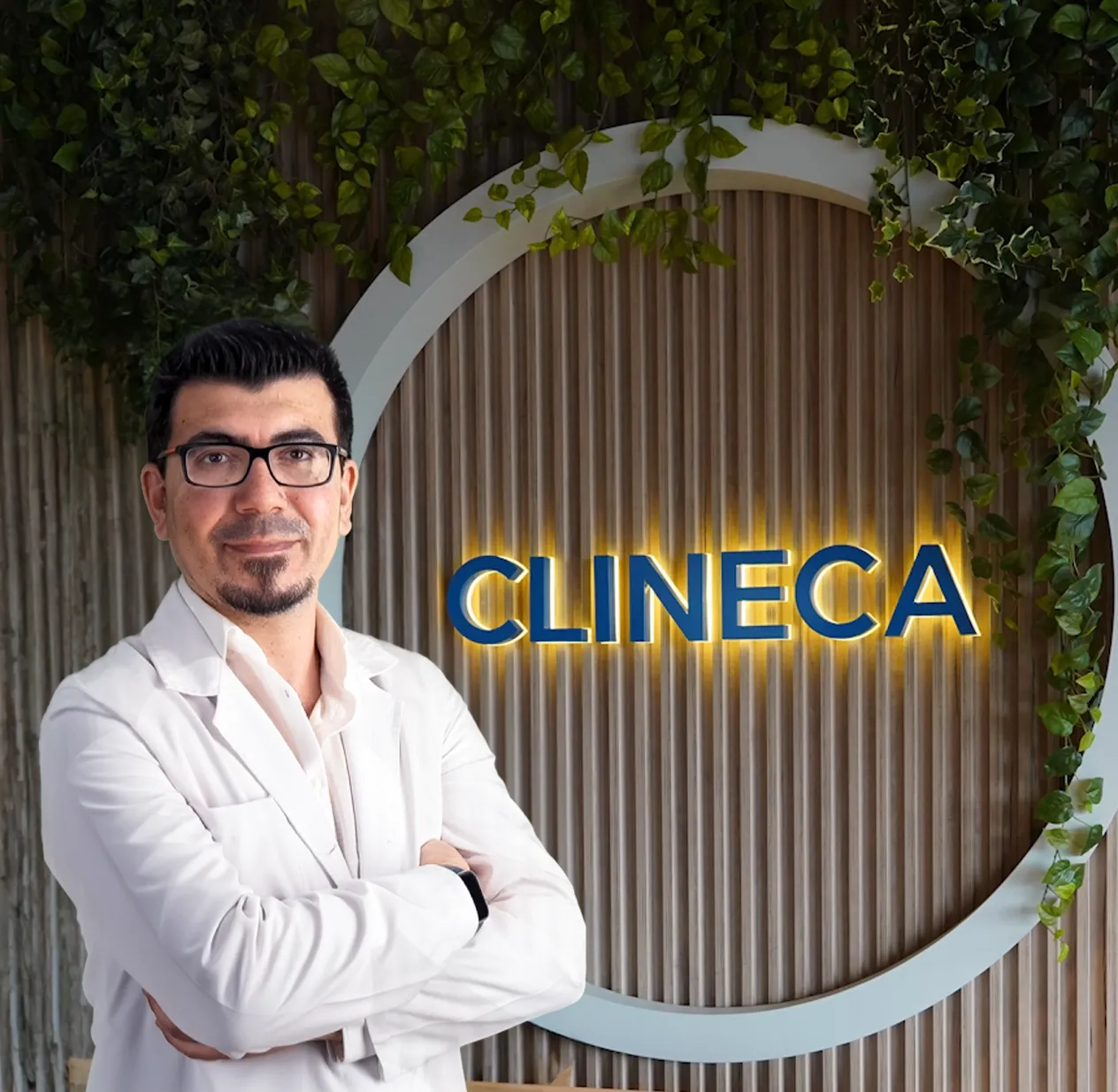 Clineca SpecialistErkan PinegözPlastic & Reconstructive Surgery
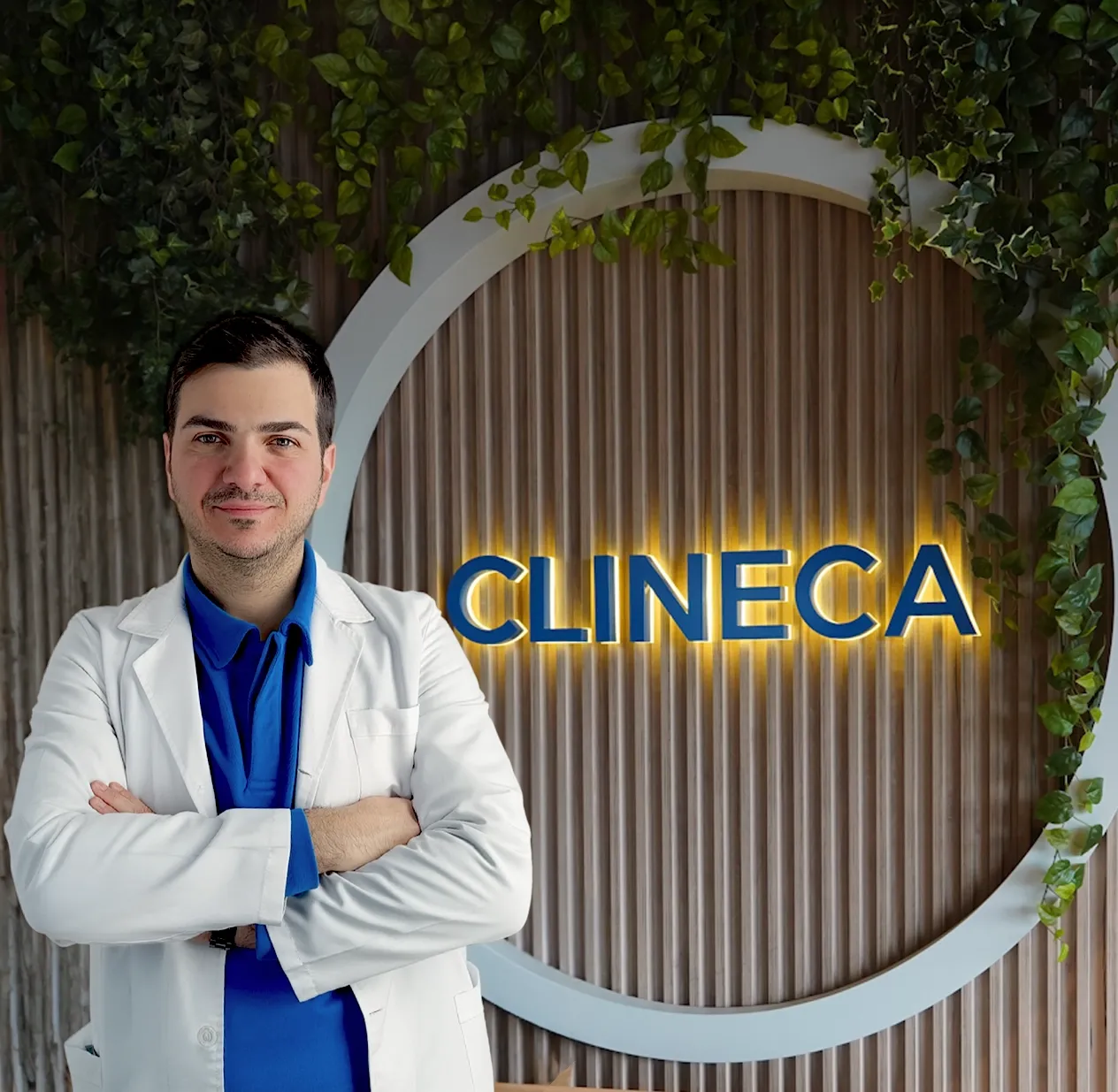 Clineca SpecialistHakan AktaşPlastic & Reconstructive Surgery
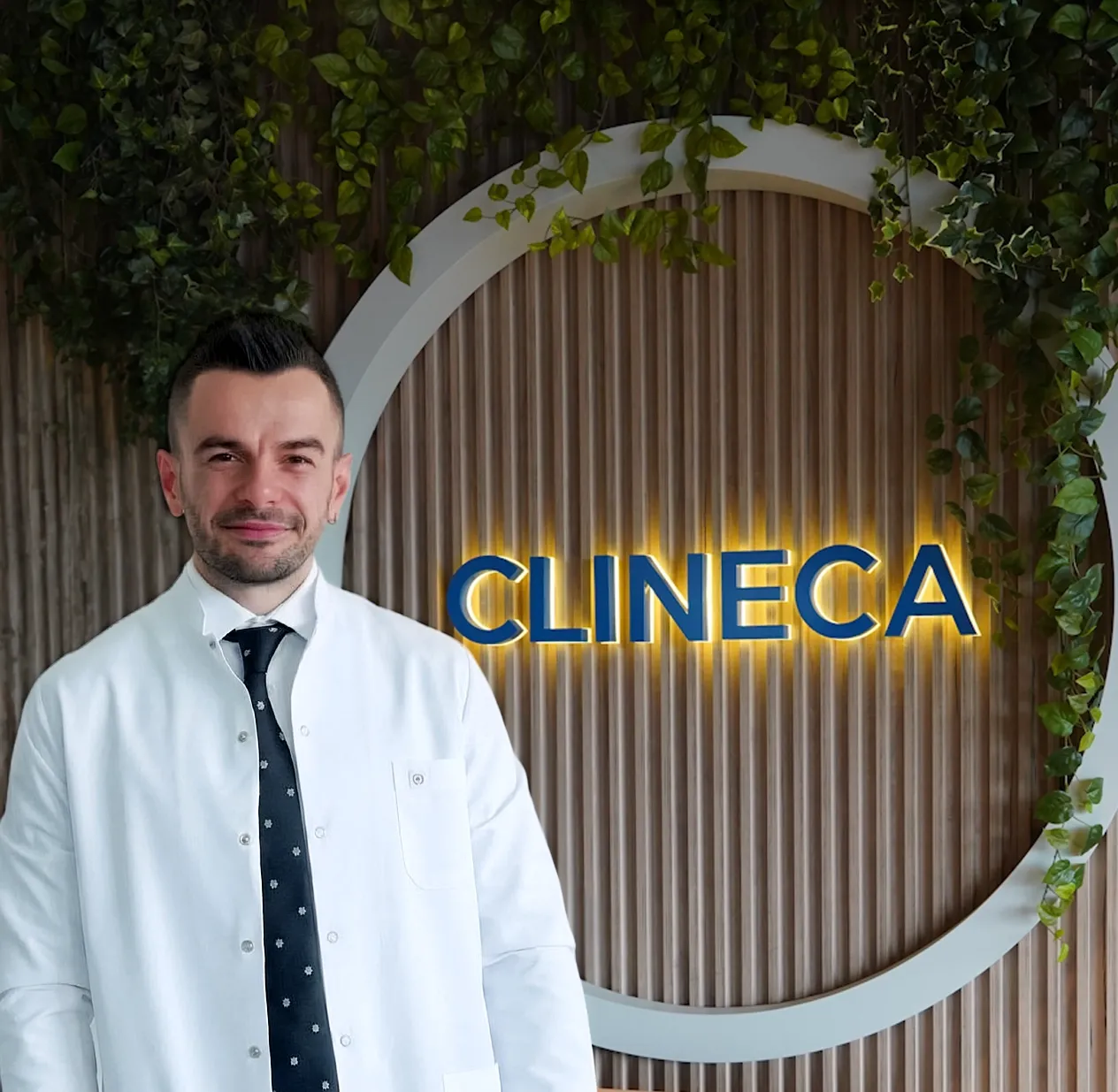 Clineca SpecialistOrkun UzuneyüpoğluPlastic & Reconstructive Surgery
 Clineca SpecialistSalim İskenderPlastic & Reconstructive Surgery
 Clineca SpecialistEngin SelamioğluPlastic & Reconstructive Surgery
 Clineca SpecialistCem AydınPlastic & Reconstructive Surgery
 Clineca SpecialistAlperen ÖnalEar, Nose & Throat (ENT)