
Have a question about All-on-4 Dental Implants in Turkey: Cost, Safety, Process?
In this article
- What All-on-4 Actually Is (And What It Is Not)
- How the Two-Trip Process Works in Turkey
- How Long to Stay, and What the Logistics Look Like
- What Drives the Cost of All-on-4 in Turkey
- Are You a Good Candidate for All-on-4?
- Recovery: What the First Weeks and Months Feel Like
- Safety, Peri-Implantitis and the Maintenance Nobody Mentions
- All-on-4 Versus the Alternatives
- How to Choose a Clinic and Clinician in Turkey
Few dental decisions feel as big as replacing a whole arch of teeth, and All-on-4 dental implants in Turkey sit at the centre of that decision for thousands of international patients each year. The treatment is often described as a one-week smile makeover, which is only part of the story — the jawbone works to its own schedule, and the planning behind a full-arch bridge matters as much as the surgery itself. This guide walks through what the treatment involves, how the trips are organised, what shapes the price, and the questions worth asking before you book anything.
What All-on-4 Actually Is (And What It Is Not)
All-on-4 is a method of replacing a complete arch of teeth — your upper jaw, your lower jaw, or both — with a single fixed bridge that is anchored on four dental implants. The implants are small titanium screws placed into the jawbone, where they take over the job of natural tooth roots. The bridge that sits on top is one connected piece of teeth, not a set of separate crowns.
The clever part is the angle. The two implants at the back are tilted, which lets the surgeon anchor them in the denser bone towards the front and middle of the jaw rather than the thinner, softer bone further back. For many patients that avoids the need for bone grafting, which would otherwise add months to the treatment and more surgery to the plan.
It is important to be clear about what All-on-4 is not. It is not a denture that you take out at night, and it is not the same as having ten or twelve individual implants with individual crowns. A full-arch bridge is cleaned differently, repaired differently, and designed differently — the teeth and the gum-coloured section are made as one unit, which is why the shape, lip support and bite are planned so carefully before anything is made final.
Why the implants need time in the bone
After placement, bone cells grow onto the implant surface and lock it in place. Dentists call this osseointegration. A 2023 review in the Journal of Environmental Pathology, Toxicology and Oncology describes this integration period as the key phase for the long-term survival of a dental implant and for avoiding failure — which is exactly why a serious clinic will not rush you into a final, permanent bridge in the same week your implants go in.
📋 All-on-4, All-on-6 and "Turkey teeth" are not the same thing All-on-4 and All-on-6 replace missing or failing teeth with implants. They are completely different from having healthy natural teeth filed down for crowns or veneers. If a clinic offers to "do All-on-4" on an arch where most teeth are still sound, ask for a second opinion.
How the Two-Trip Process Works in Turkey
Most international patients complete All-on-4 in Turkey over two trips, with a healing gap in between that usually runs somewhere between three and six months. The exact gap depends on your bone quality, whether teeth had to be removed, and how the implants felt at the moment they were placed.
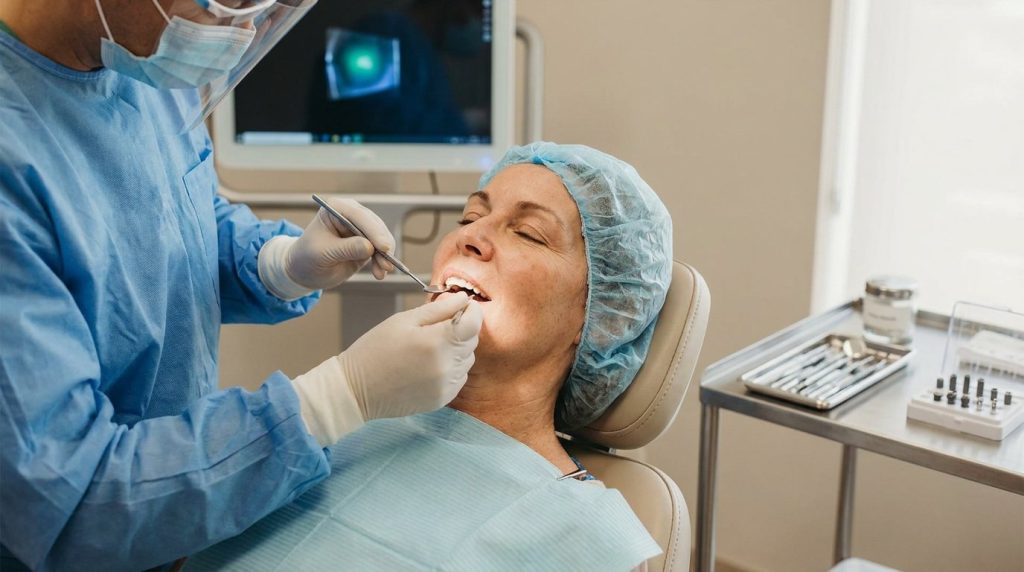
The first trip is the surgical one. It typically starts with a 3D scan of your jaws (a cone-beam CT), photographs, impressions or a digital scan, and a planning discussion about tooth shape, shade and how much your lip shows when you smile. Any failing teeth are removed, the implants are placed under local anaesthetic with sedation if you want it, and a temporary bridge is fitted so that you never walk around without teeth. Reviews over the following days check healing and adjust the bite.
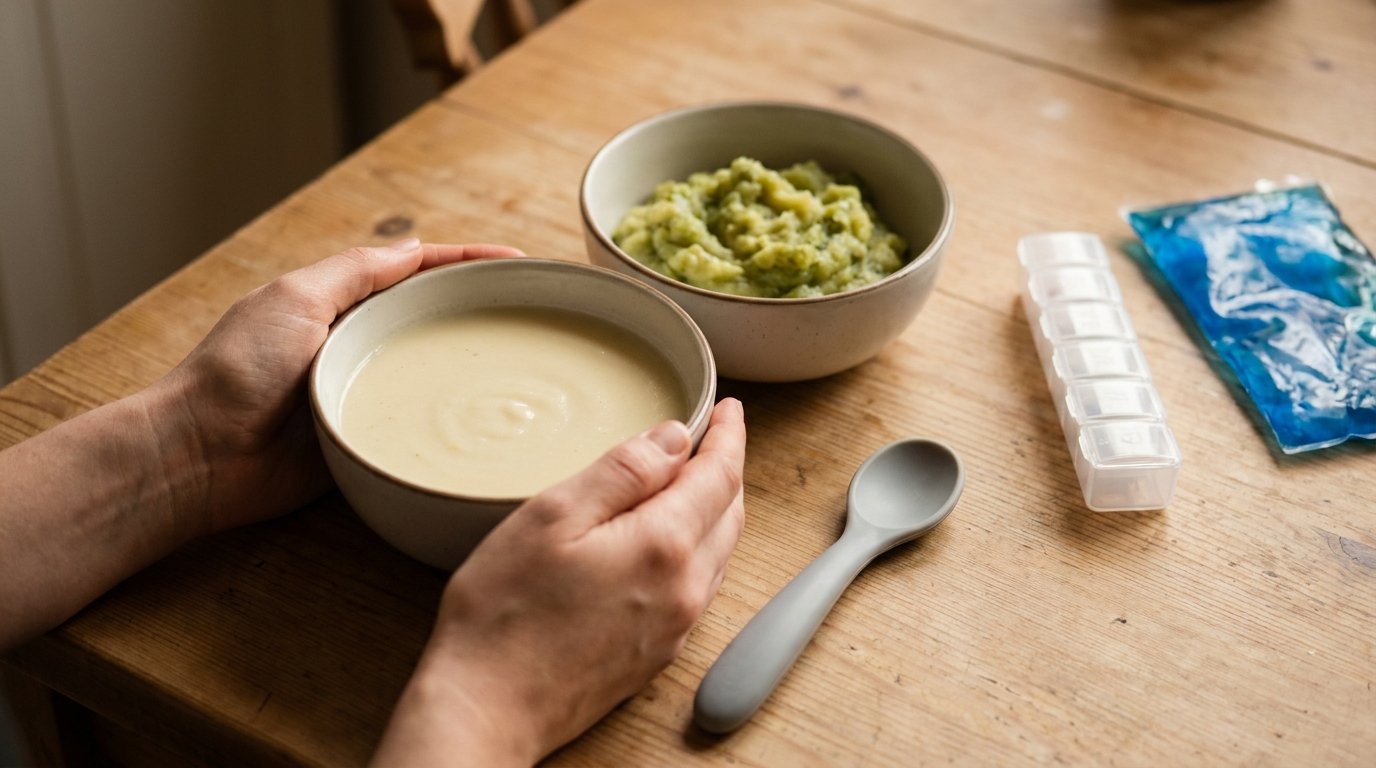
Then you go home with your temporary bridge and live on a soft diet while the bone integrates. The second trip is the fitting trip: new scans, a try-in of the final bridge, small adjustments to shade and bite, and then the permanent bridge is secured. This visit is shorter and involves no surgery for most patients.
Some clinics offer a single-trip version where a long-term bridge is fitted much sooner. It can be appropriate in selected cases, but it is not the default, and it should be a clinical decision made from your scans — not a travel convenience.
⚠️ Plan the healing gap before you book flights Timing is one of the most common worries patients raise, because two trips need two sets of leave from work. Agree the likely window for your second trip in writing at the first consultation, and treat it as an estimate that depends on how your healing is reviewed.
How Long to Stay, and What the Logistics Look Like
For the surgical trip, most patients are advised to allow roughly a week to ten days. That gives room for the planning appointments, the surgery itself, a settling period and at least one proper review before flying. The fitting trip is usually shorter, but it still needs several appointments because the try-in stage is where small changes to shade, length and bite get made — rushing it is how people end up unhappy with teeth that technically fit.
Accommodation and airport transfers are usually arranged by the clinic and included in treatment packages, in the same way they are for surgical patients. It is worth reading what an all-inclusive package in Turkey typically includes so you know which nights, transfers and follow-ups are covered and which are not.
Two practical points often get overlooked. First, you will be on a soft diet for the whole healing period, so choose accommodation with food you can actually manage. Second, swelling and bruising after full-arch surgery peak around the second or third day, so booking a flight home for day three is usually a poor idea even if you feel fine on day one.
If you are deciding between a full-arch bridge and replacing teeth individually, our broader guide to dental implants in Turkey covers how single-implant treatment is staged, and the week-by-week implant recovery timeline shows what the healing phase feels like day to day.
What Drives the Cost of All-on-4 in Turkey
Price is the question patients ask most often, and it is also the one where online figures are least reliable — because “All-on-4” can mean very different packages. Two quotes can differ enormously and both be honest, simply because they include different materials, different numbers of implants and different levels of aftercare.
Rather than chasing a headline number, it helps to understand what moves it. The implant system itself, the material of the final bridge, whether you need one arch or two, whether extractions and bone work are required, and how much laboratory time goes into the try-in stage all have a real effect. So does the seniority of the clinician placing the implants.
What a complete full-mouth dental implant quote in Turkey normally covers is the diagnostic scans, the surgery, the implants and abutments, the temporary bridge, the final bridge, hotel nights tied to treatment, transfers and follow-up. What it often does not cover is extra bone grafting discovered on the scan, night guards, flights, or treatment on the opposing arch. Ask for that list in writing; a personalised price can only be confirmed after a consultation and a review of your scans.
For context on why Turkish dental and surgical pricing sits where it does compared with Western Europe, our comparison of prices in Turkey versus the UK, Germany and the Netherlands explains the cost structure behind it without pretending cheaper always means equal.
🚨 Be careful with unusually low full-arch offers If a quote is far below everything else you have seen, ask exactly which implant system is used, how many implants per arch, what the final bridge is made of, and what happens — and who pays — if an implant fails in the first year.
Are You a Good Candidate for All-on-4?
All-on-4 suits people who have lost most or all of the teeth in an arch, or whose remaining teeth are failing beyond repair, and who want something fixed rather than removable. It also suits many long-term denture wearers who are tired of movement, sore spots and limited biting power.
The real screening happens on the 3D scan. Your surgeon is looking at bone height and width where the implants need to go, the position of the sinuses in the upper jaw and the nerve in the lower jaw, and the shape of your bite. Severe bone loss does not automatically rule you out, but it may change the plan towards six implants, grafting, or in selected upper-jaw cases implants anchored in the cheekbone.
Some health and habit factors deserve an honest conversation rather than a tick-box form:
- ✓Uncontrolled gum disease needs treating first, because the same bacteria can attack the tissue around implants.
- ✓Smoking is linked with slower healing and a higher chance of implant problems; cutting down or stopping around surgery genuinely helps.
- ✓Poorly controlled diabetes affects healing, so recent blood results matter more than a yes/no answer.
- ✓Heavy grinding or clenching can overload a full-arch bridge, which is why a night guard is often part of the plan.
- ✓Certain bone medications, particularly some osteoporosis treatments, need to be disclosed before any extraction or implant surgery.
If you are under about 20, or still growing, full-arch implant work is usually deferred. And if a clinic tells you that nothing in your medical history or scan changes anything about the plan, that is a reason to ask more questions, not fewer.
Most teeth missing or failing in one arch, reasonable general health, stable gum condition after treatment, willing to commit to two trips and to lifelong cleaning around the bridge.
Significant bone loss, sinus proximity, heavy grinding or a history of implant failure — often workable, but with six implants, grafting, or a different bridge design rather than standard All-on-4.
Active untreated gum infection, poorly controlled diabetes, ongoing heavy smoking with no willingness to reduce, or an arch where most teeth are healthy and could be saved.
Recovery: What the First Weeks and Months Feel Like
The first 48 to 72 hours are the most uncomfortable part. Expect swelling of the lips and cheeks, some bruising, and a stiff, tight feeling when you open your mouth. Most patients manage with prescribed painkillers and cold compresses, and the worst of the swelling settles over the first week.

Speech feels odd at first. A temporary full-arch bridge is bulkier than natural teeth, and your tongue needs a few days to recalibrate — reading aloud for ten minutes a day is a surprisingly effective fix. Eating takes longer to normalise. The temporary bridge is there to let you function and look presentable, not to chew steak, so you stay on soft food for the whole integration period.
Through the healing months, most people feel essentially normal within two to three weeks and simply live with a careful diet and careful cleaning. A good clinic will ask for photos and check in remotely during this phase, and will tell you clearly which symptoms warrant a message: increasing rather than decreasing pain, a bad taste or discharge, a bridge that suddenly feels loose or that clicks when you bite.
When the final bridge goes on during the second trip, there is another short adjustment period. The bite usually needs a tweak or two in the following days as your muscles settle, which is one more reason not to book the flight home for the day after fitting.
⚠️ Signs to report straight away Pain that worsens after day four, spreading swelling with fever, persistent bleeding, a loose or mobile bridge, or numbness in the lower lip that is not improving. These need assessing, not waiting out.
Safety, Peri-Implantitis and the Maintenance Nobody Mentions
Full-arch implant treatment is a well-established procedure, but it is still surgery with real risks: infection, bleeding, sinus involvement in the upper jaw, nerve irritation in the lower jaw, and failure of an individual implant to integrate. A fractured or chipped bridge is also possible, particularly in people who grind.
The risk that matters most over the years, though, is inflammation of the gum and bone around the implants — peri-implant mucositis in its early, reversible form, and peri-implantitis once bone starts to be lost. It is widely recognised in implant dentistry as the leading cause of late implant problems, and it is largely driven by plaque that sits undisturbed where the bridge meets the gum. The uncomfortable truth is that a full-arch bridge is harder to clean than natural teeth, because you cannot floss between individual teeth the way you used to.
That is why maintenance is part of the treatment, not an optional extra. In practice this means daily cleaning under the bridge with interdental brushes, a water flosser or superfloss, and professional cleaning appointments — commonly recommended at around six-month intervals, more often if your gums have a history of disease. Many clinics also schedule a periodic review where the bridge is unscrewed, cleaned thoroughly, checked for wear and re-tightened.
Before you travel, arrange who will do that maintenance at home. A clinic that plans your long-term cleaning schedule and sends you home with your implant system details, the components used and the torque records is thinking about year five, not just week one.
📋 Smoking and long-term implant health Smoking is consistently associated with worse outcomes around implants. If you are not ready to stop completely, reducing around the surgery and the first healing months is still worthwhile — discuss it openly rather than leaving it off the form.
- ✓Daily under-bridge cleaning: Interdental brushes or a water flosser along the whole gum line, morning and night, not just brushing the front surfaces.
- ✓Professional cleaning roughly twice a year: A hygienist who is comfortable with implant-supported bridges, with more frequent visits if you have had gum disease.
- ✓Annual review of the bridge and screws: Checking for wear, chips, screw loosening and any early gum inflammation around the implants.
- ✓A night guard if you grind: Protects both the bridge material and the implants from overload while you sleep.
- ✓Your implant passport: Written records of the implant brand, sizes and components, so any dentist anywhere can order the right parts.
All-on-4 Versus the Alternatives
All-on-4 is one option among several, and the right choice depends on your bone, your budget, how much you mind something removable, and how many of your own teeth can realistically be saved.
All-on-6 spreads the load over six implants per arch and is often preferred in the upper jaw, where bone is softer, or for patients with strong bite forces. An implant-retained overdenture uses two to four implants to hold a removable denture firmly in place — less expensive, easier to clean, but you still take it out. Individual implants with separate crowns can be the better long-term answer when you are only missing some teeth, because each unit can be repaired or replaced on its own. And in cases of severe upper-jaw bone loss, implants anchored into the cheekbone may be proposed; that is specialist surgery and should be treated as such.
If part of your motivation is appearance rather than function, it is worth being clear about the difference between implant work and cosmetic dentistry. Our guides to dental veneers in Turkey and to choosing between zirconia and porcelain crowns cover the options for teeth that are still present and healthy — which should never be removed to make a full-arch case easier.
Six implants per arch for extra support. Often chosen for the upper jaw or heavy bite forces; costs more and needs adequate bone in more positions.
A removable denture clipped onto two to four implants. More affordable and easy to clean, but you take it out and it covers more of the palate or gum.
Best when several natural teeth are sound. Each tooth stands alone, so repairs are simpler — but more implants usually means a higher total cost.
No surgery and the lowest cost, with the trade-off of movement, less biting power and gradual bone shrinkage over the years.
How to Choose a Clinic and Clinician in Turkey
This is where outcomes are really decided. Full-arch implant work is a planning-heavy treatment, and the difference between a good and a poor result usually shows up in the paperwork and the conversations long before the surgery.
Ask who will actually place the implants and what their training is — many are placed by oral and maxillofacial surgeons (specialists in surgery of the mouth and jaws) or by periodontists and implantologists with dedicated postgraduate training. Ask which implant system is used and why, and insist on written documentation of the brand and components. Ask what the clinic’s protocol is if an implant does not integrate: who re-operates, who pays, and whether another flight is covered.
Look for a hospital or clinic licensed by the Turkish Ministry of Health, with sterilisation and anaesthesia standards you can ask about directly. International accreditation such as JCI is a reasonable extra signal, though its absence does not automatically mean a clinic is poor. What matters just as much is the quality of communication: clear answers, realistic expectations, and the same named coordinator from enquiry through to aftercare.
Finally, be realistic about results. Before-and-after photos are useful, but they show other people’s faces, bone and gum lines. Ask to see cases similar to yours, ask what the limitations are in your case specifically, and be more reassured by a clinician who explains a trade-off than by one who promises perfection.
This article is for informational purposes only and does not constitute medical advice. Always consult a qualified surgeon for personalised guidance.
A 3D scan reviewed before any quote is finalised; a named surgeon with implant credentials; written implant brand and component records; a clear try-in stage before the final bridge; a written warranty and failure protocol; a maintenance plan for when you get home.
A fixed price quoted from a selfie with no scan; pressure to extract healthy teeth; a permanent bridge promised within days with no healing period; refusal to name the implant system; no aftercare contact once you have flown home.
Frequently Asked Questions
References
- 📎Dental Implants and Implant Coatings: A Focus on Their Toxicity and Safety — J Environ Pathol Toxicol Oncol, 2023
- 📎NHS — Cosmetic procedures
- 📎Mayo Clinic — Tests and Procedures

You Might Also Like



Related articles



Our specialists
 Clineca SpecialistErkan PinegözPlastic & Reconstructive Surgery
 Clineca SpecialistHakan AktaşPlastic & Reconstructive Surgery
 Clineca SpecialistOrkun UzuneyüpoğluPlastic & Reconstructive Surgery
 Clineca SpecialistSalim İskenderPlastic & Reconstructive Surgery
 Clineca SpecialistEngin SelamioğluPlastic & Reconstructive Surgery
 Clineca SpecialistCem AydınPlastic & Reconstructive Surgery
 Clineca SpecialistAlperen ÖnalEar, Nose & Throat (ENT)