
Have a question about Dental Implants?
In this article
- How many trips does implant treatment in Turkey really need?
- Trip one: what happens between landing and flying home
- The gap between trips: why three to six months?
- Trip two: turning implants into teeth
- Two trips, one trip or three: which plan fits which mouth?
- What drives the cost, and what a quote should include
- Choosing the clinic and staying safe across two visits
Before anyone thinks about crown shades or bone quality, they usually want to sort out the diary: how many trips for dental implants in Turkey do you actually need to book, and how far apart do they fall? It is a fair first question, because implant treatment is not one appointment — it is surgery, a healing period, and then the fitting of the teeth you will eventually bite with. The answer shapes your flights, your annual leave and your budget, so it deserves a proper explanation rather than a one-line promise.
How many trips does implant treatment in Turkey really need?
Most patients travel twice. The first trip is for assessment and implant surgery, the second is for the final crowns or bridge, and the two are usually separated by roughly three to six months of healing at home.
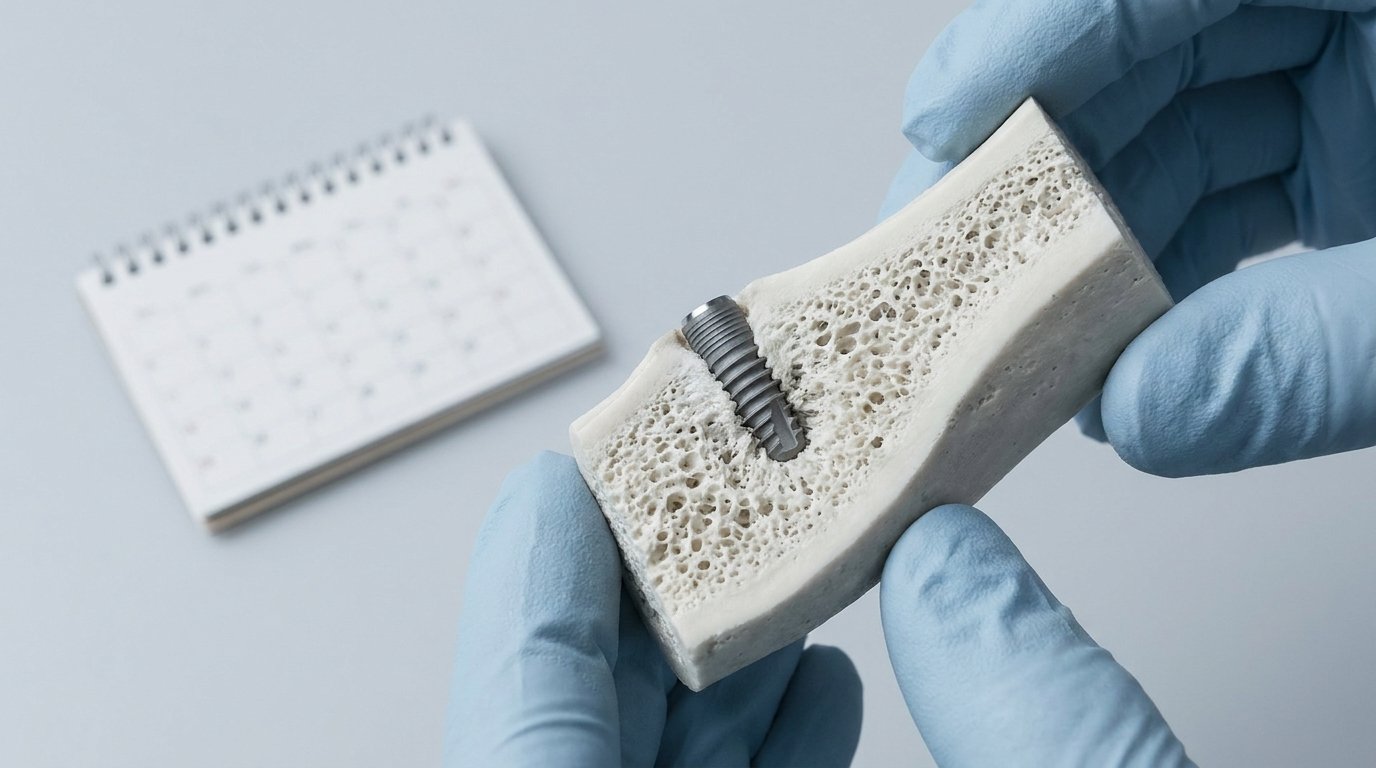
That gap is not clinic scheduling or inefficiency. An implant is a small titanium or titanium-alloy screw placed into the jawbone, and the bone has to grow tightly around it before it can carry chewing load. Dentists call that fusion osseointegration. Rush it, and the implant can loosen instead of settling.
There are variations. Some cases are finished in a single longer visit when a full-arch solution with immediate temporary teeth is planned, and a few complex mouths need three visits because grafting or gum work has to heal before implants go in at all. What your own plan looks like depends on the X-rays and 3D scan, not on a general rule, which is why a serious clinic will not confirm your trip count until it has seen your imaging.
📋 Two trips is the pattern, not a promise Your trip count is set by bone volume, how many teeth are missing, whether extractions or grafting are needed, and how your gums heal. Treat any plan quoted before imaging as provisional.
Trip one: what happens between landing and flying home
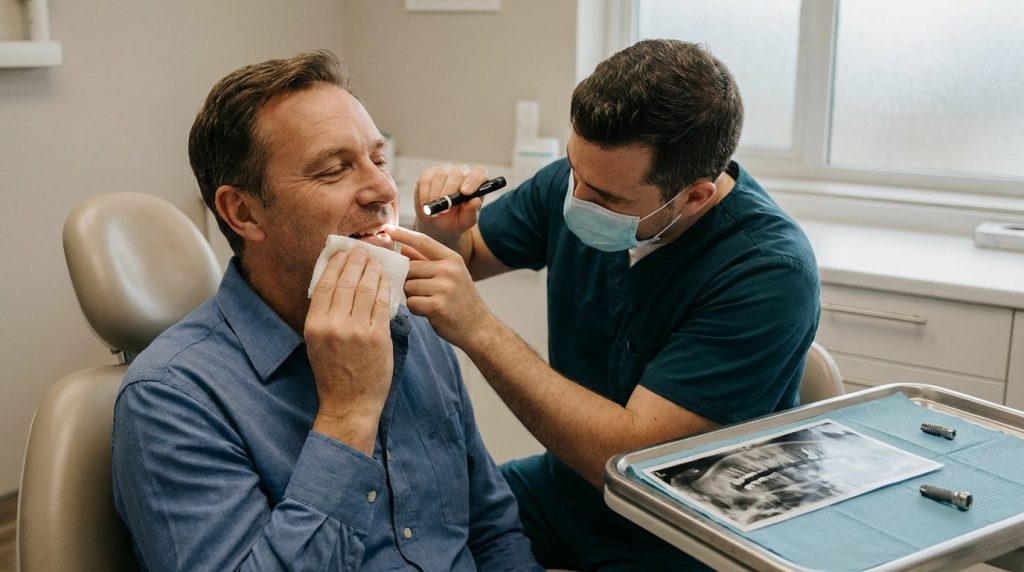
The first visit is the surgical one, and it is usually shorter than people expect. Plan on being in Turkey for around three to five nights for straightforward implant placement, and longer if several teeth are being removed on the same day.
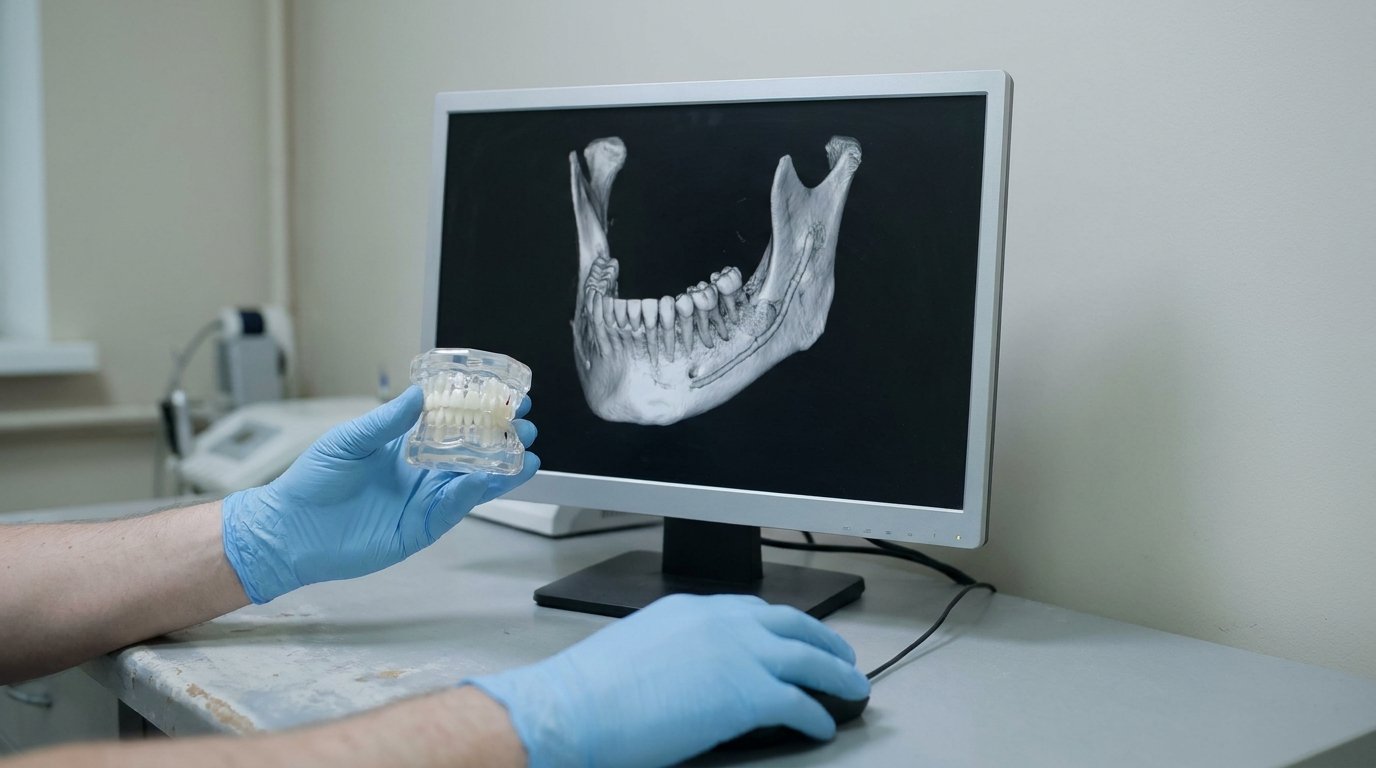
Day one is assessment: a clinical examination, panoramic X-rays and normally a cone-beam CT scan, which shows the jawbone in three dimensions so the dentist can judge where there is enough bone and where there is not. The treatment plan and the final written quote follow this, not the other way round. If the imaging shows thin bone, you may be offered grafting or a sinus lift in the same sitting, which adds healing time rather than many extra appointments.
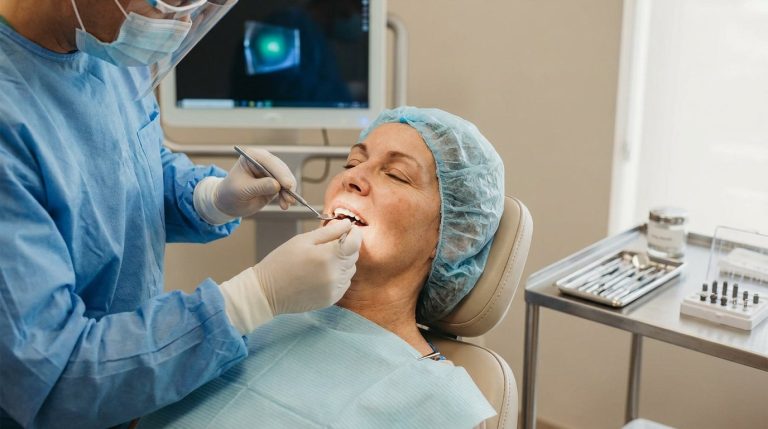
Surgery itself is done with local anaesthetic, sometimes with sedation, and placing a single implant often takes well under an hour. Any extractions happen first. Where the gap is visible, a temporary tooth, a temporary bridge or a small denture is usually fitted so you are not flying home with an obvious space.
Before you leave there should be a review appointment to check the gum and remove or confirm stitches, plus written aftercare, a medication list and a named contact for questions once you are home. For a realistic picture of the first fortnight, our guide to dental implant recovery week by week walks through what normal healing feels like.
⚠️ Flying after implant surgery Short-haul flights a few days after placement are commonly fine, but bleeding, swelling or sinus work can change that. Let your dentist clear you for travel instead of booking the cheapest same-week return.
The gap between trips: why three to six months?
The healing window is the part patients most want to shorten, and it is the part least worth rushing. Lower jaws, where bone is denser, often integrate towards the shorter end of that range. Upper jaws, especially at the back near the sinus, typically sit at the longer end. If you needed a bone graft or a sinus lift, the clock usually starts after that has matured, which can push the second trip towards six to nine months.
Healing is also influenced by things you control. Smoking reduces blood supply to healing gum and bone and is widely recognised as one of the clearest risk factors for implant problems, so being honest about it matters more than it feels. Poorly controlled diabetes, heavy grinding, and inconsistent cleaning around the healing site all pull in the same direction.
Timing questions also come from life, not just biology. Pregnancy or breastfeeding comes up in roughly one in four of the conversations we have with women planning treatment with us, and it is relevant here because routine dental imaging, some antibiotics and painkillers, and the comfort of a long appointment are all things clinicians prefer to reschedule rather than push through. Mention any pregnancy plans at the first consultation, since it may be simpler to shift the surgical trip than to redesign the whole timeline later.
Between trips you live normally. You eat carefully for the first couple of weeks, keep the area clean, and send photos if anything looks wrong. A local dentist at home can also check the site, and good clinics welcome that.
🚨 Be cautious with "permanent teeth in five days" Immediate-load protocols do exist, but they suit specific cases. A clinic offering final, fixed teeth on fresh implants for every patient, sight unseen, is selling a schedule rather than planning treatment.
Trip two: turning implants into teeth
The second visit is restorative and usually needs five to ten nights, because the laboratory work happens while you are there. The implant is uncovered if it was buried, an abutment (the connector between implant and tooth) is fitted, and the dentist takes an impression or a digital scan.
The lab then makes the crown, bridge or full arch. You come back for a try-in, where fit, bite and colour are checked, and adjustments are made before anything is cemented or screwed into place permanently. This back-and-forth is exactly why the stay is longer than you might assume for “just fitting the teeth”.
This is the trip where material choice becomes real. Zirconia and porcelain-fused options behave differently in strength, translucency and cost, and the comparison in our article on zirconia versus porcelain crowns is worth reading before you arrive, so the discussion is a decision rather than a surprise. Full-arch cases run on their own rhythm, covered in our All-on-4 dental implants in Turkey guide.
Two trips, one trip or three: which plan fits which mouth?
The comparison below shows how the same procedure can be organised differently. None of these routes is inherently better — they answer different clinical situations.
Ask whether a single-visit full-arch approach is clinically appropriate for you, and whether your home dentist could carry out the final restoration using the same implant system.
Grafting adds months, not visits you can skip. A plan that ignores low bone volume to keep the schedule short is the wrong kind of convenience.
What drives the cost, and what a quote should include
Cost in implant treatment is driven by the plan, not by the postcode of the clinic. The number of implants, the implant brand and system, whether grafting or a sinus lift is needed, the crown or bridge material, and the number of units in the final restoration all move the figure. Extractions, sedation and temporary teeth are separate line items in some quotes and bundled in others, which is where confusing comparisons come from.
Because two trips mean two sets of flights and two hotel stays, the travel side belongs in your budget too. A side-by-side view of the economics is in our comparison of dental implant costs in the UK versus Turkey, and the broader logistics of combining treatment with travel are covered in our overview of dental treatment in Turkey. Your own price can only be confirmed after a consultation and imaging.
A written quote should make all of the following explicit:
- ✓The exact number of implants and the brand or system being used
- ✓Whether grafting, sinus lift or extractions are included or billed separately
- ✓The material and number of units for the final crowns or bridge
- ✓What happens on the second trip and whether those appointments are already paid for
- ✓The warranty or guarantee terms on implants and restorations, and what voids them
- ✓Ask for the implant system in writing: Named, documented systems make future repairs possible anywhere in the world; unnamed parts can leave your home dentist unable to help.
- ✓Ask which trip each payment covers: You want to know before trip one whether the final crowns are already settled or still to be invoiced.
- ✓Ask who pays if healing fails: Implant failure is uncommon but real. Clarify re-treatment and travel responsibility up front.
- ✓Ask for your records: Scans, surgical notes and implant passports should come home with you.
Choosing the clinic and staying safe across two visits
Treatment split across two trips only works if the clinic is organised enough to pick up where it left off. Look for a dentist who reviews your scan personally before quoting, explains why a particular number of implants is proposed, and tells you plainly when a plan is harder than average. Check registration and qualifications, ask who performs the surgery and who makes the crowns, and read how the clinic handles follow-up once you are back home.
Continuity matters more than marketing. If you cannot find out who will treat you on the second visit, or the plan changes substantially after you arrive, slow down. Our wider guide to dental implants in Turkey goes deeper into the questions worth asking before you commit.
This article is for informational purposes only and does not constitute medical advice. Always consult a qualified surgeon for personalised guidance.
CT-based planning before any price is confirmed, a named implant system, a written two-trip schedule with dates, stitches and review booked into the first stay, and a clear route for contact between trips.
A fixed price quoted from photos alone, pressure to pay the full amount before assessment, vague answers about the implant brand, and no plan for what happens if healing does not go as hoped.
Frequently Asked Questions
References
Related Articles


You Might Also Like



Related articles


Our specialists
 Clineca SpecialistErkan PinegözPlastic & Reconstructive Surgery
 Clineca SpecialistHakan AktaşPlastic & Reconstructive Surgery
 Clineca SpecialistOrkun UzuneyüpoğluPlastic & Reconstructive Surgery
 Clineca SpecialistSalim İskenderPlastic & Reconstructive Surgery
 Clineca SpecialistEngin SelamioğluPlastic & Reconstructive Surgery
 Clineca SpecialistCem AydınPlastic & Reconstructive Surgery
 Clineca SpecialistAlperen ÖnalEar, Nose & Throat (ENT)