

Have a question about Veneers?
In this article
- What should you know first about veneers in Turkey?
- What affects the cost of dental veneers in Turkey?
- Are dental veneers in Turkey safe?
- What is the treatment process from consultation to final veneers?
- How long do you need to stay in Turkey for veneers?
- How do you choose a clinic and dentist carefully?
- What are the long-term trade-offs and maintenance needs?
Many patients looking into dental veneers in Turkey are trying to balance three things at once: appearance, safety, and practical travel planning. The basics can sound simple online, but the real decision usually comes down to how much tooth preparation is needed, how carefully the case is planned, and whether the clinic is being clear about what is and is not included.
What should you know first about veneers in Turkey?
If you are comparing dental veneers in Turkey cost, safety and process, the short version is this: the final quote depends less on a headline deal and more on the material used, how many teeth are being treated, whether you need other dental work first, and how much planning goes into bite and smile design. Safety depends on a proper exam, X-rays or scans where needed, a clear explanation of how much enamel will be removed, and realistic case selection rather than rushing everyone into the same cosmetic plan.
The process is usually not a one-hour makeover. Most patients need a consultation and assessment, tooth preparation if appropriate, impressions or digital scans, temporary veneers in some cases, a fit try-in, and then final bonding. For travel planning, many veneer cases need more than one visit over several days, and some clinics may advise a longer stay if you are having a full smile makeover or if your gums, bite, or existing dental work need attention first.
That matters because veneers are not simply a beauty purchase. The General Dental Council, which regulates dental professionals in the UK, is clear that good consent means patients should understand benefits, limits, risks, and alternatives before treatment. In practical terms, you should expect a proper discussion about whether veneers are suitable at all, not just what shape and shade you want.
⚠️ A low headline quote is not the whole picture A veneer quote may change if the dentist finds decay, gum disease, old fillings that need replacement, bite problems, or a need for temporary restorations before the final veneers are placed.
What affects the cost of dental veneers in Turkey?
The biggest cost driver is usually the treatment plan itself. Porcelain veneers generally involve different lab work and planning from direct composite bonding, and a small touch-up on a few teeth is not priced in the same way as a full upper smile design. Even among porcelain veneers, the complexity can vary depending on the material, the lab, the level of customisation, and how much bite work is needed.
Preparation is another major factor. Some patients are suitable for minimal-prep veneers, where only a small amount of enamel is shaped, while others may need more extensive preparation because of tooth position, older restorations, dark staining, or worn edges. If a clinic is quoting before seeing photos, X-rays, or a scan, the first number is only a starting point.
You should also ask what the quote covers beyond the veneers themselves. Some clinics include the first consultation, imaging, temporary veneers, local anaesthetic, digital smile planning, and review visits. Others charge separately for these. Travel patients should also ask whether the quote includes airport transfers, hotel, interpreter support, aftercare, replacement of temporaries if one breaks, and any adjustment appointments before flying home.
A careful clinic should explain if there are extra costs for related treatment such as hygiene cleaning, gum treatment, root canal treatment, replacement crowns, or a bite guard for night grinding. If you are comparing veneers with other options, it also helps to understand the difference between porcelain veneers and more conservative treatments such as dental bonding, teeth reshaping, or teeth whitening.
Are dental veneers in Turkey safe?
They can be safe when the case is well selected and the provider works to good clinical standards, but safety is not guaranteed by destination alone. The key point is that veneers are an irreversible treatment if enamel is removed, so the planning stage matters as much as the bonding stage.
The strongest safety signs are quite ordinary. You should have a full dental exam, a discussion of your medical history, an assessment of your gums and bite, and imaging where needed. The dentist should explain whether you are a heavy grinder, whether you already have worn teeth, and whether veneers might chip, debond, or look bulky if the underlying bite is not stable.
Dental guidance bodies consistently stress diagnosis and consent. The GDC’s standards for the dental team emphasise valid consent and clear communication. NICE guidance on oral health and related UK dental guidance support risk-based assessment and prevention rather than cosmetic treatment in isolation. Scottish Dental Clinical Effectiveness Programme guidance is also helpful in travel-planning terms because it reflects a structured approach to examination, prevention, and long-term maintenance, which is exactly what cosmetic dentistry still needs.
Evidence matters too. Reviews in journals indexed on PubMed show that porcelain veneers can perform well over time in suitable cases, but outcomes depend on case selection, tooth preparation, bonding technique, and maintenance. That is very different from social media claims suggesting that veneers are simple covers that work the same for everyone.
Red flags are also fairly consistent:
- ✓You are offered veneers without being asked about grinding, jaw pain, gum bleeding, or old dental work.
- ✓The clinic promises a universal style such as very white, very large teeth without discussing face shape, lip support, and bite.
- ✓You are pressured to treat many more teeth than you expected.
- ✓No one explains alternatives, limitations, or what happens if a veneer chips or comes off after you return home.
- ✓The provider avoids questions about qualifications, materials, the lab, or aftercare.
- ✓The treatment plan is based only on a selfie.
The dentist talks about gum health, bite forces, and whether veneers are even the best option before discussing shade.
The focus is only on a dramatic cosmetic result, with little discussion of enamel removal, maintenance, or future repairs.
What is the treatment process from consultation to final veneers?
Most veneer journeys start with photos and a remote discussion, but that is only a screening step. A proper in-person assessment usually includes an exam, photographs, and either impressions or a digital scan. Some clinics also take X-rays to check the teeth and supporting structures before confirming the final plan.
Once the plan is agreed, the teeth may be cleaned first. If the dentist is placing porcelain veneers, the next step is usually preparation of the tooth surface, though the amount can vary a lot from case to case. Temporary veneers may be placed while the final restorations are being made in the lab. Composite veneers are often completed more directly in the clinic, but they still depend on careful shaping and polishing.
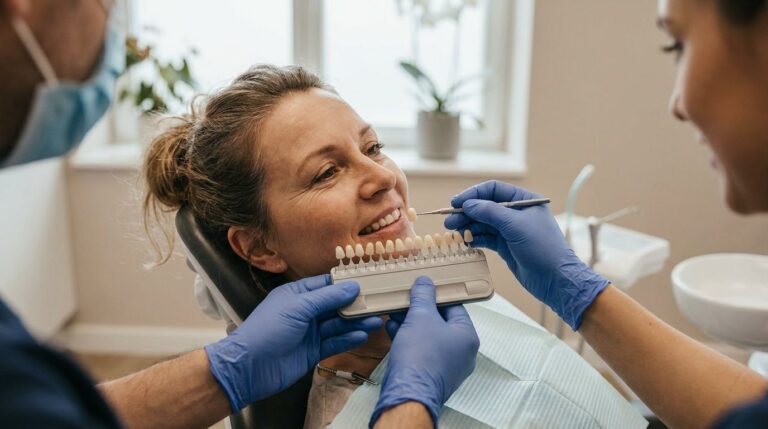
The fit appointment is important. This is when shape, length, edge position, bite, and shade are checked before final bonding. It is also your chance to speak up if the smile looks too square, too bright, too long, or unlike the agreed plan. A rushed final cementation without that check is not ideal, especially for an international patient who will soon be flying home.
After bonding, the dentist should check your bite again and give aftercare instructions. You may be advised to avoid very hard foods for a short period, wear a night guard if you grind your teeth, and return for a review before departure if there is time.
For readers comparing options, teeth veneers are not the same as dental crowns. Crowns cover much more of the tooth and are usually used when there is more structural damage. That distinction matters because some online “veneer” marketing may actually describe a more aggressive full-coverage treatment.
- →Remote screening: Photos and basic history help the clinic decide if you may be suitable, but this is not the final diagnosis.
- →In-person assessment: Exam, scans or impressions, photos, and discussion of bite, gum health, and treatment limits.
- →Preparation and temporaries: If porcelain veneers are planned, the teeth may be minimally shaped and temporary veneers may be placed.
- →Try-in and bonding: The final veneers are checked for fit, look, and bite before being bonded.
- →Review and aftercare: The bite is rechecked and you receive cleaning, eating, and maintenance advice before travel home.
How long do you need to stay in Turkey for veneers?
For travel planning, think in visits rather than in a single appointment. Many straightforward veneer cases are arranged over two main clinical visits with lab time in between, so patients often stay for several days. Some need a little longer, especially if they are having many veneers, replacing older work, or needing extra treatment first.
If the clinic is using an external dental lab, that gap matters. A same-week turnaround may be possible, but it should not be assumed. If your gums are inflamed, if there is decay to treat, or if your bite needs closer adjustment, adding an extra review day is often wiser than planning a tight return flight.
Ask very directly how many appointments are expected and what each one is for. Also ask whether the clinic wants to see you again a day or two after bonding. That final review can be useful for checking bite pressure and comfort once the numbness has gone and you have eaten and spoken normally.
A sensible travel checklist includes your medication list, recent dental X-rays if you have them, and clear time in your schedule in case treatment takes longer than hoped. If you are also exploring other restorative options such as dental bridges or dental implants, your stay may be longer or split into separate stages.
📋 Do not book the shortest possible trip Leaving no spare day can turn a minor adjustment into a stressful travel problem.
How do you choose a clinic and dentist carefully?
A good cosmetic dental provider should be willing to slow the conversation down. You want to know who will assess you, who will actually carry out the work, what materials are used, and what the aftercare plan looks like once you are back home. If a clinic cannot answer those simple questions clearly, that is useful information.
Look for evidence of a real diagnostic process rather than pure marketing. That means clear pre-treatment photos, explanation of risks, a written treatment plan, and discussion of alternatives. If your case might be handled with bleaching, contouring, or direct bonding instead of multiple veneers, that should be said openly. Conservative dentistry is usually a good sign.
For international patients, aftercare arrangements matter almost as much as the procedure itself. Ask what happens if a veneer feels high when you bite, if one debonds after you return home, or if the shade match is not what you expected. You should also ask whether the clinic will coordinate with your local dentist if follow-up is needed.
Keep the commercial side simple and transparent. If you want to start with a remote discussion, a neutral step is to request a written assessment through the clinic’s consultation page, but treat that as the start of fact-finding, not the end of it.
If I am not a good veneer candidate, what would you recommend instead and why?
For some patients, whitening, bonding, orthodontic alignment, or replacing old fillings can improve the smile with less tooth reduction.
What are the long-term trade-offs and maintenance needs?
Veneers can look very natural, but they are not maintenance-free. Porcelain resists staining better than composite, yet both types still depend on cleaning, gum health, and bite control. If you clench or grind, a night guard may be strongly advised to reduce the risk of chipping or overloading the edges.
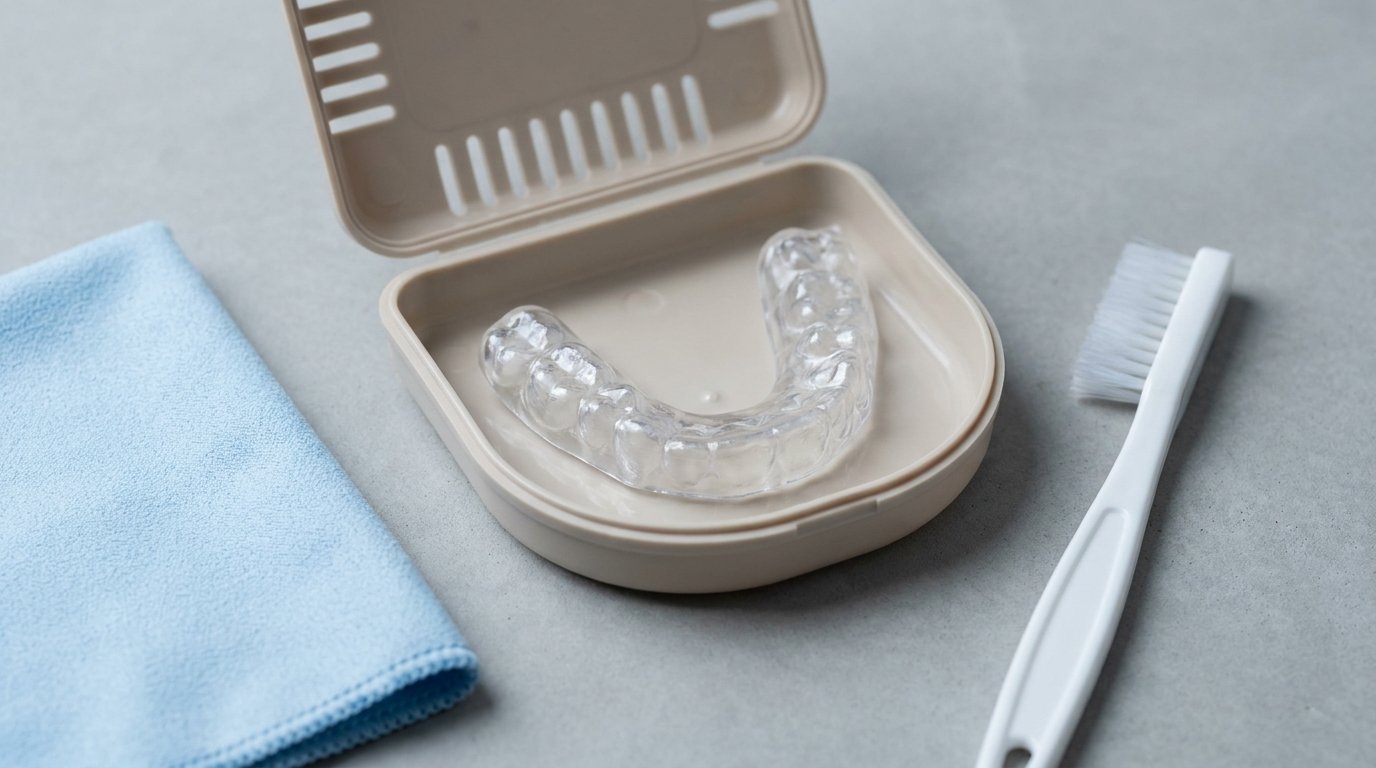
The main long-term trade-off is that prepared teeth usually stay in the restoration cycle. In plain language, once enamel has been removed, the tooth may always need some form of covering or repair over the years. That is why conservative planning matters so much, especially in younger patients.
You should also expect some future upkeep. Small adjustments, polishing, replacement of damaged work, and monitoring of margins are normal parts of ownership. A well-done veneer case can still need maintenance, and an honest clinic will say that plainly rather than presenting veneers as a once-and-done fix.
Peer-reviewed literature indexed on PubMed supports the idea that veneers can have good medium- and long-term performance in appropriate cases, but that success is linked to preparation design, bonding quality, case selection, and follow-up. In other words, the best veneer result starts long before the bonding appointment and continues after you leave the clinic.
Frequently Asked Questions
References
- 📎General Dental Council: Standards for the Dental Team
- 📎NHS: Cosmetic dental treatments and dental care guidance
- 📎PubMed search: porcelain laminate veneers survival systematic review
- 📎PubMed search: veneer preparation bonding clinical outcomes
You Might Also Like


Related articles
Our specialists
 Clineca SpecialistErkan PinegözPlastic & Reconstructive Surgery
 Clineca SpecialistHakan AktaşPlastic & Reconstructive Surgery
 Clineca SpecialistOrkun UzuneyüpoğluPlastic & Reconstructive Surgery
 Clineca SpecialistSalim İskenderPlastic & Reconstructive Surgery
 Clineca SpecialistEngin SelamioğluPlastic & Reconstructive Surgery
 Clineca SpecialistCem AydınPlastic & Reconstructive Surgery
 Clineca SpecialistAlperen ÖnalEar, Nose & Throat (ENT)