

Have a question about Veneers?
In this article
- What a "Hollywood Smile" Actually Means in a Turkish Clinic
- How Many Veneers Do You Need for a Hollywood Smile?
- What Drives Hollywood Smile Turkey Cost
- Veneers, Crowns, Zirconia or Composite: Choosing the Material
- How Long to Stay in Turkey and What Each Day Looks Like
- Safety, Risks and the Trade-Offs Brochures Skip
- Alternatives Worth Considering Before Veneers
- How to Choose a Clinic and Dentist in Turkey
- After You Fly Home: Aftercare, Maintenance and Longevity
Search for a Hollywood smile in Turkey and two things dominate the screen: dazzling before-and-after galleries and flight prices that make the whole idea feel effortless. What those photos rarely show is the decision-making behind them — how many teeth were treated, how much natural tooth was shaved away, and what that mouth looks like ten years later. This guide walks through the parts that actually shape your result, your trip and your quote.
What a "Hollywood Smile" Actually Means in a Turkish Clinic
“Hollywood smile” is a marketing phrase, not a single procedure. It describes a cosmetic result — teeth that look even, bright and symmetrical across the full width of the smile — and clinics reach that result using different combinations of treatments.
In practice, most Hollywood smile plans are built on porcelain veneers (thin shells bonded to the front of the tooth) or crowns (caps that cover the whole tooth), sometimes alongside whitening of the back teeth, minor gum reshaping, or replacing old, discoloured fillings. Two patients can be quoted the same package name and receive very different dentistry. That is why the first question in a consultation should never be “how much?” but “what exactly are you doing to my teeth?”
The appeal is real and well documented. A 2022 survey published in the Journal of Pharmacy and Bioallied Sciences, which looked at why residents across five Gulf countries wanted a “Hollywood smile”, found that the motivation was largely driven by appearance and social factors rather than dental problems. A 2026 narrative review in Cureus made a related point about social media: platforms like Instagram and TikTok have genuinely raised interest in smile aesthetics, but the benefit depends on a dentist mediating expectations rather than simply delivering what a filtered photo promises.
That is the honest framing for anyone planning treatment abroad. A full-mouth makeover can be transformative. It is also irreversible once enamel is removed, so the smile you design in a consultation is the smile you commit to maintaining for decades.
📋 Ask what the package contains Before comparing clinics, get each plan in writing: how many teeth, veneer or crown, which material, whether whitening, gum work or any root canal treatment is included. Two "Hollywood smile" quotes are only comparable once you know this.
How Many Veneers Do You Need for a Hollywood Smile?
This is where most of the cost, and most of the regret, is decided. The number of teeth treated should depend on how wide your smile is when you grin fully — your “smile line” — not on a round number that sounds impressive.
Many people only show six to eight upper teeth when they smile naturally. Others show ten or twelve, plus a good portion of the lower arch when they laugh or speak. A careful dentist photographs your smile from several angles and decides from that. If the plan stops at tooth number six but you reveal eight, the transition between bright porcelain and natural tooth will be visible in photographs — the problem patients describe as “my veneers look fake at the edges”.
Full upper-and-lower treatment (commonly sixteen to twenty units) is sometimes genuinely appropriate: heavy wear, old failing crowns, extensive discolouration, or a bite that needs rebuilding. It is not automatically better. More units means more healthy tooth structure touched, more that can eventually need repair, and more cost.

| Number of units | Who it usually suits | Trade-offs to weigh |
|---|---|---|
| 6 upper front teeth | Narrow smile line; only the front teeth are discoloured or uneven | Colour mismatch risk if you show more than six teeth when laughing |
| 8–10 upper teeth | The most common cosmetic plan; smile shows canines and first premolars | Needs careful shade blending with untreated back teeth |
| 16–20 upper and lower | Worn, dark or heavily restored teeth; visible lower arch | Highest cost, most tooth preparation, longest chair time |
| Mixed veneers + crowns | Some teeth are sound, others are heavily filled or root-treated | Different materials must be shade-matched; plan must be explained tooth by tooth |
If a clinic recommends twenty crowns for a mouth with healthy, cavity-free teeth and a single chipped incisor, that is a reasonable moment to pause and seek a second opinion. Our wider guide to dental veneers in Turkey covers how plans are built in more detail.
⚠️ Count your own smile first Take a phone photo of your widest natural smile before any consultation. Count the teeth you can actually see. It is the simplest way to sense-check a recommended unit count.
What Drives Hollywood Smile Turkey Cost
Turkey’s pricing advantage comes from lower clinic running costs, lower lab and staffing costs, and a competitive local market — not from cutting corners by default. The flip side is that quotes vary enormously between clinics, and the cheapest headline figure often covers the fewest teeth with the most basic material.
We do not publish fixed figures for a reason: the honest price depends on what your X-rays and clinical exam show. A mouth that needs gum treatment, a replacement root canal or an implant before cosmetic work is a different case from a healthy mouth needing eight veneers, and quoting before seeing images would be guesswork. A personalised price is confirmed after your photos and X-rays are reviewed, and ideally after an in-person examination on day one.
| What affects your quote | Why it changes the price |
|---|---|
| Number of units | The single biggest factor — pricing is usually per tooth |
| Material and technique | Layered porcelain, pressed ceramic and zirconia differ in lab work and cost |
| Veneer vs crown | Crowns cover the whole tooth and involve more preparation and lab material |
| Lab and technician | In-house master technicians and custom shade work cost more than outsourced batch work |
| Preparatory treatment | Gum therapy, fillings, root canals, extractions or implants are separate items |
| Digital workflow | Intraoral scanning, digital smile design and a trial mock-up add value and cost |
| Package inclusions | Hotel nights, airport and clinic transfers, translation, follow-up terms |
What a complete quote should spell out
A quote worth trusting is itemised. It states the number of teeth, the exact material brand or type, whether temporary restorations are included, how many clinic visits are planned, what happens if a unit needs remaking during your stay, and the written terms of any guarantee — including who pays for shipping or repair if something fails after you fly home.
It is also worth separating travel costs in your own budgeting: flights, extra hotel nights if your trip runs long, meals and any second trip for a staged plan. People who compare only the dental figure often find the real total drifts.
🚨 Treat "all-inclusive per tooth" claims carefully If a figure is quoted before anyone has seen your X-rays, it is an estimate, not a price. Ask specifically whether extractions, root canal treatment, gum work or implants would be charged separately.
Veneers, Crowns, Zirconia or Composite: Choosing the Material
Material choice is not a luxury upgrade question — it depends on how much healthy tooth you have left and how much light you want the restoration to transmit. Thin porcelain veneers look most natural on teeth that are structurally sound and reasonably well aligned. Teeth that are heavily filled, root-treated or badly worn often need the full coverage of a crown to be strong enough.
A common mix-up among patients is assuming “Hollywood smile” always means veneers. In many Turkish treatment plans, especially full-arch cases, the units are actually crowns. That is not automatically wrong, but it involves more tooth reduction, so you deserve a clear explanation of why.
| Option | Best for | Honest limitations |
|---|---|---|
| Layered porcelain veneers | Natural-looking front teeth with sound enamel | Needs skilled lab work; thin edges can chip under heavy grinding |
| Pressed ceramic (e.max-type) veneers/crowns | Strength plus good translucency on front teeth | Slightly less light-transmitting than hand-layered porcelain |
| Zirconia crowns | Heavily restored, dark or weak teeth; back teeth; bruxism | Can look flatter and more opaque unless layered on the visible surface |
| Composite bonding | Small chips, gaps and edge repairs; reversible, no enamel removal | Stains sooner, less strong, needs polishing and periodic repair |
If you are weighing ceramic options, our comparison of zirconia versus porcelain crowns in Turkey explains where each material earns its place.
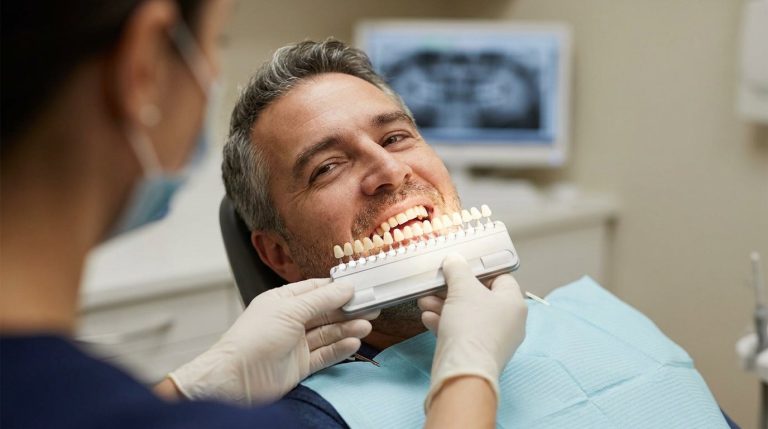
One more detail that quietly decides how natural the result looks: shade. A shade chosen on a bright screen in a consultation can look startlingly white in daylight against your skin tone and the whites of your eyes. Good clinics show you a trial smile or mock-up and let you see it in natural light before the final units are made.
The dentist proposes different materials for different teeth and explains why — translucent ceramic at the front, stronger zirconia where the bite load is heaviest.
One material and one shade for every tooth in the mouth, chosen from a photo, with no mock-up stage and no discussion of your bite or grinding habits.
How Long to Stay in Turkey and What Each Day Looks Like
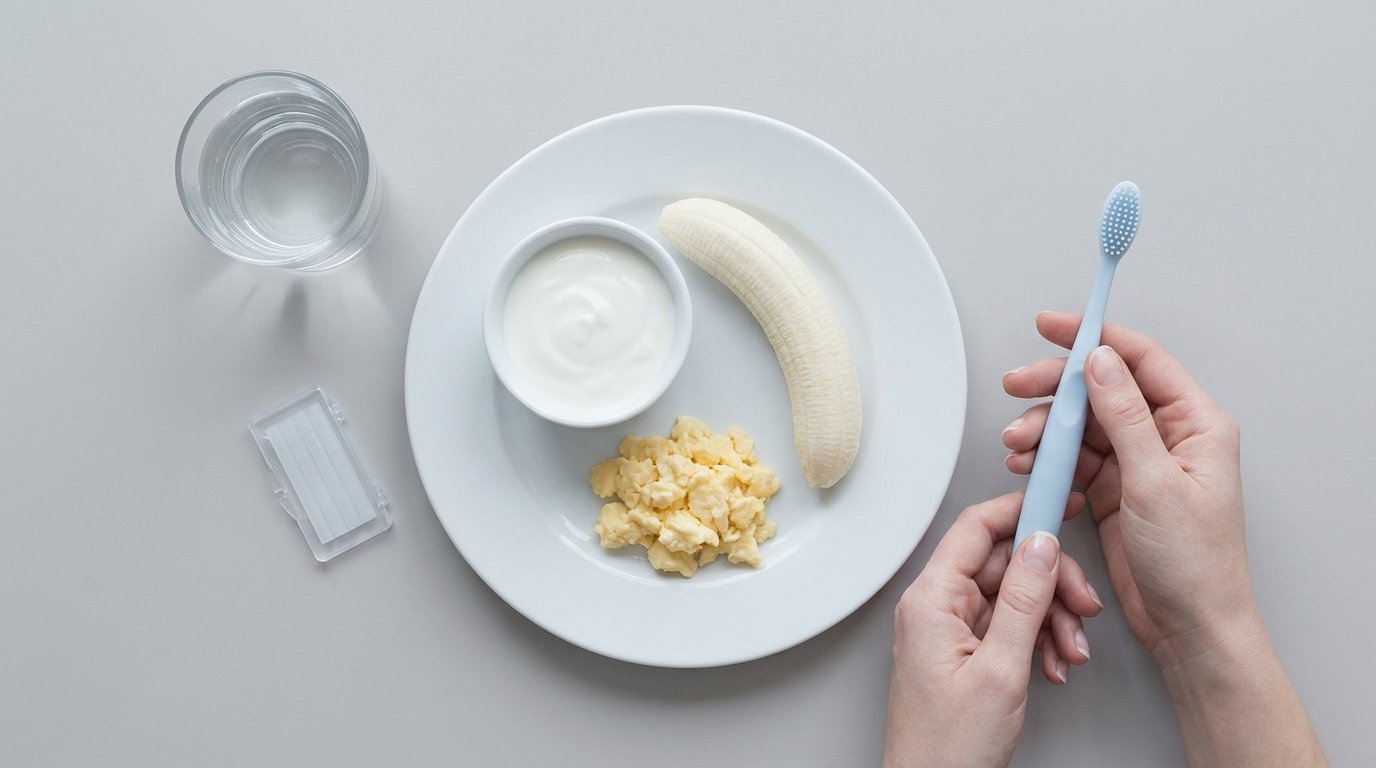
Most cosmetic veneer or crown cases are completed in a single trip of roughly five to eight days, because the laboratory work happens locally and quickly. The schedule is not continuous chair time — there are gaps while the technician builds your units, which is when people explore the city.
| Stage | Typical timing | What happens |
|---|---|---|
| Arrival and consultation | Day 1 | Exam, X-rays, photographs, shade and smile discussion, final plan and price confirmed |
| Preparation | Day 2 | Teeth prepared, digital or conventional impressions taken, temporary restorations fitted |
| Lab fabrication | Days 3–5 | Units made; some clinics offer a trial fit to check shape, length and shade |
| Trial and adjustment | Day 5–6 | Try-in, bite checks, shape or shade corrections sent back to the lab if needed |
| Final bonding | Day 6–7 | Permanent cementing, polishing, bite refinement, aftercare instructions |
| Buffer / departure | Day 7–8 | Spare day for any late adjustment before flying |
That buffer day matters more than people expect. If a unit needs remaking, you want the time to wait for it rather than accepting something that is nearly right because your flight is at dawn.
Some plans genuinely need two trips: gum disease that must settle first, teeth that need root canal treatment, extractions that need healing time, or implants that need months of integration before the visible restorations go on. A clinic that tells you this honestly at the quote stage is giving you useful information, not bad news.
If you are also considering facial surgery on the same trip, timing matters — swelling and lip position can affect how a new smile is designed. Combining the two in the wrong order is a common mistake worth avoiding.
📋 Flying with temporaries Temporary veneers are deliberately fragile and the fit is approximate. Eat softly, avoid anything sticky, and never schedule your return flight on the same day as final bonding — leave at least one clear day for adjustments.
Safety, Risks and the Trade-Offs Brochures Skip
Cosmetic dentistry is low-risk compared with surgery, but it is not risk-free, and the main risk is permanence. Preparing a tooth for a veneer or crown removes enamel that does not grow back. Once a healthy tooth is prepared, it will need some form of restoration for the rest of your life.
Sensitivity is the most common short-term complaint. Freshly prepared teeth can react to cold air and drinks for days to a few weeks while they settle; our note on how long veneer sensitivity lasts covers what is normal and what is not. Lingering, throbbing or spontaneous pain is different and should be assessed, because occasionally a prepared tooth later needs root canal treatment.
Other issues worth knowing about before you commit:
- ✓Gum irritation and recession. Units that sit slightly too thick at the gum line can leave gums red and inflamed, and over years recession can expose a visible margin.
- ✓Bulky or over-white results. Excess thickness and an extremely opaque shade are the two things that make a smile read as artificial.
- ✓Chipping and debonding. Grinding, nail-biting and biting hard objects are the usual culprits; a protective night guard is often recommended.
- ✓Bite problems. Changing the length and shape of many teeth at once changes how your jaw closes. A rushed full-mouth case can leave jaw ache or an uncomfortable bite.
- ✓Aftercare distance. A small repair is simple in Istanbul and far more awkward from another country. Know in advance who handles it and at whose cost.
The safety side of treatment abroad comes down to standards you can verify: a licensed clinic, a named dentist with checkable qualifications, sterilisation protocols you can ask about, proper radiographs before any drilling, and written records you can take home to your local dentist. The NHS also publishes plain-English information on cosmetic dental procedures and the questions to ask before going ahead, which is a useful neutral read alongside clinic marketing.
🚨 Healthy teeth deserve a second opinion If a full-mouth crown plan is proposed for teeth with no decay, no fractures and no failing restorations, ask what a minimally invasive alternative would look like. The decision cannot be undone later.
Alternatives Worth Considering Before Veneers
Plenty of people who want a Hollywood smile do not actually need sixteen units of porcelain. Often the real complaints are colour, a couple of chipped edges, or mild crowding — and each of those has a less invasive answer. These options can also be combined, or used as a staging post before deciding on veneers later.
Professional whitening
If your teeth are reasonably straight and well shaped but simply darker than you would like, whitening addresses colour without touching the tooth surface. It works on natural enamel only, so existing crowns and fillings will not change shade and may need replacing to match afterwards. Temporary sensitivity is common and settles; our guide on how long teeth whitening sensitivity lasts explains the usual pattern. Results fade gradually and need occasional top-ups.
Composite bonding
Tooth-coloured resin is sculpted directly onto the tooth to close small gaps, rebuild chipped edges or even out shape — usually in a single appointment and often with little or no enamel removal. It is the most conservative cosmetic option and largely reversible, which makes it attractive for younger patients and for anyone unsure about committing to porcelain. The trade-off is durability: bonding stains more readily and needs polishing or repair over time. See dental bonding in Turkey for how it is planned and maintained.
Edge reshaping (enamel contouring)
For slightly uneven incisor edges, a small pointed canine or a tooth that looks marginally longer than its neighbour, a dentist can polish the enamel edges into better harmony. It is quick, usually painless and removes only a fraction of a millimetre — but it only works when the teeth are already well positioned and a good colour. Our piece on whether teeth reshaping is safe for minor chips sets out the limits.
Aligners first, cosmetics later
When crowding or rotation is the real issue, straightening the teeth with clear aligners or braces fixes the problem at its source. It takes months rather than a week, which is why it is unpopular with travel timelines — but aligning first often means far fewer veneers afterwards, or none at all. Veneers used purely to mask crowding have to be thicker, which means more enamel removed and a bulkier end result.
Best when shape and alignment are fine and only colour bothers you. No enamel removed; fades and needs top-ups; does not change crowns or fillings.
Best for small chips, gaps and edge repairs. Conservative and largely reversible, but stains sooner and needs periodic maintenance.
Best for slightly uneven edges on otherwise well-positioned teeth. Fast and minimal, but cannot change colour or position.
Best when crowding is the actual complaint. Slower, but usually means thinner veneers afterwards — or avoiding them altogether.
How to Choose a Clinic and Dentist in Turkey
The variation in Turkish cosmetic dentistry is wide, which is precisely why vetting matters. The good clinics are genuinely excellent — digital workflows, in-house master technicians, conservative planning. The weaker ones sell unit counts.
Start with the person, not the package. Ask for the name of the dentist who will actually prepare your teeth, their qualifications and how long they have worked in cosmetic and prosthetic dentistry, and whether they will be the one treating you on the day. Clinics should be licensed by the Turkish Ministry of Health, and the treating dentist should be registered with the relevant national dental authority — a clinic that is reluctant to give a name is telling you something.
Then look at how they plan. A clinic that asks for photographs and X-rays, discusses your bite, raises the possibility of gum treatment, offers a mock-up and occasionally tells patients they need fewer teeth treated is behaving like a clinical practice rather than a sales funnel.
Finally, read the guarantee before you fly, not after. A warranty is only as useful as its conditions: what it covers, what voids it, whether it requires you to return to Istanbul, and who pays for travel or shipping if a unit fails.
They sometimes recommend less than you asked for; they explain why a tooth needs a crown instead of a veneer; they insist on treating gum inflammation before cosmetic work.
A firm price before any X-ray, pressure to book within 24 hours, no named dentist, a single shade of ultra-white for everyone, and a guarantee described only verbally.
- ✓Named, verifiable dentist: You know who is treating you, where they trained, and how to check their registration.
- ✓Proper diagnostics before drilling: X-rays, periodontal (gum) assessment, photographs and a bite check — not just a shade choice.
- ✓Itemised written plan: Tooth-by-tooth list, material specified, visits scheduled, extras priced separately.
- ✓Mock-up or trial fit: A chance to see and approve shape, length and shade before final bonding.
- ✓Clear aftercare pathway: Written guarantee terms, records to pass to your home dentist, and a named contact for problems.
- ✓Unhurried scheduling: A buffer day built into the trip so adjustments do not compete with your flight home.
After You Fly Home: Aftercare, Maintenance and Longevity
The first week or two after bonding is an adjustment period. Speech can feel slightly different, teeth may be sensitive to temperature, and your gums may be tender where they were worked around. Most of that settles steadily. Stick to softer food at first, avoid very hot and very cold extremes while sensitivity lasts, and keep the gum line meticulously clean.
Longer term, porcelain restorations are durable but not indestructible, and they are not permanent. How long yours last depends heavily on three things you control: whether you grind your teeth (and wear a night guard if you do), how well you clean around the margins, and whether you use your front teeth as tools. Hard crusts, ice, pens and fingernails are the classic causes of a chipped edge.
Book a check-up with a dentist at home within a few months of returning, and keep up routine hygiene visits. Your home dentist will look after the gums and the underlying teeth, so give them the records, X-rays and material details from Turkey. If a unit chips or debonds years later, a local dentist can often re-bond or repair it, but matching a single replacement to existing units is a skilled job — one more reason to keep your material documentation.
Expect maintenance rather than permanence: occasional polishing, possible gum recession over the years, and eventual replacement of some units. Planned for honestly at the start, that is a manageable trade-off. Discovered by surprise, it is the main source of disappointment among people who treated a smile makeover as a one-off purchase.
This article is for informational purposes only and does not constitute medical advice. Always consult a qualified surgeon for personalised guidance.
⚠️ Get a night guard if you grind Clenching and grinding are the leading mechanical cause of chipped or debonded units. A custom guard is a small cost against replacing porcelain.
Frequently Asked Questions
References
- 📎Reasons for Widespread Aspiration of Esthetics Veneers "Hollywood Smile": A Survey among Five Gulf Countries — Journal of Pharmacy and Bioallied Sciences, 2022
- 📎Influence of Social Media on the Demand for Esthetic Dental Treatment: Patient Expectations, Risks, and Professional Responsibility — Cureus, 2026
- 📎NHS — Cosmetic procedures
Related Articles

You Might Also Like


Related articles

Our specialists
 Clineca SpecialistErkan PinegözPlastic & Reconstructive Surgery
 Clineca SpecialistHakan AktaşPlastic & Reconstructive Surgery
 Clineca SpecialistOrkun UzuneyüpoğluPlastic & Reconstructive Surgery
 Clineca SpecialistSalim İskenderPlastic & Reconstructive Surgery
 Clineca SpecialistEngin SelamioğluPlastic & Reconstructive Surgery
 Clineca SpecialistCem AydınPlastic & Reconstructive Surgery
 Clineca SpecialistAlperen ÖnalEar, Nose & Throat (ENT)