
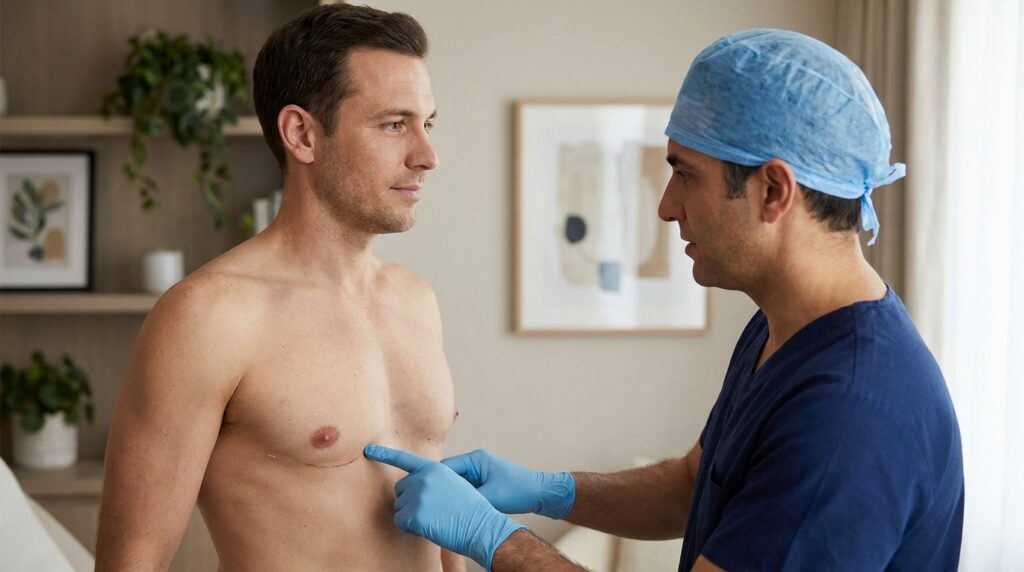
Have a question about Gynecomastia?
In this article
- What do gynecomastia surgery scars usually look like?
- Where are the scars placed after gynecomastia surgery?
- How do gynecomastia scars heal over time?
- What affects how noticeable the scars become?
- How can you help gynecomastia scars heal well?
- When should you worry about a gynecomastia scar?
- What should you ask before booking gynecomastia surgery abroad?
Gynecomastia surgery scars are usually small and placed around the edge of the areola or in discreet chest areas, and in most patients they fade gradually over months rather than disappearing completely. If you are researching gynecomastia surgery scars what they look like and how they heal, the short answer is that scar appearance depends mainly on the technique used, your skin type, aftercare, and how your body naturally heals.
What do gynecomastia surgery scars usually look like?
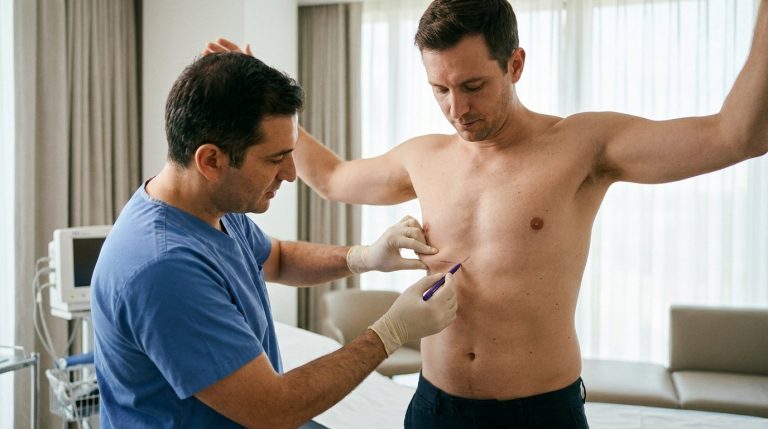
The look of the scar depends first on the type of male breast reduction used. In many cases, the incision sits along the lower half of the areola, where the darker skin meets the lighter chest skin. That location is popular because the natural colour change helps hide the line once it heals.
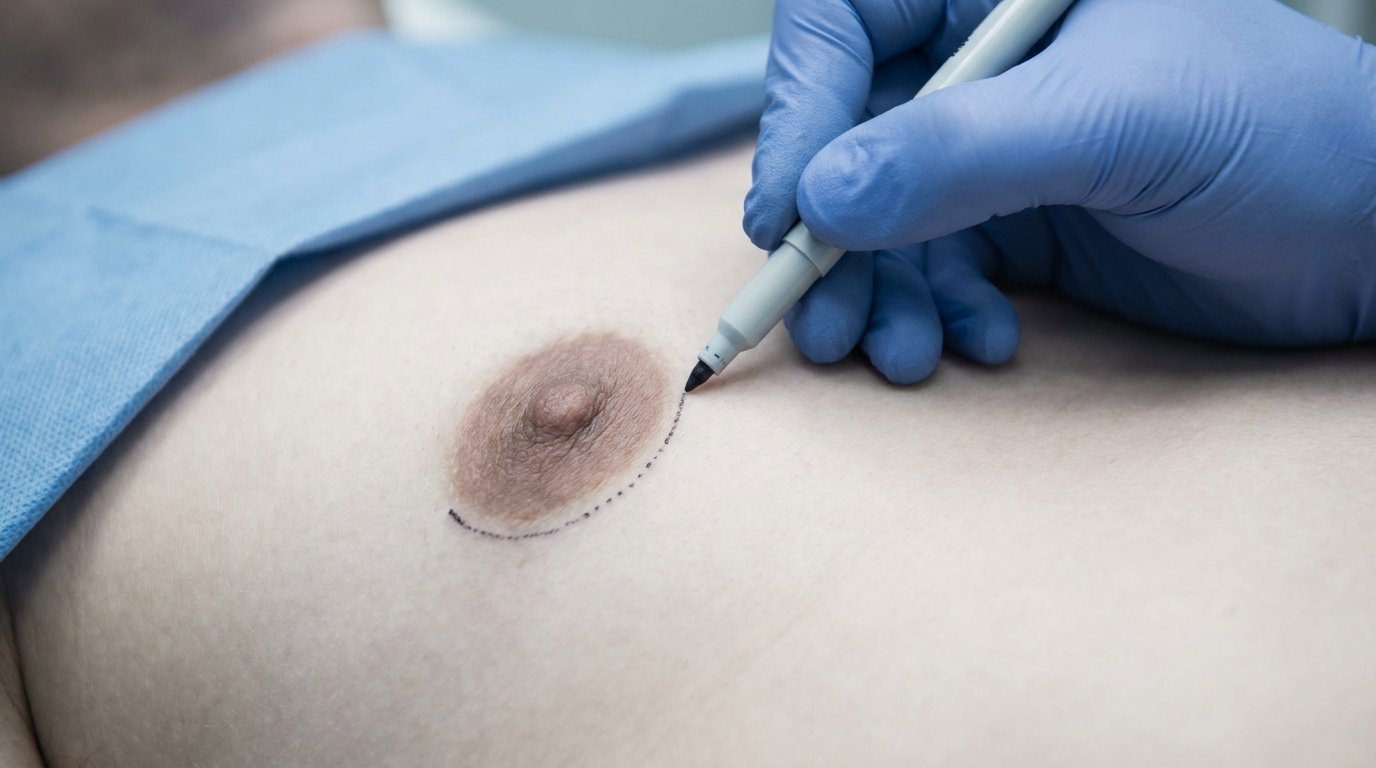
If liposuction is part of the operation, there may also be one or two very small access scars on the chest or near the side of the chest. These are often much smaller than the areola incision. When the chest is larger or there is loose skin to remove, the scar pattern can be longer and more visible, simply because more skin work is needed.
In the early weeks, scars often look more obvious than patients expect. They may be pink, red, firm, itchy, or a little puckered. That does not mean anything has gone wrong. According to the NHS, surgical wounds and scars commonly change for months as they mature.
For a general overview of the procedure itself, patients often start with a page on gynecomastia surgery before focusing on scar care and recovery.
A thin pink line, slight firmness, mild itching, and gradual softening over time are all common during normal healing.
If skin removal is needed for a larger chest, the scars can be longer and more noticeable than the small areola scars seen in simpler cases.
Most gynecomastia scars start out pink, red, or slightly raised, then flatten and lighten with time. The final look depends on whether gland tissue, liposuction, or both were used, where the incision was placed, and how your skin tends to scar. They usually become less noticeable, not invisible.
Where are the scars placed after gynecomastia surgery?
In straightforward cases, the least noticeable scar is often the one placed at the border of the nipple area. Because that line follows a natural edge, it tends to blend better than a straight line across the chest.
If chest fat is removed with liposuction, the surgeon may need tiny entry points for the cannula, which is the thin tube used to remove fat. These scars are usually small, but they can still look darker or redder for a while before settling.
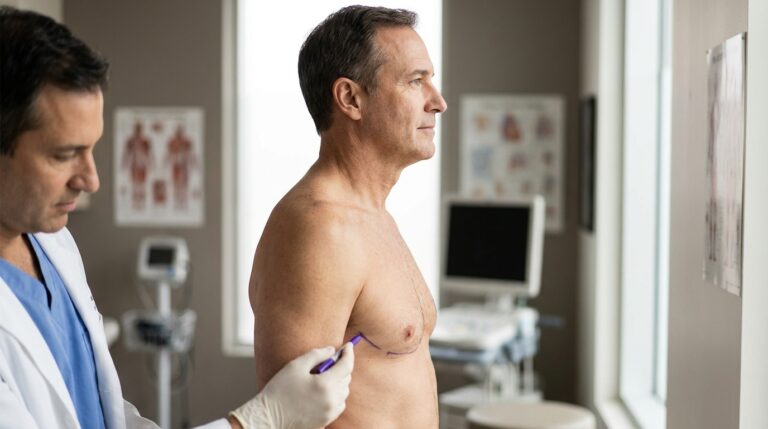
Patients with stretched skin or a larger amount of tissue may need some skin removal as well. That improves chest shape, but it is the trade-off that often leads to more visible scars. This is one of the most important honest conversations to have before surgery: a flatter chest may require a longer scar pattern.
That trade-off is not unique to gynecomastia. It is similar to other body contouring operations, where better shape sometimes means more scar length, as seen with procedures such as abdominoplasty or arm lift surgery.
📋 Scar placement is planned, not random Incisions are usually designed to balance access, chest contour, and how easy the scar will be to hide once healed.
Scar placement depends on the chest size, skin quality, and whether the surgeon removes gland, fat, or extra skin. The most common scar sits at the areola edge, but some patients also have tiny liposuction scars or longer scars if skin tightening is necessary.
How do gynecomastia scars heal over time?
The first stage is basic wound healing. During the first couple of weeks, the focus is on the incision sealing properly, reducing swelling, and avoiding tension on the chest. At this point, the scar is not mature. It is simply closed.
The next stage often surprises patients. Once the skin has sealed, the scar may look darker, pinker, thicker, or more raised for a period of time. This is part of the scar-building phase. It can look worse before it looks better, especially in people with more reactive skin.
After that, the scar slowly begins to remodel. It usually flattens, softens, and fades. Mayo Clinic and the NHS both describe healing as an ongoing process rather than an instant result, and that is especially true for scars.
A practical healing timeline
The timeline below is a guide, not a promise. Some scars settle faster, while others stay pink for longer.
- →Normal healing is gradual, and chest swelling can make scars look more tense early on.
- →Sun exposure can make scars stay darker for longer.
- →Nicotine, wound irritation, and poor aftercare can slow healing.
- →Some people are naturally more prone to thick or raised scars.
Gynecomastia scars heal in stages. The wound closes first, then the scar often becomes redder or firmer before it slowly softens and fades. Most patients judge the scar too early. A more realistic timeline is months, not weeks, with continued change well after the first recovery period.
What affects how noticeable the scars become?
No surgeon can honestly promise a scar-free result. What they can do is place incisions thoughtfully, use the least invasive approach that still works, and explain your likely scar pattern before surgery.
Your own skin matters just as much. Some people naturally form fine, pale scars. Others are more likely to develop thick, dark, or raised scars, even with good surgery and careful aftercare. This matters particularly if you have a personal or family history of hypertrophic or keloid scars, which are scars that become unusually raised.
Complications also affect the final look. If there is delayed healing, infection, fluid build-up, or tension on the incision, the scar can widen or become more irregular. That is one reason careful follow-up matters. The American Society of Plastic Surgeons, or ASPS, also stresses that healthy healing habits can influence recovery after cosmetic surgery.
A detailed consultation should cover more than the operation itself. It should also cover smoking, medications, scar history, and how long you need to stay locally before flying home. If you are arranging treatment from abroad, a proper consultation is where these details should be reviewed clearly.
⚠️ Raised-scar history matters If you have had keloid or thick scars before, tell your surgeon before booking. That history can change the plan and the aftercare advice.
The biggest scar factors are surgical technique, the amount of tissue removed, skin tone, genetics, aftercare, and whether healing is smooth or complicated. Patients who need skin removal usually accept more visible scars in exchange for better chest contour, while smaller cases often heal with subtler marks.
How can you help gynecomastia scars heal well?
The first rule is not to rush. Patients often want to start massaging or applying creams too early, but scar care only helps once the skin surface has healed properly. Until then, the priority is clean wound care and avoiding irritation.
Once the incision is closed, your care team may recommend scar massage, silicone gel, or silicone sheets. These are common scar-management tools used after surgery. They do not erase scars, but they may help some scars stay flatter and softer when used correctly.
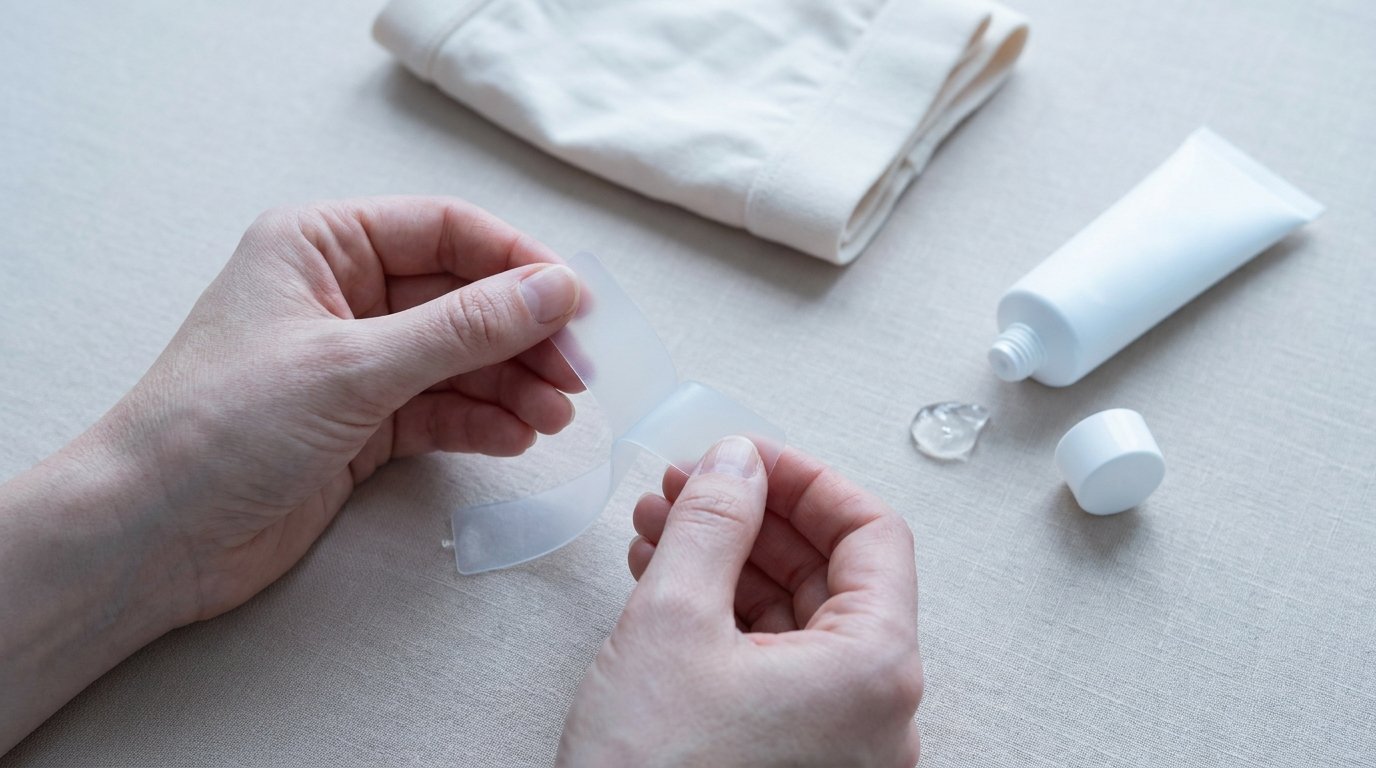
Lifestyle also matters more than many people realise. Smoking or vaping with nicotine can impair blood flow and slow healing. Heavy chest exercise too early can put tension on the incision. Strong sun on a fresh scar can make the colour linger.
If you are travelling for surgery, keep the trip practical. You should plan enough time in Turkey for early checks, dressing changes if needed, and an initial review before you fly back. The exact stay depends on the operation details and your recovery speed, but it should be discussed in advance rather than guessed.
Patients choosing a clinic abroad should also check who the operating surgeon is, where the procedure is performed, and how follow-up is handled after they return home. A transparent clinic should make it easy to review the surgical team on the doctors page and learn more about the clinic before making travel plans.
- ✓Keep follow-up appointments and send clear recovery photos if remote follow-up is part of your plan.
- ✓Use only the scar products recommended for your stage of healing.
- ✓Protect healing scars from direct sun with clothing or appropriate sun protection once the wound is closed.
- ✓Avoid smoking and nicotine if your surgeon advises stopping before and after surgery.
- ✓Return to gym training gradually, especially chest-focused exercise.
Good scar care is simple but consistent: protect the wound early, follow dressing advice, avoid strain, wear the compression garment if advised, and protect the scar from sun. Scar products may help in some cases, but only after the incision has fully closed and your surgeon says it is safe.
When should you worry about a gynecomastia scar?
A scar does not need to look perfect to be healing normally. Early redness, itching, and some firmness are common. The concern starts when things are moving in the wrong direction rather than slowly improving.
Warning signs include spreading redness, heat, bad smell, increasing discharge, wound separation, fever, or pain that is getting stronger instead of easing. These can point to infection or wound problems and should not be managed with home advice alone.
There is also a slower kind of concern: a scar that becomes very raised, thick, itchy, or extends beyond the original incision line. That may suggest hypertrophic or keloid-type scarring. It is not usually an emergency, but it does need proper assessment because early treatment can be more helpful than waiting too long.
🚨 Get checked promptly if the wound is worsening Increasing redness, heat, pus, opening of the incision, or fever should be reviewed by your surgical team or a local doctor without delay.
You should seek advice if the scar becomes increasingly red, hot, swollen, very painful, opens up, leaks pus, or keeps thickening rapidly. Mild redness and firmness can be normal early on, but worsening symptoms need review to rule out infection, delayed healing, or problematic scarring.
What should you ask before booking gynecomastia surgery abroad?
Scar quality starts with planning. Before you book, ask where the incisions will be, whether liposuction alone is likely to be enough, and whether skin removal may be needed. If a larger scar is possible, that should be discussed openly before you travel, not after you arrive.
Cost also needs clear explanation, even though the exact price is personalised. A quote for gynecomastia surgery usually depends on the complexity of the chest, whether gland removal and liposuction are both needed, the hospital setting, anaesthesia, garments, medication, and follow-up arrangements. The cheapest quote is not always the most complete one.
For international patients, logistics matter almost as much as the operation. You need to know how long to stay for early recovery, when you can fly, what happens if you have a scar concern after going home, and whether revision surgery is covered if it becomes medically appropriate.
The clinic explains likely scar patterns with nuance and does not pretend every patient will have barely visible marks.
Anyone who says scars will be invisible or who avoids discussing skin removal, healing time, or follow-up is oversimplifying the reality.
Ask exactly what scar pattern is expected in your case, who performs the surgery, what your quote includes, how many days you should stay, and who manages follow-up. The safest choice is a surgeon and clinic that answer direct questions clearly rather than minimising scars or rushing the decision.
Frequently Asked Questions
References
- 📎NHS – Cosmetic procedures
- 📎ASPS – Cosmetic procedures
- 📎Mayo Clinic – Tests and procedures
- 📎PubMed search – gynecomastia surgery scar healing
Related Articles



You Might Also Like



Related articles

Our specialists
 Clineca SpecialistErkan PinegözPlastic & Reconstructive Surgery
 Clineca SpecialistHakan AktaşPlastic & Reconstructive Surgery
 Clineca SpecialistOrkun UzuneyüpoğluPlastic & Reconstructive Surgery
 Clineca SpecialistSalim İskenderPlastic & Reconstructive Surgery
 Clineca SpecialistEngin SelamioğluPlastic & Reconstructive Surgery
 Clineca SpecialistCem AydınPlastic & Reconstructive Surgery
 Clineca SpecialistAlperen ÖnalEar, Nose & Throat (ENT)