In this article
A high hairline is one of those features people notice in their own photos long before anyone mentions it. Forehead reduction surgery in Turkey — also called hairline lowering — has become a common reason for international patients to travel, and the questions that follow are always the same ones: what moves the cost, how safe is it away from home, and how long does the recovery really take. The honest answers depend on your scalp, your hairline and the kind of clinic you choose, so it is worth going through each part properly.
What Forehead Reduction Surgery Actually Does
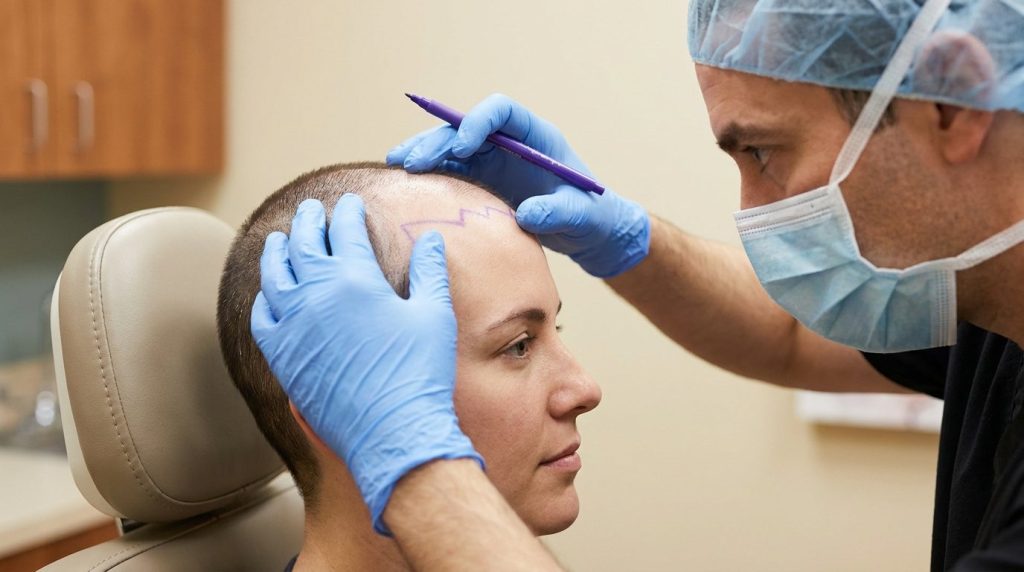
Forehead reduction does not shrink the forehead bone. The surgeon lifts the hair-bearing scalp forward and removes a strip of forehead skin, so the hairline sits lower and the bare area between brows and hair looks shorter. The incision is placed along the front hairline, usually with a slightly zig-zag or irregular edge, and closed in a way designed to let hairs grow up through the scar line so it blends in over time.
How much movement is possible comes down to one thing above all: how loose and mobile your scalp is. A scalp that slides easily when you push it forward allows a more generous advancement in a single operation. A tight scalp allows less, and in those cases a surgeon may suggest a staged approach — a first operation, then a second one later — or a tissue expander in selected cases. Promising a dramatic change on a tight scalp is a warning sign, not a selling point.
The technique itself is well described in the surgical literature. A 2026 paper in Aesthetic Plastic Surgery reported 820 consecutive forehead reduction operations performed with a single standardised method over roughly five and a half years, which is the kind of large, consistent series that helps define the technical details — incision design, the extent of scalp release and how far the hairline can safely be advanced — rather than leaving each surgeon to improvise.
Often combined with a brow lift
If your brows also sit low or heavy, lifting the hairline alone can make the upper face look flat. Many surgeons address both in one operation, since the same access allows the brows to be repositioned. If you are weighing that up, our comparison of brow lift versus upper eyelid surgery explains which one does what, and the endoscopic versus traditional brow lift article covers the incision trade-offs.
📋 Bring photos, not just a description Hairline shape matters as much as height. Temporal recession, a widow’s peak or thinning at the corners changes what the surgeon can plan, and these are hard to judge from words alone. Clear, well-lit photos from the front, side and with the hair pulled back make the first consultation far more useful.
What Drives the Cost of Forehead Reduction in Turkey
Price is the question patients raise most often, and it is also the one where published numbers mislead the most. We cannot quote figures here, but we can be specific about what actually moves a quote up or down — which is more useful when you are comparing two very different offers.
The largest single factor is the surgeon: their training, whether forehead and hairline work is a regular part of their practice, and how much operating time your plan needs. After that comes the hospital or surgical facility, the type of anaesthesia and whether an anaesthetist is present throughout, and whether anything is combined with the procedure in the same session.
| What sits inside the quote | Why it moves the price |
|---|---|
| Surgeon’s experience and case volume | Specialist hairline-lowering experience is priced higher than general practice |
| Operating time and complexity | A tight scalp, a staged plan or an unusual hairline needs more time |
| Anaesthesia type and team | General anaesthesia with a dedicated anaesthetist costs more than sedation alone |
| Facility standard | Fully licensed hospital with inpatient capacity versus a small day clinic |
| Combined procedures | A brow lift, hair transplant or eyelid surgery in the same session adds cost but saves a second trip |
| Package extras | Hotel nights, airport and clinic transfers, interpreter, post-op medication and follow-up |
Quotes usually arrive in one of two shapes. A surgical-only price covers the operation, anaesthesia, the facility and your scheduled check-ups. An all-inclusive package adds the non-medical side of the trip — accommodation, transfers and a coordinator — which is often why two quotes for “the same surgery” look so far apart. Our guide to what an all-inclusive surgery package in Turkey includes is worth reading before you compare.
When you ask for a price, ask for it in writing and ask these questions:
- ✓Who performs the surgery, and will that named surgeon also see me before and after?
- ✓Is general anaesthesia included, and is an anaesthetist present for the whole operation?
- ✓Which hospital or clinic is the operation performed in, and is it licensed for it?
- ✓What happens — and what is charged — if I need a revision or extra follow-up?
- ✓Are hotel nights, transfers, medication and the post-op review inside the price or outside it?
A personalised price can only be confirmed after a consultation, once your scalp mobility, hairline shape and overall plan have been assessed. If a quote arrives before anyone has looked at your photos or asked about your hair, it is a sales number rather than a surgical one.
⚠️ The cheapest quote is rarely the cheapest outcome Some patients tell us a quote feels high, which is a fair thing to say out loud. The honest answer is that the savings in a very low offer usually come from somewhere real — less surgeon time, a lower-standard facility, no anaesthetist, or no aftercare if something needs attention. A revision costs more than doing it once properly.
Is It Safe? Risks, Standards and Surgery Abroad
Forehead reduction is an elective operation on the scalp, performed under sedation or general anaesthesia, and it carries real risks like any surgery. The ones specific to this procedure are a visible or widened scar, temporary numbness behind the incision, hair shedding along the scar line in the first months, and hairline irregularity or asymmetry. Bleeding, infection and delayed healing are possible, as with any surgical wound. Smoking and nicotine in any form raise the risk of poor scar healing noticeably.
Safety abroad is mostly about structure rather than geography. The NHS guidance on cosmetic procedures advises anyone considering treatment overseas to check the surgeon’s qualifications and registration, to understand that aftercare and follow-up may not be straightforward once you fly home, and to plan in advance for who will manage any complication locally. That is a practical point, not a scare story: book a trip that includes your post-op reviews, keep your operative notes and medication list, and ask the clinic in writing how they handle problems that appear after you land.
The other half of safety is you. Honest answers about blood-thinning medication, supplements, previous scalp surgery or a hair transplant, bleeding disorders and any history of keloid scarring change the plan. So does a realistic conversation about how much movement your scalp allows — the most common cause of disappointment is an expectation that was never surgically available.
🚨 Contact the clinic, not a search engine Spreading redness, increasing pain after the first few days, fever, pus or a wound that starts to separate all need prompt assessment — wherever you are. Make sure you leave Turkey with a direct contact number and know which local service to attend if you cannot reach the clinic quickly.
A named, qualified surgeon you speak to directly; surgery in a licensed hospital or fully equipped clinic; scalp mobility assessed before any promise is made; before-and-after photos of the surgeon’s own forehead reduction patients, including close-ups of healed scars; written aftercare and a clear revision policy.
A fixed price before anyone has seen your photos; refusal to name the operating surgeon; pressure to book flights within hours; guaranteed results or ‘invisible scar’ claims; no plan for follow-up once you are home.
Recovery Timeline: What the First Year Looks Like
Most people are surprised by how quick the functional recovery is and how slow the scar maturation is. You feel human again within days; the scar keeps improving for months.
Expect a tight, pressure-like feeling across the forehead and scalp for the first week, some forehead and eyelid swelling that drifts downwards, and numbness behind the incision that can last weeks to a few months. Sleeping with your head elevated helps the swelling settle faster.

| Time after surgery | What is typical |
|---|---|
| Days 1–2 | Dressing or light bandage, tightness, mild to moderate swelling, managed discomfort |
| Days 3–7 | Swelling peaks then eases; bruising may reach the upper eyelids; gentle hair washing as instructed |
| Around day 7–10 | Sutures or staples removed; most patients feel presentable enough for low-key public outings |
| Weeks 2–4 | Back to desk work and light routine; scar line pink and sometimes crusted; itching common |
| Weeks 4–6 | Gradual return to full exercise once your surgeon clears it; numbness fading |
| Months 2–4 | Possible shedding of hairs along the scar, which usually regrows; scar begins to soften |
| Months 6–12 | Scar flattens and pales; hair grows through and across it; final appearance judged here |
The shedding phase around the second or third month worries people the most, because it looks like the opposite of progress. Hairs disturbed near the incision commonly fall out and then regrow over the following months. It is also the point where patience matters: judging your result at week six is judging it too early. For a closer look at what the scar line goes through, see our dedicated article on forehead reduction scars and how they heal.
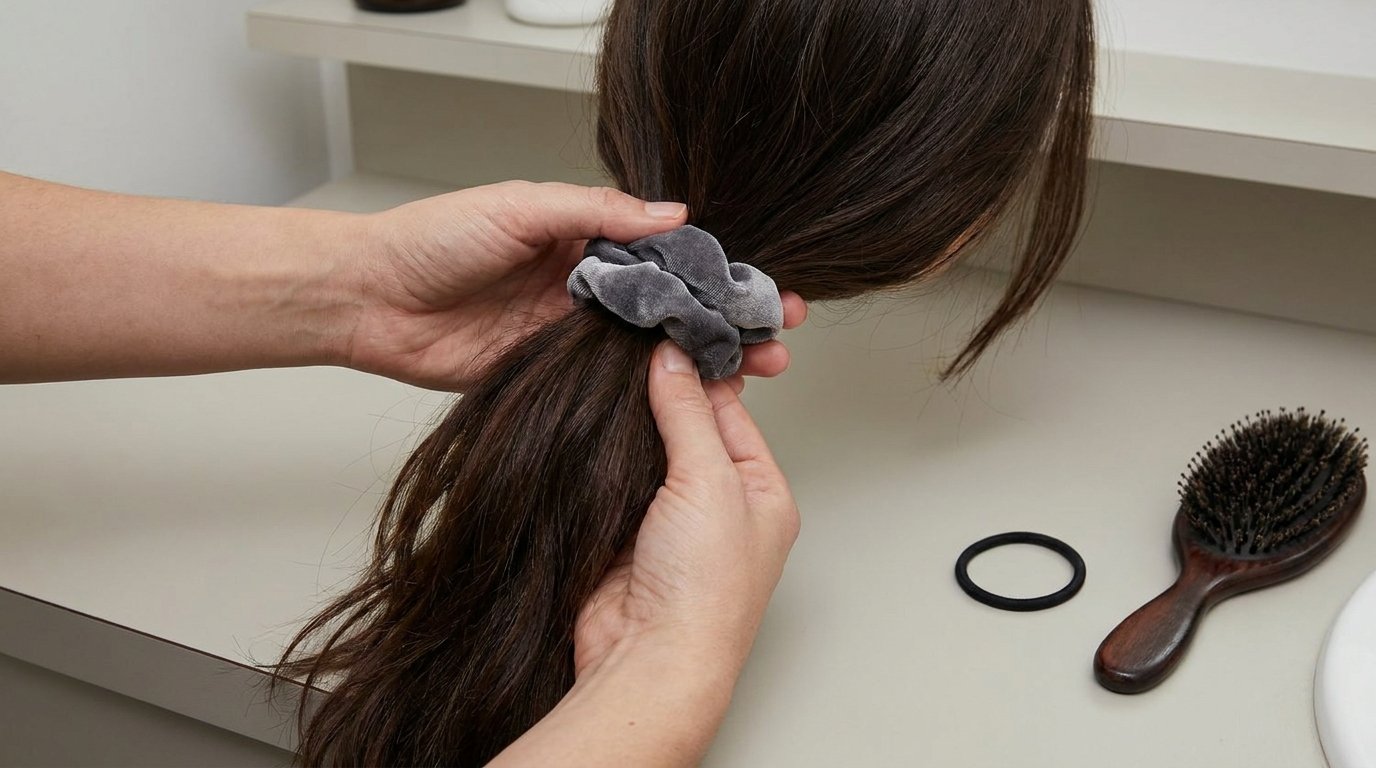
Hair care is part of recovery, not an afterthought. No tension on the hairline for the first few weeks means no tight ponytails, braids or hair extensions pulling on the new scar. Colouring and chemical treatments wait until the surgeon says the wound is fully healed, and sun protection on a fresh scar genuinely affects how it ends up looking.
📋 Plan the calendar backwards Timing is the hesitation patients mention most often. If you have a wedding, a work presentation or a holiday in mind, count back at least three months from the event, not three weeks — swelling settles quickly but the scar needs far longer to look its best.
How Long to Stay in Turkey
For a forehead reduction alone, plan on roughly a week to ten days in the country. That allows a face-to-face consultation and pre-operative checks, surgery, a first dressing change, and the review where sutures or staples come out before you fly. Some surgeons prefer to see you once more a day or two after that, which pushes the trip towards the longer end.
Flying itself is not the problem; the issue is being away from your surgeon during the window when early problems show up. Do not book a return flight for the day after surgery, and do not plan a tightly packed sightseeing itinerary. A quiet hotel close to the clinic, with a lift and good air conditioning, makes more difference in that first week than a scenic location.
If you are combining procedures — a brow lift, eyelid surgery or a hair transplant to refine the temples — the stay usually lengthens and the recovery is a little more demanding, though it saves you a second trip and a second set of flights. Our guide to combining surgeries in Turkey covers how surgeons decide what can responsibly be done in one session.
- ✓A companion if possible: Someone to handle logistics for the first 48 hours is worth more than any extra service.
- ✓Loose, button-up tops: Nothing that has to be pulled over your head and across the incision.
- ✓Travel insurance that covers elective surgery abroad: Standard holiday policies usually do not.
- ✓Your documents: Operative note, medication list and the clinic’s direct contact details, kept with you on the flight home.
Are You a Candidate, and What Are the Alternatives?
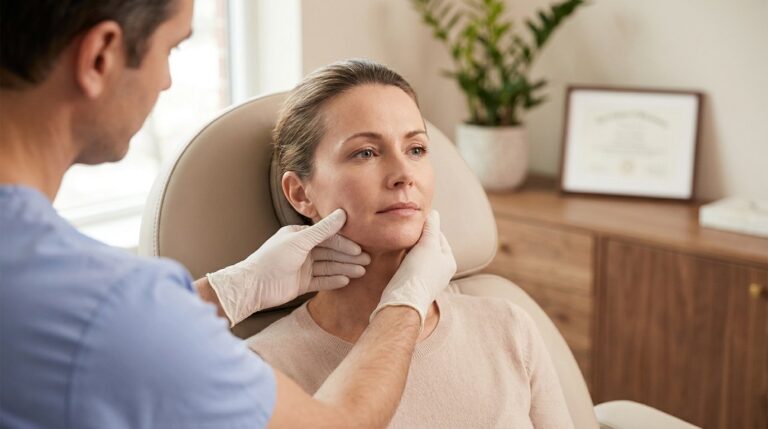
The best candidates have a hairline that sits high relative to their facial proportions, a reasonably mobile scalp, stable hair density, and realistic expectations about a scar at the hairline. Age matters less than hair stability: if you are actively losing hair, lowering the hairline now can look odd later, so that pattern needs assessing first.
Some people who ask about forehead reduction turn out to be better served by something else. A receding or patchy hairline with thinning temples often responds better to hair transplantation, which rebuilds density without removing skin. Heavy, low brows with a normal hairline may be a brow lift problem rather than a hairline one. And if your concern is a prominent brow ridge or an unusually convex forehead shape rather than its height, that is a different operation altogether.
There is no non-surgical way to lower a hairline. Hairstyling, fringe cuts, scalp micropigmentation and topical hair treatments can soften the appearance of a high forehead, and for some people that is genuinely enough. Being told honestly that surgery is not the right answer for you is a sign of a good consultation, not a lost opportunity.
This article is for informational purposes only and does not constitute medical advice. Always consult a qualified surgeon for personalised guidance.
Better suited to recession, thin temples or low density. No skin is removed and no linear hairline scar is created, but it needs grafts, time and sometimes more than one session to build a full hairline.
Raises heavy brows and opens the upper eye area. It does not shorten the forehead — in fact it can make it look slightly longer, which is why the two are often planned together.
If your hair pattern is still changing, or you cannot commit to several months of scar care, waiting is a legitimate choice rather than a failure to decide.
Frequently Asked Questions
References
- 📎Forehead Reduction: A Retrospective Study of 820 Consecutive Cases — Aesthetic Plastic Surgery, 2026
- 📎NHS — Cosmetic procedures
- 📎American Society of Plastic Surgeons — Cosmetic procedures
Related Articles

You Might Also Like



Related articles


Our specialists
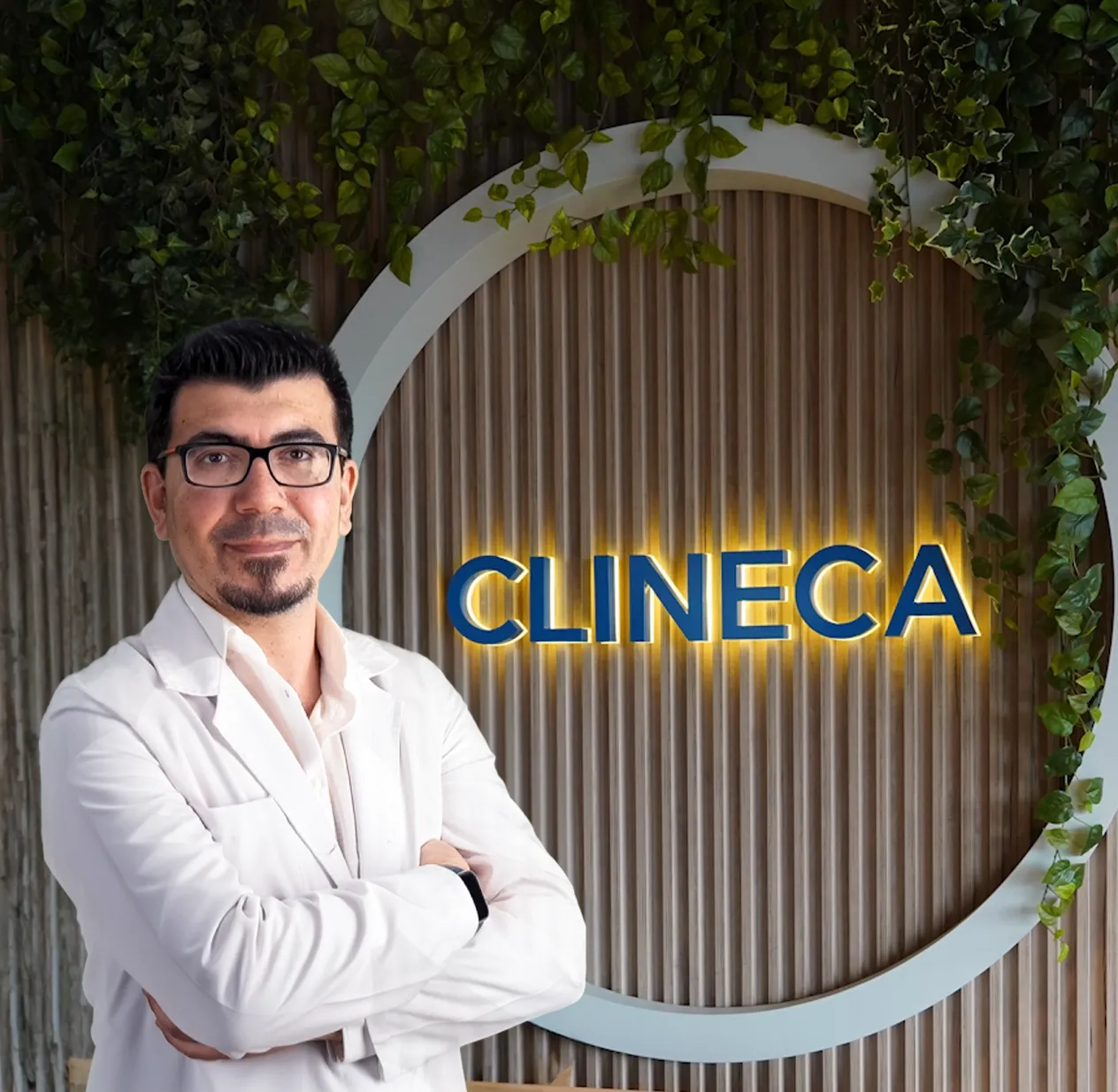 Clineca SpecialistErkan PinegözPlastic & Reconstructive Surgery
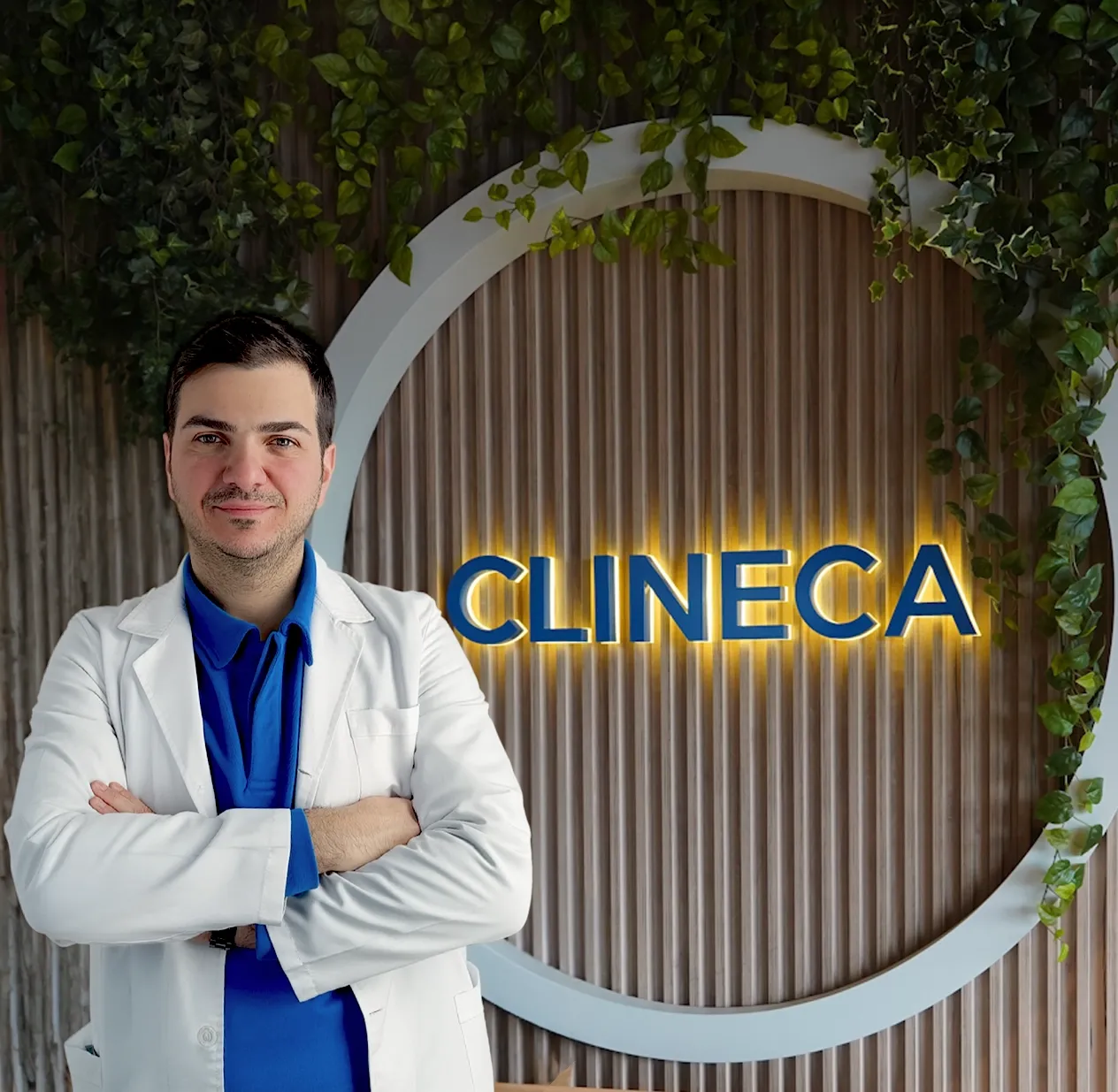 Clineca SpecialistHakan AktaşPlastic & Reconstructive Surgery
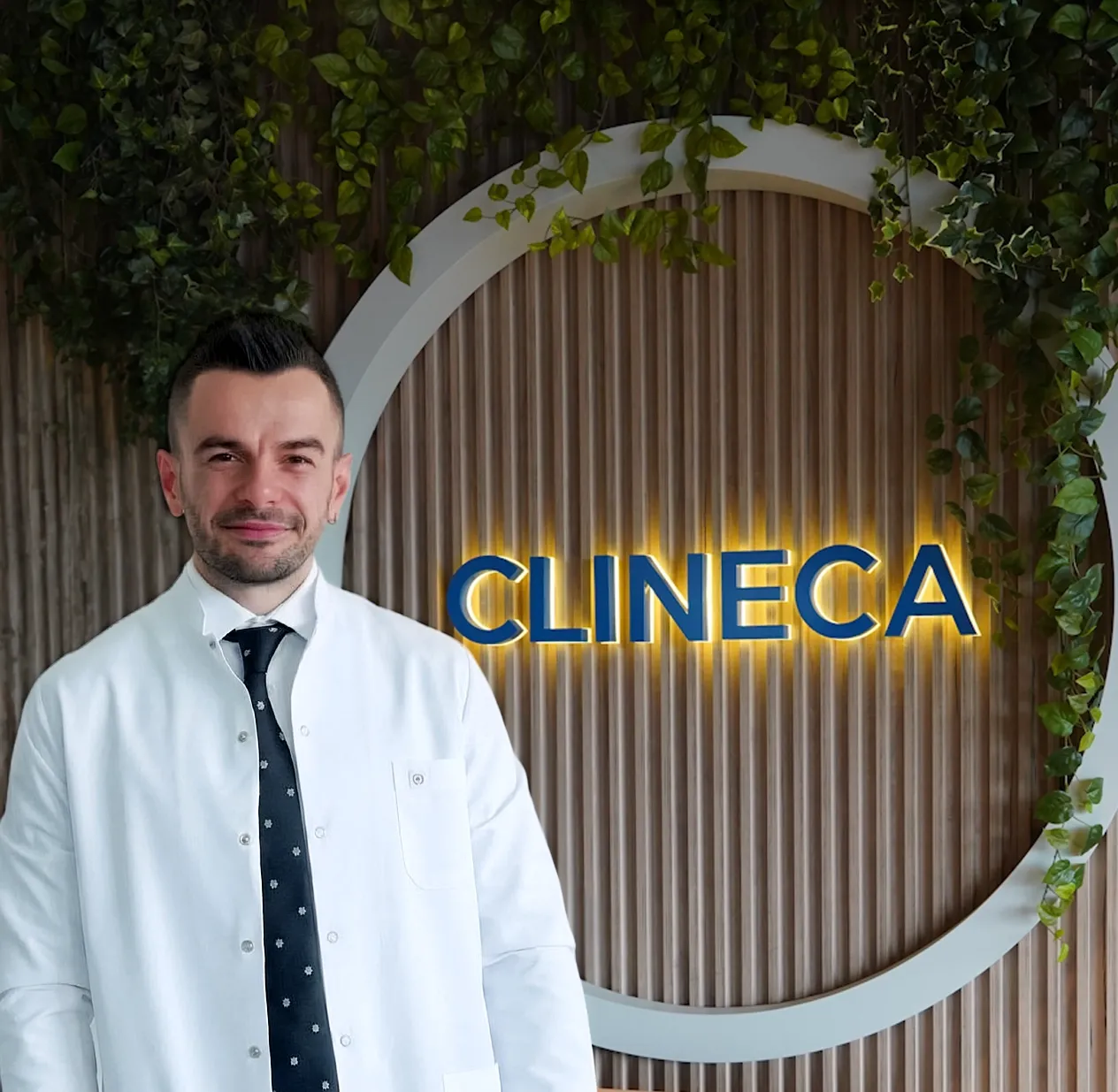 Clineca SpecialistOrkun UzuneyüpoğluPlastic & Reconstructive Surgery
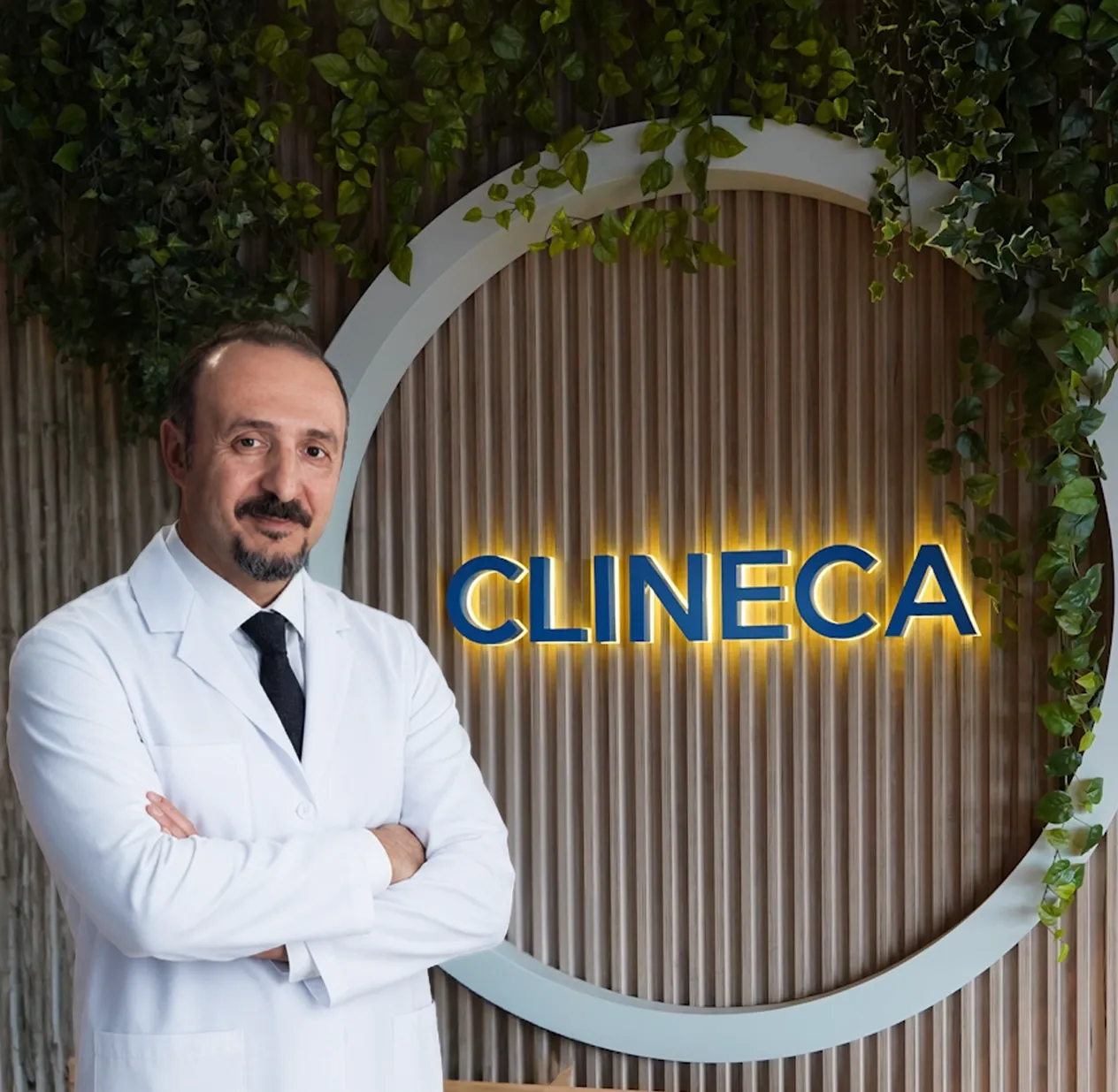 Clineca SpecialistSalim İskenderPlastic & Reconstructive Surgery
 Clineca SpecialistEngin SelamioğluPlastic & Reconstructive Surgery
 Clineca SpecialistCem AydınPlastic & Reconstructive Surgery
 Clineca SpecialistAlperen ÖnalEar, Nose & Throat (ENT)