Have a question about Breast Augmentation?
In this article
- Can you remove breast implants and have a lift in one operation?
- When a surgeon may prefer to stage them instead
- What actually happens during explant with mastopexy
- Risks that come specifically from combining the two
- Recovery week by week after explant with a lift
- What drives the cost, and what a quote should include
- Planning the trip: how long to stay and how to choose the clinic
- Combining it with other procedures in the same trip
Asking whether you can remove your breast implants and have a lift at the same time is one of the most practical questions in breast surgery, and the short answer is that this single-stage combination is routine: surgeons call it explant with mastopexy. What decides whether it suits you is less about whether it is possible and more about what your breast tissue and skin will do once the implants are out. That is where the honest conversation begins.
Can you remove breast implants and have a lift in one operation?
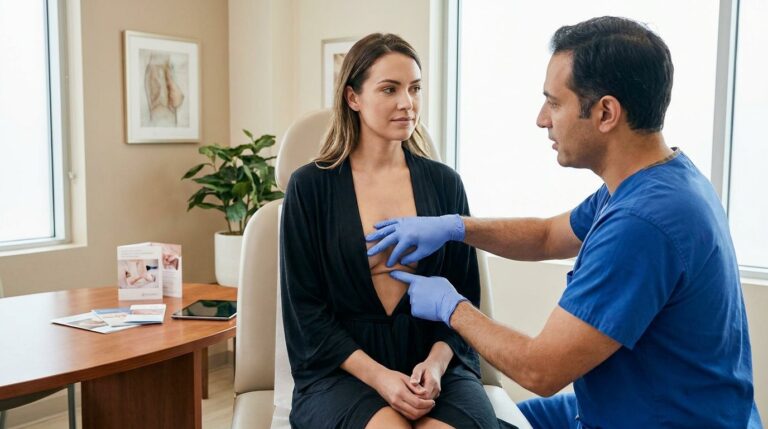
In most cases, yes. Taking the implants out and reshaping the breast in the same session is a standard plan, and for many women it is the obvious choice. One anaesthetic, one set of incisions, one recovery.
The reasoning is simple. An implant stretches the skin envelope and often pushes the nipple into a position that only looks right while the implant is there. Remove it on its own and the breast may look emptier and lower than you expected, because the skin that was holding a volume no longer has anything to fill it. A lift (mastopexy) tightens that envelope and moves the nipple back up on the chest, so the breast you wake up with is a finished shape rather than a deflated one.
Surgeons plan the two parts together: how much capsule to remove, how much skin to take out, where the nipple needs to sit. That planning is easier when both are done at once, because the surgeon can judge the new shape on the table instead of guessing what the skin will do over the following year. If you are still deciding between taking implants out and swapping them, our piece on breast implant removal without replacement walks through that fork in the road.
📋 Why the two are usually planned as one The lift is not an add-on to explant surgery. It is the part that determines what your breast looks like afterwards, which is why most surgeons discuss skin and nipple position at the very first consultation.
When a surgeon may prefer to stage them instead
There are real situations where doing everything at once is the riskier plan. Very large implants that have thinned the overlying tissue, heavy or calcified capsules, significant weight change still in progress, or smoking all make skin healing less predictable. Some surgeons also prefer to wait when the breast has been distorted by long-standing capsular contracture, because the tissue needs months to soften and settle before anyone can judge how much skin to remove.
Staging means removing the implants first, letting the breast retract over roughly three to six months, then lifting what is genuinely there. It costs you a second operation and a second recovery, but it can produce a cleaner lift with less tension on the scars.
Among our patients who want two procedures, roughly one in ten choose to split them across two trips rather than have everything in one stay — a respected minority path, and those who return most often come back for a breast lift, a nose procedure or an implant exchange. For you, that means if your surgeon suggests staging, it is not an unusual or second-rate plan; it is a normal option with different trade-offs, and it is worth asking specifically why they are recommending it for your tissue.
Moderate implant size, skin with some elasticity, stable weight, non-smoker, and sagging that the surgeon can measure and mark reliably before surgery.
Very large or long-standing implants, thin stretched tissue, firm capsules, recent major weight loss, or a planned pregnancy in the near future.
What actually happens during explant with mastopexy
The operation has three tasks. The implant comes out, the capsule around it is dealt with, and the breast is reshaped. How much capsule is removed depends on the reason for the removal: a thin, healthy capsule may be left largely alone, while a thick, contracted or calcified one is usually removed more fully. If rupture or a specific medical concern is part of the picture, the approach changes again, which we cover in more detail in when implants should be removed or replaced for medical reasons.
The lift itself is chosen by how far the nipple has to travel. A small correction may be handled with a scar around the areola only. A larger one usually needs a vertical scar down from the areola, and the most extensive cases add a scar along the breast fold. Surgeons often reuse the old incision where it helps, so you do not always end up with more scars than you started with.
Not every case needs a full lift. A 2021 report in Plastic and Reconstructive Surgery – Global Open described the ECLiPSE technique, a crescent-shaped skin excision around the areola offered as an alternative to formal mastopexy for women with mild to moderate sagging and loss of central volume after implant removal and capsule surgery — in that series, capsular contracture was the most common reason women wanted their implants out. It is a reminder that “lift” covers a spectrum, not one fixed operation.
If the lifted breast still looks emptier at the top than you would like, some surgeons discuss adding your own fat at the same time or later. That trade-off is set out in our article on a breast lift with fat transfer as an alternative to implants.
Risks that come specifically from combining the two
Doing both at once is generally safe in appropriate candidates, but it is a longer operation on tissue that has just had an implant removed, and the named complications are worth knowing by name rather than in the abstract.
The nipple and areola depend on a blood supply that runs through the tissue the surgeon is reshaping. When a lot of skin is removed and the nipple is moved a long way, that supply can be compromised — partial loss of nipple skin, and rarely full nipple necrosis, is the complication surgeons plan hardest to avoid. Changed or reduced nipple sensation is more common and often improves over months, though it can be permanent.
Wound healing is the other pressure point. Where the vertical scar meets the breast fold, the skin edges are under the most tension, and delayed healing or a small wound separation at that junction is not rare; it usually settles with dressings but can leave a wider scar. Seroma (fluid collecting in the space the implant occupied), bruising, infection and asymmetry are the other realistic possibilities.
Revision is part of an honest conversation too. Skin behaves differently from person to person, and some women need a touch-up later for residual sagging, scar revision or asymmetry. No surgeon can promise a one-operation result, and any clinic that does is overpromising.
General safety information on cosmetic breast procedures, including what to ask about risk and aftercare, is available through the NHS cosmetic procedures pages.
🚨 Call your surgeon, not the internet Spreading redness, a fever, one breast becoming suddenly larger or firmer, wound edges opening, or a nipple that turns dusky, dark or cold needs same-day contact with your surgical team.
⚠️ Smoking is not a minor detail here Nicotine narrows the small vessels that keep skin and nipple tissue alive under tension. Most surgeons ask for several weeks smoke-free and vape-free before and after this combination, and some will decline to operate otherwise.
Recovery week by week after explant with a lift
Recovery is paced by the lift, not the removal. Taking implants out alone is a comparatively gentle recovery; adding a mastopexy means incisions under tension and a longer period of restricted movement.
Most people are up and walking the same day and describe soreness and tightness rather than sharp pain. A surgical bra is worn day and night for several weeks, and lifting, reaching overhead and anything that stretches the chest is limited early on. Scars go through a red, firm phase before they flatten, and the final shape keeps refining for the better part of a year.
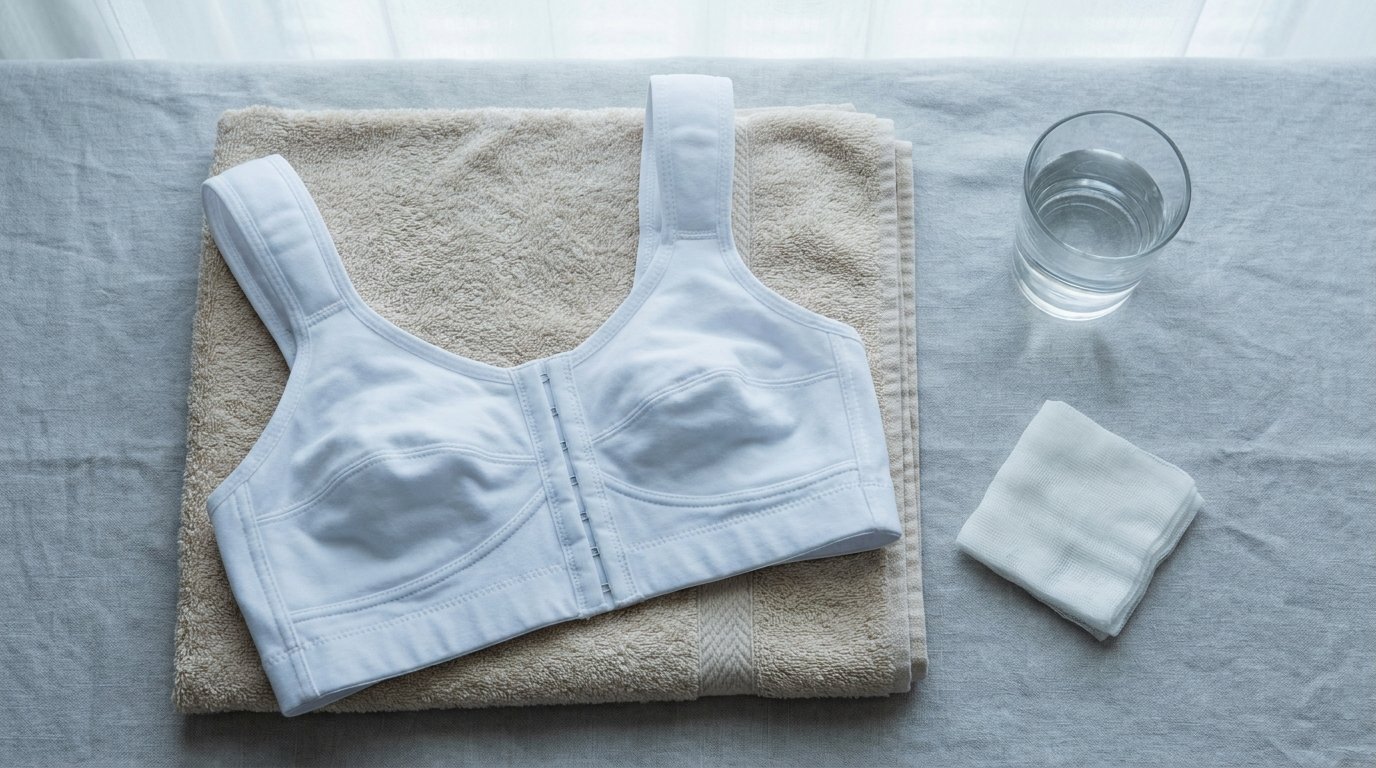
For a closer look at the removal side of the healing curve, see our breast implant removal recovery week by week.
What drives the cost, and what a quote should include
Two procedures in one session are quoted as one surgical plan, not as two prices added together, because you only pay once for the theatre, the anaesthesia team and the hospital stay. That is a genuine saving compared with staging, though staging can still be the right clinical choice.
The main variables are how complex the capsule work is, which lift technique your anatomy needs, how long the operation takes, whether any fat transfer is added, and the hospital and anaesthesia standard. Prices are not comparable between clinics until you know what sits inside them, so ask for the inclusions in writing. A personalised figure only becomes meaningful after a consultation where your photographs, implant history and skin quality have been assessed.
📋 Ask this before you compare numbers Does the quote cover the lift as well as the removal, an overnight stay, and follow-up visits before you fly home? A lower headline figure that excludes the lift is not a cheaper operation.
Planning the trip: how long to stay and how to choose the clinic
For international patients the stay is set by the bigger of the two procedures, so plan around the lift. Most clinics ask for somewhere in the region of seven to ten nights in Turkey, which allows pre-operative tests, surgery, an inpatient night, dressing changes and at least one proper review before flying. Our guide to how long to stay in Turkey for breast surgery breaks down what each of those days is for.
Book a flexible return ticket. Wound healing occasionally needs an extra review, and no one wants to fly with an unresolved dressing problem. On the flight itself, move your legs, walk the cabin when it is safe to do so, and follow whatever clot-prevention advice your surgeon gives you.
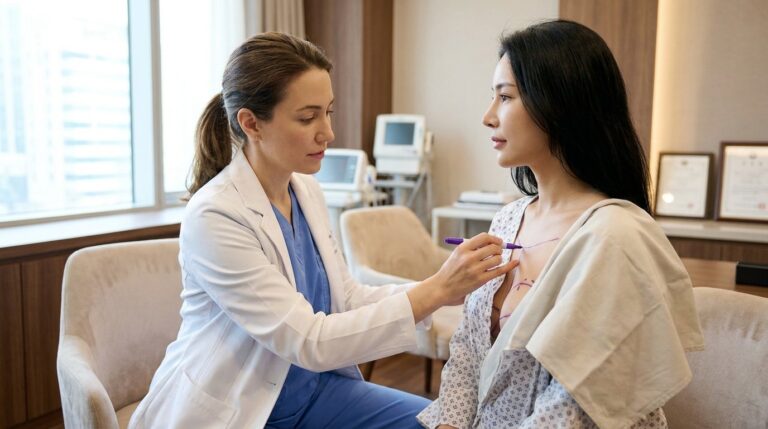
On choosing a surgeon, ask about board certification and hospital accreditation, and ask to see before-and-after photographs of women whose starting point resembles yours — same implant size, similar degree of sagging. Photographs of a different problem tell you little about your result. Ask who performs the surgery, who you speak to if something worries you at 2am in your hotel, and what happens if a revision is needed after you have gone home. Mention any plans for pregnancy or breastfeeding at the first consultation, since a future pregnancy can change breast shape again and may influence the timing your surgeon recommends.
A clear, unhurried consultation that talks openly about scars and the possibility of revision is a better sign than a fast quote and a discount deadline. This article is for informational purposes only and does not constitute medical advice. Always consult a qualified surgeon for personalised guidance.
Board-certified plastic surgeon operating in an accredited hospital, photographs of comparable cases, a written plan naming both the explant and the lift technique, and a named contact for after you fly home.
No surgeon named before booking, guaranteed results, pressure to decide within hours, a quote that hides whether the lift is included, and no discussion of scars or revision.
Combining it with other procedures in the same trip
Women having explant with a lift often ask about adding something else — abdominal surgery, liposuction or a nose procedure — while they are already in theatre. It can be reasonable, and it is common, but the decision belongs to the surgeon and the anaesthetist, who will weigh total operating time, blood loss and how two recovery plans interact.
The practical limits are worth understanding in advance. Chest surgery and abdominal surgery both restrict how you move and sleep, so combining them makes the first fortnight harder rather than simply shorter. Adding a facial or nose procedure is usually easier to tolerate physically but lengthens the anaesthetic. Longer combined operations raise the anaesthetic and clot risks, which is why responsible clinics cap total theatre time rather than agreeing to everything requested.
If you are weighing whether a lift alone will give you the fullness you want, breast lift without implants candidacy is the most useful next read.
Frequently Asked Questions
References
- 📎The ECLiPSE Procedure as an Alternative to Mastopexy following Implant Removal — Plastic and Reconstructive Surgery Global Open, 2021
- 📎NHS — Cosmetic procedures
- 📎ASPS — Cosmetic procedures
Related Articles



You Might Also Like



Related articles

Our specialists
 Clineca SpecialistErkan PinegözPlastic & Reconstructive Surgery
 Clineca SpecialistHakan AktaşPlastic & Reconstructive Surgery
 Clineca SpecialistOrkun UzuneyüpoğluPlastic & Reconstructive Surgery
 Clineca SpecialistSalim İskenderPlastic & Reconstructive Surgery
 Clineca SpecialistEngin SelamioğluPlastic & Reconstructive Surgery
 Clineca SpecialistCem AydınPlastic & Reconstructive Surgery
 Clineca SpecialistAlperen ÖnalEar, Nose & Throat (ENT)