

Have a question about Breast Augmentation?
In this article
- Is there really a ten-year expiry date on breast implants?
- What actually decides how long implants last
- Signs it may be time to replace or remove implants
- A realistic long-term timeline after augmentation
- What revision surgery actually involves
- What affects the cost of implant replacement in Turkey
- Travel, stay length and choosing a clinic you can go back to
One of the first things people want to know before surgery is how long do breast implants last — and the answer they usually hear, "about ten years", is repeated so often that it has taken on the feel of an expiry date. The reality is less tidy and far more useful to understand, because it changes how you plan, budget and follow up for decades after the operation. Implants are manufactured devices placed inside living tissue that keeps changing, so their lifespan is shaped by both.
Is there really a ten-year expiry date on breast implants?
No. There is no built-in date at which implants stop working and must come out. The ten-year figure grew out of two things: older generations of devices had higher rupture rates, and manufacturers’ warranty and follow-up periods were often framed around a decade. Neither is the same as an expiry date.
What is true is that risk accumulates slowly with time. A device that has been in place for fifteen years is statistically more likely to have a problem than one placed last year — a small annual chance, repeated many times over. So the honest way to think about it is that implants are long-lasting but not permanent, and most women who have augmentation in their twenties or thirties should expect at least one further operation at some point in their life.
Plenty of patients keep the same implants for well over a decade with no complaints and no reason to intervene. Others need surgery much earlier, for reasons that often have nothing to do with the device failing — a change of mind about size, breast tissue that has drooped after pregnancy, or a capsule that has tightened. Replacement is usually triggered by an event or a preference, not by the calendar.
📋 Routine replacement is not a rule If your implants feel comfortable, look the way you want and imaging shows nothing worrying, there is no medical reason to swap them out simply because ten years have passed. Decisions are made on symptoms, imaging and your own goals.
What actually decides how long implants last
Lifespan is less about brand marketing and more about how well the implant suits your body and how it was placed. Several factors do most of the work.
The device itself matters. Modern cohesive silicone gel implants have thicker, multi-layer shells than the products used decades ago, and long-term follow-up studies now track them over years rather than months. A 2019 prospective study in the Aesthetic Surgery Journal followed women who had primary augmentation with a modern smooth-surface silicone implant over six years, as part of a planned ten-year assessment of safety and effectiveness — the kind of sustained follow-up that simply did not exist for earlier generations of devices. If you are still weighing gel against saline, our guide on choosing between saline and silicone implants goes through the practical differences in how each one behaves over time.
Fit matters just as much as fill. An implant that is too wide or too heavy for the breast footprint and skin quality puts constant load on tissue that was never built to carry it, which over years can stretch skin, thin tissue and pull the result downwards. A 2012 review in Plastic and Reconstructive Surgery set out the principles of tissue-based planning — selecting implant dimensions from measurements of the patient’s own breast rather than from a desired cup size — precisely because outcomes hold up better when the device respects the tissue. This is one reason a conservative size often ages more gracefully than a dramatic one.
Then there is your body’s own timeline. Pregnancy, breastfeeding, significant weight changes and normal ageing all alter the breast around a device that stays the same shape. The implant may be perfectly intact while the result no longer looks the way it did, and that mismatch is a common reason women return to theatre. Pregnancy or breastfeeding plans come up in roughly a quarter of the conversations we have with women weighing breast surgery, so it is worth raising openly at your first consultation — not because it rules anything out, but because it can change implant choice, timing and whether a lift is likely to be needed later.
Things that shorten the interval
- ✓Capsular contracture, where scar tissue around the implant tightens and firms the breast
- ✓Rupture or gel leak, more likely the older the device
- ✓Large or heavy implants combined with thin skin and weak tissue support
- ✓Significant weight loss or gain, and post-pregnancy changes in breast volume and skin
- ✓Wanting a different size or shape years later, which is a preference rather than a complication
Our patients are on average 27 at the time of their augmentation, and only a small minority are over 40 — which means the device usually has to look right across pregnancies, weight shifts and decades of tissue change. That is exactly why the size and placement decision made in the consultation room matters more for longevity than any brand promise.
Signs it may be time to replace or remove implants
Most problems announce themselves through change rather than pain. A breast that gradually firms up, rides higher, distorts in shape or starts to feel round and hard is the classic pattern of a tightening capsule — our article on the signs of capsular contracture covers how that progresses and what the grades mean.
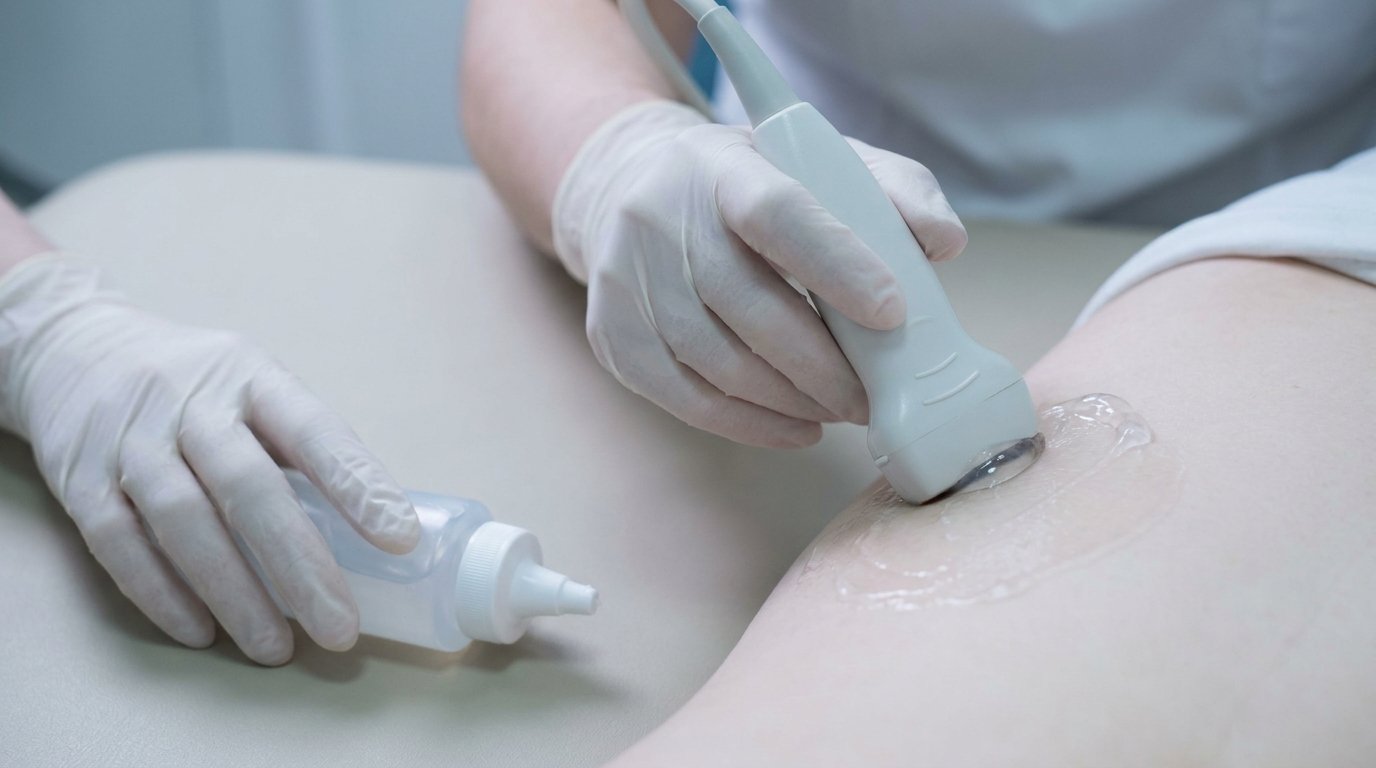
A silicone rupture is often silent, because cohesive gel tends to stay contained within the capsule. Saline behaves differently: if the shell fails, the salt water is absorbed and the breast visibly deflates over days. That is why imaging, usually ultrasound and sometimes MRI, is the way silicone devices are checked rather than relying on how the breast feels.
One more honest point: not every reason to operate again is a medical one. Wanting a smaller size, correcting asymmetry that has developed, or adding a lift because the skin has relaxed are all legitimate reasons. If you are trying to work out which category you fall into, how to tell replacement from removal walks through the decision.
🚨 Seek urgent medical advice Sudden swelling, spreading redness, fever, severe pain or a rapid change in one breast needs same-day assessment by a doctor, wherever you are. Do not wait for a scheduled follow-up.
Progressive firmness, a breast that looks rounder or sits higher than before, visible rippling, new asymmetry, a change in shape or position, or persistent aching.
Breasts that feel the same as they have for years, no shape change, and a normal ultrasound at your follow-up. Ageing implants alone are not a reason to operate.
If the complaint is sagging rather than volume, adding size rarely solves it. A lift with the existing implant, or removal with a lift, is often the better answer.
A realistic long-term timeline after augmentation
It helps to see the years laid out. The stages below describe what usually happens rather than what must happen, and your surgeon may suggest a different follow-up rhythm based on the implant type and your own history. For the early months, our week-by-week guide to healing after breast augmentation covers the detail.
What revision surgery actually involves
Swapping implants is usually a shorter and less uncomfortable operation than the original augmentation, because the pocket already exists. The surgeon works through the previous scar where possible, removes the old device, deals with the capsule if it is thickened, and places the new implant. Recovery is often quicker than the first time, though this varies with what else is done in the same session.
Where it gets bigger is when the capsule has to be removed completely, or when the skin has relaxed enough that a lift is needed to get a good shape. Combining replacement with a lift adds incisions, adds time in theatre and lengthens recovery — but it is frequently the only way to produce a result that looks natural rather than simply full. Breast implant revision in Turkey explains how these different scenarios are planned.
Some women decide against another implant altogether and choose removal, with or without a lift. That is a valid path and the outcome depends heavily on how much natural tissue remains and how elastic the skin still is. Nobody should be pushed into a replacement they do not want.

⚠️ Keep your paperwork Ask for your implant card or device details after surgery and store them with your passport documents. Manufacturer, size, batch and date make any future assessment abroad far easier, and many manufacturers link their warranty terms to that record.
What affects the cost of implant replacement in Turkey
Cost is the question patients raise most often, and for revision it is genuinely harder to quote than for a first augmentation, because the work needed varies so much. Two women the same age with implants of the same age can need very different operations. A personalised figure is confirmed only after a consultation with imaging and an examination, and any clinic giving you a firm number before seeing your case is guessing.
What a quote typically covers is the surgeon’s fee, anaesthesia, the hospital or clinic stay, the implants themselves, standard medication, your post-operative garment, follow-up checks during your stay, and airport and hospital transfers. Flights and hotel nights beyond the included package are usually separate — our breakdown of what an all-inclusive package includes is worth reading before you compare offers. What matters more than the headline figure is whether the inclusions are the same.
Travel, stay length and choosing a clinic you can go back to
For implant replacement, most patients plan roughly a week in Turkey: pre-operative assessment and imaging, surgery, a rest period, then a wound and drain check before the surgeon clears you to fly. If a lift is added, or both breasts need reshaping, allow a little longer rather than booking a tight return. Our guide on how long to stay in Turkey for breast surgery sets out the day-by-day version.
Because implants may need attention years after you fly home, continuity matters more here than in almost any other cosmetic procedure. Ask who you contact at month six, at year two and at year ten. Ask whether the clinic keeps your device records and whether they will send them to a doctor in your own country if you need an opinion locally. A clinic that answers those questions clearly is telling you something useful about how they work.
On safety, check that the surgery happens in a licensed hospital or surgical facility, that your surgeon is a qualified plastic surgeon with verifiable board credentials, and that the implants are CE-marked or FDA-approved devices with documentation you can keep. European board certification through EBOPRAS and membership of international bodies such as ISAPS are reasonable credentials to ask about. If a price seems to work only because something has been left out, find out what.
A final practical note: combining procedures is common and can make sense on one trip, and a lift alongside replacement is the most frequent pairing we see with breast implant work. It should be a clinical decision about safe operating time, not a package deal — ask your surgeon to justify any combination in terms of anaesthesia length and your own recovery capacity.
This article is for informational purposes only and does not constitute medical advice. Always consult a qualified surgeon for personalised guidance.
A named, board-certified plastic surgeon; a video or in-person consultation before any quote; imaging requested before revision; written inclusions; implant documentation given to you; a clear long-term follow-up route.
A firm price for revision without assessment, pressure to decide within hours, no implant brand or batch details, no surgeon named until arrival, or guarantees that implants will last a lifetime.
Frequently Asked Questions
References
- 📎Six-Year Prospective Outcomes of Primary Breast Augmentation With Nano Surface Implants — Aesthetic Surgery Journal, 2019
- 📎Breast augmentation — Plastic and Reconstructive Surgery, 2012
- 📎ASPS: Cosmetic Procedures
Related Articles



You Might Also Like



Related articles


Our specialists
 Clineca SpecialistErkan PinegözPlastic & Reconstructive Surgery
 Clineca SpecialistHakan AktaşPlastic & Reconstructive Surgery
 Clineca SpecialistOrkun UzuneyüpoğluPlastic & Reconstructive Surgery
 Clineca SpecialistSalim İskenderPlastic & Reconstructive Surgery
 Clineca SpecialistEngin SelamioğluPlastic & Reconstructive Surgery
 Clineca SpecialistCem AydınPlastic & Reconstructive Surgery
 Clineca SpecialistAlperen ÖnalEar, Nose & Throat (ENT)