

Have a question about Breast Augmentation?
In this article
- What "drop and fluff" actually means after breast augmentation
- Drop and fluff timeline: what to expect week by week
- Why some implants settle faster than others
- Normal settling or a problem? How to tell the difference
- Can you speed up drop and fluff?
- Settling while you are abroad: stay length, flights and follow-up
- When is the result actually final?
Almost every woman who looks in the mirror two weeks after breast augmentation thinks the same thing: these sit too high, they feel hard, and the shape is nothing like the photos. That early look is where the phrase drop and fluff comes from, and it describes a real, predictable change in how implants sit and feel over the months after surgery. Understanding what is actually moving — and what is not — makes those first strange weeks much easier to live with.
What "drop and fluff" actually means after breast augmentation
The phrase describes two separate changes that happen at different speeds. “Drop” is the implant settling downwards into the lower part of the breast, so that its centre lines up behind the nipple instead of sitting above it. “Fluff” is the softening and filling out of the lower breast, which rounds off the shape and gives natural movement and a visible lower curve.
The reason implants start high is mechanical, not a mistake. Your surgeon creates a pocket in tissue that has never held an implant before, and that tissue resists. Skin and breast tissue are tight, the chest muscle is in spasm if the implant sits under it, and swelling pushes everything upwards and outwards. The implant is being held in place by tissue that has not yet relaxed.
As the muscle calms down, swelling drains and the lower tissues stretch to their new volume, gravity does the rest. Nothing is falling or failing. The implant stays in the same pocket — the pocket itself simply relaxes around it.
This early top-heavy look is also why upper fullness is such a poor guide to the final shape. Upper pole hollowing and upper pole fullness are recognised shape issues in their own right, and a 2003 paper in Aesthetic Plastic Surgery pointed out that standard breast droop classifications do not even account for them, which is part of why surgeons plan upper fullness deliberately rather than leaving it to chance. Early on, you are looking at swelling and tightness in that area, not at the result your surgeon planned.
📋 Different words, same process You may hear this called implant settling, implant drop, or "fluffing out". They all describe the same gradual relaxation of the pocket and lower breast tissue — there is no separate procedure or treatment involved.
Drop and fluff timeline: what to expect week by week
Most of the visible change happens in the first three months, with slower refinement for several months after that. The table below is a realistic average rather than a promise — placement, implant choice and your own tissue all shift these windows, sometimes by weeks.
In the first week, the breasts usually look round, high and wide-set, and the skin feels tight across the top. Many women describe a band of pressure under the collarbone and a sensation like sore, overworked chest muscles after a heavy gym session. Swelling peaks around days three to five.
By the end of the first month the tightness has usually eased enough that you can tell the implants are starting to sit lower. The lower breast begins to fill. Between months two and three, the shape generally becomes recognisably yours: the upper slope softens, the nipple position looks more central, and the breasts move more naturally when you lean forward.
After three months the changes are subtle, and you may only notice them when comparing photographs. The final softening of the lower pole, the last of the swelling and the fading of scars continue through six to twelve months. If you want the wider recovery picture alongside this, our week-by-week breast augmentation healing guide covers pain, activity and sleep in more detail.
📋 One side often leads It is very common for one breast to drop weeks before the other. Breasts are rarely identical to begin with, and the two pockets rarely relax at the same pace. Asymmetry during the process says little about the final match.
Why some implants settle faster than others
The single biggest factor is where the implant sits. When it is placed partly under the chest muscle, the muscle has to stretch and release before the implant can move down, and that adds weeks. Implants placed above the muscle, behind the breast tissue only, often look settled noticeably sooner because there is less tissue resistance to overcome.
Beyond placement, these are the factors that genuinely change the pace:
- ✓Implant size and profile. Larger and higher-projection implants stretch tissue more and generally take longer to settle, though their weight can eventually help them drop.
- ✓Skin and tissue quality. Tighter, thicker, more elastic tissue — common in younger women and in those who have never been pregnant — resists longer. Looser tissue after pregnancy or weight loss relaxes faster.
- ✓Breast width and chest shape. A narrow breast base or a tight fold under the breast holds an implant high for longer.
- ✓How much the fold was lowered. If your surgeon released the fold under the breast to fit the implant, that area needs time to heal before the implant settles into it.
- ✓Whether a lift was done at the same time. A simultaneous breast lift tightens the skin envelope on purpose, so there is deliberately less give.
That last point matters more than most people expect. Roughly a third of the women who come to us for breast augmentation have it done alongside something else, most often a breast lift or a rhinoplasty, so the settling pattern many patients actually experience is the combined one rather than implants alone. If a lift is part of your plan, ask your surgeon to describe the expected timeline for the combined operation, because a tightened envelope changes how much visible movement you should look for and when.
Implant shape plays a smaller role than the internet suggests, but it does change the early look — our comparison of round and teardrop implants explains how each behaves. Size choice matters too, and it is worth thinking about before surgery rather than during recovery; see choosing an implant size for your body.
Normal settling or a problem? How to tell the difference
Normal drop and fluff is gradual, symmetrical in direction even if not in speed, and comes with steadily decreasing firmness. The breasts get softer week by week, not harder. Odd sensations — tingling, zapping, itching, brief sharp pains as nerves recover — are expected and tend to fade.
What is not part of normal settling is a breast that was softening and then starts to tighten again, becomes distorted or rides visibly higher than it did a month earlier. That pattern can point towards scar tissue contracting around the implant, and it is worth having looked at rather than waiting it out. Our guide to the signs of capsular contracture sets out what to watch for.
Also worth remembering: silicone implants sit inside a capsule of your own scar tissue, and imaging can characterise changes in that capsule when symptoms suggest a problem. A 2017 paper in Insights into Imaging described MRI findings used to identify silicone-related reaction within an implant capsule, which is one reason surgeons use imaging rather than guesswork when a breast changes long after it had settled.
🚨 Contact your surgeon the same day if One breast suddenly swells, becomes hot, red or far more painful than the other; you develop a fever; a wound opens or leaks; or you have chest pain, breathlessness or a swollen, painful calf. These are urgent signs and have nothing to do with normal settling.
⚠️ Do not self-diagnose from forum photos Comparing your three-week chest with someone else’s six-month result is the fastest way to panic yourself. Send your own dated photos to your surgical team and let them compare you with you.
Breasts getting softer over time, the lower curve filling in, less upper tightness each week, scars flattening, one side simply lagging behind the other.
A breast firming up again after weeks of softening, a visible change in implant position, a hard round shape returning, new distortion when you raise your arms, or persistent one-sided pain.
Can you speed up drop and fluff?
Honestly, not by much — and most of what you can do is about not slowing it down. Tissue relaxes at its own rate, and the genuinely useful measures are unglamorous.
Follow your surgeon’s instructions on bras, because they are not all the same. Some teams use a soft surgical bra plus an upper band to discourage the implant from riding high; others want no band at all. Wearing a band because a stranger online recommended one can push an implant into the wrong position, so this is a question for your own surgeon, not the internet.
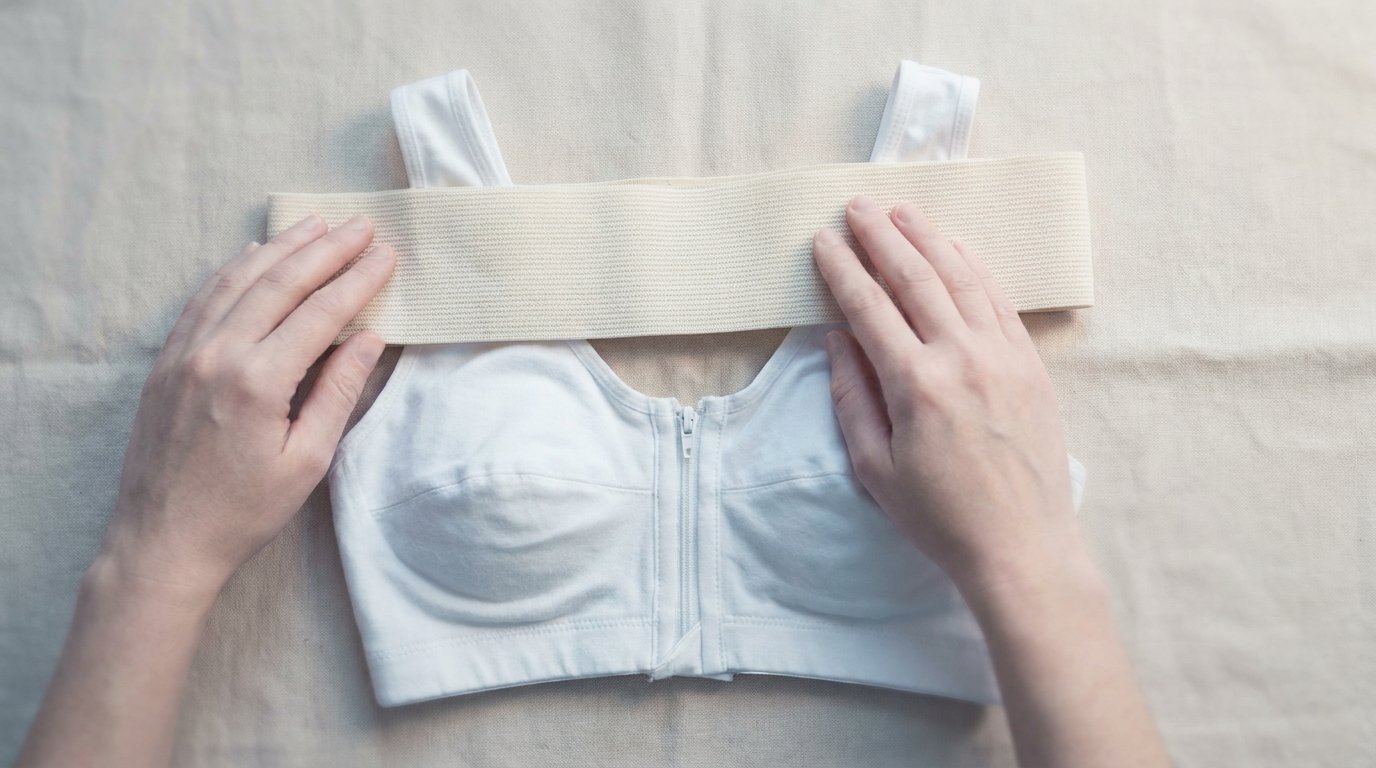
Sleeping position matters in the early weeks too, mostly for comfort and swelling. We cover the practical side of that in our piece on sleeping on your side after breast augmentation.
Things that genuinely help the process along:
- ✓Wearing exactly the bra or band your surgeon prescribed, for as long as they ask
- ✓Avoiding underwired and push-up bras until you are cleared, since they press on healing tissue and the fold
- ✓Keeping chest exercises — press-ups, chest press, heavy pulling — out of your routine until your surgeon says otherwise, because an irritated muscle stays tight
- ✓Taking monthly photos in the same light and position, so you can see change that the daily mirror hides
- ✓Staying patient with massage: do it only if, and exactly how, your surgeon instructs
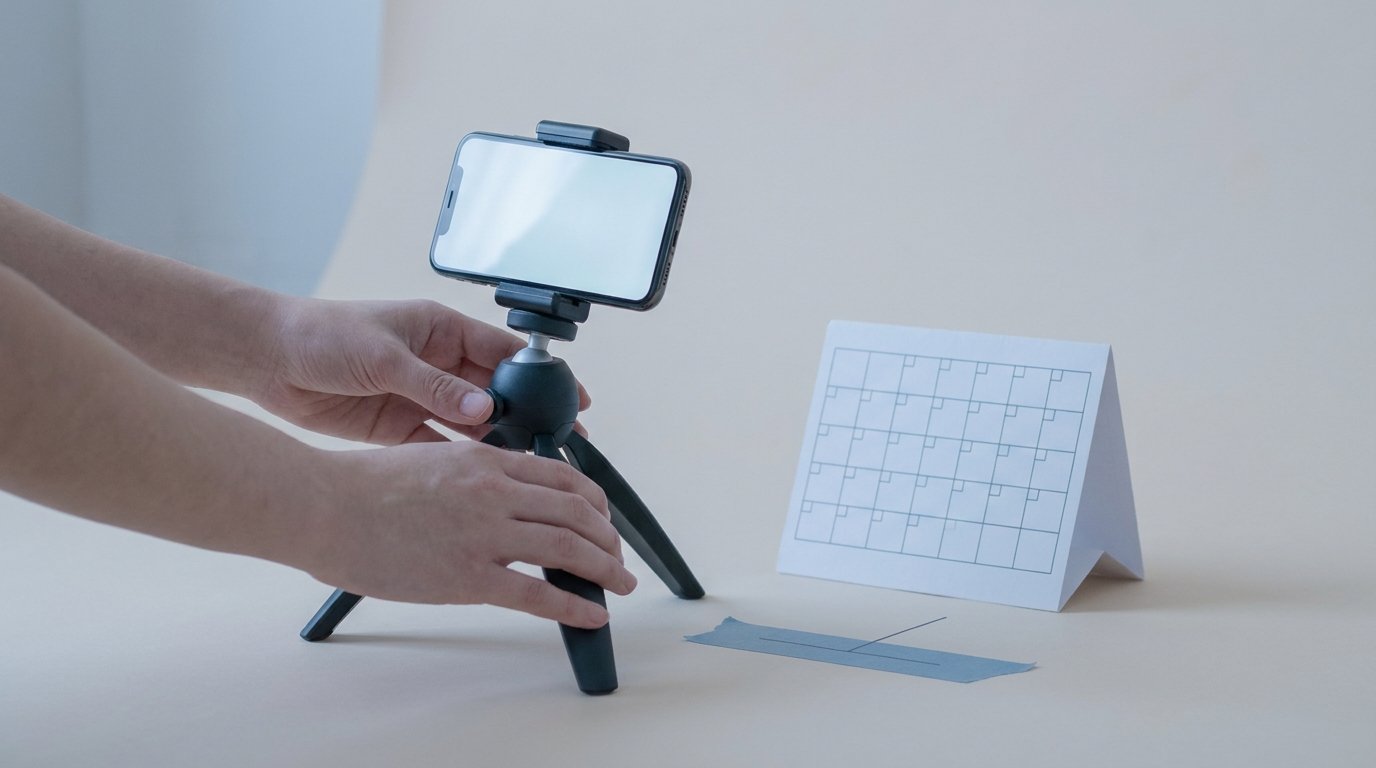
Smoking slows every stage of soft-tissue healing, and nicotine in any form is worth stopping well before surgery. Beyond that, there is no supplement, cream, device or massage technique with convincing evidence that it makes an implant drop faster.
- →Do not band without instruction: Upper breast bands are a surgical tool, not a shortcut. Used wrongly they can displace an implant.
- →Do not judge at four weeks: The one-month look is swollen, tight and high in almost everyone.
- →Do not chase symmetry early: Sides settle at different speeds; matching is assessed months later.
Settling while you are abroad: stay length, flights and follow-up
If you are travelling for surgery, the settling process will almost entirely happen at home, long after you fly back. That is normal and expected — what matters is that the early, higher-risk days happen where your surgical team can see you, and that you have a clear route back to them afterwards.
Most breast augmentation patients are asked to stay in Turkey for several days after surgery for wound checks and a final review before flying, and the stay is set by the biggest procedure in the plan rather than the implants alone. If you are combining surgeries, expect a longer stay. Our guide on how long to stay in Turkey for breast surgery explains the usual pattern and what the days involve.
Flying itself does not stop implants settling, though long-haul travel soon after surgery brings its own precautions: move around the cabin, keep hydrated, and follow whatever clot-prevention advice your surgeon gives. Mild swelling after a flight is common and settles within a few days.
For the months of settling that follow, agree the follow-up plan before you leave. A good arrangement includes named contact details for the surgical team, scheduled photo reviews at intervals such as one, three and six months, written guidance on bras and activity, and a clear statement of what happens if something concerns you.
What this means for your quote
Costs are quoted per person after consultation, and the drivers are fairly predictable: the implant brand and type chosen, whether the operation is combined with a lift or another procedure, the surgeon’s experience, the hospital or clinic facility, anaesthesia, the length of your hospital stay, and what the package covers in terms of hotel, transfers, garments and follow-up. Ask specifically whether revision surgery, implant warranty and remote follow-up are included, because those are where quotes differ most. Our breakdown of what affects breast augmentation cost goes through the inclusions line by line.
A surgeon qualified in plastic surgery who you speak to directly before booking, an accredited hospital, written implant details and warranty documents, honest discussion of the high early look, and a documented follow-up plan for the months after you fly home.
No named surgeon until arrival, pressure to decide on a size by message, promises of a specific final look, no mention of settling in the aftercare information, and no clear answer about who pays if revision is needed.
When is the result actually final?
Most surgeons assess the settled outcome somewhere between six and twelve months, and that is also the point at which any revision conversation becomes reasonable. Operating earlier means operating on tissue that is still swollen, still tight and still moving — which is why experienced surgeons resist it unless there is a clear medical reason.
There is one honest limit worth naming: drop and fluff improves position and softness, but it cannot create tissue that was not there. If the breast skin was already loose before surgery, the implant will settle into a loose envelope, and the answer at that point is usually a lift rather than more time. This is exactly the conversation to have before surgery, not after, and our comparison of what a lift and implants each fix is a useful starting point.
Settling is also not the end of the story for the shape over a lifetime. Weight change, ageing and pregnancy all alter the tissue around an implant. Pregnancy or breastfeeding plans come up in around one in four of the conversations we have with women weighing up breast surgery, which should tell you how normal the question is — raise it at your first consultation, because a possible future pregnancy can influence implant choice, placement and timing.
Keep your dated photos, keep your implant documentation somewhere safe, and judge the result against your own early pictures rather than against anyone else’s. Most women who hated the look at three weeks feel entirely differently at three months.
This article is for informational purposes only and does not constitute medical advice. Always consult a qualified surgeon for personalised guidance.
Frequently Asked Questions
References
- 📎"Tear-drop augmentation mastopexy": a technique to augment superior pole hollow — Aesthetic Plastic Surgery, 2003
- 📎Breast magnetic resonance imaging: tips for the diagnosis of silicone-induced granuloma of a breast implant capsule — Insights into Imaging, 2017
- 📎ASPS: Cosmetic Procedures
- 📎NHS: Cosmetic Procedures
Related Articles


You Might Also Like


Related articles

Our specialists
 Clineca SpecialistErkan PinegözPlastic & Reconstructive Surgery
 Clineca SpecialistHakan AktaşPlastic & Reconstructive Surgery
 Clineca SpecialistOrkun UzuneyüpoğluPlastic & Reconstructive Surgery
 Clineca SpecialistSalim İskenderPlastic & Reconstructive Surgery
 Clineca SpecialistEngin SelamioğluPlastic & Reconstructive Surgery
 Clineca SpecialistCem AydınPlastic & Reconstructive Surgery
 Clineca SpecialistAlperen ÖnalEar, Nose & Throat (ENT)