
Have a question about Rhinoplasty?
In this article
- A quick planning summary before you book
- How long should you stay for rhinoplasty in Turkey?
- What accommodation works best after nose surgery?
- What transfers should be included and why do they matter?
- What should be included in the quote for travel support?
- Can you travel alone, or should someone come with you?
- How do you judge whether the travel arrangements are safe and well organised?
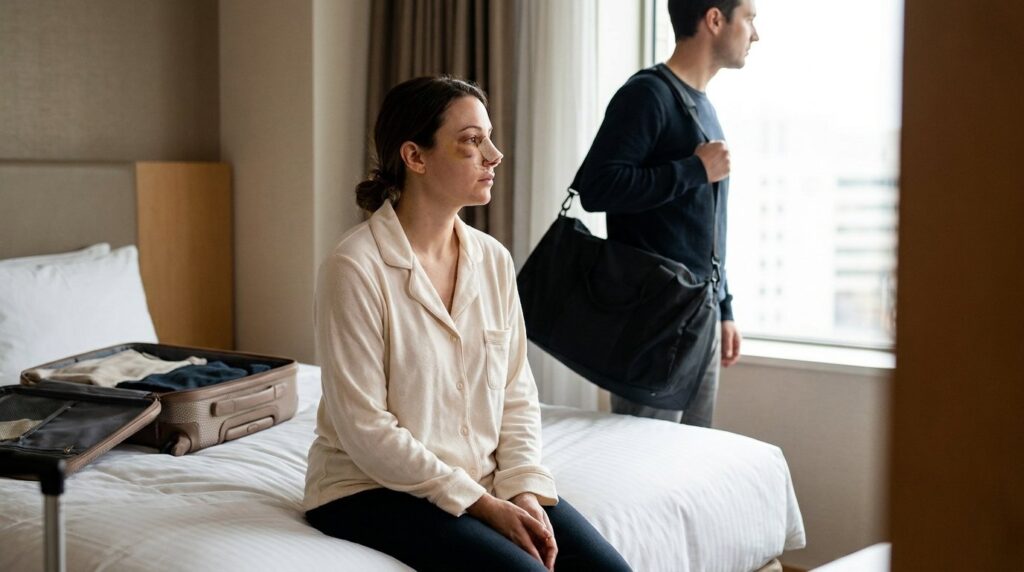
For many international patients, accommodation and transfer arrangements for rhinoplasty patients feel almost as important as the surgery itself. A smooth trip can make the first week after nose surgery much easier, while poor planning can add stress at the exact point you need rest and follow-up care.
A quick planning summary before you book
Most rhinoplasty patients travelling abroad are advised to plan for a stay that covers the pre-operative assessment, the operation itself, early recovery, and the first surgeon review. In practical terms, that often means arriving before surgery and remaining in the country until the splint check or early follow-up is completed, rather than trying to leave after only a few days.
Accommodation usually means a hotel or serviced apartment close to the clinic or hospital, with enough privacy and easy transport rather than luxury for its own sake. Transfer arrangements often include airport pick-up, journeys between hotel and clinic, and return transport for key appointments. The exact schedule varies by surgeon, by whether your rhinoplasty is primary or revision surgery, and by how your swelling, breathing, and general recovery are progressing.
Fitness to fly is not something to assume from a standard itinerary. It should be confirmed by the treating surgeon after surgery, because the right timing depends on your own recovery, the extent of the operation, and whether there were any added procedures such as septoplasty.
⚠️ Do not book your return flight too tightly A fixed early return can create pressure if your surgeon wants one more review or if swelling, bleeding, or congestion make travel unwise.
How long should you stay for rhinoplasty in Turkey?
This is one of the most useful questions to settle early, because it shapes your flights, hotel booking, time off work, and who should travel with you. For rhinoplasty, patients are commonly advised to stay long enough for the pre-op consultation, surgery day, the immediate recovery period, and the first post-op checks. In many cases, that means around a week or a little longer, but the safe plan is always the one set by your own surgeon.
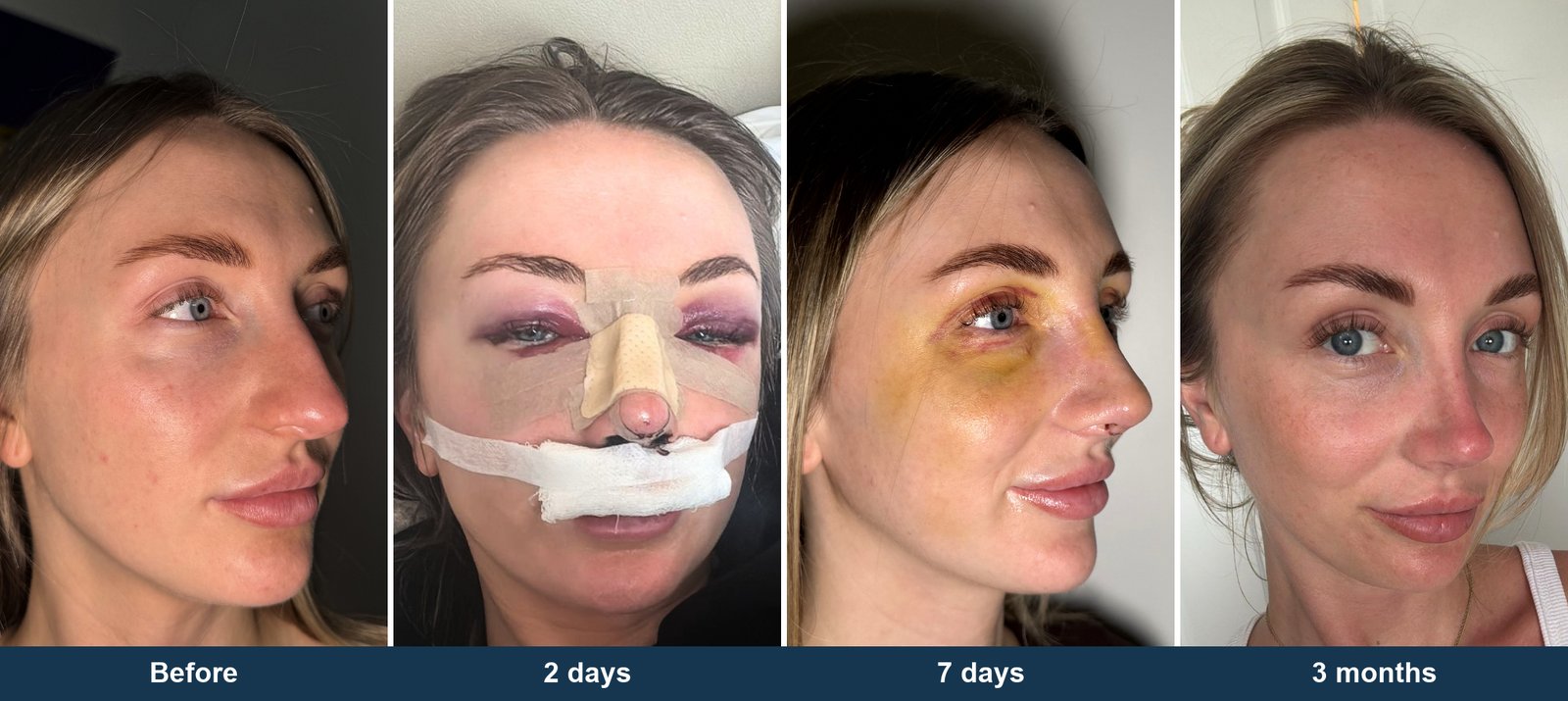
Why that timing matters is simple. The first few days are when swelling, congestion, tiredness, and mild oozing are most likely. The external splint is often still on the nose during this period, and many surgeons prefer to assess you before approving travel. If your procedure is more complex, especially revision rhinoplasty or rhinoplasty combined with breathing work inside the nose, the recommended stay can be longer.
If you want a broader view of recovery timing around the operation itself, our article on rhinoplasty in Turkey, including safety and recovery gives useful context, and when breathing feels more normal after rhinoplasty helps explain why the first week can feel more blocked than patients expect.
The NHS advises that recovery after cosmetic nasal surgery includes swelling, bruising, and the need for follow-up care, which is one reason a short in-and-out trip is not ideal. Mayo Clinic also notes that rhinoplasty changes continue to settle over time, even though the earliest travel decisions are about those first post-op days rather than final shape.
📋 Surgeon approval matters more than a standard package Even if a clinic offers a routine stay plan, the treating surgeon should be the person who confirms whether your timeline is suitable.
What accommodation works best after nose surgery?
The best accommodation for rhinoplasty recovery is usually simple, quiet, clean, and close. You do not need a luxury hotel to recover well, but you do need a place where you can sleep with your head elevated, move around safely, keep cold packs or prescribed medicines nearby, and reach the clinic without a complicated journey.

A room with a lift, reliable air conditioning or heating, and easy bathroom access tends to matter more than stylish design. After surgery, you may feel tired, breathe mostly through your mouth for a while, and want to avoid crowded public spaces. A hotel with a 24-hour reception can also be reassuring, especially if you are travelling alone and need help arranging water, food, or transport late in the day.
If you are choosing between a hotel and a serviced apartment, think about how independent you want to be. A serviced apartment can be more comfortable for a longer stay, but a hotel often works better in the first few days because there is less to manage. If meals are not included, make sure food delivery is easy and that the clinic team can be reached quickly.
Our article on what an all-inclusive surgery package usually includes can help you understand whether accommodation is simply bundled in, or whether it has actually been chosen with recovery in mind.
Close to the clinic, quiet at night, easy lift access, simple check-in, and staff who understand post-op needs.
Long transfers, lots of stairs, noisy nightlife areas, or hosts who are hard to contact if something changes.
What transfers should be included and why do they matter?
Transfers are not just a convenience after rhinoplasty. They are part of making the trip manageable when you may be swollen, tired, congested, and not keen to navigate taxis or public transport. For most patients, the most helpful setup is private airport transfer, transfer to the pre-op appointment, transport on surgery day, and return trips for dressing changes or splint removal if needed.
The key point is reliability. A delayed driver is frustrating at any time, but especially before surgery or when you are leaving hospital. Ask who is arranging the car, whether it is private or shared, how the driver will contact you, and what happens if your flight is delayed. Fast, clear communication is often the difference between a trip that feels organised and one that feels chaotic.
If your quote mentions transfers, ask for the exact scope in writing. Some arrangements cover only airport pick-up and drop-off. Others also include clinic visits. That difference matters because short urban journeys can feel much harder than expected in the first few days after surgery.
- ✓Airport pick-up and drop-off
- ✓Hotel to clinic transport for the pre-op visit
- ✓Transfer on surgery day
- ✓Transport for planned follow-up appointments
- ✓A clear contact number for delays or last-minute changes
What should be included in the quote for travel support?
Because cost should be discussed case by case, the useful question is not the final figure but what the quote actually covers. Rhinoplasty travel arrangements vary a lot between providers. Some include only surgery-related items, while others bundle accommodation, transfers, medication, or follow-up visits into one plan.
A clear quote should tell you whether accommodation is included, how many nights are covered, which transfers are included, whether a companion can stay with you, and what happens if your surgeon asks you to remain longer. It should also explain which reviews are routine and whether there is any extra charge for added in-person checks during your stay.
If you are comparing options, focus on value and clarity rather than trying to compare one headline number with another. A lower quote can become less appealing if it leaves you arranging your own airport travel, extending your hotel unexpectedly, or paying separately for essential reviews. For a deeper look at non-travel elements that shape the quotation itself, see what affects a rhinoplasty quote, stay, and recovery planning.
Can you travel alone, or should someone come with you?
Many rhinoplasty patients do travel alone, especially when the clinic has organised airport transfers and a nearby hotel. For a straightforward primary rhinoplasty, that can be workable if you are comfortable travelling, using your phone for updates, and managing a few quiet recovery days independently.
That said, having a companion can make the first day or two much easier. You may feel groggy after anaesthesia, sleep poorly because of mouth breathing, and not want to go out for food or supplies. A friend or family member is not medically necessary in every case, but for anxious travellers, first-time surgery patients, or anyone having combined procedures, the added support can be worth it.
If you are considering combining rhinoplasty with another operation, ask whether the recovery demand changes enough to alter your travel plan. In some cases it does. Our article on combining rhinoplasty with another surgery explains why logistics and aftercare become more important when procedures are stacked together.
It is often manageable for a straightforward case if accommodation, transport, and clinic communication are well organised.
It can reduce stress, especially after anaesthesia or if you are naturally anxious about travelling for surgery.
How do you judge whether the travel arrangements are safe and well organised?
The safest setup is not the one with the most polished sales message. It is the one where roles, timings, and responsibilities are clear. You should know who your surgeon is, where the operation takes place, how follow-up is handled, and who you call if swelling, bleeding, or fever worries you after hours.
Professional standards matter here. For surgeon credentials, look for recognised training and board standards such as those associated with EBOPRAS in Europe. For general cosmetic surgery advice, bodies such as the NHS and ASPS emphasise informed consent, realistic recovery planning, and proper aftercare rather than treating surgery like a holiday purchase.
It is also reasonable to ask practical questions that patients sometimes feel shy about asking. Who meets you at the airport? Are drivers shared with other patients? How quickly does the coordinator reply if your flight changes? Where will you be reviewed before being cleared to fly home? Good organisation is not a luxury extra in medical travel. It is part of safety.
A peer-reviewed rhinoplasty literature base, searchable on PubMed, consistently discusses swelling, airway symptoms, and the importance of follow-up in early recovery. That is why return travel should follow a clinical review, not just a preset package schedule.
🚨 Red flag Be cautious if no one will say exactly where your surgery takes place, who will review you before you fly, or what happens if you need to extend your stay.
Frequently Asked Questions
References
- 📎NHS: Cosmetic procedures
- 📎Mayo Clinic: Tests and procedures
- 📎ASPS: Cosmetic procedures
- 📎PubMed: rhinoplasty recovery air travel follow-up
Related Articles



You Might Also Like


Related articles


Our specialists
 Clineca SpecialistErkan PinegözPlastic & Reconstructive Surgery
 Clineca SpecialistHakan AktaşPlastic & Reconstructive Surgery
 Clineca SpecialistOrkun UzuneyüpoğluPlastic & Reconstructive Surgery
 Clineca SpecialistSalim İskenderPlastic & Reconstructive Surgery
 Clineca SpecialistEngin SelamioğluPlastic & Reconstructive Surgery
 Clineca SpecialistCem AydınPlastic & Reconstructive Surgery
 Clineca SpecialistAlperen ÖnalEar, Nose & Throat (ENT)