Have a question about Breast Reduction & Lift?
In this article
- What is breast reduction and lift surgery, and who is it for?
- How much is a breast reduction and lift in Turkey?
- Why is breast reduction and lift often cheaper in Turkey than in the UK or US?
- What is recovery like after breast reduction and lift?
- What are the scars, risks, and common problems after breast reduction surgery?
- Can you breastfeed after a breast reduction?
- Will insurance cover breast reduction?
- How do you choose a safe clinic and surgeon in Turkey?
- How long should you stay in Turkey for breast reduction and lift surgery?
- Is breast reduction with lift worth it if your main goal is comfort and shape?
Breast reduction and lift Turkey is typically discussed as an indicative option, with most people needing about a week to a week and a half in Turkey and several weeks for early recovery at home. Breast reduction and lift Turkey can be a reasonable option when the surgeon, hospital standards, and aftercare are properly checked, but the right choice depends on your breast size, symptoms, scarring tolerance, travel plans, and whether you may want to breastfeed in the future.
What is breast reduction and lift surgery, and who is it for?
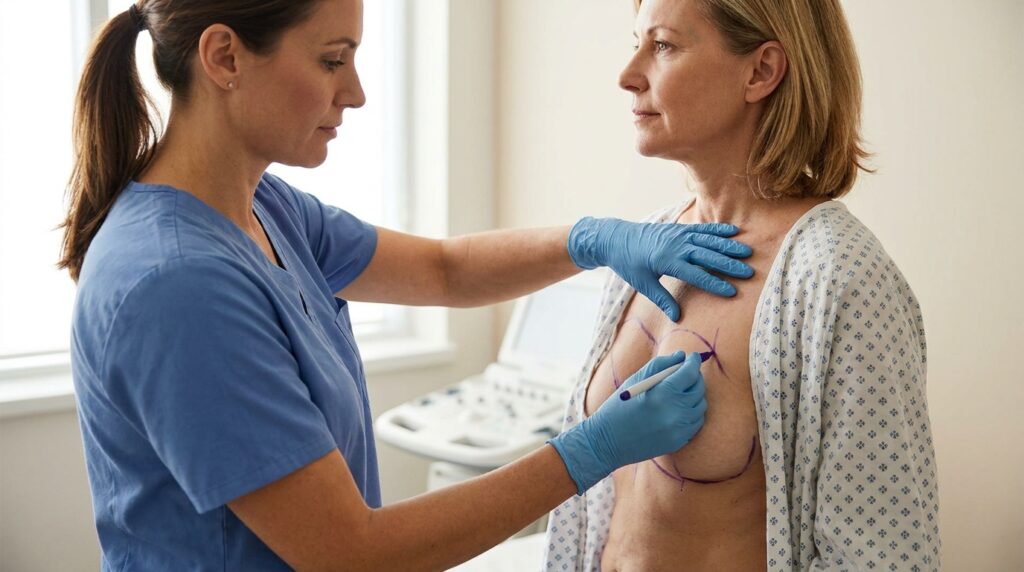
Breast reduction and lift surgery removes excess breast tissue and skin, then reshapes and raises the breasts. It is usually chosen by people with heavy, drooping breasts who want relief from neck, back, shoulder or skin-fold symptoms as well as a lighter, higher shape.
A breast reduction and lift combines two goals in one operation. First, the surgeon reduces breast volume by removing tissue, fat and skin. Then the breast is reshaped and the nipple is moved higher to suit the new breast position.
You may see this called reduction mammoplasty or mammaplasty. In plain terms, it is breast reduction surgery with a lifting element built in. In practice, most true reductions include some degree of lift because once weight is removed, the skin envelope also has to be reshaped.
People usually look into this operation for a mix of physical and cosmetic reasons, such as:
- ✓Neck, upper-back or shoulder discomfort
- ✓Deep bra strap grooves
- ✓Rashes under the breasts
- ✓Difficulty with exercise
- ✓Trouble finding clothes that fit well
- ✓Breasts that feel too low or too heavy after pregnancy or weight change
According to the NHS, breast reduction can also be used to ease discomfort caused by very large breasts, while the American Society of Plastic Surgeons (ASPS) notes that reduction surgery can improve proportion and reduce physical symptoms linked to overly large breasts.
If your main concern is droop rather than weight, a lift alone may be enough. If you want more volume rather than less, you would be looking at augmentation instead. If it helps to compare options, you can read about a breast lift procedure or breast augmentation options.
📋 A practical point If you want both symptom relief and a lifted shape, reduction with lift is often more suitable than a lift alone.
- ✓Best suited to breasts that feel too heavy as well as too low
- ✓Usually leaves more scarring than a lift alone
- ✓Not a weight-loss procedure
- ✓Final breast shape settles gradually over several months
How much is a breast reduction and lift in Turkey?
Breast reduction surgery in Turkey starts from around €3,240. That is a starting point, not a guaranteed quote — your own figure is confirmed after consultation, once the surgeon has assessed how much tissue needs to be removed, how much lift is needed to reposition the breast, and your general health.
In Turkey, breast reduction and lift surgery is quoted individually, and the final price varies with breast size, surgical complexity, hospital fees, surgeon experience, tests, compression garments, and what aftercare or hotel transfers are included, with your confirmed quote given after consultation.
This is one of the first questions people ask: how much is a breast reduction, how much does a breast reduction cost, or how much will a breast reduction cost in Turkey compared with the UK or US?
A realistic answer is that prices vary. For breast reduction and lift Turkey, many international patients see indicative packages that vary considerably. Larger reductions, combined contouring, premium hospitals, and longer stays can increase the total.
The important part is not just the headline price. Two quotes that look similar can cover very different things.
What usually changes the cost?
- ✓How much tissue needs to be removed
- ✓Whether significant lift and nipple repositioning are needed
- ✓Surgeon experience and reputation
- ✓Hospital standard and anaesthetist fees
- ✓One-night versus two-night hospital stay
- ✓Blood tests, imaging, and pre-op checks
- ✓Compression bra, dressings, and medication
- ✓Airport-hotel-hospital transfers
- ✓Follow-up visits before you fly home
A lower price is not automatically a problem, but it should prompt better questions. Ask exactly who performs the operation, where it is carried out, whether the hospital is accredited, and what happens if you need extra dressings or review appointments after discharge.
⚠️ Price should not be your only filter A very low quote may exclude hospital nights, tests, compression garments, or follow-up. Always ask for an itemised breakdown.
Why is breast reduction and lift often cheaper in Turkey than in the UK or US?
Turkey prices are often lower because clinic overheads, labour costs, and operating costs can be lower than in the UK or US. That does not make every option equally safe, so lower cost should be weighed against surgeon credentials, hospital standards, and aftercare access.
The cost difference is usually driven by local operating costs, currency differences, and the high volume of elective cosmetic surgery in major Turkish cities. It is not usually because the operation itself is somehow smaller or simpler.
That said, there is no single “Turkey standard.” One surgeon may operate in a well-equipped private hospital with round-the-clock nursing and structured follow-up. Another may quote less but offer thinner aftercare or less transparent communication.
For international patients, the real comparison is not just Turkey versus UK. It is:
- ✓Surgeon versus surgeon
- ✓Hospital versus hospital
- ✓Package transparency versus vague pricing
- ✓Robust aftercare versus minimal aftercare
If you are comparing body procedures, some people also look at a mommy makeover package or combine surgery planning with a formal consultation request. Combining procedures can sometimes reduce travel costs per operation, but it can also make recovery slower and more tiring.
Clear surgeon identity, accredited hospital, itemised quote, written aftercare plan, and sensible advice about whether you are a suitable candidate.
A cheap package with vague inclusions, no named surgeon, no hospital details, and no clear plan for support once you fly home.
What is recovery like after breast reduction and lift?
Most people are up and walking the same day or next day, stay in Turkey around 7 to 10 days, and need 4 to 6 weeks before returning to full exercise. Swelling, tightness, and tiredness are common early on, while scars and final shape keep maturing for months.
Recovery is usually manageable, but it is not a small procedure. You are healing from internal tissue reshaping, external incisions, and often nipple repositioning.
The Mayo Clinic notes that breast reduction recovery commonly includes soreness, swelling and bruising, and that scars fade over time but do not disappear completely. The NHS also advises that return to normal activities is gradual and that supportive bras are usually recommended during healing.
In many clinics’ routine international-patient pathways, people stay in hospital for one night, then recover in a hotel for several more days before a final review. Recovery speed varies by age, general health, smoking status, breast size, and how extensive the reduction is.

A realistic recovery timeline
📋 Travel timing matters Flying home too early can make follow-up harder if dressings need changing or swelling becomes more marked. Build in enough days for review before departure.
- ✓Sleep on your back at first unless your surgeon tells you otherwise.
- ✓Wear the recommended support bra as advised.
- ✓Do not lift children, heavy bags, or suitcases too soon.
- ✓Plan help at home for the first several days, especially if you have young children.
What are the scars, risks, and common problems after breast reduction surgery?
Breast reduction and lift usually leaves visible scars around the nipple and vertically down the breast, often with a crease scar too. Common risks include bleeding, infection, delayed wound healing, changes in nipple sensation, asymmetry, and dissatisfaction with size or shape.
An honest guide has to say this clearly: scars are part of the trade-off. Most reductions leave an anchor-shaped or lollipop-shaped scar pattern, depending on how much lifting and tissue removal is needed.
The ASPS and Mayo Clinic both list common surgical risks such as bleeding, infection, poor wound healing, asymmetry, sensation changes, and scarring. The NICE guidance on venous thromboembolism prevention in surgical patients also supports formal risk assessment and prevention planning around blood clots, which matters especially if you are travelling for surgery.
Common problems after breast reduction surgery can include:
- ✓Delayed healing where the breast skin is under most tension
- ✓Small openings at the junction of scars
- ✓Firmness from swelling that softens over time
- ✓Uneven swelling between sides
- ✓Nipple or skin numbness, which may improve slowly
- ✓Wider or darker scars in people prone to stronger scar responses
- ✓Disappointment if expected cup size was not discussed clearly beforehand
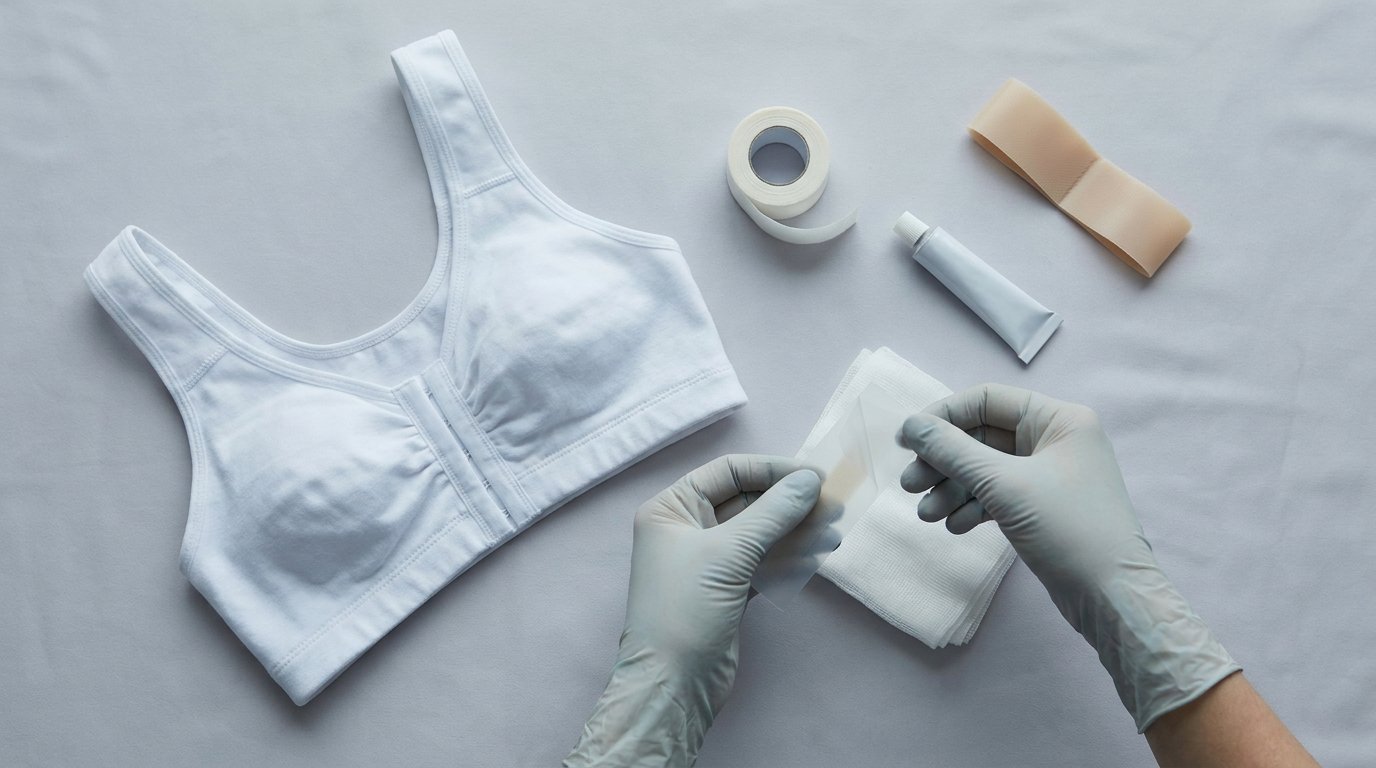
Smoking raises the risk of wound and nipple-healing problems. So does uncontrolled diabetes and poor nutrition.
Warning signs after you go home
Contact your surgical team urgently if you develop:
- ✓One breast becoming much larger or tighter than the other
- ✓Increasing redness, heat, pus, or bad smell from wounds
- ✓Fever or feeling suddenly unwell
- ✓Chest pain, shortness of breath, or calf swelling
Those last symptoms need urgent local medical assessment, not just a message to a coordinator.
🚨 Blood clot risk needs a plan Ask how clot risk is assessed, whether compression stockings or injections are advised, and how long you should wait before long travel after surgery.
Most scars soften and flatten over time, yet breast reduction always means permanent scars to some degree.
Can you breastfeed after a breast reduction?
Some people can breastfeed after a breast reduction, but it cannot be promised. The chance depends on surgical technique, how much tissue is removed, whether milk ducts and nerves are preserved, and your own milk supply factors before pregnancy.
This is a very important question if you may want children later. The truthful answer is that breastfeeding may still be possible, but there is no guarantee.
The NHS notes that breast reduction can affect the ability to breastfeed. That risk depends partly on technique. In many reductions, the nipple stays attached to a blood and nerve supply within the breast, which may preserve more function than older or more drastic methods. Even so, milk production can be reduced.
Ask your surgeon directly:
- ✓What reduction technique is planned?
- ✓Will the nipple remain attached to underlying tissue?
- ✓How might my future breastfeeding chances be affected?
- ✓If I plan pregnancy soon, should I wait?
If pregnancy is likely in the near future, some surgeons advise delaying surgery. Pregnancy and breastfeeding can stretch the skin again and change the final shape.
- →Possible to breastfeed after some reductions
- →Not possible to guarantee before surgery
- →Future pregnancy can change breast shape again
Will insurance cover breast reduction?
Insurance sometimes covers breast reduction when it is medically necessary rather than purely cosmetic, but cover rules vary by country, insurer, symptoms, and evidence. Cosmetic surgery abroad is often self-funded, and Turkish private treatment packages are usually paid directly by the patient.
Whether insurance covers a breast reduction is a common question for a reason. In some systems, cover is possible when there is clear medical need, such as chronic pain, skin problems, failed non-surgical treatment, and documented functional symptoms.
For UK patients, private cosmetic surgery in Turkey is usually self-pay. NHS funding is not a routine route for cosmetic travel abroad. Some private insurers may cover medically necessary breast reduction in your home country, but they often do not reimburse elective treatment overseas unless arranged within their own approved network.
If you want to explore cover in your own country, ask your insurer:
- ✓Is reduction mammoplasty covered for medical reasons?
- ✓What documents are needed?
- ✓Is there a minimum tissue removal requirement?
- ✓Do I need photos, GP letters, or physiotherapy history?
- ✓Will they cover surgery performed outside my home country?
Keep expectations realistic. If your main goal is appearance rather than physical symptoms, insurance cover is much less likely.
Some patients choose self-funded surgery abroad for a shorter waiting time and lower indicative private cost, but that means you must judge safety and aftercare very carefully.
How do you choose a safe clinic and surgeon in Turkey?
Choose a named surgeon with relevant board membership, operate in an accredited hospital rather than a vague ‘clinic’, and get a written plan for complications and aftercare after you return home. Safe choices are built on verification, not on social media before-and-after photos alone.
This is where you should slow down. Turkey has excellent surgeons and hospitals, but standards are not identical everywhere.
Here is what to verify before booking breast reduction and lift Turkey:
Check the surgeon, not just the brand
Ask for the full name of the surgeon who will operate and check their background. Useful points include:
- ✓Plastic surgery training and qualifications
- ✓Hospital privileges for the procedure
- ✓Experience with breast reduction surgery specifically
- ✓Professional memberships and whether they are current
If you are speaking with a provider, ask to see the surgeon profile on the doctors page and request your consultation with the operating surgeon, not only a coordinator.
Check the hospital accreditation
Ask where the operation will happen. A proper private hospital with operating theatre standards, anaesthesia cover, and overnight nursing is generally more reassuring than a loosely described office facility.
Useful questions:
- ✓Is the hospital nationally licensed and accredited?
- ✓Is there an intensive care capability on site or through the hospital network?
- ✓Who gives the anaesthetic?
- ✓Will I stay overnight?
Check the aftercare before and after your flight home
This part is often overlooked. You need to know:
- ✓How many in-person checks happen in Turkey
- ✓Who changes dressings or removes drains if used
- ✓What happens if a wound opens after you return home
- ✓Whether you get direct contact with a nurse or surgeon
- ✓Whether video follow-up is included
- ✓What local medical support you should arrange if needed
Ask the awkward questions
A good team will answer them calmly. Ask:
- ✓What are the main risks in my case?
- ✓What scar pattern do you expect?
- ✓What happens if I need an unplanned extra night in hospital?
- ✓What costs are not included?
- ✓What is your revision policy?
You can also read the provider’s about page, review the dedicated breast reduction treatment page, and use the official contact page if you want written answers before making a decision.
⚠️ Do not rely on messaging apps alone Quick replies are helpful, but surgery decisions should also be backed by proper consultation notes, consent documents, and a written aftercare plan.
- ✓Named surgeon before you pay a deposit
- ✓Operation in a licensed hospital
- ✓Written quote with inclusions and exclusions
- ✓Structured follow-up before your return flight
- ✓Clear instructions for problems once you are back home
How long should you stay in Turkey for breast reduction and lift surgery?
Most international patients should plan for 7 to 10 days in Turkey, though some surgeons may advise longer depending on healing, drain use, or combined procedures.
A simple schedule often looks like this:
- ✓Day 1: arrival and pre-op review
- ✓Day 2: surgery
- ✓Day 3: discharge from hospital if stable
- ✓Days 4–8: hotel recovery and follow-up checks
- ✓Days 7–10: final review and fit-to-fly decision
Do not book a rigid return flight before you understand the review schedule. If you are healing slowly or dressings need more attention, an extra few days can make a real difference.
If you are considering adding liposuction or tummy surgery, remember that combining procedures can increase swelling and fatigue. Some patients compare options such as liposuction or abdominoplasty, but combination surgery needs a more cautious recovery plan.
Is breast reduction with lift worth it if your main goal is comfort and shape?
For many people, yes, it can be worth it when both heaviness and sagging are the problem. The main benefits are usually better comfort in clothes, easier exercise, less downward pull, and a more balanced breast shape.
The trade-offs are just as important:
- ✓Permanent scars
- ✓A recovery period that disrupts normal life for several weeks
- ✓Some unpredictability in final cup size and symmetry
- ✓Possible changes in nipple feeling and breastfeeding ability
If your breasts are heavy enough to affect daily life, the physical relief can matter more than the cosmetic change. If your breasts are not very heavy and the real concern is low position, a lift alone may be the better fit.
The best way to judge whether it is worth it is not by celebrity rumours or social media trends. It is by matching your symptoms, anatomy, recovery capacity, and scar tolerance to the right operation.
Frequently Asked Questions
References
- 📎NHS – Breast reduction on the NHS
- 📎NHS – Breast reduction
- 📎American Society of Plastic Surgeons – Breast Reduction
- 📎Mayo Clinic – Breast reduction
- 📎NICE – Venous thromboembolism in over 16s: reducing the risk of hospital-acquired deep vein thrombosis or pulmonary embolism
Related Articles


You Might Also Like


Related articles

Our specialists
 Clineca SpecialistErkan PinegözPlastic & Reconstructive Surgery
 Clineca SpecialistHakan AktaşPlastic & Reconstructive Surgery
 Clineca SpecialistOrkun UzuneyüpoğluPlastic & Reconstructive Surgery
 Clineca SpecialistSalim İskenderPlastic & Reconstructive Surgery
 Clineca SpecialistEngin SelamioğluPlastic & Reconstructive Surgery
 Clineca SpecialistCem AydınPlastic & Reconstructive Surgery
 Clineca SpecialistAlperen ÖnalEar, Nose & Throat (ENT)