
Have a question about Turbinate Reduction?
In this article
- What is the normal timeline for scabs and dryness after turbinate reduction?
- What should healing look like week by week?
- When are scabs and dryness a sign of a problem?
- What helps scabs and dryness heal faster and more comfortably?
- Does the type of turbinate reduction change recovery?
- How long should you stay nearby if you travelled for surgery?
- How do you choose a safe clinic or surgeon for turbinate surgery?
- What about cost and planning?
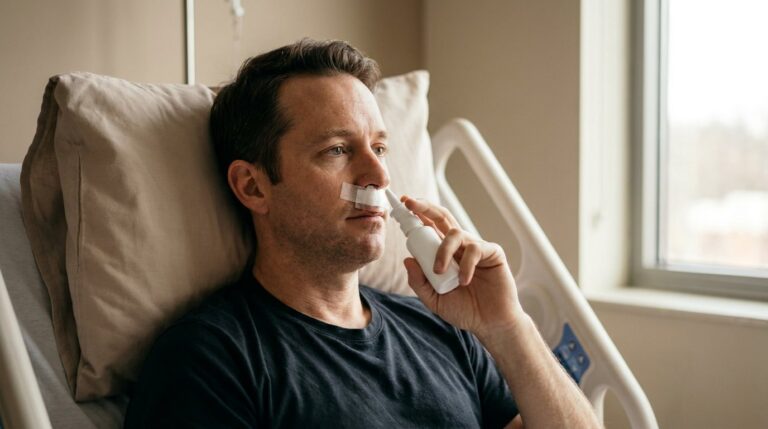
After turbinate reduction, nasal scabs and dryness usually improve over about 2 to 6 weeks, but some people notice milder dryness, crusting, or sensitivity for longer. If you are wondering how long do nasal scabs and dryness last after turbinate reduction, the honest answer is that recovery depends a lot on the surgical technique used, whether you also had septoplasty or rhinoplasty, and how well the inside of the nose heals.
Medically reviewed by a clinician experienced in ENT and post-operative recovery content. This article is for general information and does not replace advice from your own surgeon.
What is the normal timeline for scabs and dryness after turbinate reduction?
The first thing to know is that scabs, crusting, and a dry blocked feeling are common after turbinate reduction. They do not always mean something is wrong. The inside lining of the nose has been irritated or reshaped, and that tissue needs time to recover its normal moisture and airflow pattern.
In the first few days, many patients feel more blocked rather than less. This can be surprising, especially if the surgery was done to improve breathing. Swelling, dried blood, and mucus can all make the nose feel stuffy at first. According to patient aftercare guidance from major ENT centres such as Cleveland Clinic and Stanford Health Care, crusting and dryness are expected parts of healing after turbinate procedures.
A typical pattern looks like this: dryness and crusting are usually strongest in week 1, still noticeable in week 2, and then slowly improve from weeks 3 to 6. Some people feel almost normal by the end of the second week. Others need longer, especially after septoplasty at the same time, because the inside of the nose has more healing surfaces.
If your procedure involved radiofrequency or coblation, the recovery can feel a bit gentler for some patients than older tissue-removal methods. If bone and soft tissue were reduced more extensively, crusting may last longer. That is why it is safer to think in ranges, not exact dates.
Why timelines vary so much
Not all turbinate reduction procedures are the same. Some shrink the turbinate from within using heat energy. Others remove a small amount of soft tissue or bone. Some are done alone, while others are combined with septoplasty or rhinoplasty. Each of those choices can change how long dryness and scabbing last.
Your baseline nose health matters too. People with allergic rhinitis, chronic sinus irritation, smoking exposure, very dry indoor air, or frequent nose picking often take longer to settle. If you already had a dry nose before surgery, the recovery may feel more noticeable.
For many patients, the worst dryness and crusting happens in the first 1 to 2 weeks, then settles gradually over the next few weeks. A more complete improvement often takes 2 to 6 weeks, but healing can be longer if you had additional nasal surgery, packing, cautery, or a more extensive reduction technique.
What should healing look like week by week?
A week-by-week view is often more useful than broad reassurance, because patients want to know what is likely at each stage.
📋 A blocked nose does not always mean the surgery failed Early swelling and crusting can temporarily narrow the airway. Many patients breathe worse before they breathe better.
Healing is usually uneven rather than perfectly smooth. Expect some bloody mucus, crusts, dryness, and congestion early on, then a gradual shift toward easier breathing and less need for saline care over the next month. Brief setbacks are common, especially if a scab loosens or the nasal lining gets irritated.
When are scabs and dryness a sign of a problem?
Most post-operative crusting is harmless, but there is a line where normal healing becomes something that should be checked. Contact your surgeon or ENT team sooner if the pain is getting stronger instead of milder, if bleeding is heavy or recurrent, or if the nose develops a bad smell with thick yellow or green discharge.
A fever or feeling generally unwell can also suggest infection, although not every blocked or crusty nose means infection. If breathing first improved and then became sharply worse, your doctor may want to look for a retained crust, scar band, inflammation, or a problem unrelated to the turbinate surgery.
One longer-term concern patients sometimes read about is excessive dryness from too much turbinate tissue being removed. That is not the usual recovery course, and it is one reason modern surgeons often use tissue-preserving techniques where appropriate. If dryness is intense, ongoing, and paired with a strange sensation of poor airflow months later, it is worth a proper review rather than just waiting it out.
⚠️ Seek urgent advice if you have red-flag symptoms Heavy bleeding, fever, severe worsening pain, spreading facial swelling, or foul-smelling discharge should not be managed at home without guidance.
Mild crusting and dryness are expected, but severe pain, heavy bleeding, fever, foul smell, worsening blockage after early improvement, or one-sided thick discharge deserve medical review. Persistent symptoms beyond the expected recovery window may need examination to check for infection, adhesions, excessive dryness, or another healing issue.
What helps scabs and dryness heal faster and more comfortably?
The main goal is to keep the inside of the nose moist without disturbing the healing lining. Saline is usually the centre of that plan. Different surgeons prefer sprays, mists, or bottle irrigations, and timing matters, so follow your own instructions first.
Gentle care works better than aggressive cleaning. Pulling out a crust that is still attached can restart bleeding and slow healing. If something feels stuck, softening it with saline is safer than digging at it.
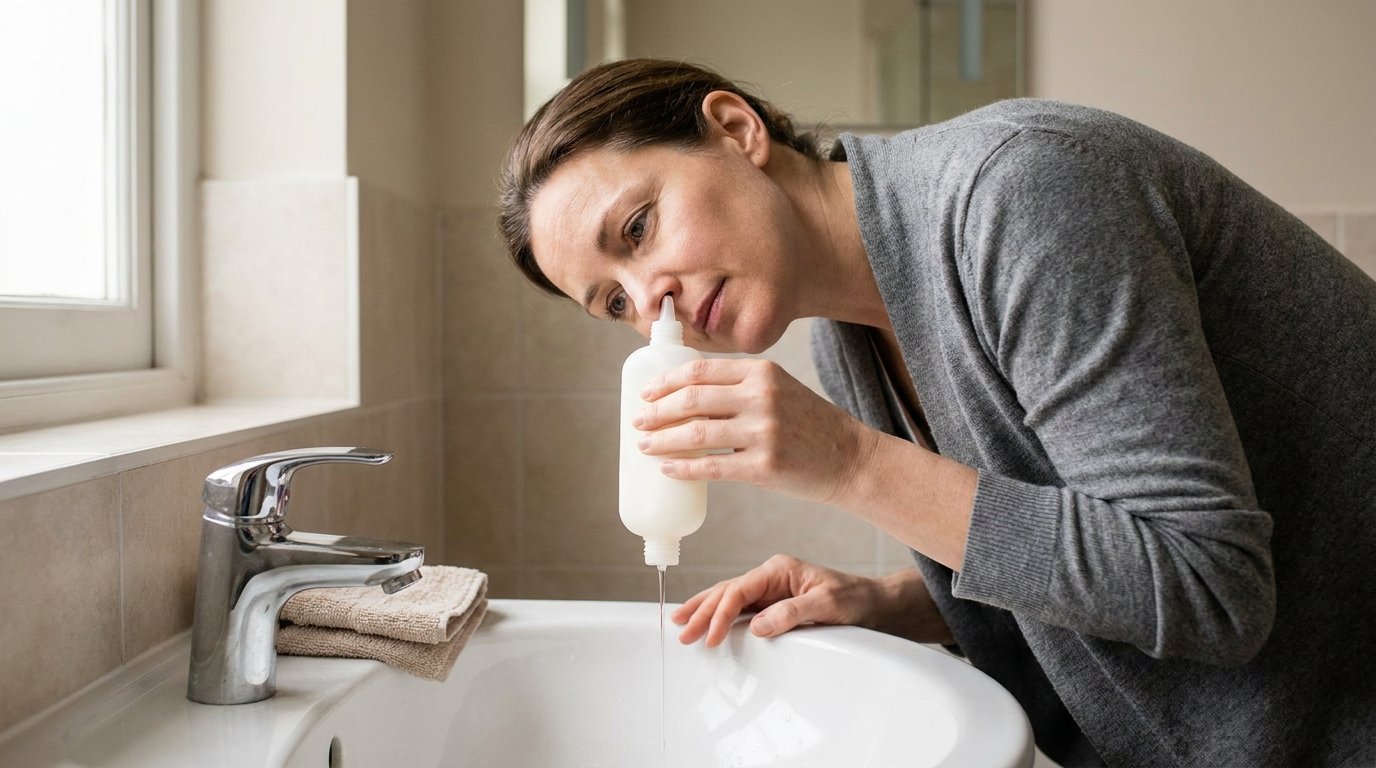
Simple home measures can help a lot:
- ✓Use saline exactly as advised by your surgeon or ENT team.
- ✓Drink enough fluid, especially if you are breathing through your mouth at night.
- ✓Sleep with your head slightly raised in the first days if recommended.
- ✓Avoid smoking and second-hand smoke, which can irritate the nasal lining.
- ✓Avoid forceful nose blowing until you are told it is safe.
- ✓Use a humidifier if your room air is very dry.
Some surgeons also recommend a specific ointment or moisturising gel. Others avoid this, depending on the procedure and the risk of trapping debris. That is why it is best not to self-prescribe medicated nasal sprays, antibiotic ointments, or essential oils inside the nose.
If you are travelling for treatment, ask for written aftercare before you leave, including when to start saline, what degree of crusting is expected, and who to contact if symptoms change. A pre-travel check or follow-up plan arranged through the clinic team or your treating surgeon can make recovery less stressful.
Good aftercare usually matters more than patients expect. Saline irrigation or spray, avoiding nose picking or forceful blowing, staying hydrated, and following your surgeon’s cleaning advice can reduce crust build-up and make healing smoother. Do not add ointments or sprays unless your own clinician has told you they are safe for your case.
Does the type of turbinate reduction change recovery?
This is one of the most important caveats, because many online articles talk as if all turbinate reduction is one thing. It is not. Inferior turbinate reduction can be done in several ways, and the healing pattern changes with each technique.
Radiofrequency and coblation usually shrink tissue under the surface. Many patients still get dryness and crusting, but the amount may be less than after methods that remove more lining or bone. Submucosal reduction aims to preserve the outer lining while reducing bulk underneath, which may support a smoother long-term result when done well.
If your surgery also included septoplasty, sinus work, or cosmetic nasal surgery, your recovery can be slower and less predictable. More swelling, more dried blood, and more internal cleaning visits may be needed. That does not automatically mean a complication. It often reflects the fact that more than one structure inside the nose is healing at the same time.
Patients often remember only the phrase ‘turbinate reduction’. Knowing whether it was radiofrequency, coblation, submucosal reduction, or another method makes recovery advice more accurate.
Yes. Recovery is not uniform across all turbinate procedures. Tissue-preserving techniques such as radiofrequency or coblation often cause less visible crusting than more extensive reductions, while combined surgery such as septoplasty can lengthen the dry, blocked phase. The exact method used matters as much as the procedure name.
How long should you stay nearby if you travelled for surgery?
For a straightforward turbinate procedure, people often feel well enough to travel relatively soon, but that does not mean they should leave immediately. The first few days are when congestion, spotting, and crusting start to build, and that is also when questions about aftercare usually come up.
If you travelled, a short local stay is often sensible so early checks can be done if needed, especially when turbinate reduction was combined with another nasal operation. The practical point is less about tourism and more about safe access to your treating team if bleeding, packing discomfort, or heavy crusting develops.
Before booking flights, ask who will handle follow-up, whether debridement or cleaning visits are routine, and what symptoms should delay travel. If you need help arranging consultation or follow-up logistics, the clinic’s consultation page explains how enquiries are handled.
How do you choose a safe clinic or surgeon for turbinate surgery?
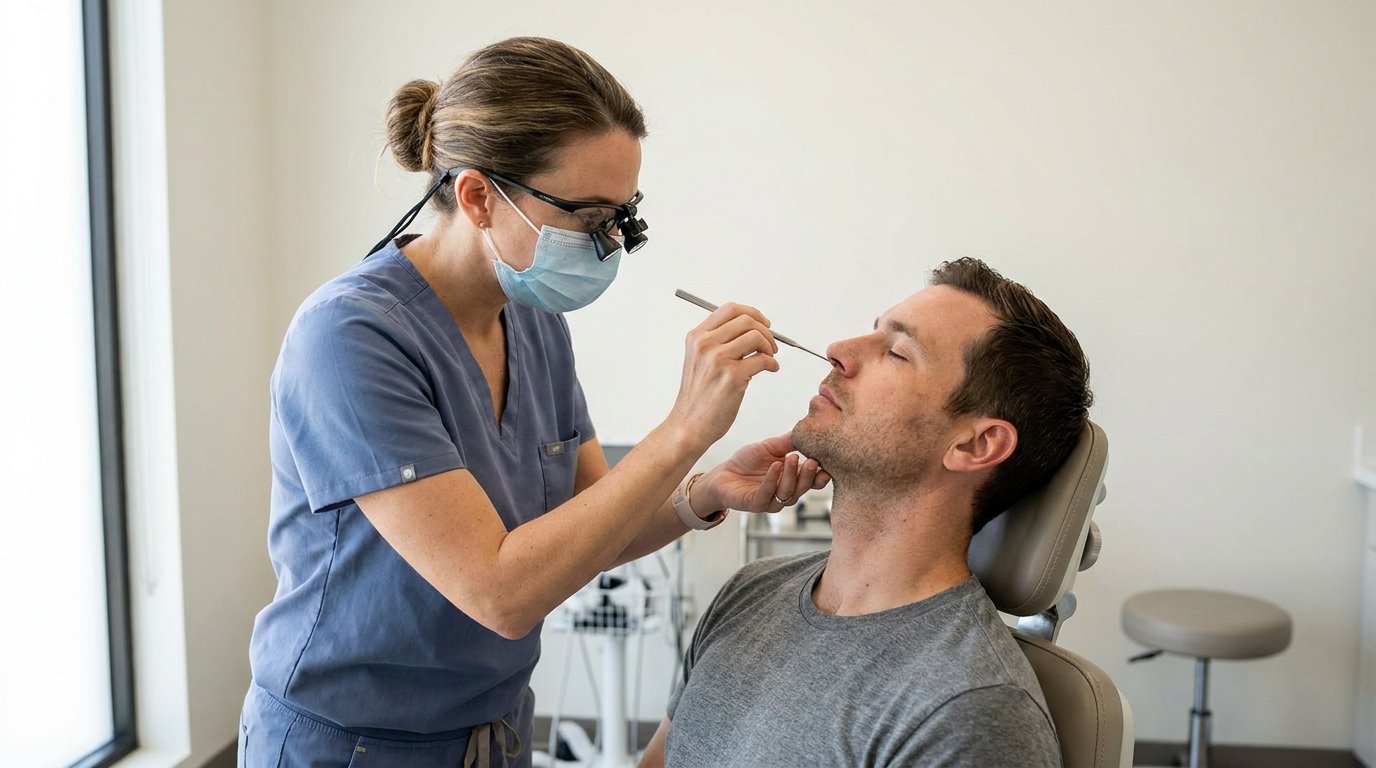
Turbinate surgery is often described as minor, but the inside of the nose is delicate. A good consultation should cover more than the promise of better breathing. You should hear why surgery is being advised, what alternatives were tried first, what type of reduction is planned, and what recovery will realistically feel like.
According to the NHS approach to many elective procedures, informed consent should include benefits, risks, alternatives, and what happens if you do nothing. That principle matters here. If a clinic speaks only about quick breathing improvement and not about crusting, cleaning, or follow-up, that is a gap worth noticing.
Useful signs include a surgeon profile you can verify, written aftercare, and a clear route for post-op contact. If you want to review clinician information, the doctors page and about page should help you check who is involved and how patient care is organised.
- ✓The surgeon explains the exact turbinate technique, not just the procedure name
- ✓You receive clear advice on saline care, nose blowing, bleeding, and follow-up
- ✓The clinic discusses risks such as dryness, crusting, infection, and scarring honestly
- ✓There is a realistic plan if you are travelling and need help after discharge
Look for a surgeon who routinely performs nasal airway surgery, explains the exact technique, discusses expected crusting and dryness honestly, and provides clear aftercare. Safety is not only about the operation itself. It is also about conservative tissue handling, proper follow-up, and access to help if healing is slower than expected.
What about cost and planning?
Because this topic is really about recovery rather than shopping by price, the most useful cost advice is to understand what changes the quote. A simpler office-based reduction may be costed very differently from surgery in hospital under general anaesthetic. Adding septoplasty, sinus work, scans, blood tests, medication, or extra follow-up can change the overall fee as well.
The safest approach is to ask what is included and what is not. That means surgeon fees, anaesthesia, facility charges, routine follow-up, and whether any planned cleaning visits are part of the package. Final pricing is normally confirmed after consultation rather than from an online estimate alone.
There is no single standard price for turbinate reduction, and a reliable quote depends on the technique, the surgeon, the hospital setting, anaesthesia, and whether other nasal procedures are done at the same time. A personalised quote is usually confirmed only after consultation and review of your nose and symptoms.
If you are also considering rhinoplasty, our rhinoplasty in Turkey cost and safety guide explains what shapes the quote and how to plan the trip.
Frequently Asked Questions
References
- 📎Cleveland Clinic: Turbinate Reduction
- 📎Stanford Health Care: Turbinate Reduction
- 📎University of Mississippi Medical Center: Turbinate Reduction Postoperative Instructions
- 📎ENT Health (American Academy of Otolaryngology): Turbinate Surgery
Related Articles


You Might Also Like



Related articles


Our specialists
 Clineca SpecialistErkan PinegözPlastic & Reconstructive Surgery
 Clineca SpecialistHakan AktaşPlastic & Reconstructive Surgery
 Clineca SpecialistOrkun UzuneyüpoğluPlastic & Reconstructive Surgery
 Clineca SpecialistSalim İskenderPlastic & Reconstructive Surgery
 Clineca SpecialistEngin SelamioğluPlastic & Reconstructive Surgery
 Clineca SpecialistCem AydınPlastic & Reconstructive Surgery
 Clineca SpecialistAlperen ÖnalEar, Nose & Throat (ENT)