Have a question about Rhinoplasty?
In this article
- How long do you need to sleep elevated after rhinoplasty?
- Why does sleeping elevated help after a nose job?
- What is the best sleeping position after rhinoplasty?
- When can you sleep on your side again after rhinoplasty?
- What if you had septoplasty or revision rhinoplasty too?
- How can you sleep comfortably without rolling over?
- When should you call your surgeon about sleep or swelling concerns?
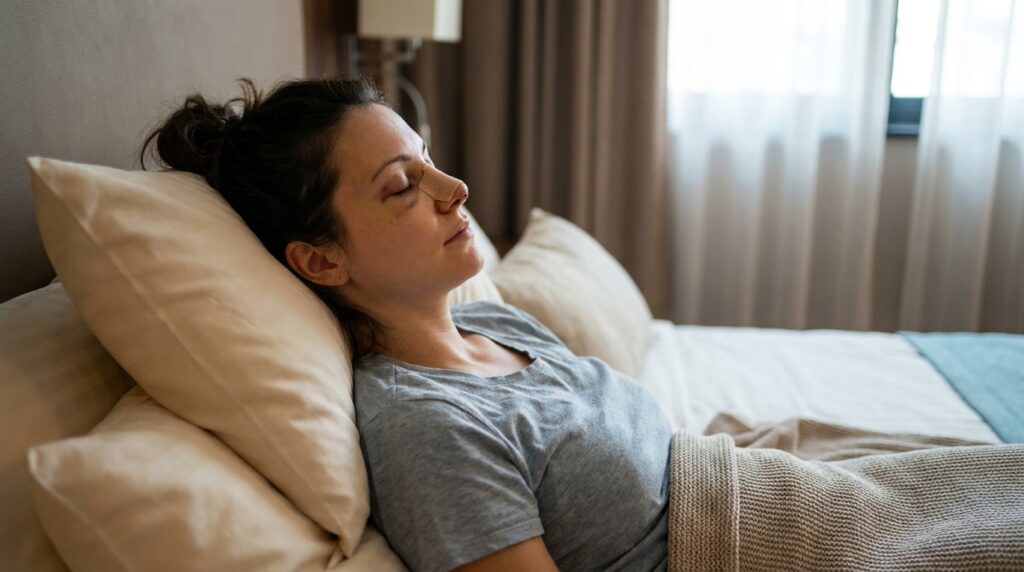
Most people need to sleep elevated after rhinoplasty for about 1 to 2 weeks, and many surgeons advise staying on your back with your head raised during that early healing period. If you are asking how long do i need to sleep elevated after rhinoplasty, the honest answer is that it depends on swelling, whether you also had septoplasty or revision surgery, and your own surgeon’s instructions.
How long do you need to sleep elevated after rhinoplasty?
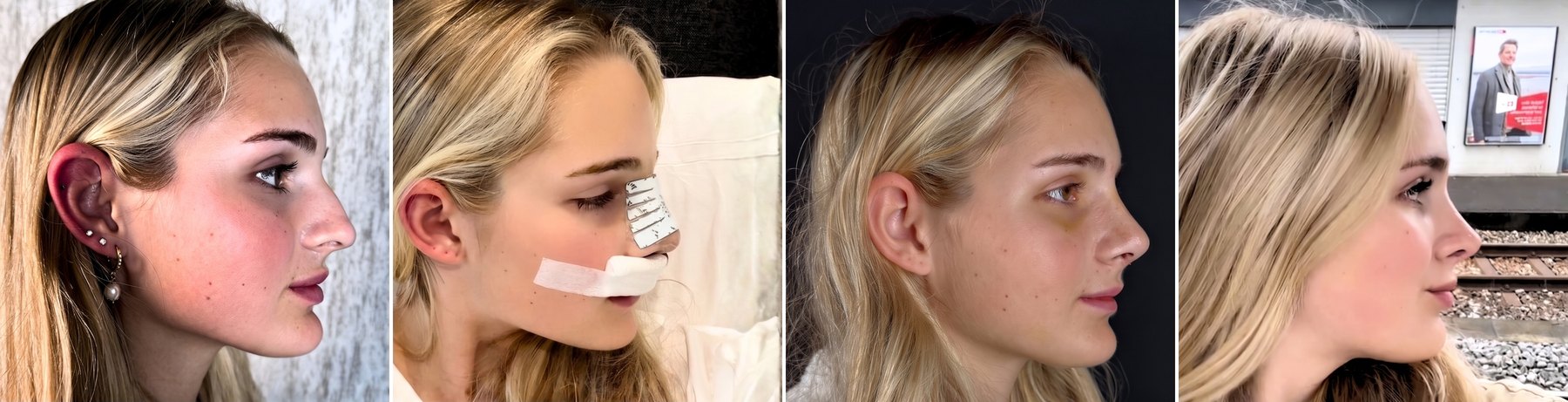
The short answer is that most patients are told to sleep with their head elevated for the first 1 to 2 weeks after a nose job. That is the period when swelling tends to be strongest, your nose is most vulnerable to pressure, and sleeping flat can make morning puffiness worse.
Elevation does not change your final result on its own, but it can help reduce fluid build-up and make the first part of recovery more comfortable. The American Society of Plastic Surgeons (ASPS) advises patients to keep their head elevated after rhinoplasty, and the NHS also notes that swelling after cosmetic nasal surgery is expected in the early recovery period.
A common real-life pattern looks like this: the first few nights are the hardest, days 3 to 5 often bring peak swelling, and by the end of the first week many people feel less blocked and less puffy. Even then, plenty of surgeons still prefer patients to stay elevated until the 10-day to 14-day mark rather than flattening out too early.
If you had revision rhinoplasty, grafts, broken nasal bones, or a septoplasty done at the same time, you may be asked to keep sleeping elevated for longer. Those cases often involve more swelling inside the nose as well as outside.
📋 Typical timeframe A raised sleeping position is usually recommended for 7 to 14 days after rhinoplasty, but some patients are told to continue for longer if swelling is significant or the surgery was more complex.
For most patients, sleeping elevated for 7 to 14 days after rhinoplasty is the usual advice, especially while swelling and bruising are at their worst. Some people are told to continue longer, particularly after revision rhinoplasty or when internal nasal work was done. Your own surgeon’s instructions should take priority.
Why does sleeping elevated help after a nose job?
The reason is simple: when your head is raised, fluid is less likely to collect around the nose and eyes overnight. That can mean less pressure, less throbbing, and less dramatic swelling when you wake up.
There is also a practical safety benefit. In the first days after surgery, people often move around in their sleep without realising it. If you sleep elevated and supported, you are less likely to roll onto your side or press your nose into a pillow.
This matters most when you still have a splint, tape, or internal swelling from surgery inside the nose. Pressure on the nose may not always cause major damage, but early on it is better avoided.
Mayo Clinic guidance on rhinoplasty recovery commonly includes keeping the head elevated and limiting pressure on the nose. That advice is routine because the early stage of healing is when tissues are swollen, delicate, and easier to irritate.
Sleeping elevated after rhinoplasty mainly helps with swelling, comfort, and protecting the nose from pressure while you heal. It will not guarantee a certain cosmetic result, but it can make the first recovery phase easier and may reduce morning puffiness compared with lying flat.
What is the best sleeping position after rhinoplasty?
For most patients, the best position is on your back, head elevated, face up. You do not need to sleep fully upright. In fact, that is often uncomfortable and hard to maintain. What usually works better is a gentle incline that keeps your head higher than your heart.
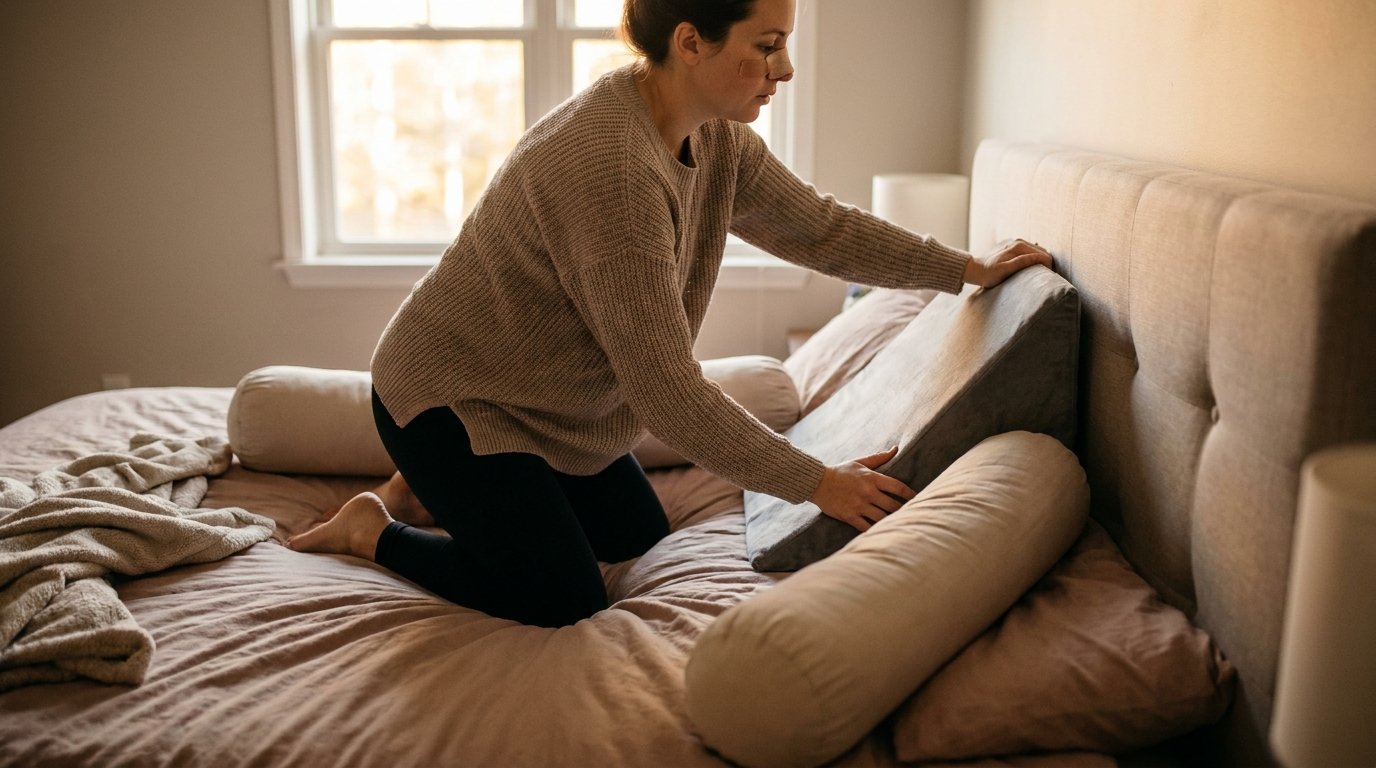
A 30 to 45 degree angle is a common target. That can be done with a wedge pillow, an adjustable bed, or a recliner. If you use regular pillows, stack them carefully so they support your shoulders as well as your head. If only your head is propped up and your neck bends sharply, you may wake with neck pain and slide down during the night.
A recliner is often easiest for the first few nights because it naturally limits turning. If you prefer a bed, a wedge pillow plus one small pillow under the knees can make the position more stable and reduce back strain.
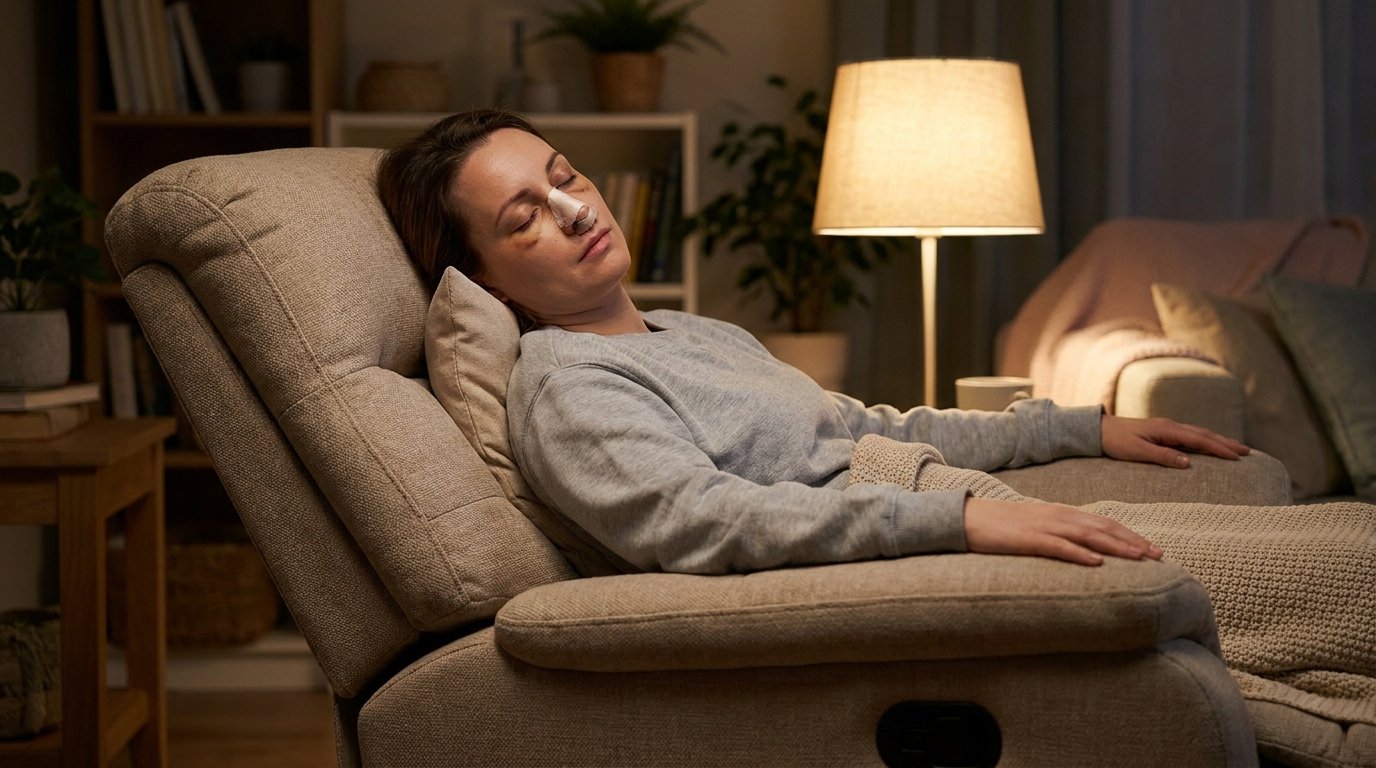
If you are worried about rolling over, many patients build a simple barrier with pillows on both sides of the body. That does not guarantee you will stay still, but it often helps.
Simple setups that usually work well
- ✓Wedge pillow in bed: often the easiest long-term setup for 1 to 2 weeks
- ✓Recliner chair: helpful in the first few nights if swelling and congestion are intense
- ✓Pillow nest: pillows at each side of the torso and shoulders to reduce rolling
- ✓Travel neck pillow: can help some people feel steadier, but it should not force the chin down too much
- ✓Keep your head and upper chest raised, not just your neck.
- ✓Choose a setup you can maintain all night, not just for an hour.
- ✓Use support at your sides if you tend to roll in your sleep.
- ✓If your neck hurts, change the pillow arrangement rather than flattening out fully.
The safest usual position is on your back with your head elevated above chest level. A wedge pillow, several firm pillows arranged securely, or a recliner can all work. The goal is not to sit bolt upright, but to stay comfortably raised and avoid rolling onto your side.
When can you sleep on your side again after rhinoplasty?
This is one of the biggest practical questions after rhinoplasty, especially for people who never normally sleep on their back. In many cases, side sleeping is restricted for the same early period as elevation: roughly 7 to 14 days.
That said, the safer answer is not to switch based on the calendar alone. If your nose is still very sore, your splint has only just come off, or you still wake with marked swelling, it often makes sense to wait longer.
A gentle return is usually better than suddenly going back to your usual position for a full night. Some patients start by lying partly tilted with pillow support behind the back, then move to true side sleeping later once tenderness settles.
If you had a revision rhinoplasty, cartilage grafts, or substantial reshaping of the bridge or tip, surgeons may be more cautious about side pressure. The same can apply if you also had internal nasal surgery and still feel blocked.
What you want to avoid is direct pressure on the nose itself. Even when the bones and cartilage are not easily moved, pressure can increase swelling and leave you feeling more congested the next morning.
⚠️ Do not rush side sleeping If your nose still feels tender or unstable, or you are still wearing tape or a splint, changing to side sleeping too early can worsen swelling and may make recovery less comfortable.
Many patients are told to avoid side sleeping for at least 1 to 2 weeks, and sometimes longer if swelling is still strong or the nose remains tender. A careful return to side sleeping usually waits until your surgeon says the nose is stable enough to tolerate mild pressure.
What if you had septoplasty or revision rhinoplasty too?
Not every rhinoplasty is the same. Some operations mainly change the outer shape of the nose. Others also include septoplasty, which is surgery to straighten the wall inside the nose, or work on the turbinates, the structures that help warm and filter air.
When internal nasal surgery is added, patients often notice more pressure, stuffiness, or mouth breathing in the first days. In that situation, sleeping elevated is not only about swelling you can see. It can also make the blocked feeling easier to manage.
Revision rhinoplasty is another group that often needs a little more patience. Tissues have been operated on before, swelling can last longer, and surgeons may be stricter about pressure and sleeping position.
If this sounds like your case, it is worth asking your surgeon one very specific question before surgery or at discharge: For how many nights do you want me elevated, and for how long do you want me off my side? That wording usually gets a more useful answer than a vague question about “normal recovery.”
Often follows the usual 1 to 2 week advice for elevated back sleeping, depending on swelling and splint removal.
May feel more congested inside the nose, so sleeping elevated can be especially helpful in the first week.
Often needs a more cautious recovery plan, including longer avoidance of pressure and careful follow-up.
If your rhinoplasty included septoplasty, turbinate reduction, or revision surgery, you may need to stay elevated longer because internal swelling and congestion are often greater. These combined procedures can make lying flat feel worse, especially in the first week when breathing through the nose may be difficult.
If you are still planning surgery, our rhinoplasty in Turkey cost and safety guide covers prices, stay length and how to choose a surgeon.
How can you sleep comfortably without rolling over?
This is where practical planning matters more than theory. Many people know they should sleep elevated after a rhinoplasty nose job, but they do not set up the bed in a way that makes success likely.
The simplest trick is to support the whole upper body instead of just piling pillows under the head. If the angle starts at the shoulders, you are less likely to slide down and less likely to wake with a stiff neck.
A second tip is to build a soft barrier. Put pillows on both sides of your waist and arms, not only near your head. That gives your body feedback when you start turning.
If congestion is the main reason you cannot sleep, make sure you are also following the rest of your aftercare instructions. Depending on your surgeon’s advice, that may include saline spray, avoiding nose blowing, and taking medicines exactly as directed. The NHS advises avoiding blowing your nose after nasal surgery because it can disturb healing tissues.
If you are a determined side sleeper, a recliner for the first few nights may genuinely be easier than trying to force yourself flat on a bed setup that does not work for you.
- →Use a wedge or recliner rather than loose pillow stacking if you move a lot in your sleep.
- →Place pillows beside your body to reduce rolling.
- →Keep water, tissues, and any prescribed medicines nearby so you do not keep getting up.
- →Avoid alcohol or anything else that makes you sleep very heavily if your surgeon has told you to monitor your position closely.
When should you call your surgeon about sleep or swelling concerns?
Some swelling, stuffiness, and poor sleep are normal after rhinoplasty. A few bad nights do not usually mean anything is wrong.
What deserves attention is a clear change. If you wake after rolling onto your face and the nose looks more crooked, much more swollen, or starts bleeding, it is sensible to contact your surgeon. The same applies if one-sided swelling becomes marked, pain escalates rather than slowly improving, or you develop fever.
You should also ask for advice if sleeping elevated becomes almost impossible because of breathing trouble or neck and back pain. Sometimes a small change in setup solves the problem. Sometimes your team needs to rule out an issue such as excessive internal swelling.
For general information on the procedure itself, recovery expectations, and what a rhinoplasty involves, patients often look at a dedicated overview such as this page on rhinoplasty. If you need personalised advice, it is safer to contact your own surgical team directly rather than relying on a general before-and-after discussion online.
🚨 Get medical advice promptly if symptoms change suddenly Heavy bleeding, fever, severe worsening pain, major asymmetry after pressure on the nose, or significant breathing difficulty should be assessed by your surgeon or an urgent medical service.
Contact your surgical team if swelling suddenly gets much worse on one side, you think you injured your nose during sleep, or you cannot breathe comfortably despite following aftercare advice. Ongoing severe pain, heavy bleeding, or fever should also be checked promptly rather than watched at home.
Frequently Asked Questions
References
- 📎NHS – Cosmetic procedures
- 📎ASPS – Cosmetic procedures
- 📎Mayo Clinic – Tests and procedures
- 📎PubMed search – rhinoplasty postoperative edema sleep position
Related Articles

You Might Also Like

Related articles
Our specialists
 Clineca SpecialistErkan PinegözPlastic & Reconstructive Surgery
 Clineca SpecialistHakan AktaşPlastic & Reconstructive Surgery
 Clineca SpecialistOrkun UzuneyüpoğluPlastic & Reconstructive Surgery
 Clineca SpecialistSalim İskenderPlastic & Reconstructive Surgery
 Clineca SpecialistEngin SelamioğluPlastic & Reconstructive Surgery
 Clineca SpecialistCem AydınPlastic & Reconstructive Surgery
 Clineca SpecialistAlperen ÖnalEar, Nose & Throat (ENT)