

Have a question about Temporal Lift?
In this article
- What is the normal recovery timeline in the first two weeks?
- How does recovery differ between a surgical temporal lift and a thread lift?
- What do swelling, bruising, numbness, and tightness feel like?
- When can you wash your hair, remove stitches, fly, and exercise?
- How long should international patients stay after a temporal lift?
- What are the main safety risks and warning signs in the first two weeks?
- What affects recovery, and how can you make the first two weeks easier?
- What about price and planning?
What to expect during temporal lift recovery in the first two weeks is usually swelling, tightness, mild to moderate discomfort, and a gradual return to normal daily activity rather than an instant result. Most people are presentable sooner than they feel fully settled, but recovery depends a lot on whether you had a surgical temporal lift or a thread-based, non-surgical lift, so it helps to keep those two paths separate from the start.
What is the normal recovery timeline in the first two weeks?
A temporal lift, sometimes called a temple lift, is a procedure that lifts the outer brow and temple area. In practice, recovery is usually easier than a full facelift, but the first two weeks still matter. The area can feel tight, puffy, itchy, and oddly numb at the same time. That combination is common.
If you had a surgical temporal lift, expect the first 48 to 72 hours to be the peak swelling phase. Bruising may track down toward the outer eye or upper cheek. Sleeping with your head raised, taking medicines exactly as prescribed, and avoiding bending or straining can make those first few days more manageable.
If you had a thread lift or non-surgical temple lift, recovery is usually shorter. You may still have swelling, tenderness, puckering, and a pulling sensation, but downtime is often measured in a few days rather than a full two weeks. Even so, thread procedures are not “no recovery” treatments, and you still need to protect the area.
By the end of the first week, many people notice the bruising changing colour and the swelling starting to soften. You may still feel uneven from one side to the other. That does not automatically mean anything is wrong. Symmetry is hard to judge early, especially while one side is more swollen.
Between days 10 and 14, many surgical patients feel well enough for light social activity, desk work, and short outings. The result is not final at that point. Minor swelling, scalp numbness, tenderness at the incision line, and a firm feeling under the skin can all continue beyond two weeks.
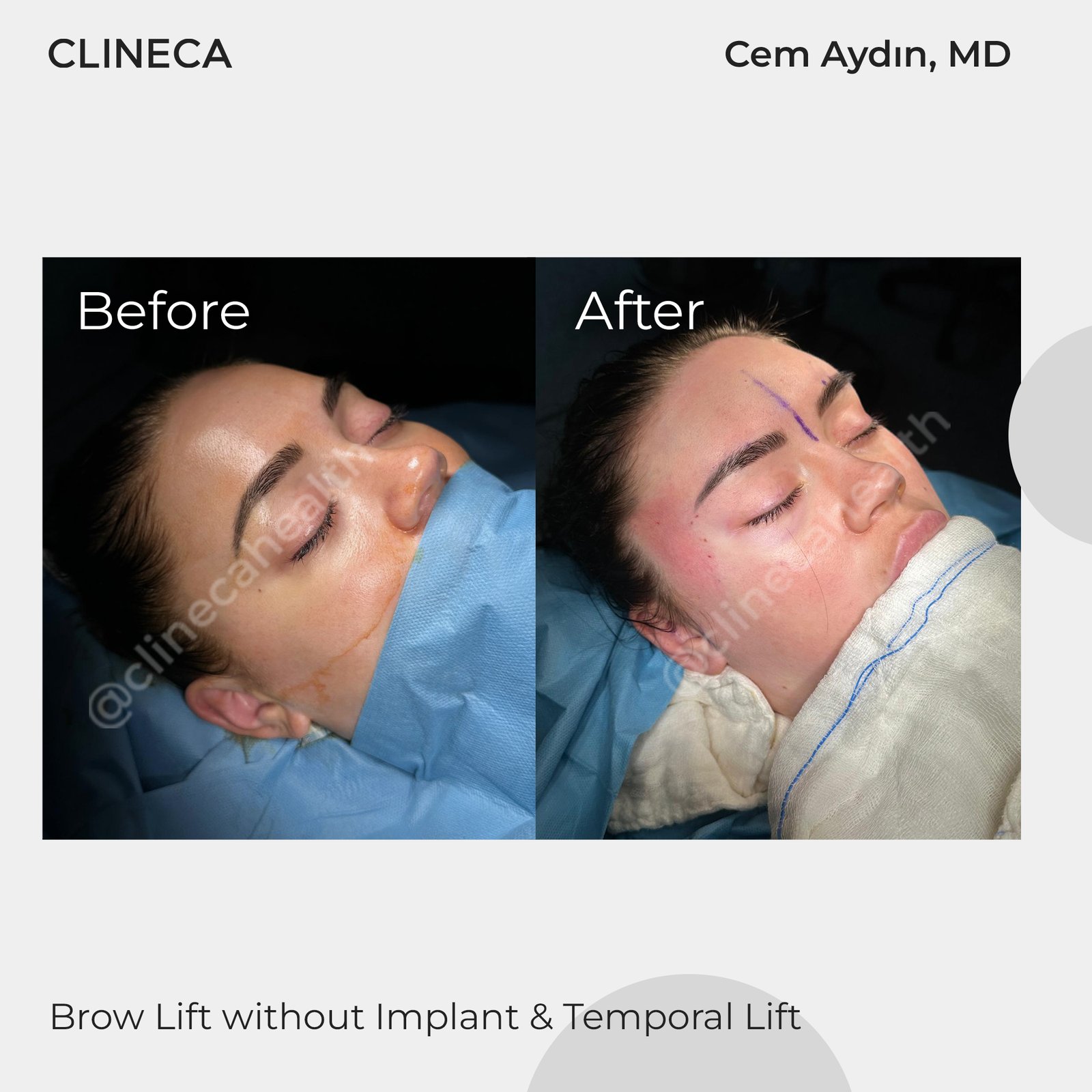
The NHS notes that after cosmetic surgery you should follow the specific advice given by your own surgeon about wound care, activity, and follow-up, because recovery times vary between procedures and between patients. The American Society of Plastic Surgeons, or ASPS, also advises that bruising and swelling are expected after brow-area surgery and that recovery is gradual rather than immediate.
📋 Early asymmetry is common One side can look more lifted or more swollen in the first two weeks. It is usually too early to judge the final shape.
In the first two weeks after a temporal lift, most people go through the same broad pattern: the first few days are about swelling, tightness, rest, and careful wound care; days 4 to 7 are usually easier; and by days 10 to 14 many patients feel socially comfortable, though swelling and numbness can still linger.
How does recovery differ between a surgical temporal lift and a thread lift?
This is one of the most important distinctions, because patients often read mixed advice online and end up confused.
A surgical temporal lift involves incisions, usually hidden in or near the hairline, and tissue repositioning. That means more swelling, more need for wound care, and a clearer aftercare schedule. You may have dressing material, visible stitch points, and firmer rules about washing your hair, exercise, and flying.
A thread lift uses dissolvable or non-dissolvable support threads placed under the skin to lift the outer brow or temple area. The skin is not cut in the same way as surgery, so downtime is often less. But there can still be tenderness, bruising, puckering, and soreness when chewing, smiling, or sleeping on your side. Thread lifts also need aftercare, especially avoiding strong facial movement, rubbing, or pressure early on.
The other difference is predictability. A surgical lift generally gives a more stable change, but with a longer recovery. A thread lift may suit someone wanting less downtime, but results and settling can be more variable. If you are also comparing it with a broader upper-face procedure, the overview on this brow lift procedure page may help frame where a temporal lift sits in relation to other brow-lifting techniques: brow lift procedure page.
Usually offers a more defined and longer-lasting lift, but needs more careful recovery and wound care.
Usually means shorter downtime, but the early settling phase can be less predictable and still needs protection.
Surgical temporal lift recovery is usually more structured: you may have incisions in the hairline, dressings, stitches, and around 1 to 2 weeks of visible healing. Thread lift recovery is often shorter, but it can still involve swelling, tenderness, skin puckering, and movement restrictions while the threads settle.
What do swelling, bruising, numbness, and tightness feel like?
Most patients worry most about how they will look in the mirror during the first week. The usual pattern is that swelling peaks early, then slowly improves. Bruising often looks worse before it looks better, because it spreads and changes colour as it resolves.
Tightness is especially common around the temples, outer brow, and scalp. Some people describe it as a pulling feeling when raising the eyebrows or opening the eyes wide. That can be unsettling, but it often reflects the normal effect of tissue repositioning and swelling.
Numbness or altered feeling in the scalp is also common after surgical lifts because small sensory nerves can be irritated during surgery. Mayo Clinic notes that numbness after facial procedures can happen and may improve gradually over time. In the first two weeks, it is usually something to monitor rather than panic about.
Thread lifts can create their own version of tightness. You may feel the threads catching when you make certain facial expressions, or notice slight dimpling near the entry points. Mild puckering often settles as the tissues relax, but marked worsening, severe pain, or a visible thread should be reviewed promptly.
⚠️ Call your surgeon urgently if swelling suddenly increases Fast-growing swelling, severe one-sided pain, active bleeding, fever, worsening redness, or vision symptoms need prompt medical review.
Swelling, bruising, scalp numbness, and tightness are typical in the first two weeks after a surgical temporal lift. Most patients find that discomfort improves before the area looks fully normal. A thread lift can also cause tenderness and skin puckering, but usually with a shorter recovery window.
When can you wash your hair, remove stitches, fly, and exercise?
This is where recovery advice should be practical, not vague. The exact schedule comes from your own surgeon, because incision placement, dressings, and how your skin is healing all matter. Still, there are some typical patterns that are useful for planning.
Hair washing
For a surgical temporal lift, many surgeons allow gentle hair washing after 24 to 48 hours, once any initial dressing is removed or once they confirm the incision can get lightly wet. The key word is gentle. Use lukewarm water, a mild shampoo, no scratching with fingernails, and no high-pressure shower directly onto the incision. Pat dry rather than rubbing.

If your surgeon has used glue, tapes, or a dressing that must stay in place longer, the timing may be different. For a thread lift, hair washing is often possible earlier, but you still need to avoid vigorous rubbing, salon blow-dries on high heat, or pulling on the temple area.
Stitch removal
If you have non-dissolvable stitches after a surgical temporal lift, they are often removed at around day 7 to day 10. Some surgeons prefer slightly earlier or slightly later depending on the hairline location and how the wound looks. Dissolvable stitches do not need formal removal, but they can still need checking.
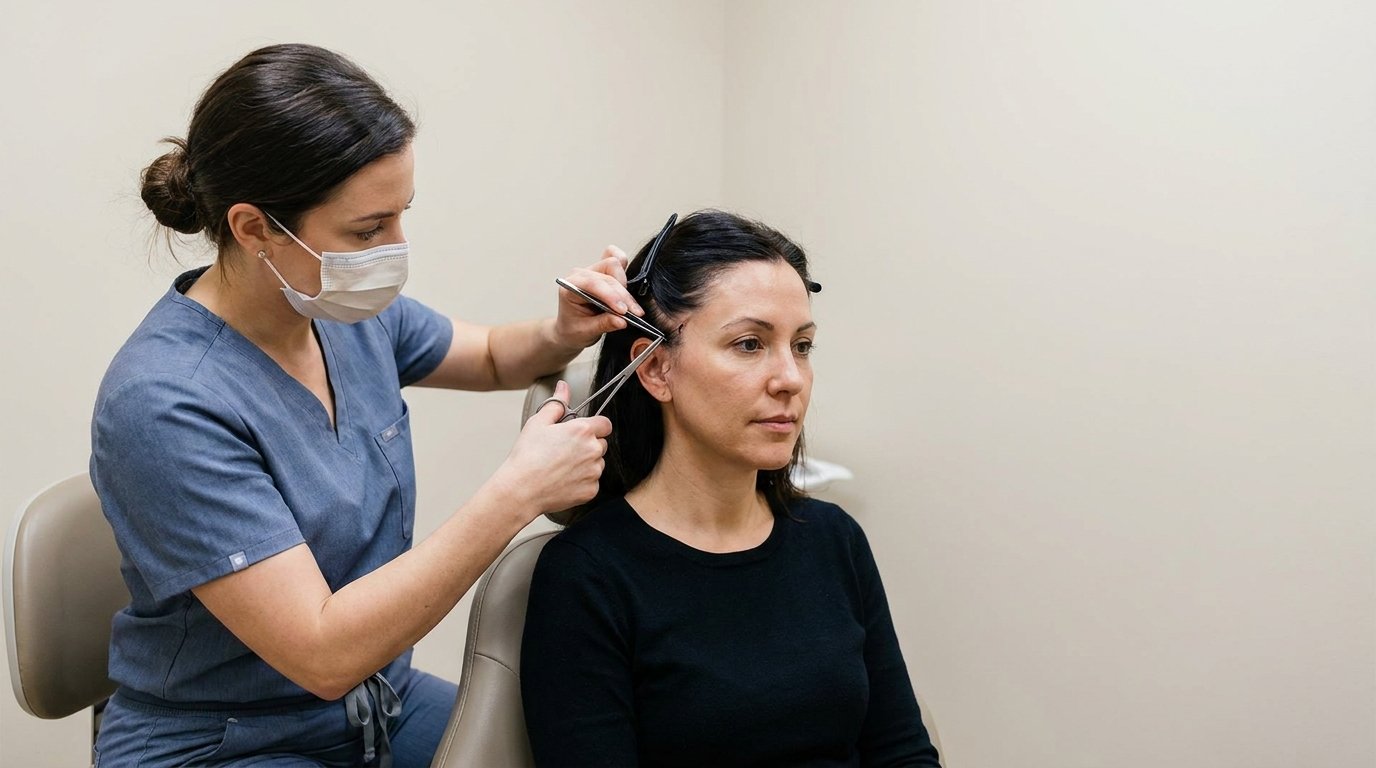
This is one reason international patients should not plan to leave too quickly. If your stitches need removal before you travel, your stay needs to cover that review. If removal will happen back home, you need a clear written handover.
Flying home
There is no universal rule for every patient, but for a surgical temporal lift, many surgeons advise avoiding flights for at least the first week, and often prefer 10 to 14 days before long-haul travel. That allows time to check swelling, bleeding risk, wound healing, and early complications before you are away from the operating team.
For a thread lift, some patients fly sooner, but that does not automatically mean next-day travel is sensible. If you are still significantly swollen, uncomfortable, or need review, staying a little longer is safer. The NHS advises people having cosmetic procedures abroad to plan aftercare carefully and not underestimate follow-up needs.
Exercise and gym return
After a surgical temporal lift, walking is usually fine early on, often from the first day, as long as it is gentle. More strenuous activity, including running, weight training, yoga inversions, swimming, and anything that raises blood pressure sharply, is usually postponed for at least 2 weeks, and often longer if bruising or swelling is still obvious.
For a thread lift, light activity may resume sooner, but intense workouts are still commonly restricted for around 1 to 2 weeks because facial strain and increased blood flow can worsen swelling or shift the early settling.
If you are unsure, the safe rule is simple: if an activity makes your face throb, redden, or feel more swollen, you are probably doing too much too soon.
⚠️ Do not base travel timing on how you look alone You can appear presentable before the wound is ready for long travel. Follow-up access matters as much as bruising.
The timing is usually more precise than patients expect. After a surgical temporal lift, hair washing is often allowed after 24 to 48 hours if your surgeon agrees, stitch removal is commonly around day 7 to 10, flying is often delayed until at least 1 week for short flights and around 10 to 14 days for long-haul travel, and exercise is usually limited for 2 weeks or longer. Thread lifts usually allow a quicker return, but still need caution.
How long should international patients stay after a temporal lift?
This is one of the most practical parts of planning treatment abroad. The right length of stay is not just about feeling okay in a hotel. It is about being available for wound checks, dressing changes, and early decision-making if something does not look right.
For a surgical temporal lift, patients often need at least one in-person review within the first week. If non-dissolvable stitches are used, that can also shape how long you should remain nearby. A very short trip may save time on paper, but it can create stress if you need a review after you have already flown home.
For a thread lift, the stay may be shorter because there are no surgical incisions in the same sense, but you still need a realistic plan for aftercare. If dimpling, thread visibility, or an uneven pull appears after a couple of days, remote advice is less useful than direct assessment.
If you are planning treatment abroad, keep the logistics simple. Confirm who you contact out of hours, when you will be reviewed, whether your stitches are dissolvable, and whether your return flight fits the expected healing schedule. If you need to arrange a personalised treatment and recovery plan, that discussion should happen before travel through a proper consultation request, not after surgery.
- ✓Ask whether your lift is surgical or thread-based, because recovery timing differs
- ✓Confirm if stitches need removal and on which day
- ✓Check when hair washing is allowed in your case
- ✓Ask for a written guide on flying and activity restrictions
- ✓Make sure you know who handles urgent concerns after hours
For a surgical temporal lift, international patients usually need to stay long enough for the first review and, if relevant, stitch removal, which often means around 7 to 10 days and sometimes closer to 14. Thread lifts may need a shorter stay, but leaving too early can make follow-up difficult if swelling or asymmetry develops.
What are the main safety risks and warning signs in the first two weeks?
A normal recovery can feel dramatic without being dangerous, so the challenge is knowing what deserves urgent attention.
Expected signs include mild oozing on the first day, bruising, swelling, numbness, tenderness, and a tight feeling. What is less reassuring is a clear change for the worse after you had been improving. That pattern matters.
The ASPS advises patients recovering from brow and forehead procedures to watch for bleeding, infection, and poor wound healing. In practical terms, you should contact your surgeon promptly if you develop increasing redness, heat, pus-like discharge, fever, severe headache, or pain that is not controlled by prescribed medicine.
Because the temporal area sits close to the eyes, any vision change, double vision, marked eye pain, or rapidly increasing one-sided swelling should be treated urgently. Those are not symptoms to watch overnight and see what happens.
For thread lifts, warning signs also include visible thread extrusion, skin dimpling that is getting worse rather than better, or increasing tenderness at an entry point. Thread problems are not always dangerous, but they should be assessed rather than ignored.
Rapid swelling, heavy bleeding, fever, worsening redness, pus, severe one-sided pain, or any vision symptom.
Mild bruising, tightness, numbness, itchiness, tenderness, and swelling that slowly improves.
Most temporal lift recoveries are straightforward, but the first two weeks are when bleeding, infection, wound problems, nerve irritation, and unusual swelling are most likely to show up. Sudden worsening pain, fever, spreading redness, active bleeding, or vision changes should never be treated as routine recovery.
What affects recovery, and how can you make the first two weeks easier?
Recovery is not only about the procedure itself. It is also shaped by your baseline health, smoking status, skin quality, age, whether other facial procedures were done at the same time, and how closely you follow aftercare.
Smoking and nicotine use can slow healing and increase wound problems. The NHS repeatedly warns that smoking raises surgical risk and can impair recovery. Alcohol in the first days can also make swelling worse and interfere with medicines.
Small choices help more than patients expect. Sleep on your back with your head raised. Keep your face relaxed. Do not tug at the temples while washing or brushing your hair. Eat normally, stay hydrated, and avoid the temptation to “test” the result by raising your brows hard in the mirror every hour.
If your temporal lift was combined with another facial procedure, such as a more extensive facial rejuvenation plan, the recovery usually follows the larger procedure rather than the smaller one. In that case, your instructions may be stricter than the average timeline described here.
A final point that patients appreciate once they are in recovery: the result often looks socially acceptable before it feels normal. Tenderness, numb patches, and a tight scalp can last longer than the visible bruising. That does not necessarily mean your healing is off track.
What about price and planning?
For this topic, it is more useful to explain what changes the quote than to give a number without context. A surgical temporal lift is usually priced differently from a thread lift because the treatment setting, anaesthesia, operating time, and aftercare needs are different.
Other factors include whether the procedure is done alone or alongside another facial operation, whether overnight observation is needed, what kind of dressings or follow-up visits are included, and how complex your starting anatomy is. This is why personalised pricing is usually given only after photographs, examination, or a formal medical review.
If you are comparing clinics, do not look at price in isolation. Ask what aftercare is included, who removes stitches if needed, how flying timing is handled, and whether you will be reviewed in person before travelling home. Those details matter just as much as the quote itself.
There is no single standard price for a temporal lift, and the final quote is normally confirmed after consultation. Cost depends on whether the procedure is surgical or thread-based, whether it is combined with other facial surgery, the surgeon’s approach, anaesthesia, aftercare, and how much follow-up is built into the plan.
Frequently Asked Questions
References
- 📎PubMed search: brow lift recovery postoperative complications
- 📎PubMed search: thread lift facial rejuvenation complications recovery
- 📎NHS cosmetic procedures guidance
- 📎American Society of Plastic Surgeons cosmetic procedures
Related Articles

You Might Also Like



Related articles


Our specialists
 Clineca SpecialistErkan PinegözPlastic & Reconstructive Surgery
 Clineca SpecialistHakan AktaşPlastic & Reconstructive Surgery
 Clineca SpecialistOrkun UzuneyüpoğluPlastic & Reconstructive Surgery
 Clineca SpecialistSalim İskenderPlastic & Reconstructive Surgery
 Clineca SpecialistEngin SelamioğluPlastic & Reconstructive Surgery
 Clineca SpecialistCem AydınPlastic & Reconstructive Surgery
 Clineca SpecialistAlperen ÖnalEar, Nose & Throat (ENT)