
Have a question about Dental?
In this article
- What people actually mean by "Turkey teeth"
- What actually drives your Turkey teeth cost
- What Turkey teeth packages usually include — and what they don’t
- Crowns, veneers or implants: which costs more and why
- Two worked examples: a smile makeover versus a full-arch rebuild
- How long you need to stay in Turkey
- The cost that shows up years later
- Choosing a clinic without choosing on price
- Getting a figure that actually applies to you
Few dental searches are as loaded as turkey teeth cost. The phrase covers everything from a handful of veneers on the front teeth to a full mouth of crowns or implants, and those are very different treatments with very different price tags. Before you can compare quotes sensibly, it helps to know what you are actually being quoted for, what sits inside a package, and what the long-term cost of each option looks like.
What people actually mean by "Turkey teeth"
“Turkey teeth” is not a dental treatment. It is a nickname the internet gave to the very white, very even smile that became popular in dental tourism — and in practice it usually means one of three things: veneers, crowns, or implants with crowns on top.
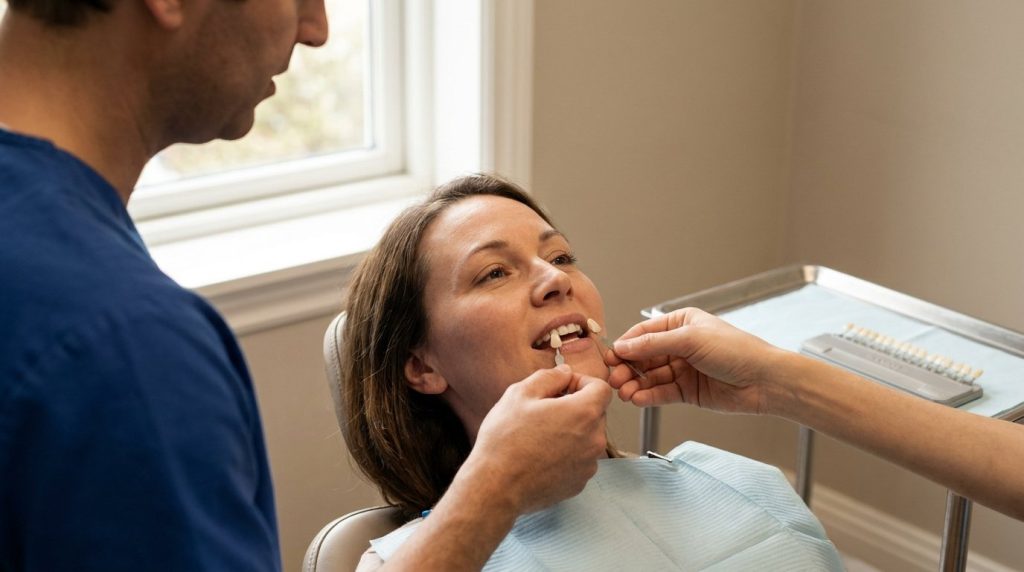
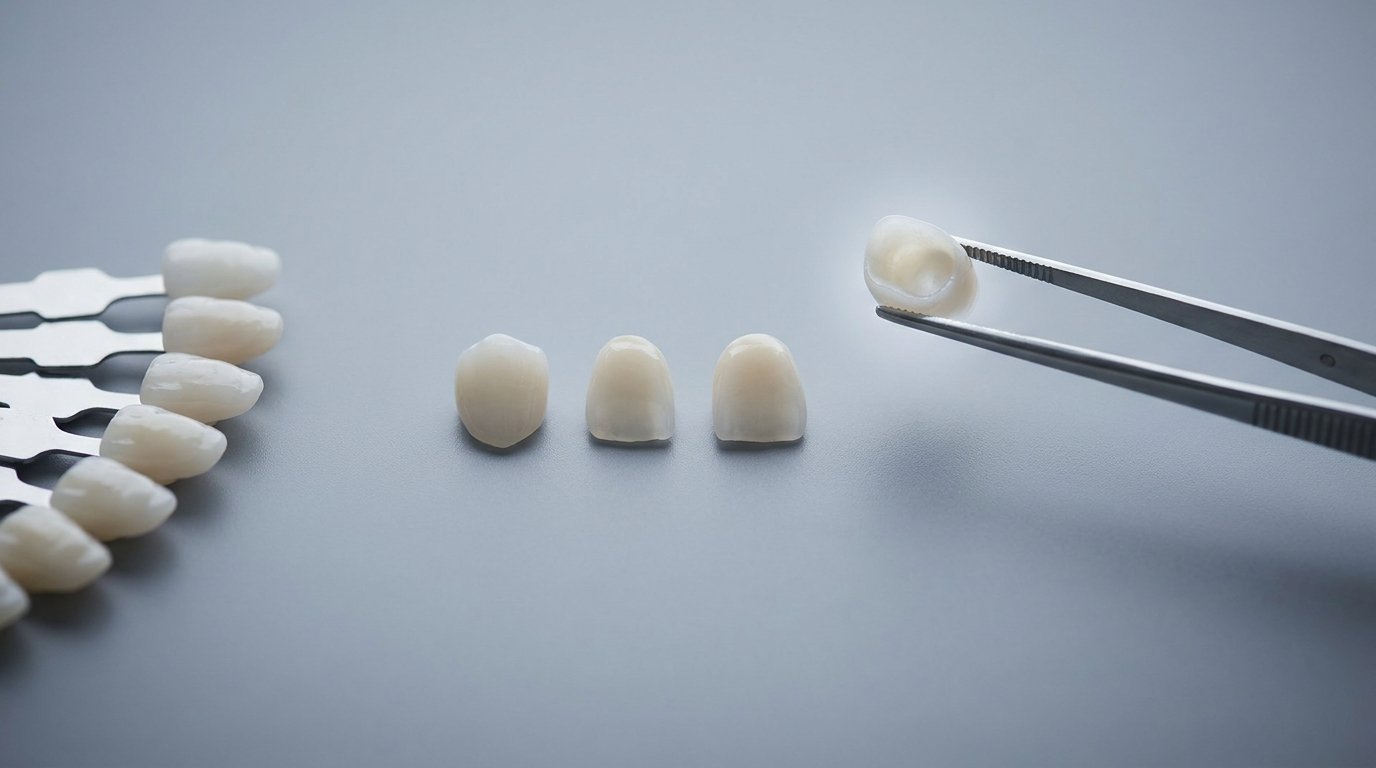
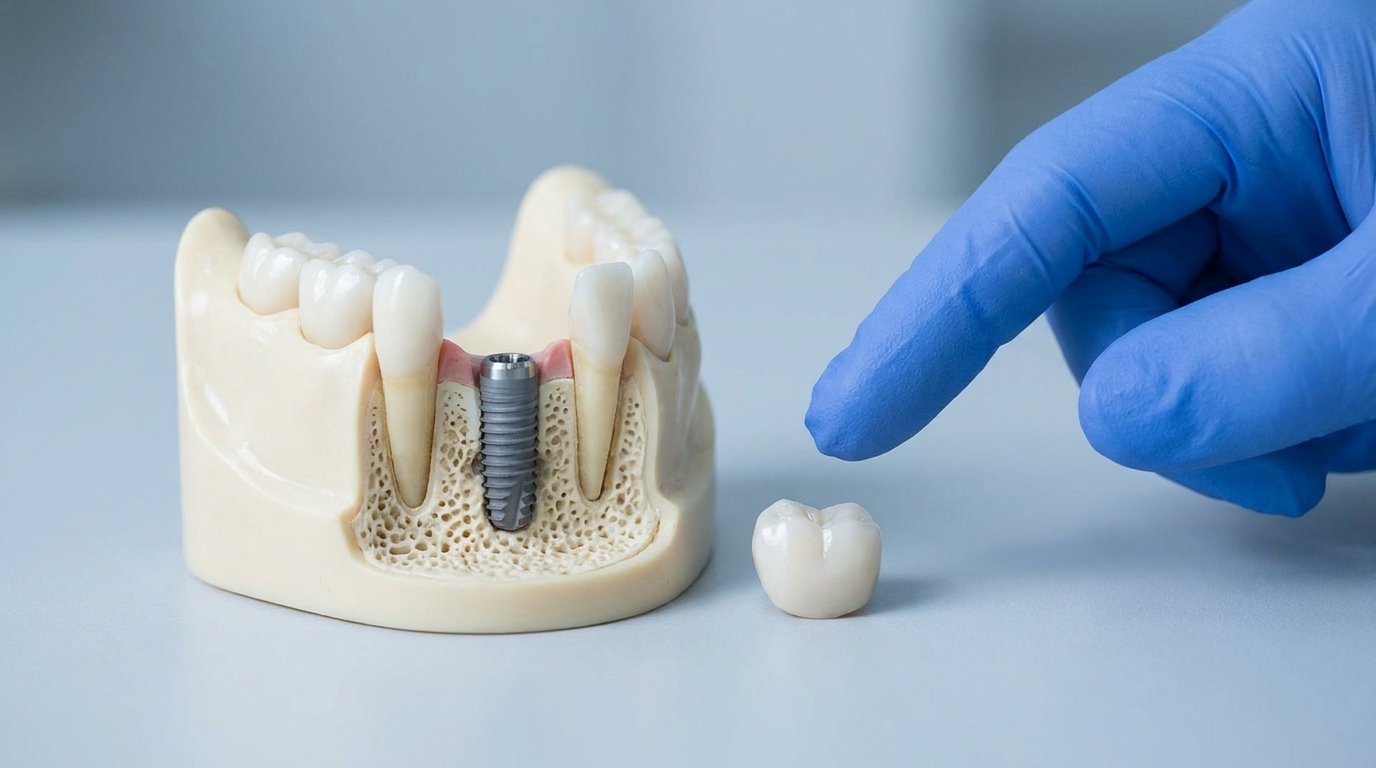
Veneers are thin shells bonded to the front surface of a tooth. A crown covers the whole tooth, so more of the natural tooth has to be shaped down to make room for it. An implant is different again: a titanium post placed in the jawbone to replace a tooth that is missing or beyond saving, with a crown fitted onto it later.
That distinction is the single biggest reason two quotes for “Turkey teeth” can look nothing alike. A set of bonded dental veneers on the upper front teeth is a cosmetic plan. A mouth rebuilt with dental implants is reconstructive surgery with a longer timeline and a higher cost per tooth. Comparing them on price alone tells you very little.
⚠️ Crowns on healthy teeth are not reversible Shaping a healthy tooth for a crown permanently removes enamel, and that tooth will need some form of restoration for the rest of your life. If your teeth are sound and the goal is purely cosmetic, ask whether whitening, bonding, orthodontics or minimal-prep veneers could achieve a similar look with far less tooth removed.
What actually drives your Turkey teeth cost
Clinics price dental work per unit — per veneer, per crown, per implant — and then build a plan around how many units you need. The honest answer to “how much are Turkey teeth” is that nobody can give you a real figure until someone has looked at your x-rays, because the number of units and the amount of groundwork are what move the total.
The material matters too. Zirconia, layered zirconia, e.max and composite all behave differently in the mouth and sit at different price points, which is why it is worth understanding the difference between zirconia and porcelain crowns before you accept a quote. Preparatory treatment is the other variable most people underestimate: gum disease, decay under an old filling, a failing root canal or a tooth that needs removing all have to be dealt with before anything cosmetic goes on top.
📋 A quote without x-rays is a guess Any price given before panoramic x-rays and ideally a 3D scan is provisional. A personalised cost is only confirmed after a proper assessment, and a plan that changes on arrival is a sign the first number was never complete.
What Turkey teeth packages usually include — and what they don’t
Most dental tourism quotes are presented as packages rather than itemised invoices, which makes them easy to compare on the headline number and hard to compare on substance. The useful question is not “what does it cost” but “what am I buying”.
A reasonably complete dental package usually covers:
- ✓Consultation, x-rays and a written treatment plan
- ✓The restorations themselves, plus lab work and temporaries
- ✓Hotel nights matched to your treatment schedule
- ✓Airport and daily clinic transfers
- ✓An interpreter or patient coordinator
What often sits outside the package is more revealing: flights, extractions, gum treatment, bone grafting, root canals, night guards and — crucially — what happens if something fails after you fly home. Our broader guide to all-inclusive packages walks through the same logic for surgical trips.
Ask for the warranty in writing and read how it works in practice. A guarantee that requires you to fly back at your own expense is still worth something, but it is not the same as a guarantee that covers remake, lab and travel costs.
- ✓Written, itemised plan: Tooth numbers, material and the number of units — not just a total.
- ✓Named dentist: You should know who is treating you and what their qualifications are.
- ✓Clear warranty terms: What is covered, for how long, and who pays for travel on a remake.
- ✓Aftercare pathway: Who you contact from home, and whether records are sent to your own dentist.
Crowns, veneers or implants: which costs more and why
Per tooth, veneers and crowns sit well below implants, because an implant involves surgery, a healing period and a separate crown stage. But the comparison is not really about price — these options answer different problems.
Veneers suit discoloured, slightly worn or mildly uneven front teeth where the underlying tooth is healthy. Crowns suit teeth that are already heavily filled, cracked, root-treated or badly worn, where the tooth genuinely needs covering for strength. Implants are for teeth that are missing or cannot be kept. If a clinic proposes crowns on a full set of healthy teeth purely for appearance, that is the moment to ask what else could achieve the look.
Whitening, composite bonding, gum contouring or short-term orthodontics can sometimes deliver much of the visual change you want while keeping your natural teeth intact. Ask to see a mock-up of both routes.
Many realistic plans combine approaches — implants where teeth are missing, crowns where teeth are damaged, and nothing at all on teeth that are fine as they are.
Two worked examples: a smile makeover versus a full-arch rebuild
Abstract pricing talk gets clearer when you map it onto two real patient situations. The totals differ, but so does almost everything else — the number of trips, the months involved, and how much of your natural anatomy changes.
In the first scenario, someone wants their upper front teeth to look even and brighter. Their teeth are healthy, so a veneer-led plan is realistic: one trip of roughly a week, two to three appointments, and temporaries worn for a few days while the lab works. This is the plan most people picture when they think of a Hollywood smile.
In the second, several upper teeth are missing or failing and the rest are mobile. That is an implant case — often an All-on-4 style full-arch plan — which means surgery, a healing phase of several months and a second trip for the final teeth. Two trips mean two sets of flights and hotel nights, so travel becomes a meaningful share of the overall spend rather than a footnote.
How long you need to stay in Turkey
Stay length is dictated by lab time, not by how quickly a dentist can work. Crowns and veneers need preparation, impressions or a digital scan, lab fabrication, a try-in and then final bonding — which is why a credible cosmetic plan runs across most of a week rather than two days.
Implants split the timeline in half. The post is placed on the first trip, then the bone needs months to fuse to it before final teeth can be fitted on a second trip. Some cases allow immediate temporary teeth, but the permanent result still waits for healing. Our dental treatment in Turkey guide covers how clinics usually sequence those visits.
Build slack into your flights. Shade adjustments, a lab remake or a tooth that needs calming down before final cementation are all normal, and a return flight booked too tightly is the most common reason patients accept a result they are not happy with.
🚨 Don’t let the flight home set the clinical pace Rushed cementation, skipped try-ins and crowns fitted on inflamed gums create problems that cost far more to fix than the extra hotel nights would have cost. If a dentist recommends waiting, waiting is the cheaper option.
The cost that shows up years later
The number on the quote is only part of the real price. Once enamel has been removed for crowns, the tooth is permanently dependent on a restoration — and restorations do not last forever. Crowns and veneers chip, debond, wear and eventually need replacing, and each replacement cycle has its own cost wherever in the world you have it done.
There are clinical risks too. Preparing a tooth for a crown can irritate the nerve, and some teeth later need root canal treatment. Poorly fitting margins trap plaque and lead to gum inflammation and decay at the edge of the crown. These are recognised complications of crown work rather than scare stories, and they are the reason conservative treatment is usually the better long-term value.
Aftercare at home is worth planning before you fly. Ask who will check your work, make sure you leave with your x-rays, treatment notes and implant details, and tell your own dentist what was done. Sensitivity in the first weeks is common — our notes on what to expect after a crown and on veneer sensitivity set out what is normal and what is not.
Finally, treat any untreated infection as urgent rather than cosmetic. Dental abscesses can spread well beyond the mouth, and a 2016 review in Le Infezioni in Medicina described cases where an unexplained fever turned out to be driven by infection around a tooth root. Cosmetic work placed over an active infection is both unsafe and a false economy.
Choosing a clinic without choosing on price
Price is the easiest thing to compare and the least useful. What separates a good outcome from an expensive mistake is diagnosis — whether someone assessed your gums, your bite and your existing fillings before recommending a plan, or simply counted your teeth and quoted for a full set.
In the UK, dentists must be registered with the General Dental Council, and in Turkey clinics are licensed by the Ministry of Health. Ask directly about your dentist’s registration, their experience with the specific treatment you need, and whether a prosthodontist or oral surgeon is involved where the case calls for one. International accreditation such as JCI is a useful additional signal, not a substitute for knowing who is holding the drill.
X-rays reviewed before any plan is issued; a named, registered dentist; a written itemised plan with material and tooth numbers; honest talk about keeping healthy teeth untouched; a warranty you can read; clear aftercare contact.
A full-mouth price quoted from photos alone; pressure to decide within hours; no interest in your gum health; crowns recommended on sound teeth without discussing alternatives; a two-day turnaround for a full makeover; no written warranty.
Send your x-rays and the proposed plan to a dentist at home or to a second clinic. If the plans differ sharply in how many teeth get touched, that difference is the real decision you are making.
Getting a figure that actually applies to you
Because dental quotes are built per tooth and per stage, a personalised cost only becomes meaningful after a consultation with x-rays and, for implants, a 3D scan. Clear photographs and recent x-rays sent in advance will get you a provisional plan; the confirmed figure follows an in-person examination, when the clinic can see exactly how much groundwork your mouth needs.
When you compare options, compare like for like: the same number of units, the same material, the same preparatory treatment, the same warranty terms, and travel included on both sides. A plan that treats fewer teeth and keeps more of your own enamel can be both cheaper over a lifetime and kinder to your mouth, even if its headline figure sits higher than a full-set offer.
This article is for informational purposes only and does not constitute medical advice. Always consult a qualified surgeon for personalised guidance.
Frequently Asked Questions
References
- 📎NHS — Cosmetic procedures
- 📎An unnoticed origin of fever: periapical tooth abscess — Le Infezioni in Medicina, 2016
- 📎Mayo Clinic — Tests & Procedures
Related Articles



You Might Also Like


Related articles


Our specialists
 Clineca SpecialistErkan PinegözPlastic & Reconstructive Surgery
 Clineca SpecialistHakan AktaşPlastic & Reconstructive Surgery
 Clineca SpecialistOrkun UzuneyüpoğluPlastic & Reconstructive Surgery
 Clineca SpecialistSalim İskenderPlastic & Reconstructive Surgery
 Clineca SpecialistEngin SelamioğluPlastic & Reconstructive Surgery
 Clineca SpecialistCem AydınPlastic & Reconstructive Surgery
 Clineca SpecialistAlperen ÖnalEar, Nose & Throat (ENT)