Have a question about breast fat injection?
In this article
- What does breast fat transfer actually do?
- Am I a good candidate for breast fat injection?
- What affects the cost of fat transfer breast augmentation in Turkey?
- How long should I stay in Turkey, and what is recovery like?
- Is breast fat transfer safe, and what can go wrong?
- Fat transfer or implants: how to choose
- Choosing a clinic and surgeon in Turkey
Breast fat transfer in Turkey attracts a particular kind of patient: someone who wants a fuller, softer breast shape but has no interest in implants. It is an unusual operation because it is two procedures at once — liposuction from one part of the body, then careful injection into the breast — and the final result depends as much on how your body treats the grafted fat as on the surgery itself. Before you book flights, it is worth understanding what this operation can realistically change, and what it cannot.
What does breast fat transfer actually do?
Breast fat injection moves your own fat from areas like the abdomen, flanks or thighs into the breast to add modest volume and improve shape. It is not a substitute for an implant when you want a clear jump in cup size.
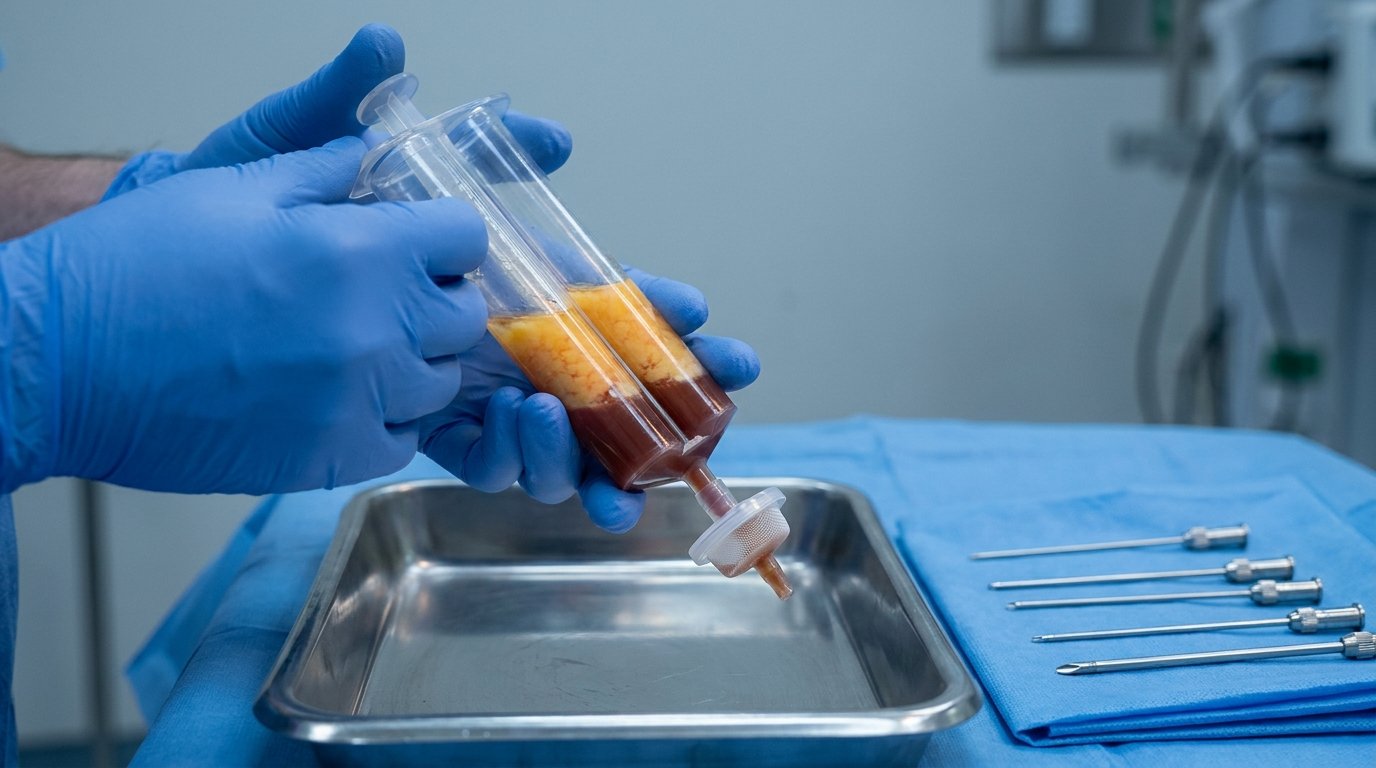
The surgeon first performs liposuction on the donor area. That fat is then processed — washed and filtered to remove blood, oil and fluid — and injected in many fine passes across different layers of the breast rather than as one lump. Spreading it out matters, because each tiny droplet of fat needs to pick up a blood supply from the surrounding tissue to survive.
Not all of it survives. A portion of the transferred fat is reabsorbed by the body in the first weeks and months, which is why surgeons overfill slightly and why your breasts look fuller at two weeks than they do at four months. If you want numbers on realistic gains, we go deeper in our guide on how much breast volume fat transfer can add alone.
What patients usually like about it: the result feels like breast tissue because it is soft tissue, there is no implant to replace later, and the donor area gets slimmer at the same time. What frustrates some patients: the change is subtle, the volume is not fully predictable, and more than one session may be needed to reach the look they had in mind.
📋 Think in shape, not cup size Fat transfer is at its best for filling the upper breast, softening a hollow after weight loss or correcting mild asymmetry. If your goal is a noticeably larger breast, an implant-based plan is usually the more honest route.
Am I a good candidate for breast fat injection?
The simplest answer: you need enough spare fat to harvest, a stable weight, and realistic expectations about a modest size change. Very slim patients are often told no, or are offered an alternative, simply because there is not enough donor fat to work with.
Beyond body fat, surgeons look at skin quality and breast position. Fat adds volume but it does not lift. If the nipple has dropped below the breast crease, adding fat alone tends to make the breast look heavier rather than perkier, and a lift — with or without fat — fits better. Loose, stretched skin after pregnancy or major weight loss behaves the same way.
Smoking is a genuine obstacle here, more so than with some other procedures, because grafted fat needs good blood flow to survive. Most surgeons ask for several weeks without nicotine before and after surgery. A recent or planned pregnancy also changes the plan, as breast volume and skin will shift again afterwards.
Pregnancy and breastfeeding plans come up in roughly one in four of the conversations we have with women considering breast surgery, so you are far from alone in asking. Raise it at your first consultation rather than after booking, because it can genuinely change what your surgeon recommends and when.
If you have lost a lot of weight and are wondering whether your breasts are the right starting point for this, read our dedicated piece on candidacy for breast fat injection after weight loss.
Stable weight, enough donor fat on the abdomen, flanks or thighs, breasts that sit in a good position, and a goal of modest fullness or better symmetry rather than a big size jump.
Very low body fat, significant sagging that needs a lift, active smoking, unstable weight, or an expectation of a dramatic increase in size from one session.
What affects the cost of fat transfer breast augmentation in Turkey?
Your quote is shaped mainly by how much liposuction the surgery involves, how long you are under anaesthesia, and whether anything is combined with it — not by a single fixed procedure fee. We keep pricing conversations personal rather than publishing figures, because two patients booking the same operation can need very different amounts of surgical time.
The biggest single variable is the donor work. Harvesting fat from one area is a shorter operation than circumferential liposuction of the abdomen, flanks and inner thighs, and the fee follows the theatre time and the team involved. Combining fat transfer with a breast lift, or with a second procedure such as a tummy tuck, moves the quote again.
A second honest variable is whether you may want a repeat session. Because some graft volume is reabsorbed, patients chasing a fuller result sometimes plan a second transfer later. Ask upfront how your clinic prices a second session — it is a fair question and a clear answer is a good sign.
A personalised price is confirmed after consultation, once the surgeon has seen your photos or examined you and agreed the donor areas and surgical plan.
⚠️ Compare inclusions, not headline numbers A cheaper quote that excludes the hospital night, garments or follow-up is not cheaper. Ask for a written breakdown of what is covered and what you would pay for separately.
- ✓Surgeon’s fee and the full operating team
- ✓Anaesthesia and hospital or clinic facility fees
- ✓Pre-operative blood tests and clearance
- ✓Compression garment and prescribed medication
- ✓Airport and hotel–hospital transfers
- ✓Scheduled follow-up before you fly home
How long should I stay in Turkey, and what is recovery like?
Most patients plan around a week in Turkey, with flying home cleared at the post-operative check rather than by the calendar alone. The soreness that surprises people is usually from the liposuction sites, not the breasts.
Expect two recovery stories running in parallel. The breasts feel tight, swollen and a little tender, but they are rarely the main complaint. The donor areas — abdomen, flanks, thighs — bruise, ache and feel stiff for a couple of weeks, and that is what limits how you move, sit and sleep early on.
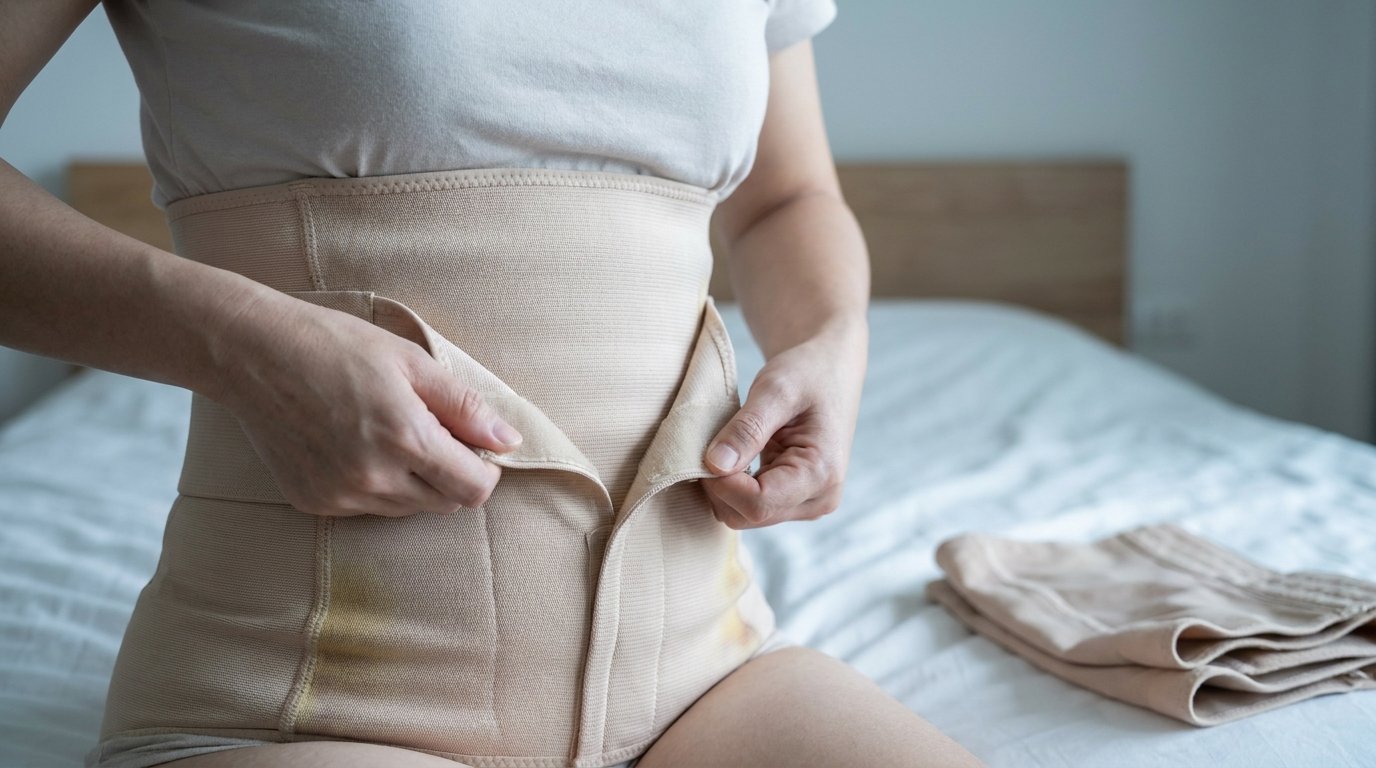
Compression on the donor areas is worn for several weeks. For the breasts themselves, surgeons often ask you to avoid tight bras, sleeping face down and any strong pressure in the first weeks, because squeezing the newly grafted fat can reduce how much of it survives.
Results settle slowly. Swelling masks the true volume for the first month, and most of the reabsorption happens in the first three months. The shape you have at the six-month mark is close to your real result. Our first-month recovery guide for breast fat transfer covers the early weeks day by day, and if you are mapping out annual leave and flights, see how long to stay in Turkey for breast surgery.
📋 Flying home Clearance to fly depends on your wound healing and general recovery after liposuction, not just the number of days. Keep your return flight flexible if you can, and move during the flight to reduce clot risk.
Is breast fat transfer safe, and what can go wrong?
It is generally considered a well-tolerated procedure in appropriate candidates, with no implant-related complications — but it carries the combined risks of liposuction and breast surgery, and it is not risk-free.
The complications specific to grafted fat are uneven reabsorption, firm lumps where fat has not survived (fat necrosis), small oil cysts, and calcifications in the breast tissue. Those calcifications matter mostly because they can show up on future breast imaging, which is why surgeons record what was done and may advise a baseline mammogram if you are in a screening age group. Tell any future radiologist that you have had fat grafting — it helps them read the images correctly.
The usual surgical risks still apply: infection, bleeding, asymmetry, contour irregularity or looseness at the donor site, prolonged numbness, and the general risks of anaesthesia and of blood clots after any procedure that involves long periods of sitting or flying. Reputable clinics screen for clotting risk and use preventive measures.
The other honest trade-off is predictability. Even with excellent technique, how much fat survives varies from person to person, and a result that looks good at two weeks may look more modest at four months. That is not a complication; it is the nature of the procedure, and a surgeon who explains it clearly before surgery is doing their job properly.
This article is for informational purposes only and does not constitute medical advice. Always consult a qualified surgeon for personalised guidance.
🚨 Contact your clinic promptly if You develop a fever, spreading redness or heat over the breast or donor area, worsening one-sided pain, foul-smelling drainage, chest pain or breathlessness, or sudden swelling in one calf.
Fat transfer or implants: how to choose
Choose fat transfer if you want a natural, modest change and would rather not have a device in your body; choose implants if a clear size increase is the goal. Many patients arrive certain about one option and leave the consultation reconsidering.
For very slim patients the decision is often made by anatomy rather than preference, since there may simply not be enough fat to harvest — we weigh that specific scenario in implants versus fat transfer for very slim patients. There is also a middle path: a small implant combined with fat grafting to soften the edges and fill the upper breast, which can suit patients who want size and a natural transition.
And if sagging is the real complaint, neither option alone solves it. A lift repositions the breast; fat or an implant fills it. Those are different problems and they need different answers.
For patients whose main issue is position and shape rather than volume, lifting the breast and adding a small amount of fat can give a fuller look without an implant.
A modest implant for reliable volume, with grafted fat used to soften the upper border and improve the transition. More surgery, but more control over the final shape.
Choosing a clinic and surgeon in Turkey
Judge a clinic on who operates, where they operate and what happens after you fly home — not on the speed of the reply on WhatsApp. Fat transfer is technique-sensitive, and the person holding the cannula matters more than the brochure.
Ask directly for the name of the surgeon who will perform your operation, and check their qualification in plastic, reconstructive and aesthetic surgery with the Turkish Medical Association register or an equivalent board. Ask where surgery takes place, whether the facility is accredited, whether an anaesthetist is present throughout, and whether you stay overnight. Then ask about aftercare: who you contact at week three with a question, and how a complication would be handled once you are home.
Photographs are useful if you read them properly. Look for before-and-after sets of patients with a similar starting body type and breast shape, taken at the same angles, and ideally at six months or later rather than at two weeks when swelling flatters everyone.
A named, board-qualified plastic surgeon; a video or in-person consultation before any deposit; accredited hospital facilities; a written, itemised quote; honest talk about graft survival and the possible need for a second session; a clear aftercare contact.
Guaranteed cup sizes or guaranteed results; no named surgeon until arrival; pressure to pay quickly for a ‘last available slot’; before-and-after photos with no dates or inconsistent angles; no plan for complications after you fly home.
Frequently Asked Questions
References
Related Articles


You Might Also Like

Related articles
Our specialists
 Clineca SpecialistErkan PinegözPlastic & Reconstructive Surgery
 Clineca SpecialistHakan AktaşPlastic & Reconstructive Surgery
 Clineca SpecialistOrkun UzuneyüpoğluPlastic & Reconstructive Surgery
 Clineca SpecialistSalim İskenderPlastic & Reconstructive Surgery
 Clineca SpecialistEngin SelamioğluPlastic & Reconstructive Surgery
 Clineca SpecialistCem AydınPlastic & Reconstructive Surgery
 Clineca SpecialistAlperen ÖnalEar, Nose & Throat (ENT)