Have a question about Breast Fat Injection?
In this article
- What is the normal swelling timeline after breast fat injection?
- Why can swelling last longer for some people?
- When should swelling improve enough to look presentable?
- What helps swelling go down after breast fat transfer?
- When is swelling not normal?
- How long should you stay in Turkey after the procedure?
- What affects the overall cost if you are considering this treatment?
How long does swelling last after breast fat injection? Most swelling is usually at its worst in the first few days, improves clearly over 2 to 6 weeks, and subtle puffiness can take a few months to settle fully. The exact timeline varies because this procedure combines liposuction with fat transfer, so recovery affects both the breasts and the donor areas.
What is the normal swelling timeline after breast fat injection?
A normal recovery is rarely a straight line. You may feel more swollen on day three than on day one, and one breast can look puffier than the other for a while. That does not always mean something is wrong.
In broad terms, the first few days are the most intense. The breasts often look fuller than the final result because part of that early volume is swelling, not only transferred fat. At the same time, the areas where fat was taken from, such as the abdomen, flanks, or thighs, can feel tighter, bruised, and more swollen than the breasts.
By the end of the second week, many people feel more comfortable in normal clothes, although the chest may still look rounder or higher than expected. Between weeks 3 and 6, a large part of the visible swelling usually fades. After that, the changes become slower and more subtle. Final settling often takes a few months because the body is healing, the tissues are softening, and some of the transferred fat is establishing its blood supply.
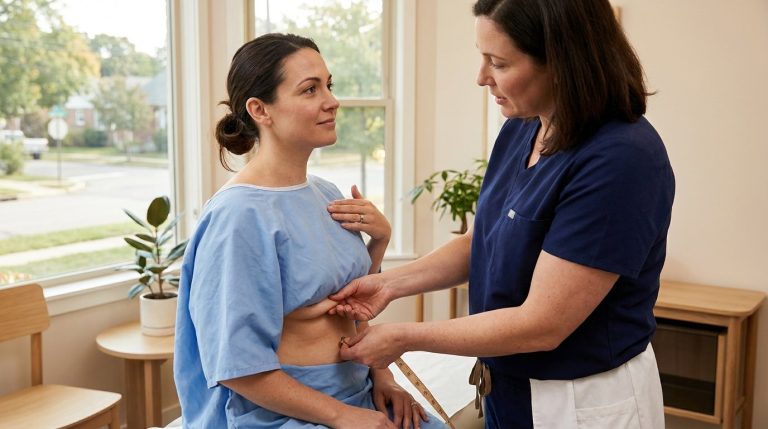
The NHS notes that swelling and bruising are expected after cosmetic surgery, and recovery time varies by procedure and by person. That is especially true here, because breast fat transfer is really two recoveries in one: liposuction recovery plus breast healing.
📋 Early fullness is not the final size Right after surgery, the breasts often look larger because swelling adds temporary volume. It takes time to see what volume remains once healing settles.
For most people, swelling after breast fat injection is strongest in the first week, eases noticeably by weeks 2 to 6, and continues to settle over 2 to 3 months. Donor areas treated with liposuction may stay swollen or firm longer than the breasts themselves.
Why can swelling last longer for some people?
There are a few honest reasons. First, the amount of liposuction matters. If more fat is harvested, donor-site swelling can last longer. Second, your body heals at its own pace. Some people bruise easily, hold fluid longer, or react more strongly to surgery.
Technique matters too. Breast fat transfer is not just about adding fat. The surgeon has to place small amounts carefully so the fat has the best chance of surviving. If larger volumes are transferred, the breast tissues may stay firm or swollen for longer while everything settles.
Your aftercare also plays a part. Compression on the liposuction areas, gentle walking, good hydration, and following the clinic’s instructions can all help recovery move more smoothly. On the other hand, smoking, nicotine use, and returning to exercise too early may make swelling worse or prolong healing. Mayo Clinic and ASPS both stress that recovery after cosmetic procedures depends heavily on the procedure details and the patient’s overall health.
If you are comparing methods of breast enlargement, it helps to know that swelling patterns are different with implants and with fat transfer. With implants, the main swelling is usually in the breasts. With fat transfer, there is also healing in the donor areas. If you are still weighing your options, reading about breast augmentation options can help you understand the broader differences.
When should swelling improve enough to look presentable?
This is one of the most practical questions, especially for people travelling for surgery. In real life, “presentable” usually means you can go out for meals, ride in a car, or return to desk-based work without looking obviously fresh from surgery.
For many patients, that point comes somewhere around 10 to 14 days. Bruising can often be covered by clothing, and the breasts tend to look less tight and overfilled. Still, they may not look fully natural yet. The upper part of the breast can seem more swollen early on, and the donor areas may still feel tender or uneven.
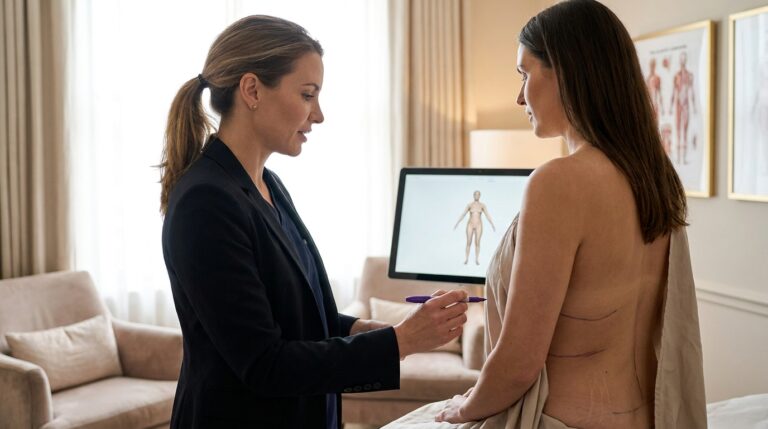
If you are planning surgery abroad, it is sensible to allow enough time for early checks before flying home. The exact plan should come from your surgical team, but many international patients stay at least several days so immediate recovery can be monitored. If you are arranging a treatment plan, a formal cosmetic surgery consultation is the place to ask how long you should stay based on the amount of liposuction, your medical history, and your return flight.
Many patients feel comfortable being seen in loose clothing after about 2 weeks, but that does not mean swelling is gone. A more natural-looking shape often appears between weeks 4 and 8, with continued softening over the next few months.
What helps swelling go down after breast fat transfer?
There is no magic fix, but there are sensible steps that often help. The aim is not to rush recovery. It is to avoid making swelling worse.
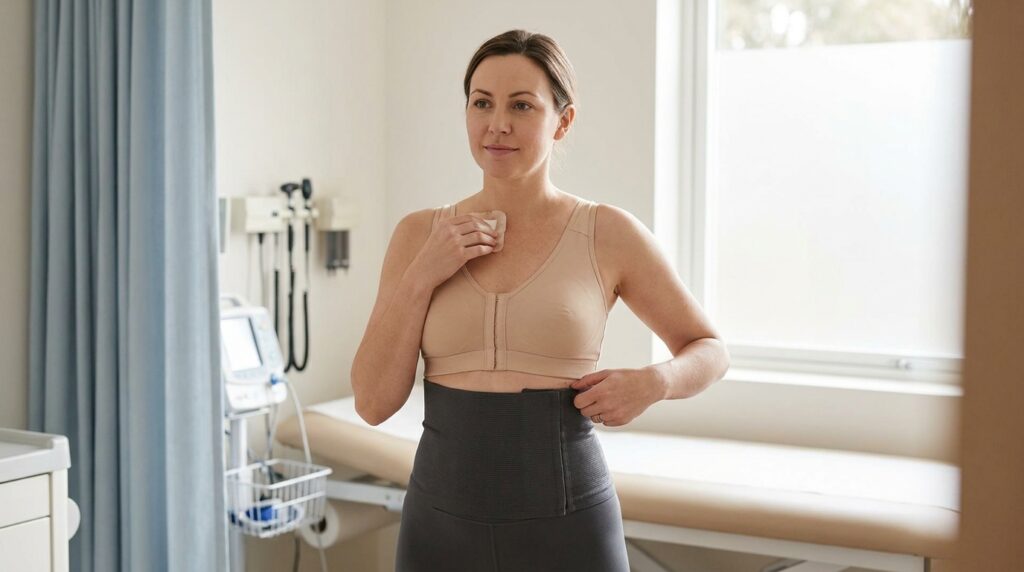
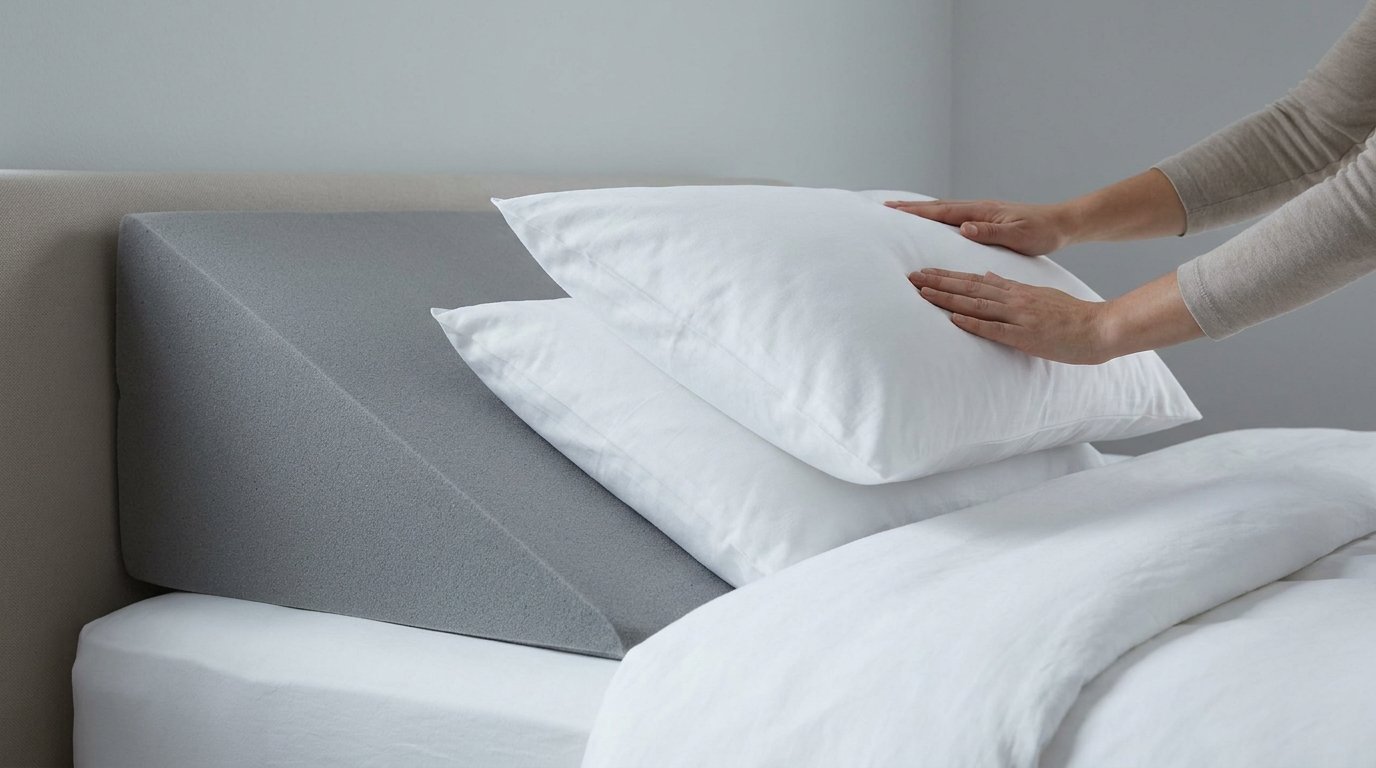
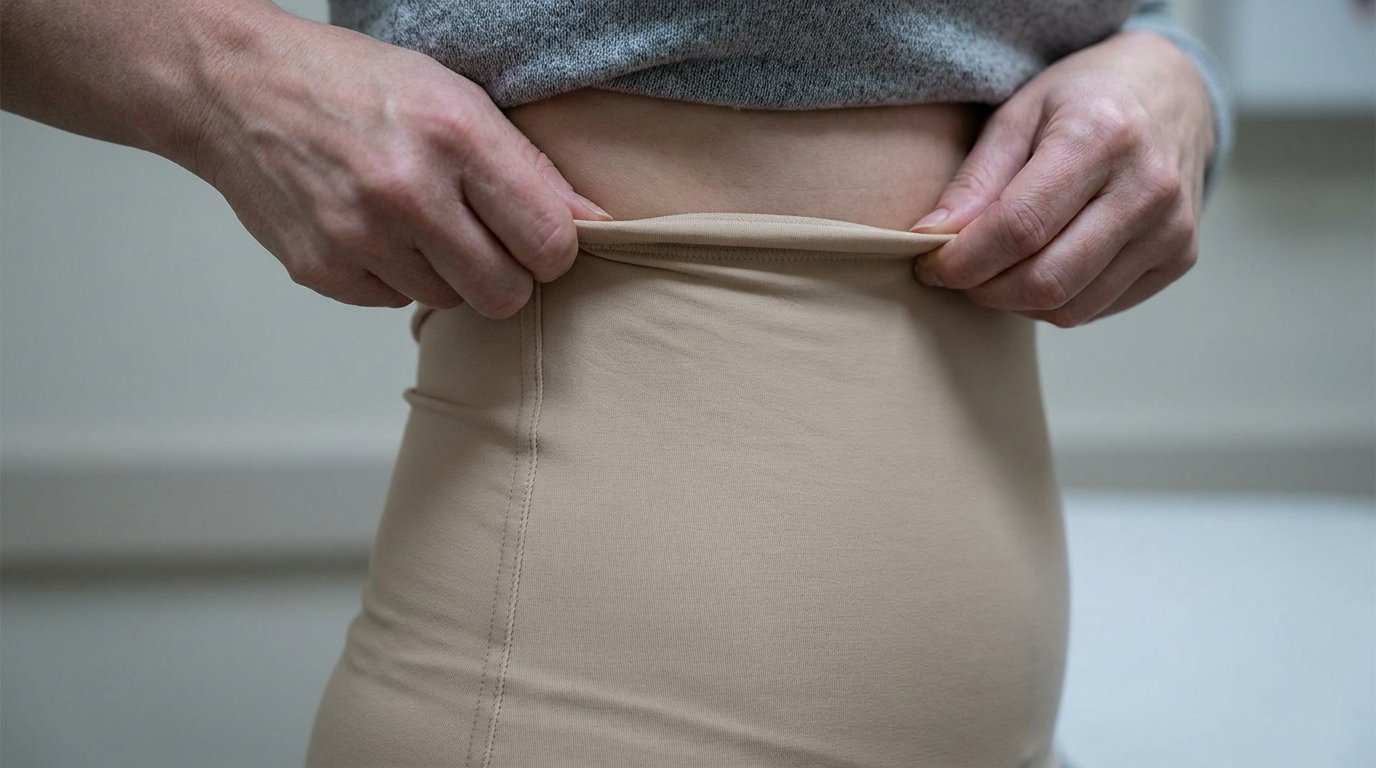
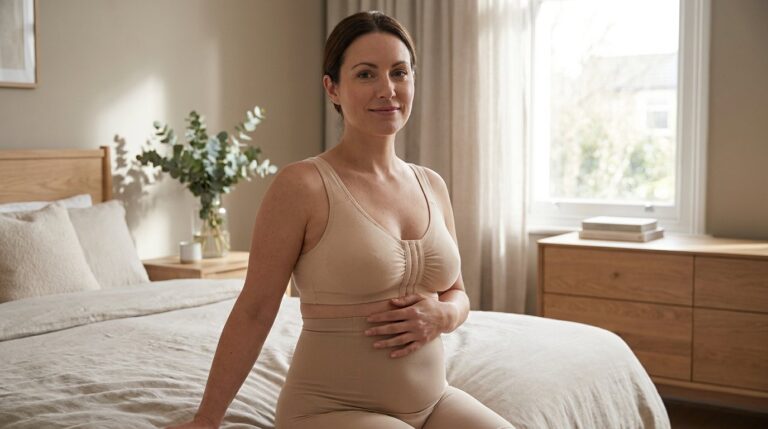
The simplest things matter most. Sleep with your upper body slightly raised if your team advises it. Walk gently from the first days to keep circulation moving. Wear any compression garment exactly as instructed for the liposuction areas, because those areas often stay puffy longer than people expect.
Try not to judge the result too early. Pressing, massaging, or constantly checking the breasts can make you more anxious without changing the healing process. Also remember that advice can differ between surgeons, especially on bras and massage, so your own post-op instructions should come first.
⚠️ Do not use other patients’ bra advice blindly Some surgeons want light support early on, while others give more specific bra rules to avoid pressure on transferred fat. Follow your own team’s instructions, not social media tips.
- ✓Take prescribed medicines exactly as directed
- ✓Wear compression on donor areas if advised
- ✓Keep moving with short, gentle walks
- ✓Avoid smoking and nicotine during healing
- ✓Delay intense exercise until your surgeon says it is safe
- ✓Attend all follow-up checks, even if swelling seems normal
Swelling usually settles with time, but good aftercare can make recovery easier. The most useful basics are rest, gentle walking, prescribed compression for donor areas, avoiding smoking, and following the surgeon’s advice on bras, sleep position, and activity.
When is swelling not normal?
Most swelling is harmless and improves gradually. What matters is the pattern. Normal swelling tends to peak early, then ease. Concerning swelling often gets worse suddenly, or comes with other symptoms that are hard to ignore.
Call your surgical team promptly if one breast becomes much larger than the other, if the skin looks very red or feels hot, or if pain sharply increases instead of slowly improving. Fever, discharge, a bad smell, or feeling generally unwell also deserve attention. The NHS advises patients to seek urgent medical help after surgery if they develop signs of infection or other serious complications.
Shortness of breath, chest pain, or calf pain are emergency symptoms and should never be brushed off as normal post-op discomfort. Those symptoms need urgent assessment wherever you are, including if you have already travelled home.
🚨 Emergency symptoms Chest pain, shortness of breath, fainting, or leg swelling and pain need urgent medical attention immediately.
Mild uneven swelling, bruising, tightness, and gradual day-by-day improvement are common early in recovery.
Sudden one-sided swelling, severe pain, spreading redness, fever, or worsening symptoms after initial improvement.
Some swelling is expected, but rapidly increasing swelling, marked asymmetry, severe pain, redness, heat, fever, or shortness of breath are not normal. These symptoms need urgent medical advice because they may point to bleeding, infection, or another complication.
How long should you stay in Turkey after the procedure?
For medical travel, the safe answer is not to book the shortest possible trip. Breast fat injection involves surgery to the breasts and liposuction donor areas, so there are two sets of healing points to review before you fly.
The exact stay depends on the extent of surgery, how you are recovering, and your surgeon’s advice. In general, patients should expect to remain long enough for the first post-op checks and for early problems, if they happen, to be noticed. A clinic should be able to explain who will review you, when you can shower, when dressings are changed, and what happens if swelling seems excessive before your return.
When choosing where to go, look for clear surgeon credentials, transparent aftercare, and a named hospital or accredited operating facility. ASPS advises patients to check training, certification, and where surgery will take place. If you are researching providers, start with the clinic’s about page, review the listed doctors, and use the contact page to ask specific recovery and follow-up questions.
- →Ask who handles out-of-hours concerns after surgery
- →Ask how many in-person checks are planned before you fly
- →Ask whether donor-site compression is included and for how long
- →Ask what support is available once you return home
What affects the overall cost if you are considering this treatment?
Because this topic is recovery-focused, the most honest approach on cost is to explain what changes the quote rather than giving a number that may not fit your case. Breast fat transfer is not priced only as a breast procedure. It also includes fat harvesting, processing, and reinjection, plus the time and resources needed for follow-up.
If one patient needs small-volume transfer and limited liposuction, the plan may be simpler than for someone needing larger contouring of several donor areas. The setting matters too. Hospital fees, anaesthesia, garments, medication, and aftercare support can all change the final quote.
A reliable clinic should explain what is and is not included before you travel. That includes pre-op tests, post-op checks, compression garments, hotel planning if relevant, and whether revision surgery is covered if the result is not exactly as hoped. The final price should be confirmed only after a proper consultation and surgical assessment.
There is no single standard price for breast fat injection. The final quote depends on the amount of liposuction needed, the surgical plan, hospital and anaesthetic fees, aftercare, and whether extra nights or garments are included. A personalised quote is usually confirmed after consultation.
Frequently Asked Questions
References
- 📎NHS: Cosmetic procedures
- 📎ASPS: Cosmetic procedures
- 📎Mayo Clinic: Tests and procedures
- 📎PubMed search: breast fat grafting swelling recovery
Related Articles

You Might Also Like

Related articles
Our specialists
 Clineca SpecialistErkan PinegözPlastic & Reconstructive Surgery
 Clineca SpecialistHakan AktaşPlastic & Reconstructive Surgery
 Clineca SpecialistOrkun UzuneyüpoğluPlastic & Reconstructive Surgery
 Clineca SpecialistSalim İskenderPlastic & Reconstructive Surgery
 Clineca SpecialistEngin SelamioğluPlastic & Reconstructive Surgery
 Clineca SpecialistCem AydınPlastic & Reconstructive Surgery
 Clineca SpecialistAlperen ÖnalEar, Nose & Throat (ENT)