Have a question about Butt Implants?
In this article
- What is the short answer for very slim patients?
- Why can fat transfer be harder in a very slim body?
- What risks matter most with butt implants in slim patients?
- How does fat transfer safety compare with implant safety?
- What does recovery really look like for a slim patient?
- How should you decide which option is safer for you?
If you are asking whether butt augmentation with implants is safer than fat transfer for very slim patients, the short answer is: not automatically. In very slim people, implants can be more feasible because there may not be enough donor fat for transfer, but they bring their own set of risks, while fat transfer has a different safety concern profile. The safest option depends less on the trend and more on your anatomy, your goals, and whether an experienced, appropriately qualified surgeon thinks either option is suitable at all.
What is the short answer for very slim patients?
Very slim patients are a special case. In someone with low body fat, a Brazilian butt lift, or gluteal fat transfer, may simply not provide enough volume because there is not much fat to harvest from areas such as the abdomen, flanks or thighs. In that narrow sense, implants can look like the more realistic route.
But “more realistic” is not the same as “safer.” Buttock implants place a foreign device into a high-movement area that is under pressure when you sit, lie down, exercise or heal. That changes the recovery and the risk profile.
Fat transfer, on the other hand, avoids an implant but has a safety issue that matters in every body type: fat must be placed correctly. The American Society of Plastic Surgeons (ASPS) and multi-society safety advisories have stressed that gluteal fat should be injected only into the subcutaneous layer, not into the muscle, because deeper injection has been linked to fatal fat embolism. That is why the most important safety question is not only “implants or fat?” but also “is this surgeon doing the right operation, in the right plane, for the right patient?”
For some very slim patients, the honest answer after assessment is that neither option is ideal. A small, subtle result, staged treatment, or even no surgery may be the safest recommendation.
⚠️ Being very slim changes feasibility, not just appearance Low body-fat levels can limit what fat transfer can achieve, but they can also make implants easier to feel or see at the edges if soft tissue cover is thin.
For very slim patients, implants are sometimes the more practical option because fat transfer may not be possible with limited donor fat. That does not make implants broadly safer. The two procedures carry different risks: implants more often raise concerns about infection, shifting, wound problems and sitting restrictions, while fat transfer has a well-known safety issue if performed incorrectly.
Why can fat transfer be harder in a very slim body?
Fat transfer sounds simple in theory: take fat from one area and move it to the buttocks. In practice, slim patients often do not have enough donor fat for both shaping and volume. You may have small pockets that can be liposuctioned, but not enough for the fuller look many people have in mind.
There is also a quality question. Even if enough fat is collected, not all of it survives after transfer. Some of the grafted fat settles in and some does not, so the early result is not the final result. In a patient who starts with very little spare tissue, that can mean the outcome is softer and smaller than expected.
This does not mean fat transfer is ruled out. It means the conversation has to be realistic. A slim patient may still be a candidate for subtle contouring, especially if the goal is shape rather than dramatic projection. If the goal is a much rounder or more projected buttock, the anatomy may push the discussion toward implants, or toward reconsidering whether surgery is likely to meet expectations.
A subtle shape improvement can still be possible if there is enough donor fat in the waist, lower back or thighs and expectations are modest.
If you want a large volume increase but have very little donor fat, the safest plan may be to avoid forcing a result your body cannot support.
Fat transfer needs enough spare fat to harvest, process and re-inject. In very slim patients, the main issue is often not safety first, but whether there is enough donor fat to create a worthwhile change without over-harvesting. Even when possible, the result may be modest and sometimes needs a second stage.
What risks matter most with butt implants in slim patients?
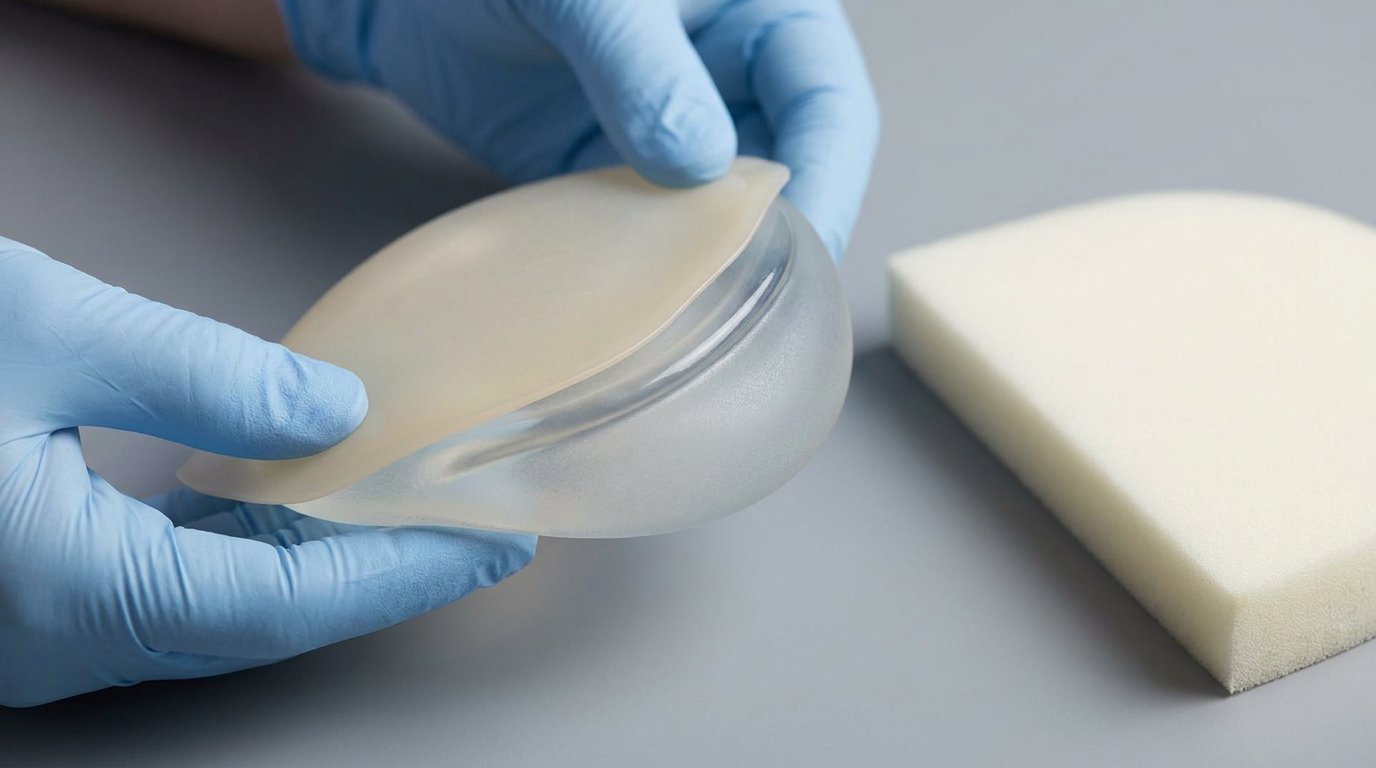
Buttock implants can create projection even when there is not enough fat for transfer. That is their biggest advantage in a slim body. The trade-off is that the operation is mechanically more demanding on recovery because the implant sits in an area that moves and takes pressure every day.
In a very slim patient, there may be less natural padding over the implant. That can make the implant easier to feel, and in some cases easier to see at the edges, especially if a larger size is chosen than the tissues can comfortably support. Thin tissue cover can also make the final feel less natural than some patients expect.
The more important medical risks include infection, seroma (a fluid collection), wound separation in the incision area, implant displacement or rotation, and discomfort when sitting. Revision surgery is not rare in implant-based cosmetic surgery generally, and buttock implants are not exempt from that reality.
According to the NHS, all cosmetic surgery carries risks such as bleeding, scarring and infection, and patients should have a full discussion about complications before going ahead. With butt implants specifically, the location of the implant and the pressure placed on the area during healing are central practical issues.
Recovery points that are easy to underestimate
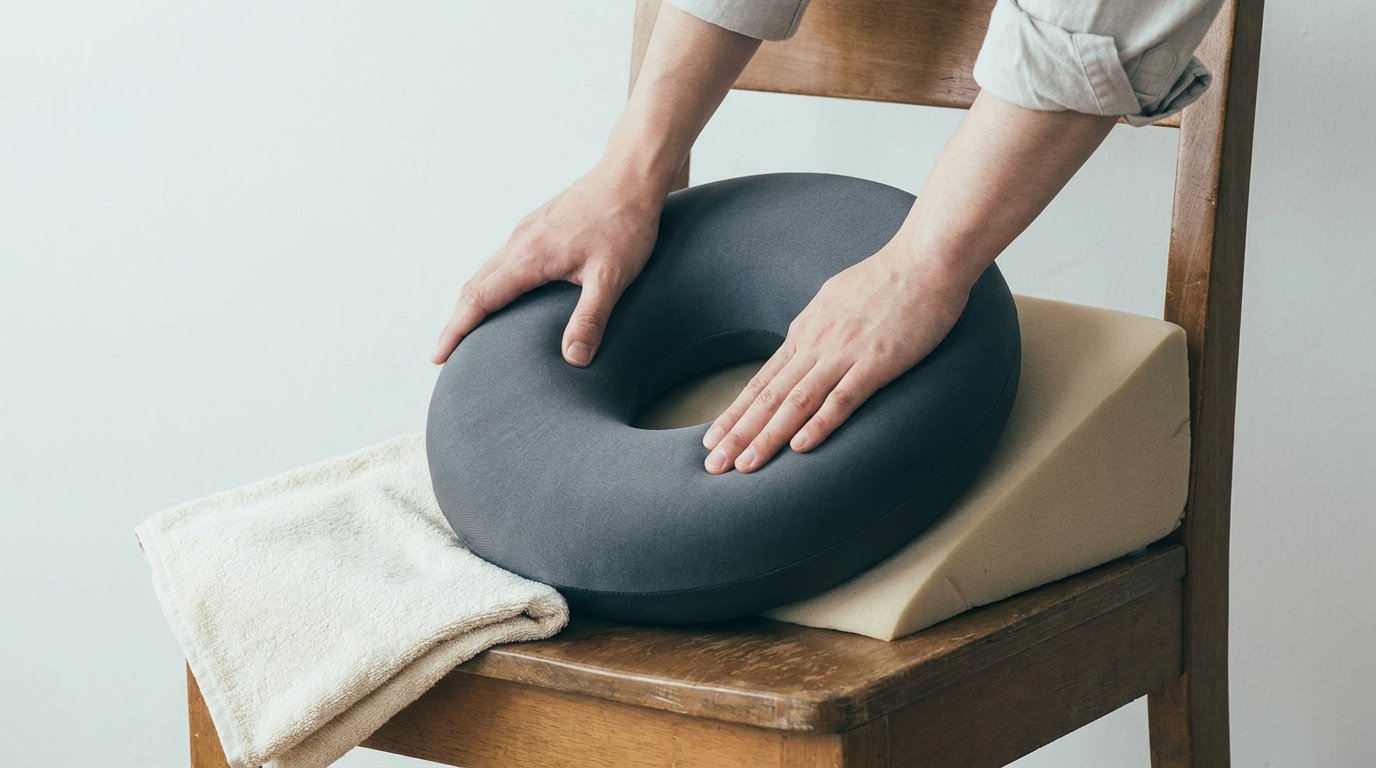
Slim patients often focus on whether implants will “show” enough. The more immediate question is whether you can actually protect the result during healing. Many surgeons advise strict limits on direct sitting at first, careful sleeping positions, and a gradual return to exercise. The first two weeks are usually the most restrictive. By around three to four weeks, many people are moving more comfortably, but swelling, tightness and pressure sensitivity can continue beyond that.
Final settling takes longer. Even when early healing looks straightforward, the tissues need time to soften around the implant and the scars need months to mature.
🚨 Implants are not a shortcut around recovery When donor fat is limited, implants may be the only surgical way to add volume, but the trade-off is often a tougher early recovery and a higher chance of needing revision than many patients expect.
For very slim patients, implant-specific risks deserve extra attention because there is less soft tissue covering the implant. The key concerns are infection, fluid collection, wound healing problems, implant movement, visible edges, firmness and the need for revision surgery. Recovery is usually more restrictive than with fat transfer.
How does fat transfer safety compare with implant safety?
This is the section where many articles oversimplify. Fat transfer and implants do not sit on a single ladder from “more safe” to “less safe.” They carry different hazards.
With fat transfer, the most serious historical concern has been pulmonary fat embolism, where fat enters the bloodstream and can travel to the lungs. This is why ASPS-led safety statements and published gluteal fat grafting guidance have emphasised avoiding intramuscular injection and keeping fat in the subcutaneous layer. That guidance matters whether a patient is slim or not.
With implants, that specific fat-grafting risk is not the issue, but implants introduce foreign-material and pocket-related problems. The operation creates a space for the implant, and that space has to heal well. Infection, fluid build-up, asymmetry, implant malposition, discomfort and future revision are part of the discussion.
For a very slim patient, comparison becomes even more individual. If there is too little fat to perform a meaningful transfer safely and conservatively, then fat transfer may be technically possible on paper but poor in practice. If tissue cover is very thin, however, implants may produce a less natural feel or carry higher visibility concerns. The best option is often the one that asks the least from the body while still matching your goals.
A useful mindset is this: the “safer” procedure is not the one with the best marketing line. It is the one for which you are a good candidate, done by a surgeon with specific experience in that exact technique, using current safety standards, in an appropriate hospital setting.
The comparison is not one-sided. Fat transfer avoids an implant, but incorrect injection technique can be dangerous. Implants avoid the fat-embolism mechanism associated with deep fat injection, but they introduce risks such as infection, shifting and wound problems. For a very slim patient, the safer option is the one that is truly appropriate and performed to current safety standards.
What does recovery really look like for a slim patient?
Recovery is one of the biggest differences between these options. With implants, the early period is usually more structured because the implant pocket needs stability. Many patients need help getting up and down for the first few days, and sitting is often limited or modified. Sleeping position matters too.
A rough guide for implants is that the first week is the hardest for movement and pressure management. The second week is often still restrictive but more manageable. By weeks three to four, many patients can do desk-based tasks more comfortably, though not always without adjustments. More energetic exercise usually has to wait longer. Full settling takes months, not days.
With fat transfer, the recovery still involves pressure precautions and swelling, but there is also soreness in the liposuction areas. Some very slim patients find those donor areas feel more noticeable because there is less padding to start with. If only a small amount of fat was available, you may go through the recovery effort for a fairly subtle change.
If you are travelling for surgery, build your trip around healing rather than around sightseeing. Allow enough time for in-person checks before flying home, ask exactly when the surgeon is comfortable with you travelling, and make sure you understand how follow-up works once you are back abroad.
For readers comparing options, the page on buttock augmentation with implants explains the procedure pathway, while the BBL treatment page outlines how fat transfer differs in approach. Those pages are useful for orientation, but your own plan should come from a proper consultation rather than a standard timetable.
- ✓Ask how long you should stay in Turkey before flying home; do not assume a weekend trip is enough.
- ✓Check who will review you in person after surgery and what happens if you have swelling, wound concerns or asymmetry after returning home.
- ✓Plan your accommodation around limited sitting and easier movement, not just location or nightlife.
- ✓Make sure your companion, if you have one, understands the first few days may be practical rather than comfortable.
Recovery depends on the technique, but slim patients considering implants should expect a more careful early phase than many social media accounts suggest. The first two weeks usually focus on wound protection, swelling control and avoiding direct pressure. Travel and work plans need to be realistic, especially if you are coming to Turkey for surgery.
How should you decide which option is safer for you?
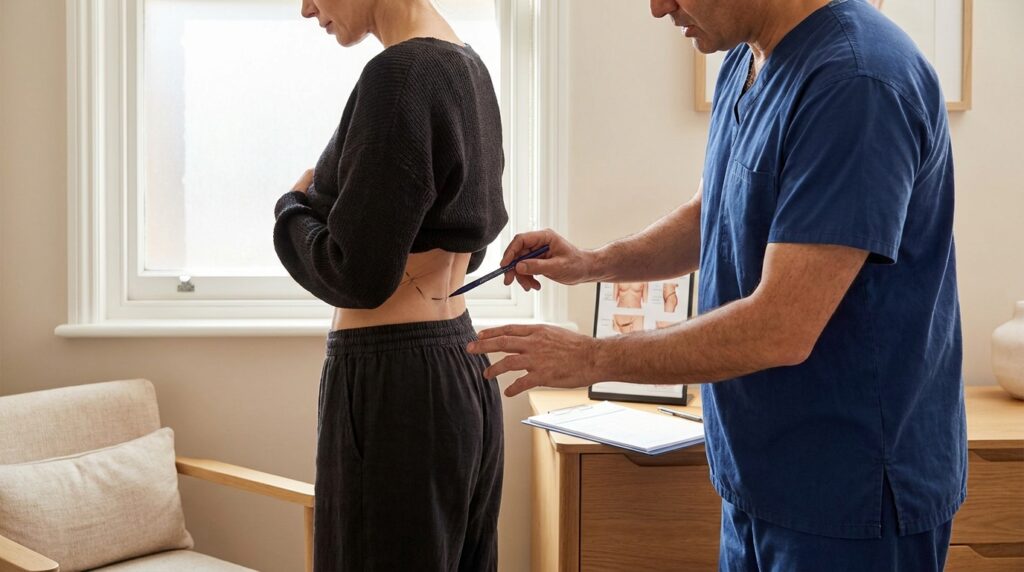
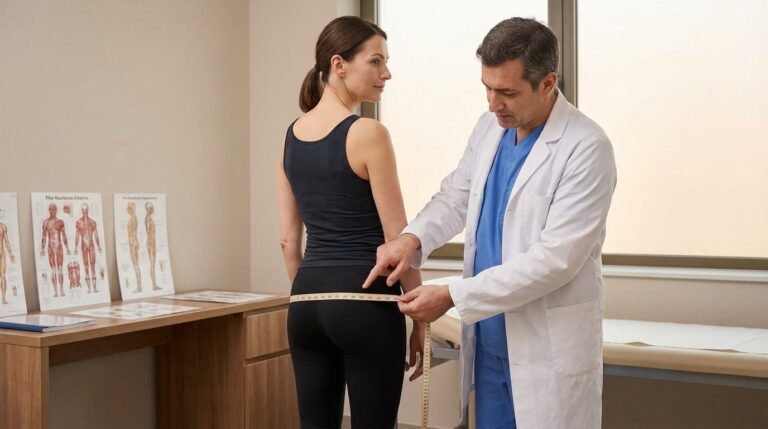
This decision should not be made from photos alone. Very slim patients need a hands-on assessment of tissue thickness, pelvic shape, skin quality and donor-fat stores. The practical question is whether your body can support the desired result without creating avoidable risk.
Ask direct questions. How much donor fat do you realistically have? If implants are being suggested, how will the surgeon reduce the chance of visible edges or displacement in a thin body? If fat transfer is being suggested, where exactly is the fat placed, and how does the surgeon follow current gluteal fat grafting safety guidance?
You should also ask about trade-offs that affect daily life. Are you prepared for stricter sitting limits if you choose implants? Would you accept a smaller result if that is what fat transfer can safely achieve? These are not side issues. They are the decision.
If you are looking at treatment abroad, verify the operating surgeon’s credentials, hospital accreditation, and who is responsible for aftercare. A patient can start that process through the clinic’s consultation page or review clinician information on the doctors page, but the key step is still the same: ask for a surgeon-led explanation tailored to your body, not a generic sales answer.
This article was medically reviewed for factual consistency by Op. Dr. Ali Cetinkaya, FEBOPRAS, plastic surgeon, with editorial review by the clinic content team. Published: 2 July 2026. Reviewed: 2 July 2026. That said, online guidance cannot replace a personal assessment and formal consent discussion.
📋 Cost is individual here No reliable standard price can be given for this comparison. The final quote depends on your anatomy, the surgical plan, hospital setting, implants if used, and aftercare needs, and should be confirmed only after consultation.
The surgeon explains why your body type suits one option better, discusses what result is realistically achievable, and is comfortable saying no if the anatomy is unfavourable.
You are promised a dramatic result without a clear discussion of donor-fat limits, implant visibility risk, revision rates or how complications would be handled after you fly home.
The safest decision starts with candidacy, not preference. A good assessment looks at donor-fat availability, skin and soft-tissue thickness, scar tolerance, tolerance for sitting restrictions, and willingness to accept revision risk. If a surgeon pushes one option without explaining why it fits your anatomy, that is a warning sign.
Frequently Asked Questions
References
- 📎ASPS Cosmetic Procedures
- 📎NHS Cosmetic Procedures
- 📎PubMed search: gluteal fat grafting safety advisory fat embolism
- 📎PubMed search: buttock implants complications review
Related Articles



You Might Also Like

Related articles


Our specialists
 Clineca SpecialistErkan PinegözPlastic & Reconstructive Surgery
 Clineca SpecialistHakan AktaşPlastic & Reconstructive Surgery
 Clineca SpecialistOrkun UzuneyüpoğluPlastic & Reconstructive Surgery
 Clineca SpecialistSalim İskenderPlastic & Reconstructive Surgery
 Clineca SpecialistEngin SelamioğluPlastic & Reconstructive Surgery
 Clineca SpecialistCem AydınPlastic & Reconstructive Surgery
 Clineca SpecialistAlperen ÖnalEar, Nose & Throat (ENT)