

Have a question about Breast Augmentation?
In this article
- Why surgeons ask you to sleep on your back first
- When you can sleep on your side after breast augmentation
- What shifts your timeline: placement, size and combined surgery
- How to sleep comfortably while you are still on your back
- Sleeping arrangements if you travel to Turkey for surgery
- Choosing a clinic that takes aftercare seriously
- When a sleeping problem is actually something to report
Sleep is the part of breast augmentation recovery that most people underestimate, and it is usually the first thing patients ask about once the surgery date is set. In practical terms, most surgeons ask you to sleep on your back and slightly propped up at first; short spells on your side tend to become comfortable around the four-week mark, and full nights of side sleeping are commonly allowed somewhere between six and eight weeks, later when the implants sit under the chest muscle. Your own surgeon’s protocol always overrides a general timeline, so the rest of this article explains what the sleeping rules are protecting, what pushes your date earlier or later, and how to get a decent night’s rest while you wait.
Why surgeons ask you to sleep on your back first
During surgery your surgeon creates a space for the implant — the pocket — either directly behind the breast tissue or behind the chest muscle. For the first few weeks that pocket is still raw and slightly oversized, and the body is busy forming a thin lining of scar tissue around the implant. Pressure from your own body weight is the main thing the sleeping rules are protecting against.
Lying on your side pushes both implants sideways: the one underneath gets squashed outwards, and the one on top drifts towards the middle. Early on, with the tissues soft and swollen, repeated pressure in one direction can nudge an implant out of the position your surgeon planned. Sleeping on your front is worse again, because the weight of your upper body sits directly on the breasts.
Sleeping on your back with your head and shoulders raised also helps with swelling and that tight, heavy feeling across the chest in the first week. Most patients find an incline more comfortable than flat anyway, because getting up from flat on your back uses exactly the muscles you want to leave alone. If you want the wider picture of what each stage feels like, our week-by-week breast augmentation recovery guide runs through the same period in more detail.
📋 One protocol beats any article Sleeping instructions vary between surgeons because implant placement, implant size and the exact technique vary. If your discharge notes give you a date, follow that date rather than a general timeline.
When you can sleep on your side after breast augmentation
The honest answer is a gradual return rather than a single green light. Most people go from strict back sleeping, to short side-lying while awake, to a few side-sleeping minutes at night with a pillow, to unrestricted sleep. The table below reflects a common pattern for implants placed under the muscle, which is the more cautious of the two routes.
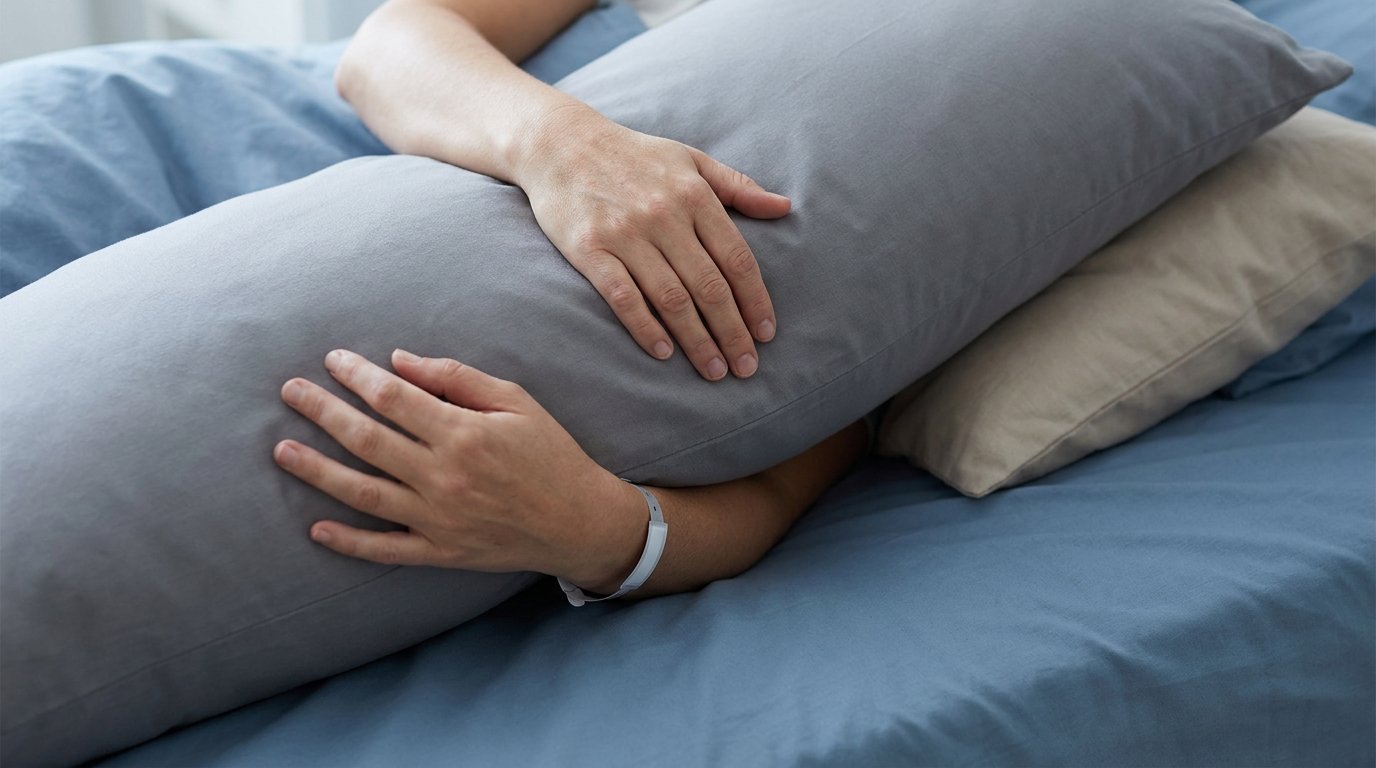
What tends to surprise patients is how long the habit takes to come back even after permission is given. Lifelong side sleepers often report a few weeks of waking up on their back out of caution, and some mild tenderness on the underneath breast for a while after that. That tenderness is not a sign something went wrong; it is normal sensitivity in tissues that have been stretched.
⚠️ Front sleeping comes last Sleeping face down puts the most direct pressure on the implants and the healing scars, so it is usually the final restriction to be lifted — often around the three-month mark.
What shifts your timeline: placement, size and combined surgery
Implant placement is the biggest single factor. When the implant sits under the chest muscle, the muscle itself has been lifted and needs time to settle, so surgeons are typically more conservative about side pressure. Implants placed in front of the muscle often allow a slightly earlier return to side sleeping, because less muscle has been disturbed.
Size and your own tissue matter too. Larger implants on a slim frame stretch the skin and the pocket more, and a bigger implant simply carries more weight when you roll over. If you are still weighing proportions, our guide on choosing an implant size for your body explains the trade-offs that also affect comfort later.
Combined surgery changes the picture more than people expect. Among the women who come to us for implants, close to a third have a second procedure in the same session, most often a breast lift or a rhinoplasty. If that is your plan, the sleeping rules you need to follow are the stricter of the two sets — a lift adds its own scar lines across the breast, and a nose operation usually means elevated back sleeping of its own for a couple of weeks.
Over the muscle versus under the muscle
The comparison below is a general guide, not a promise about your own recovery; your surgeon sets your dates after seeing how the tissues look at your follow-up.
How to sleep comfortably while you are still on your back
Back sleeping is the restriction patients complain about most, and a bit of preparation makes a real difference. Set your sleeping space up before surgery rather than at midnight on day one, when reaching and lifting are uncomfortable.
A wedge pillow or a stack of firm pillows gives a stable incline; a recliner armchair works well for the first few nights if you have one. Pillows placed along each side stop you rolling over while you are half asleep, and a small cushion under each elbow takes the drag off the chest. Keep water, medication and your phone within arm’s reach so you are not twisting to get them.
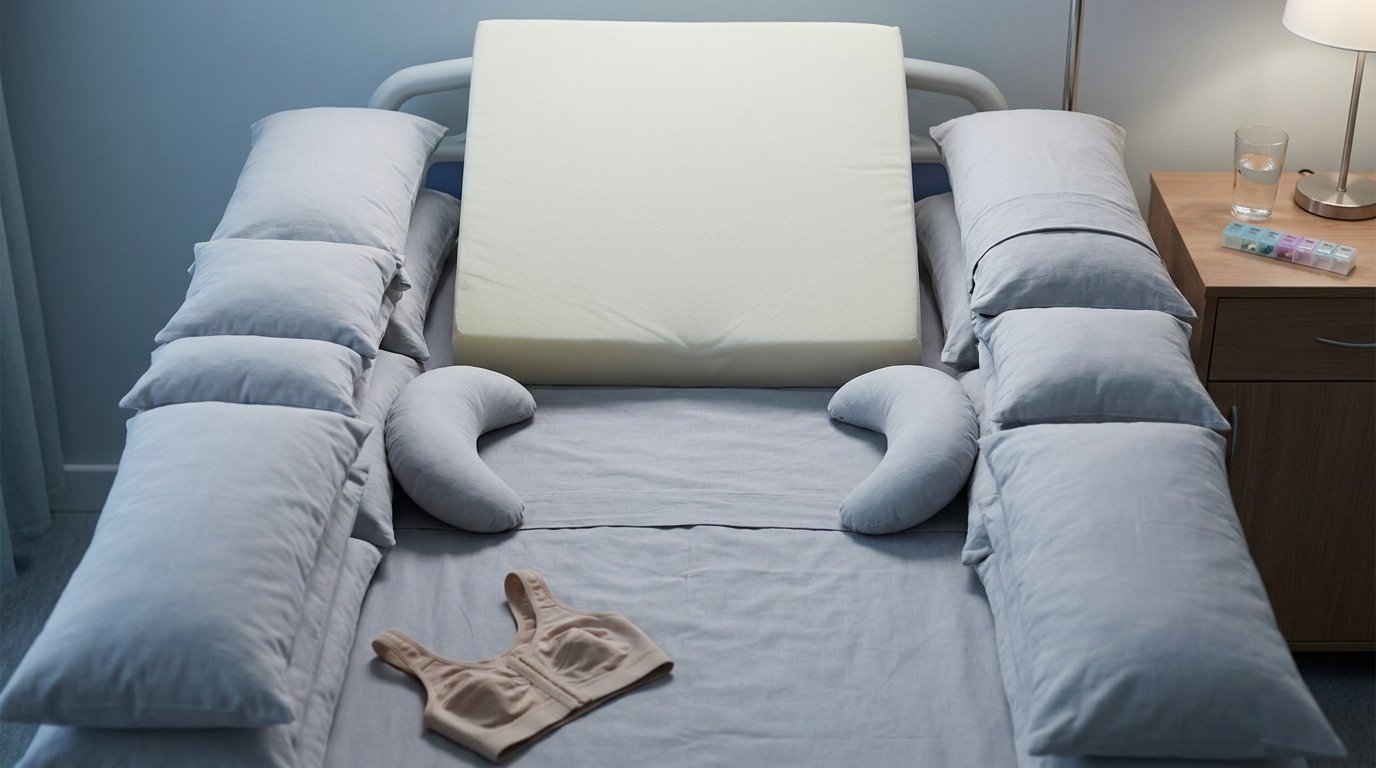
- ✓Wedge or pillow stack: Raises head and shoulders so swelling drains and getting up needs less effort.
- ✓Pillow barriers on both sides: A simple way to stay on your back without thinking about it.
- ✓Your support bra, worn at night: Most surgeons ask for it around the clock in the early weeks; it steadies the implants while you sleep.
- ✓A log roll to get out of bed: Shuffle to the edge, swing your legs down and push up with your legs, not your arms.
- ✓Pain relief on a schedule: Taking it as prescribed before bed, rather than waiting for pain, is what buys most people a full night early on.
Sleeping arrangements if you travel to Turkey for surgery
Travelling for breast augmentation adds a few sleeping questions that patients at home never face. Hotel beds rarely come with a wedge pillow, so ask your coordinator in advance whether extra pillows or an adjustable bed are available, and pack a small travel cushion. A room with a comfortable armchair is genuinely useful for the first two or three nights.
The stay itself usually covers the strictest part of the back-sleeping period. Most patients remain in Turkey for around a week after surgery for wound checks and a final review before flying, which means your first nights happen with the clinic nearby — the stage when reassurance matters most. Our guide to how long to stay in Turkey for breast surgery sets out the typical schedule.
On the flight home, aim for an aisle seat, wear your support bra, keep walking every hour or two, and accept that you will be dozing upright rather than sleeping properly. Reclining the seat a little is fine; leaning onto the window to sleep on one side is not the plan yet.
📋 Follow-up after you fly home Ask who you contact once you are back, and how. Written aftercare instructions plus a named point of contact matter far more than any single appointment.
Choosing a clinic that takes aftercare seriously
Sleeping advice is a small window into how a clinic works. A surgeon who gives you a position-by-position plan, explains why it exists and tells you what to do if you wake up on your side is a surgeon who thinks past the operating room. Vague answers are a signal worth noticing.
Check that your surgeon is a qualified plastic surgeon with recognised specialist training, that the hospital is accredited, and that your consultation covers implant type and placement rather than only size. Bodies such as ASPS, BAAPS and EBOPRAS publish member directories that let you verify credentials independently.
On price, keep expectations realistic rather than numerical. What drives a breast augmentation quote is the implant brand and type, the complexity of the plan, whether a second procedure is added, the hospital and anaesthesia fees, and how much accommodation, transfers and follow-up are included. A personalised figure is confirmed only after a consultation, and our overview of what affects the cost of breast augmentation explains which inclusions to ask about in writing.
Written aftercare notes with dates, a named contact for questions after you fly home, clear discussion of implant placement, and an accredited hospital.
No one will say which implant or pocket is planned, aftercare is a verbal ‘you’ll be fine’, or you are pushed to decide before a proper consultation.
Fat transfer and breast lift surgery have their own, often different, positioning rules — ask about sleeping instructions for the specific operation you are considering.
When a sleeping problem is actually something to report
Waking up on your side once or twice in the first weeks is not a disaster, and it does not mean your result is ruined. Reposition yourself, wear your support bra, and mention it at your next check. What deserves a phone call is a change you can see or feel rather than a position you accidentally adopted.
Contact your surgeon promptly if one breast becomes noticeably more swollen, red or hot, if pain increases instead of easing, if you develop a fever, if a wound opens or leaks, or if the shape visibly changes on one side. Firmness that builds up gradually over months is a different issue, and our article on the signs of capsular contracture describes what to watch for.
One more thing worth raising before surgery rather than after: a possible future pregnancy. Pregnancy or breastfeeding comes up in roughly a quarter of the conversations we have with women considering breast surgery, so it is a completely ordinary question — and because it can influence implant choice and timing, it belongs in your first consultation rather than a later one.
This article is for informational purposes only and does not constitute medical advice. Always consult a qualified surgeon for personalised guidance.
🚨 Do not wait to be seen Sudden one-sided swelling, spreading redness, a fever or a rapid change in breast shape needs same-day medical review, wherever you are in the world.
Frequently Asked Questions
References
- 📎NHS — Cosmetic procedures
- 📎American Society of Plastic Surgeons — Cosmetic procedures
- 📎British Association of Aesthetic Plastic Surgeons (BAAPS)
Related Articles

You Might Also Like

Related articles



Our specialists
 Clineca SpecialistErkan PinegözPlastic & Reconstructive Surgery
 Clineca SpecialistHakan AktaşPlastic & Reconstructive Surgery
 Clineca SpecialistOrkun UzuneyüpoğluPlastic & Reconstructive Surgery
 Clineca SpecialistSalim İskenderPlastic & Reconstructive Surgery
 Clineca SpecialistEngin SelamioğluPlastic & Reconstructive Surgery
 Clineca SpecialistCem AydınPlastic & Reconstructive Surgery
 Clineca SpecialistAlperen ÖnalEar, Nose & Throat (ENT)