
Have a question about Breast Augmentation?
In this article
- What makes a breast tuberous rather than simply small?
- How surgeons correct tuberous breasts
- Can it be done in one operation, or will you need two stages?
- What drives the cost of tuberous breast correction in Turkey
- Recovery week by week
- Planning the trip: how long to stay and what to arrange
- Choosing a surgeon for tuberous correction, and the honest limits
Tuberous breasts are one of those conditions most people discover by accident — usually while reading about implants and recognising their own shape in a diagram rather than in a brochure. It is a developmental difference in how the breast grew, not a result of weight, posture or bra choice, and it responds poorly to a standard implant placed without any extra planning. That is why tuberous breast correction in Turkey is quoted and planned differently from routine augmentation, and why the surgical detail matters more here than in almost any other breast operation.
What makes a breast tuberous rather than simply small?
In tuberous breasts, also called tubular breasts, the tissue at the base of the breast is held in by a tight ring of fibrous tissue. Because the breast cannot spread across the chest as it develops, the volume pushes forward and often into the areola instead. The result is a narrow, high-sitting breast that looks more cylindrical than round.
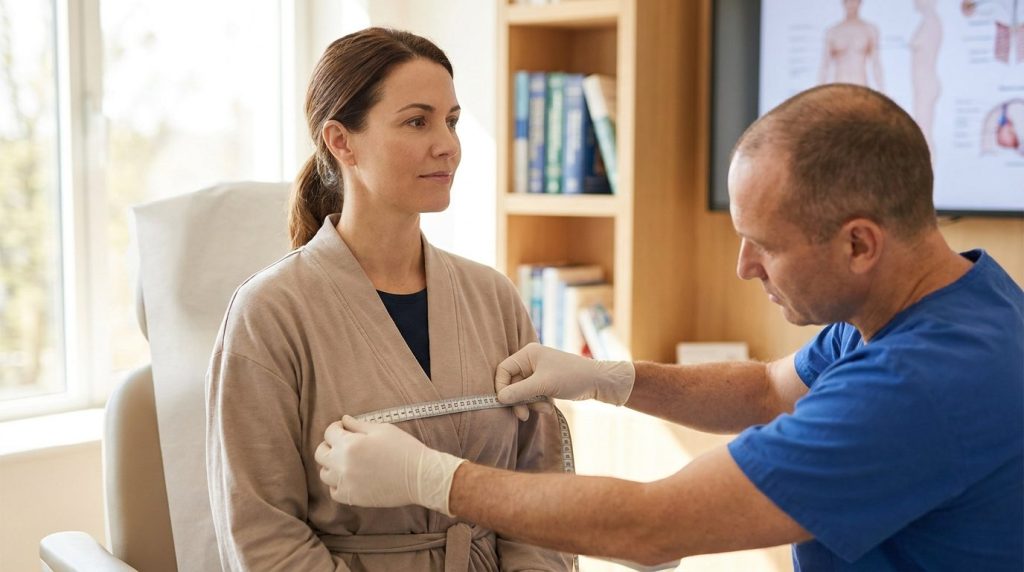
Several features tend to travel together, and most people have some but not all of them. The fold under the breast often sits unusually high, the areola can look puffy or herniated because gland tissue bulges behind it, the gap between the breasts is wide, and one side is frequently more affected than the other. Surgeons describe mild, moderate and severe grades, which is a practical way of saying how much of the base needs to be released and how much the lower pole has to be rebuilt.
This matters because the fix is not simply volume. Placing an implant behind a constricted breast without releasing that ring can make the shape worse — the implant pushes against the tight base and the gland bulges further into the areola, producing the look patients describe as a double bubble. Correction is about changing the shape of the breast footprint first and adding volume second.
Timing is part of candidacy too. Surgery is normally planned once breast development has finished, and future pregnancy deserves an honest conversation rather than a footnote: pregnancy or breastfeeding comes up in roughly a quarter of the conversations we have with women weighing breast surgery, so if it is on your mind, raise it at the first consultation — it can influence incision choice, implant plane and whether a staged plan makes more sense.
📋 Asymmetry is the rule, not the exception Tuberous breasts are often noticeably uneven, with different base widths, fold heights and areola sizes. A good plan treats each side separately, which is why two different implant sizes or two different degrees of release are common. Our article on breast augmentation with asymmetric breasts covers how that is measured.
How surgeons correct tuberous breasts
The core manoeuvre is releasing the constricting tissue so the breast can expand sideways and downward. Surgeons do this by scoring the gland from behind in a radial pattern — like loosening the spokes of a wheel — and by lowering the fold under the breast where it sits too high. Only then does an implant produce a round, naturally sloping lower half instead of a tight cone.
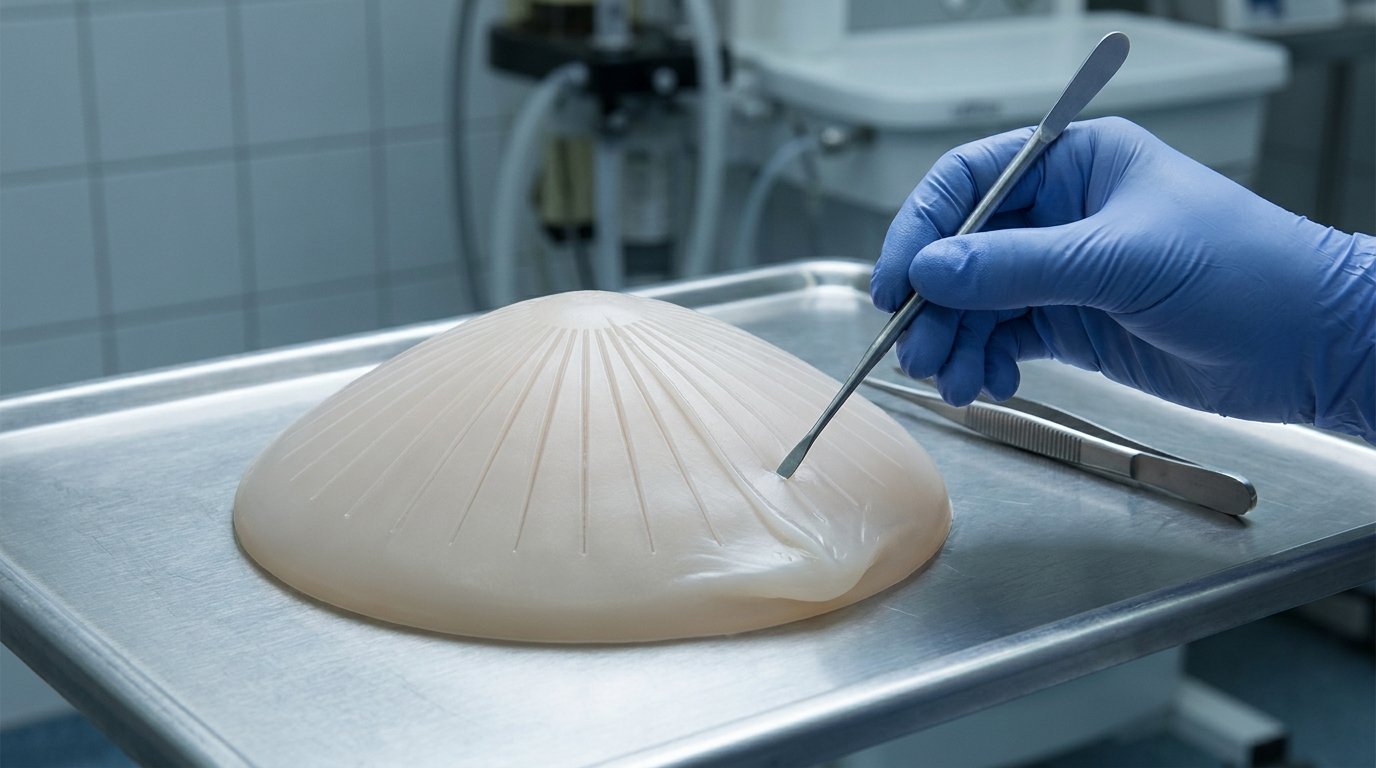
Implant choice and position follow from that. A dual plane approach, where the implant sits partly under the muscle and partly under the released gland, is commonly used because it helps redistribute the loosened tissue over the lower pole. Base width usually drives the implant decision more than cup size does, since the aim is to widen a narrow footprint; our guide on choosing an implant size for your body explains how those measurements translate into a final shape.
The areola is the second half of the operation and the part patients underestimate. When gland tissue herniates forward, the areola stays puffy even after a well-placed implant, so correction often includes reducing the areola through a circular incision at its border and trimming the tissue pushing into it. A 2022 report in the Journal of Cutaneous and Aesthetic Surgery, describing correction of areolar protuberance during augmentation in transfemale patients whose gland tissue resembled simple tuberous breast, makes the same practical point: leaving a protruding areola undermines the cosmetic result of the augmentation itself. If you want more on that step, see our piece on areola reduction during a breast lift.
Fat transfer is sometimes added in small amounts to soften the upper inner area or camouflage a wide gap, and in milder cases with reasonable tissue it can be used instead of an implant. It is rarely enough on its own for a tightly constricted breast, because fat adds volume but does not release the ring.
- ✓Release of the constricted base: Radial scoring of the gland so tissue can spread instead of bulging forward.
- ✓Lowering the breast fold: Repositioning a fold that sits too high, to build a normal lower curve.
- ✓Implant selection by base width: Sizing driven by chest measurements and tissue quality, often different per side.
- ✓Areola correction: Reducing a puffy or oversized areola and trimming herniated gland tissue.
- ✓Optional fat grafting: Small volumes used to smooth contour or soften a wide cleavage gap.
Can it be done in one operation, or will you need two stages?
Most mild and moderate cases are corrected in a single session. The release, the implant and the areola work all happen under one anaesthetic, and the stay in Turkey is the same as for a standard augmentation.
Severe cases are different and deserve a straight answer. When the skin envelope is very tight and the breast is extremely small, trying to force a full-size implant in at once risks skin tension, a hard edge at the bottom and an unnatural shape. Here a surgeon may recommend tissue expansion first, then exchange for a permanent implant later, or a lesser release now with grafting later. That means a second trip, and it should be discussed before you book flights rather than discovered afterwards.
Some patients also need a lift component if there is loose or drooping tissue alongside the constriction. That changes the scar pattern and lengthens recovery slightly. Our overview of breast augmentation combined with a lift sets out when the two are planned together.
⚠️ Be cautious with a plan that ignores the shape If a quote is simply for implants with no mention of releasing the base, lowering the fold or addressing the areola, it is a plan for a different condition. Ask specifically what will be done to the breast tissue itself.
What drives the cost of tuberous breast correction in Turkey
Tuberous breasts surgery sits above routine augmentation in complexity, so the quote reflects operating time and the number of steps rather than implants alone. Pricing is always confirmed after consultation, once photographs and measurements show how much reshaping each side needs.
The main variables are below. Ask any clinic to state in writing which of these are inside the figure you are given, because an apparently low quote often excludes the parts that matter most. For a wider view of how breast quotes are built, see our breakdown of what affects the cost of breast augmentation.
📋 Compare like with like A quote that includes hospital stay, anaesthesia, implants, garment and follow-up is not comparable with one covering surgery alone. Our guide to what is inside an all-inclusive package explains the usual line items.
Recovery week by week
Recovery after tubular breast correction follows a similar arc to augmentation, but the tissue release and areola work can make the first week feel tighter and more tender. Most patients are up and walking the same evening and off strong painkillers within a few days.
Shape takes longer than comfort. Released tissue needs weeks to settle over the implant, and the lower pole usually keeps filling out for months — the process patients know as drop and fluff. Judging your result at three weeks is the most common mistake we see.
⚠️ Call your surgeon, not a forum Sudden one-sided swelling, spreading redness, fever, a bad smell from a wound or a shape that changes abruptly needs assessment the same day, wherever you are in the world.
Planning the trip: how long to stay and what to arrange
Plan on roughly seven to ten days in Turkey for a single-stage correction. That allows pre-operative tests and consultation, surgery with an overnight hospital stay, a quiet few days at the hotel and at least one wound check before you fly. Surgeons generally prefer you not to fly within the first few days, and long-haul travel is usually easier after the first week.
Book a flexible return ticket. If a seroma needs draining or a dressing needs changing again, staying two extra days in Istanbul is far simpler than managing it at home. Our guide on how long to stay in Turkey for breast surgery goes through the day-by-day schedule, and the wider breast augmentation in Turkey article covers the logistics around it.
Pack a front-fastening bra or two, loose tops you do not have to pull over your head, and anything that makes sitting upright in bed comfortable. Arrange help at home for the first week if you have small children, because lifting is the one restriction almost everyone finds hardest to respect.

- →Written surgical plan naming the release, implant plan and any areola work
- →Confirmed accredited hospital, not an office-based treatment room
- →Named surgeon, with their qualifications verifiable
- →A clear route to reach the team after you fly home
- →Flexible flights and travel insurance that does not exclude elective surgery
Choosing a surgeon for tuberous correction, and the honest limits
This is a shape problem dressed up as a size problem, so experience with the specific condition counts more than general implant volume. Ask to see before-and-after photographs of tuberous and tubular cases rather than routine augmentations, taken from the front and the side, and ideally at six months or later. Ask directly how many such corrections the surgeon performs and how they handle a high fold and a herniated areola.
The honest limits are worth stating. Correction improves shape and symmetry a great deal, but it does not make the two sides identical, and a wide gap between the breasts can be softened rather than erased — something we cover in more detail in our piece on reducing a wide-set breast gap. Nipple sensation can change, periareolar scars are permanent even when they fade well, and implants are not lifetime devices; revision at some point in life is a realistic expectation rather than a failure. Risks include bleeding, infection, capsular contracture, implant malposition and the double-bubble deformity that incomplete release can leave behind.
If breastfeeding may matter later, say so early. Periareolar incisions and gland work sit closer to the ducts than other approaches, and our article on breastfeeding after breast augmentation explains what is and is not known.
This article is for informational purposes only and does not constitute medical advice. Always consult a qualified surgeon for personalised guidance.
The surgeon measures base width and fold position, discusses each breast separately, shows long-term tuberous cases, and explains clearly what will be done to the breast tissue, not just which implant will be used.
A price quoted before any photographs, implant size chosen by cup letter alone, no mention of releasing the base or treating the areola, pressure to book within hours, or no named surgeon.
Mild constriction with reasonable tissue can sometimes be improved with release plus fat transfer. It gives a softer, more modest change and may need more than one session, and it does not suit very tight, very small breasts.
Frequently Asked Questions
References
- 📎Correction of Areolar Protuberance During Augmentation Mammoplasty in Transfemale Patients — Journal of Cutaneous and Aesthetic Surgery, 2022
- 📎ASPS — Cosmetic Procedures
- 📎NHS — Cosmetic Procedures
Related Articles



You Might Also Like



Related articles



Our specialists
 Clineca SpecialistErkan PinegözPlastic & Reconstructive Surgery
 Clineca SpecialistHakan AktaşPlastic & Reconstructive Surgery
 Clineca SpecialistOrkun UzuneyüpoğluPlastic & Reconstructive Surgery
 Clineca SpecialistSalim İskenderPlastic & Reconstructive Surgery
 Clineca SpecialistEngin SelamioğluPlastic & Reconstructive Surgery
 Clineca SpecialistCem AydınPlastic & Reconstructive Surgery
 Clineca SpecialistAlperen ÖnalEar, Nose & Throat (ENT)