
Have a question about Breast Augmentation?
In this article
- What actually decides whether you can breastfeed after breast augmentation
- Implants and future breastfeeding: incision choice does the heavy lifting
- Fat transfer and future breastfeeding: gentler on the ducts, with other trade-offs
- Fat transfer versus implants, side by side
- Should you simply wait until after you have finished having children?
- Choosing a surgeon, planning the stay and understanding the quote
Many women arrive at a breast consultation with one eye on the next few years — fuller breasts now, a baby somewhere down the line. That is why the question of whether fat transfer or implants are better if you want to breastfeed later comes up so often, and why it deserves a proper answer rather than a reassuring shrug. The honest version involves anatomy, incision choices, and a few trade-offs that have nothing to do with feeding at all.
What actually decides whether you can breastfeed after breast augmentation
Milk is made in glandular tissue and travels to the nipple through a network of small ducts. Feeding also depends on nerve signals: when the baby latches, sensation in the nipple triggers the hormonal reflex that releases milk. So the two things worth protecting are the ducts behind the nipple and the nerve supply to it.
This is why the material you add — a silicone device or your own fat — matters less than the route the surgeon takes to place it. An operation that cuts across ducts or disturbs the nerves running to the nipple carries more risk for future feeding than one that stays away from that zone, whichever technique is used.
It is also worth separating can I breastfeed from will I produce enough milk. Many women who have had breast surgery feed successfully, and many women who have never had surgery struggle with supply. No surgeon can promise either outcome, and anyone who does is overselling. What a good surgeon can do is plan the operation so that the structures involved in feeding are disturbed as little as possible.
📋 Mention it before, not after If a future pregnancy is on the table, say so at the consultation stage. It can influence incision choice, implant plan, volume target and whether your surgeon suggests waiting — and it is far easier to factor in before surgery than to correct afterwards.
Implants and future breastfeeding: incision choice does the heavy lifting
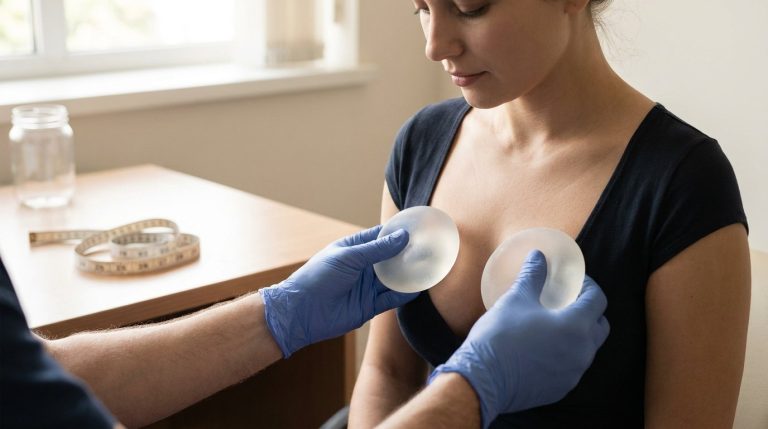
An implant sits behind the breast gland or behind the chest muscle, not inside the milk-producing tissue. It does not block the ducts, and it is not in contact with milk. The part of implant surgery that interacts with feeding anatomy is the incision.
There are three usual routes. A cut in the fold under the breast keeps the work furthest from the nipple. A cut around the lower edge of the areola gives neat camouflage but travels closest to the ducts and the nerves supplying the nipple, so it is the route most often discussed as a possible concern for later feeding and nipple sensation. An armpit approach avoids the breast skin altogether but is not offered everywhere and suits a narrower range of cases.
If feeding matters to you, the under-breast fold approach is the one most surgeons will suggest first, and it is reasonable to ask for it explicitly. Our guide to breast augmentation scars and where they sit explains how each incision heals, and there is more detail on feeding specifically in our article on breastfeeding after breast augmentation.
One more honest point: implants are long-term devices, not permanent ones. If your plan involves pregnancy a few years after surgery, bear in mind that pregnancy and feeding change breast volume and skin, so the result you see at six months may not be the result you have after a baby. That is a shape issue rather than a safety one, and we cover it in what pregnancy does to breast surgery results.
Fat transfer and future breastfeeding: gentler on the ducts, with other trade-offs
Breast fat transfer works differently. Fat is removed by liposuction from the abdomen, flanks or thighs, processed, then injected in fine layers through two or three small entry points, usually placed away from the nipple. Nothing is cut across the gland, no device is inserted, and the duct system is generally left alone. On the narrow question of feeding anatomy, that is a genuine advantage.
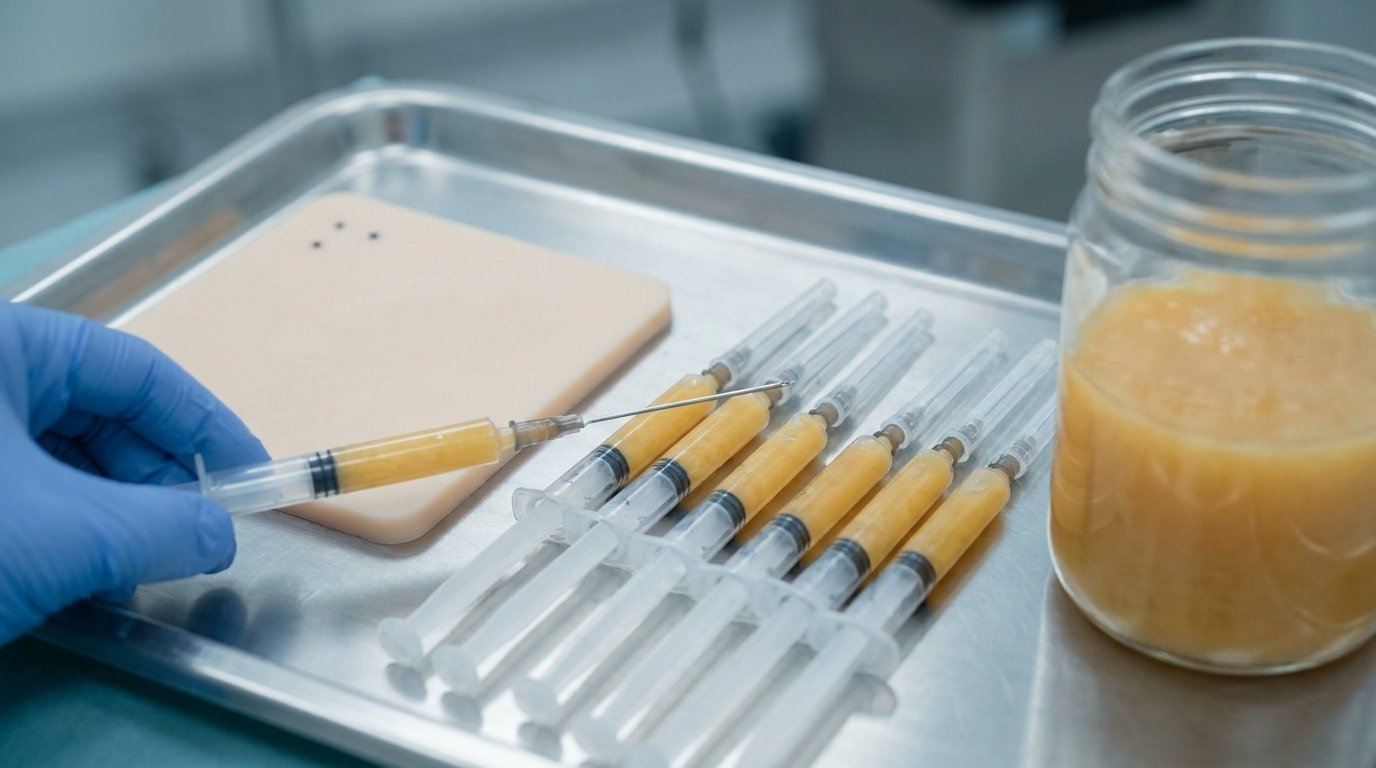
The trade-offs sit elsewhere. Volume gain per session is modest compared with an implant, and not all of the transferred fat survives — a portion is reabsorbed over the first months, so the result is partly unpredictable and a second session is sometimes needed. You also need enough donor fat to harvest in the first place, which rules out some very slim patients. Our piece on how much volume fat transfer can realistically add sets out what to expect.
There is also an imaging point that deserves plain language. Where injected fat does not survive, it can leave firm areas, small oil cysts or calcium deposits in the breast. A 2020 systematic review in Plastic and Reconstructive Surgery compiled complication and radiological findings in consecutive fat grafting patients, and a further 2024 review in the same journal argued for clinical caution and careful follow-up, partly because of these imaging changes. In practice they are usually identifiable on a mammogram, but they are a reason to tell any future radiologist what you have had done — and a reason to be wary of clinics that describe fat transfer as risk-free simply because it uses your own tissue.
⚠️ Neither option comes with a guarantee Fat transfer leaves the duct system largely undisturbed and implants placed through the breast fold stay well away from it — but no technique can promise successful breastfeeding, and no surgeon should imply otherwise.
Fat transfer versus implants, side by side
The table below compares the two on the points that matter when a future pregnancy is part of the plan. Read it as a way to frame your consultation questions rather than a verdict, because the right answer depends on your breast shape, your current volume and how much change you want.
You want a subtle one-cup-ish change, you have fat to spare in the abdomen or thighs, you would rather avoid a device, and you accept that some of the volume will be reabsorbed.
You want a clear, predictable increase in size and projection, you are slim with little donor fat, and you are comfortable with an under-breast incision and the possibility of future implant surgery.
Volume may not be the problem at all. A lift reshapes and repositions the breast, and it can be combined with either method — see our comparison of what a lift and implants each actually fix.
Should you simply wait until after you have finished having children?
For some women, waiting is the cleanest answer — not because surgery before pregnancy is unsafe, but because pregnancy and feeding alter breast volume and skin quality, and a result you paid for may need revising afterwards. If a baby is planned in the next year or two, many surgeons will say so openly.
If your plans are vaguer — maybe one day, maybe not — waiting indefinitely is not necessarily the better trade. Pregnancy and feeding plans surface in around a quarter of the conversations we have with women weighing up breast surgery, so if the question is sitting in your head, you are in very ordinary company. What it means practically is simple: raise it at the first consultation rather than deciding alone, because it changes the surgical plan more than it changes whether you should go ahead.
If you have already had children and are waiting for the right moment, timing after feeding has its own rules — breasts need to settle before a shape can be judged. Our month-by-month guide to breast surgery after breastfeeding covers that window.
Combining procedures
Many women booking breast augmentation also want a lift, a tummy tuck, liposuction or rhinoplasty in the same trip, and combining is often reasonable in one anaesthetic session. Two things to keep in mind: a combined operation makes recovery pace follow the bigger procedure, and when a lift is added the incision pattern changes, which brings the nipple and duct discussion back into play. Say the word “breastfeeding” again when a lift enters the conversation.
Choosing a surgeon, planning the stay and understanding the quote
This is a decision where the consultation quality matters more than the brochure. A surgeon who asks about your family plans, examines your breast shape and tissue thickness, and talks you out of a size that your skin cannot hold is giving you better value than one who answers only with a price.
Check that your surgeon is board-certified in plastic surgery and operates in a licensed hospital with anaesthesia cover, and ask directly which incision they intend to use and why. A clear, specific answer is a good sign; a vague one is not.
For travel planning, both options are usually treated as a single trip with a stay long enough to cover the first dressing change, a post-operative check and clearance to fly — our guide to how long to stay in Turkey for breast surgery sets out typical timings, and if a lift or tummy tuck is added the stay follows the larger procedure.
On cost, we keep things qualitative here for good reason: a meaningful figure only exists after an examination. What moves the price is the technique chosen, implant type where relevant, the number of donor areas for fat transfer, operating and anaesthesia time, hospital grade, and whether a second fat session is anticipated. A proper quote should spell out what is included — surgery, anaesthesia, hospital stay, garments, follow-up and transfers — so you can compare like with like rather than guessing. Ask for that breakdown in writing.
This article is for informational purposes only and does not constitute medical advice. Always consult a qualified surgeon for personalised guidance.
- ✓Which incision will you use, and why that one?: Ask specifically whether an under-breast fold incision is possible in your case.
- ✓How does this plan affect nipple sensation?: Sensation is part of the feeding reflex, so it is a fair question to put directly.
- ✓If I have a baby in three years, what is likely to change?: You want an honest shape forecast, not a reassurance.
- ✓With fat transfer, how much volume do you expect to survive?: And would a second session be part of the plan from the start?
- ✓What will I need to tell a radiologist at future screening?: Both options affect how imaging is performed or interpreted.
Frequently Asked Questions
References
- 📎Complications after Breast Augmentation with Fat Grafting: A Systematic Review — Plastic and Reconstructive Surgery, 2020
- 📎Autologous Fat Grafting in Breast Augmentation: A Systematic Review Highlighting the Need for Clinical Caution — Plastic and Reconstructive Surgery, 2024
- 📎Autologous Fat Transplantation for Aesthetic Breast Augmentation: A Systematic Review and Meta-Analysis — Aesthetic Surgery Journal, 2021
- 📎NHS — Cosmetic procedures
Related Articles



You Might Also Like



Related articles


Our specialists
 Clineca SpecialistErkan PinegözPlastic & Reconstructive Surgery
 Clineca SpecialistHakan AktaşPlastic & Reconstructive Surgery
 Clineca SpecialistOrkun UzuneyüpoğluPlastic & Reconstructive Surgery
 Clineca SpecialistSalim İskenderPlastic & Reconstructive Surgery
 Clineca SpecialistEngin SelamioğluPlastic & Reconstructive Surgery
 Clineca SpecialistCem AydınPlastic & Reconstructive Surgery
 Clineca SpecialistAlperen ÖnalEar, Nose & Throat (ENT)