

Have a question about Canthopexy?
In this article
**In short: a canthopexy tightens the outer corner of the eyelid using stitches, leaving the small tendon that anchors the lid intact. A canthoplasty goes a step further — the surgeon detaches that tendon, shortens it, and fixes it to the bone in a new position.** If you are trying to pin down the difference between canthopexy and canthoplasty before a consultation, you have probably noticed that clinics use the two words almost interchangeably, which makes quotes hard to compare. The two operations sit on the same spectrum, but they are not the same amount of surgery, and they are not aimed at the same eyelid.
The difference between canthopexy and canthoplasty, in plain terms
Both procedures work on the same small structure: the lateral canthus, the outer corner where your upper and lower lids meet. It is held in place by a short band of tissue called the lateral canthal tendon, which attaches to the rim of the eye socket.
In a canthopexy, that tendon is left where it is. The surgeon passes a stitch through the tissue at the corner and anchors it a little higher or tighter against the bone. It is a repositioning move — a lift and a tightening, without dividing anything. Patients often see this described as a suture canthopexy, and it is frequently added to eyelid surgery rather than done on its own.
A canthoplasty is reconstructive in nature. The corner is opened, the tendon is cut, a small strip of the lid margin may be trimmed, and the shortened tendon is then re-anchored inside the bony rim. The best-known version is the lateral tarsal strip, a workhorse technique for genuinely loose lower lids. You may also hear about an inferior retinacular canthoplasty, which lifts the corner from a slightly deeper attachment point. Because the anatomy is actually released and reset, a canthoplasty can change the shape and vertical position of the corner more decisively than a stitch alone.
That is the practical dividing line: canthopexy repositions, canthoplasty rebuilds. Everything else — recovery, risk, cost, how long the result holds — follows from that single difference. If you want the basics of the lift itself first, our explainer on what a canthopexy is and how the outer corner lift works covers the ground before you compare techniques.
📋 Why the names get muddled Some surgeons use ‘canthoplasty’ loosely for any surgery at the outer corner, including suture-only work. When you receive a quote, ask directly whether the tendon will be cut and reattached, or only tightened with a stitch. That answer tells you which operation you are actually being offered.
Which one is right for my eyes?
The decision is made by how loose your lower lid actually is, not by which word sounds more impressive. A surgeon will usually pull the lid gently away from the eye and watch how fast it snaps back, and check how much white shows below the iris.
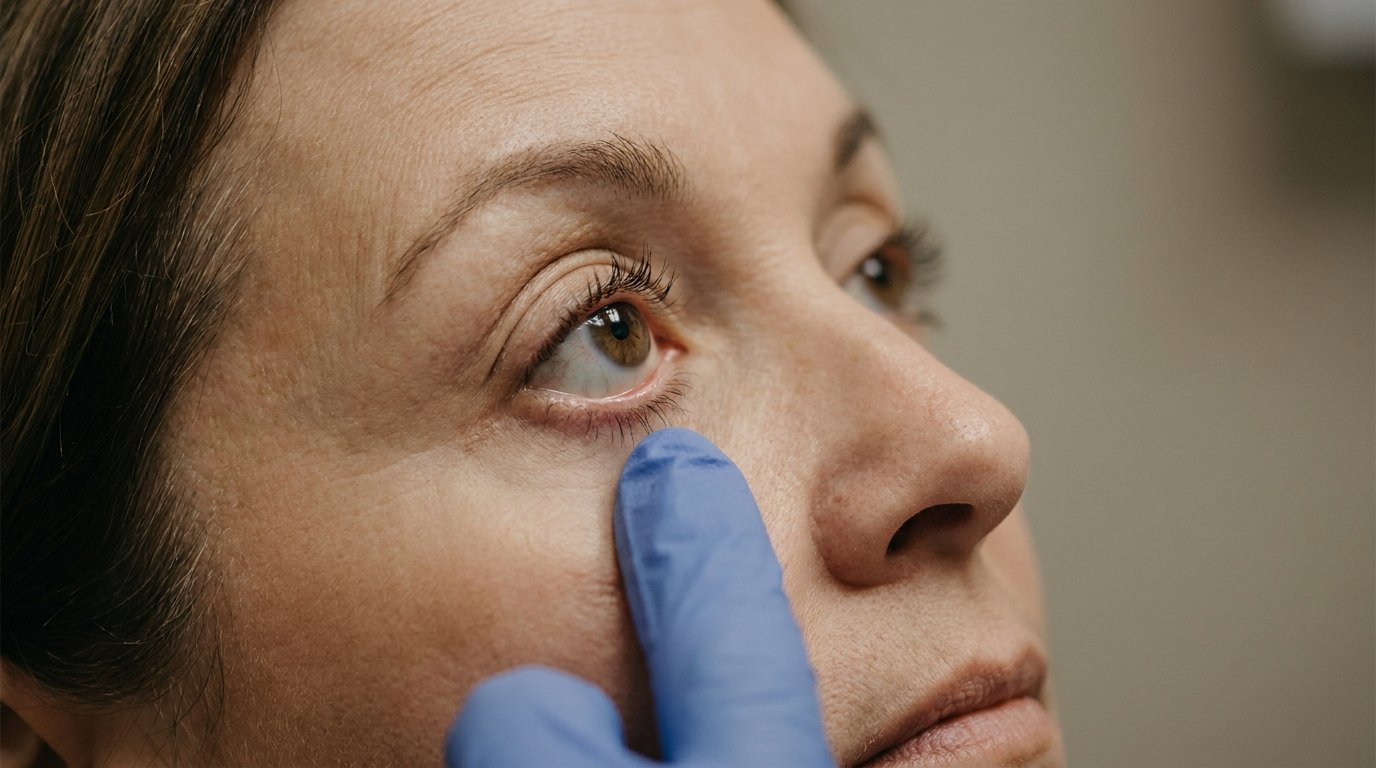
A canthopexy tends to suit mild laxity, a corner that has dropped slightly with age, or a lower lid that needs support while another procedure is performed. It is also commonly used as a preventive step during lower eyelid surgery, because removing skin or fat from a lid that is already a little loose can pull the margin downwards. Many patients asking about an almond or lifted look fall into this group, which we compare in more detail in our piece on canthopexy versus fox eye surgery.
A canthoplasty is the better choice when the lid is genuinely stretched — when the corner is rounded and blunted, when the lid sits away from the eyeball, or when a previous operation has pulled the lid down and it needs to be rebuilt rather than nudged. It is also the go-to when the aim is functional protection of the eye rather than appearance.
Eye protection is where this surgery stops being cosmetic. A 2025 paper in Head Neck examining the timing of eyelid-area procedures in patients with upper facial paralysis underlines how central keeping the eye closed and lubricated is when nerve function is lost — in those cases the reason for tightening the lower lid is to shield the cornea, not to change the shape of the eye.
If your main complaint is bags, hollowness or crepey skin rather than a loose corner, the operation you need may be a different one altogether; our comparison of canthopexy and lower eyelid surgery sets out what each one can and cannot fix.
Mild lid laxity, a slightly dropped or rounded outer corner, support alongside lower eyelid surgery, or a modest shape refinement in a lid with decent tone.
Clearly stretched lower lid, a lid margin sitting away from the eye, correction after a previous eyelid operation, or lid support needed for corneal protection.
Canthopexy vs canthoplasty compared side by side
The table below sets out how the two differ in practice. Individual surgeons vary, and the plan you are given should reflect your own lid tone and history rather than a template.
⚠️ Both are eye surgery, not a tweak Outer-corner surgery sits millimetres from the eye. Temporary dryness, gritty sensation, watering, blurred vision from ointment and uneven corners in the early weeks are all common. Lasting complications are less common but real, and include a corner that heals at a different height from the other side or a lid that sits too tight or too loose. Any surgeon who describes this as risk-free is overselling it.
How recovery differs between the two
The first 48 hours look similar either way: cold compresses, a head-elevated sleeping position, ointment or drops, and eyes that feel tight rather than sore. Real pain is unusual; most people describe pressure and dryness instead.
After a canthopexy, bruising usually peaks around day two or three and fades over the following week. Stitches at the corner are typically removed or dissolve within about a week. Many patients feel presentable with a little make-up at the ten-day mark, though the corner can look slightly over-lifted at first and softens as swelling goes.
After a canthoplasty, expect a longer arc. Because tissue has been cut and re-anchored, swelling lingers, the corner may feel firm or slightly pulled for several weeks, and the final shape declares itself over two to three months. Scar redness at the corner fades gradually rather than quickly.
With both procedures, screen work tires the eyes early on, contact lenses wait until your surgeon clears them, and strenuous exercise, swimming and saunas are off the list for around three to four weeks. If your plan includes lower lid work as well, our timeline for swelling after lower eyelid surgery gives a realistic week-by-week picture of the combined recovery.
What affects the cost of each procedure
Cost is the question patients raise most often, and the honest answer is that the two operations rarely price the same. A canthoplasty involves more operating time, more technical steps and a longer follow-up, so it generally sits above a suture canthopexy — particularly when it is corrective surgery after a previous operation elsewhere.
The main things that move a quote are the technique chosen, whether one or both eyes are treated, the type of anaesthesia, whether the surgery is performed alone or combined with upper or lower blepharoplasty, the surgeon’s experience in eyelid and orbital work, and the hospital or clinic setting. Revision cases take longer and are planned individually.
A properly written quote should make clear what is inside it: surgeon and anaesthetist fees, theatre and facility costs, pre-operative tests, medication, post-operative reviews, and — in a health-tourism package — airport transfers, hotel nights and interpreting support. Ask specifically what happens, and what it costs, if you need a small revision later. We break down how packages are usually assembled in our guide to what an all-inclusive surgery package in Turkey includes.
No reputable clinic can price eyelid corner surgery from a message alone. A personalised figure follows an assessment of your lid tone, your photographs and your medical history — and if you are quoted a price before anyone has examined how loose your lower lid actually is, treat that as information about the clinic rather than about your eyes.
Planning the trip and choosing the right surgeon
For either procedure, plan on staying in Turkey for roughly seven to ten days. That allows pre-operative checks, the surgery itself, at least one stitch or wound review, and a final check before you fly. Canthoplasty patients sometimes benefit from the longer end of that window, since more swelling means more to monitor. Flying with fresh eyelid wounds is possible once your surgeon signs it off, but cabin air is dry — bring lubricating drops.
The single most useful thing you can do is choose a surgeon who operates around the eye regularly. Oculoplastic surgeons and plastic surgeons with a heavy eyelid caseload see lid laxity every week and will tell you plainly whether a stitch is enough or the tendon needs resetting. Ask how many of each they perform, and ask to see healed results at six months or later rather than day-one photographs.
Be cautious if anyone promises a specific eye shape, quotes a single price for every patient regardless of anatomy, cannot name the technique they intend to use, or is vague about who will actually be in theatre. Slow or scattered communication before surgery is worth taking seriously too, because that is the same team you will be messaging at week three when your corner looks uneven and you want a straight answer. For a fuller look at realistic expectations and the limits of what this surgery achieves, see our overview of canthopexy candidacy, recovery and surgical limits.
This article is for informational purposes only and does not constitute medical advice. Always consult a qualified surgeon for personalised guidance.
- ✓Ask which structure is being treated: Tendon tightened with a stitch, or cut and re-anchored? This settles which operation you are buying.
- ✓Ask about lid tone by name: A snap-back or distraction test should be part of your assessment, not an afterthought.
- ✓Ask about combined procedures: Corner work is often planned alongside lower eyelid surgery; know what is included and what that adds to recovery.
- ✓Ask what follow-up looks like after you fly home: Who reviews your photographs, how quickly they reply, and what the revision policy actually says.
Frequently Asked Questions
References
- 📎Examining timing of periorbital interventions in patients with upper division facial paralysis — Head Neck, 2025
- 📎NHS — Cosmetic procedures
- 📎American Society of Plastic Surgeons — Cosmetic procedures
Related Articles



You Might Also Like



Related articles



Our specialists
 Clineca SpecialistErkan PinegözPlastic & Reconstructive Surgery
 Clineca SpecialistHakan AktaşPlastic & Reconstructive Surgery
 Clineca SpecialistOrkun UzuneyüpoğluPlastic & Reconstructive Surgery
 Clineca SpecialistSalim İskenderPlastic & Reconstructive Surgery
 Clineca SpecialistEngin SelamioğluPlastic & Reconstructive Surgery
 Clineca SpecialistCem AydınPlastic & Reconstructive Surgery
 Clineca SpecialistAlperen ÖnalEar, Nose & Throat (ENT)