Have a question about Abdominoplasty?
In this article
- How can a tummy tuck change a tattoo?
- Can a surgeon place the scar to protect my tattoo?
- Which tattoo locations are most and least affected?
- What if I want both a tummy tuck and to keep the tattoo looking good?
- What is recovery like, and when will I know how the tattoo really looks?
- Are there risks and limitations beyond the tattoo itself?
- How do quotes, travel and clinic choice fit into the decision?
Yes, your tattoo may be affected by a tummy tuck. If you are asking will my tattoo be affected by a tummy tuck, the honest answer is that lower-abdomen skin is often removed or tightened, so a tattoo can be partly cut away, shifted, stretched, or end up sitting in a different position. The exact change depends on where the tattoo sits, how much loose skin is removed, and what operation is safest for your anatomy.
How can a tummy tuck change a tattoo?
In an abdominoplasty, excess skin and fat are removed from the lower abdomen and the remaining skin is pulled down and closed under tension. That means the skin carrying your tattoo may not stay in the same place after surgery.
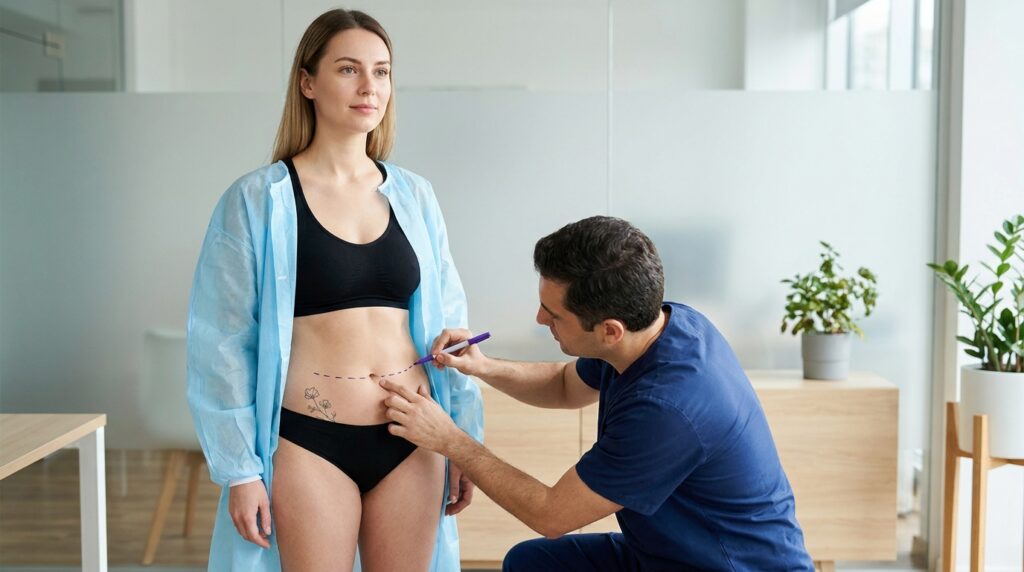
If your tattoo sits low on the belly, close to the bikini-line area where the incision usually runs, part of it may be removed completely. If it sits in the middle or upper abdomen, the image may survive but move downward, stretch a little, or look less even than before.
This is not necessarily a sign that anything went wrong. It is simply part of how skin removal and tightening work. The American Society of Plastic Surgeons explains that a tummy tuck removes excess skin and tightens the abdominal area, so any design on that skin can change with it.
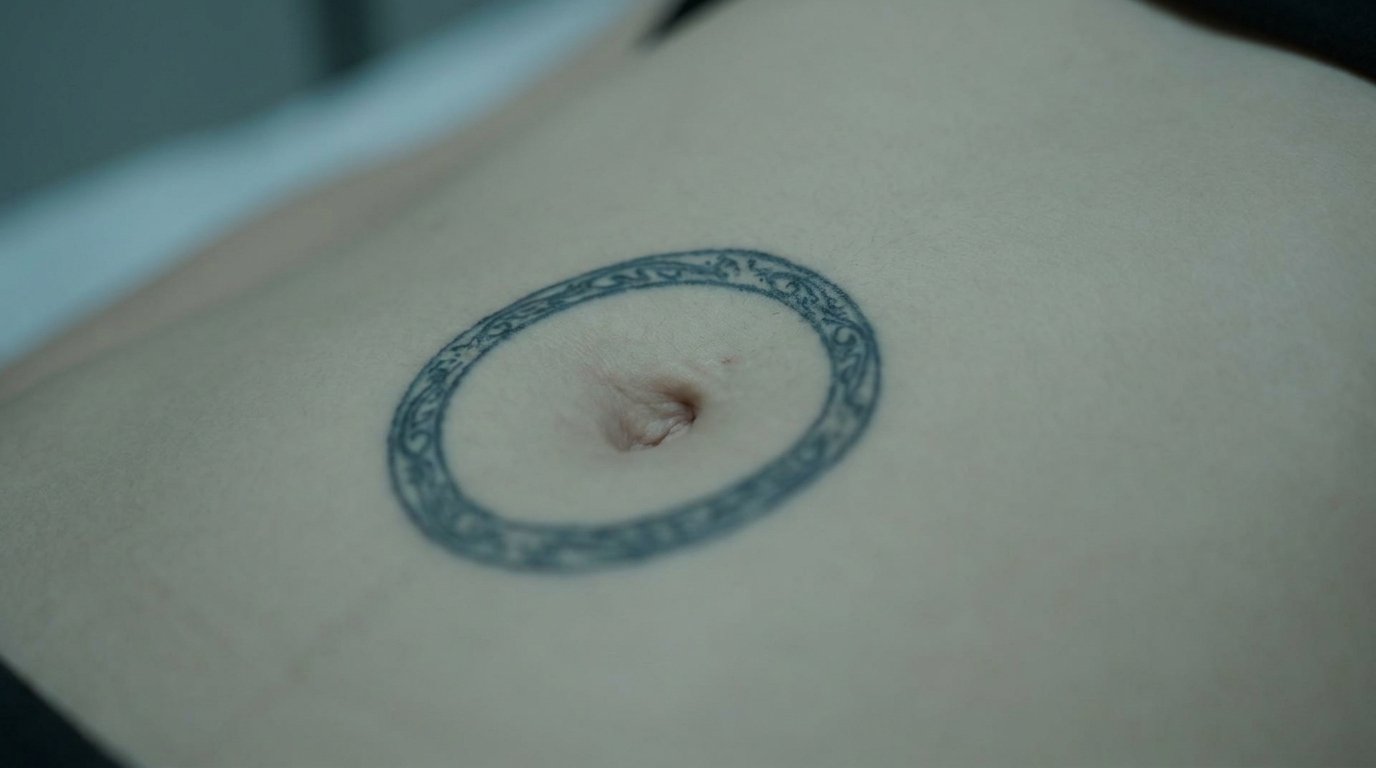
A belly button tattoo needs special mention. In a full tummy tuck, the navel is typically brought out through a new opening in the tightened skin. That can alter the look of tattoo lines around it, especially circular or symmetrical designs.
If you are still deciding whether abdominoplasty is right for you, it helps to understand the basics of the operation before focusing on tattoo details. You can read a general overview of abdominoplasty surgery and then discuss your own tattoo placement in consultation.
⚠️ Lower tattoos are most vulnerable A tattoo on the lower abdomen, especially below the navel, is the one most likely to be partly removed or visibly changed after a tummy tuck.
A tummy tuck can remove part of a tattoo, pull it lower, flatten and widen it, or change its symmetry. Tattoos below or near the usual lower-abdominal incision are most likely to be affected. Tattoos higher on the abdomen may still shift because the skin is tightened and redraped.
Can a surgeon place the scar to protect my tattoo?
This is one of the most important points to understand before surgery. Yes, tattoo position can be discussed during planning, but the incision cannot simply be moved anywhere to save body art.
A safe tummy tuck depends on how much skin needs to be removed, where the remaining skin will close without too much tension, and how to protect healing. Those surgical priorities come first. In other words, a surgeon may be able to adjust details of the scar design, but only if that still allows a safe and sensible operation.
That matters because some patients assume a tattoo can always be “worked around.” In real life, the answer is often more limited. If the best incision for your body crosses the tattooed area, keeping the tattoo untouched may not be possible.
A useful consultation includes standing photos, skin-pinch assessment, and a clear conversation about what is likely to happen to the design. Bring old photos of the tattoo if the lines have already stretched after pregnancy or weight change. That gives a better baseline for comparison.
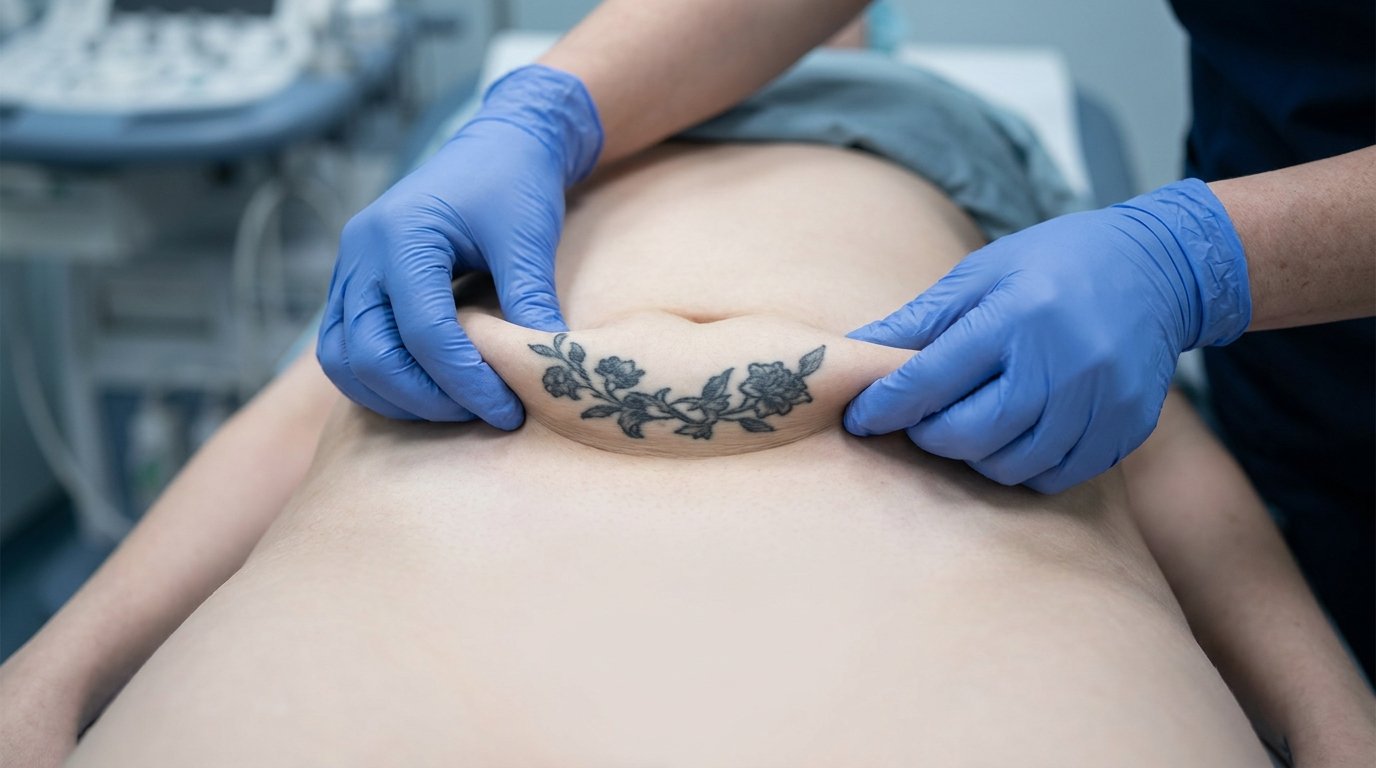
If preserving the tattoo is a high priority for you, ask for a direct explanation of the trade-off. A careful surgeon should be able to tell you where flexibility exists and where it does not.
You are shown on your own body where the likely scar would sit and told clearly whether tattoo preservation is realistic.
You are casually promised that the tattoo can be saved without a proper exam or explanation of scar limits.
Sometimes, but only within limits. Scar placement in a tummy tuck is guided mainly by anatomy, skin excess, blood supply and wound safety. A surgeon may try to preserve more of a tattoo when possible, but tattoo preservation should not override a safe incision or create unrealistic expectations.
Which tattoo locations are most and least affected?
Location matters more than tattoo size alone. A small tattoo placed right in the line of skin removal can be affected far more than a large tattoo sitting higher on the stomach.
The rough pattern is simple. Tattoos low on the abdomen are at highest risk of partial or full removal. Tattoos around the belly button may change shape if the navel is repositioned. Tattoos on the upper abdomen are often preserved, but they may sit lower after the skin is tightened.
The table below gives a practical guide, though your own anatomy can change the picture.
Lower-abdomen tattoos are usually affected the most because that is the skin commonly removed in abdominoplasty. Upper-abdomen tattoos are less likely to be cut out, but they can still shift downward or distort. Tattoos around the navel may change if the belly button is reshaped.
What if I want both a tummy tuck and to keep the tattoo looking good?
The best approach is to decide which goal matters more if the two conflict. For some people, removing loose skin is the priority, and a tattoo revision later feels acceptable. For others, the tattoo has strong personal meaning and they would rather avoid surgery that will significantly change it.
A practical plan is often staged. First, understand what the tummy tuck is likely to do. Then, if needed, consider touch-up work or redesigning the tattoo after healing is complete. Trying to tattoo over an area too soon after surgery is not wise because swelling, scar maturation and skin tension are still changing.
If the tattoo is old, faded or already stretched, some patients actually prefer to let the tummy tuck change it and then have the design refreshed later. That is not the right choice for everyone, but it is often more realistic than expecting the original image to remain exactly the same.
When to think about tattoo revision
Most surgeons and tattoo artists prefer you to wait until swelling has settled and the scar has matured before any revision work. The exact timing varies, but the key idea is patience. Skin that is still healing can produce an uneven result.
If you are also considering other body contouring procedures such as body lift surgery or liposuction, mention that before making tattoo plans. Additional contour changes can alter skin position again.
📋 A later touch-up is often more realistic For many patients, preserving every line perfectly during surgery is not possible. A healed scar and settled skin give a better base for any tattoo correction later.
What is recovery like, and when will I know how the tattoo really looks?
Right after surgery, the whole lower abdomen is swollen and tight. That makes it hard to judge your tattoo fairly. What looks pulled, uneven or oddly placed at first can improve as the tissues settle.
According to the NHS, cosmetic surgery recovery takes time and can include swelling, bruising and discomfort. A tummy tuck is not a minor treatment, so it helps to think in phases rather than expecting a quick final result.
The broad timeline below is more useful than day-by-day guessing.
- ✓Plan enough time in Turkey for early aftercare and surgeon review before flying home.
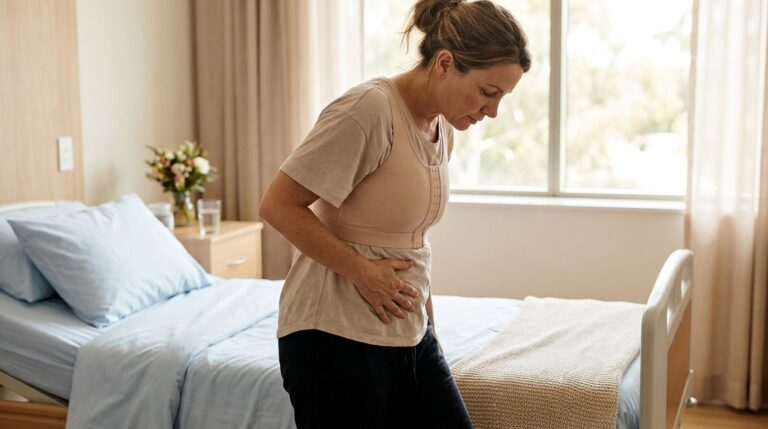
- ✓Expect to walk slightly bent at first; that is common after a tighter abdominal closure.
- ✓Do not book tattoo touch-ups during the early healing period.
- ✓Ask exactly when showering, exercise and long-haul travel are considered safe in your case.
You will not know the final tattoo appearance in the first days or weeks. Early swelling, tightness and scar healing can temporarily distort the area. Most patients get a better sense after the first phase of healing, but the scar and skin continue to settle for months.
Are there risks and limitations beyond the tattoo itself?
It is easy to focus on the tattoo because it is visible and personal, but it should not distract from the bigger safety picture. Abdominoplasty is a major operation, and the main decision should still be whether the procedure is appropriate and safe for you.
The NHS advises that cosmetic surgery can lead to problems such as infection, bleeding, blood clots and scarring. Mayo Clinic also notes common surgical risks including fluid collection, poor wound healing and changes in skin sensation after tummy tuck surgery. Those risks do not happen to everyone, but they are part of informed consent.
There are also practical limitations. You may need help at home in the first days, and you will need to avoid heavy lifting for a period advised by your surgeon. If you have children, a physical job, or a long journey home, those details matter just as much as the scar line.
For international patients, ask who handles follow-up if you develop a wound issue after returning home, what signs should trigger urgent review, and how compression, drains or dressings are managed. A responsible clinic should explain this clearly without making recovery sound easier than it is.
🚨 Get urgent medical help if needed Rapid swelling, chest pain, shortness of breath, fever, worsening redness, or one-sided calf pain after surgery need prompt medical assessment.
Yes. A tummy tuck carries the usual surgical risks as well as recovery limits that matter in real life. These include bleeding, infection, fluid build-up, delayed wound healing, unfavourable scarring, numbness and blood-clot risk. Tattoo concerns should be discussed alongside these broader safety issues.
How do quotes, travel and clinic choice fit into the decision?
A tattoo usually does not determine the cost of a tummy tuck in any meaningful way. What usually drives the quote is the operation itself: how extensive the abdominoplasty is, whether liposuction is added, the hospital setting, the anaesthesia team, compression garments, medicines, and aftercare arrangements. A personalised quote is normally confirmed after consultation and review of your medical history and photos.
If you are travelling to Turkey, the practical questions are straightforward. How long do you need to stay for early checks? Who removes drains or dressings if required? What happens if your wound opens slightly after you go home? These details matter more than glossy package language.
When you compare providers, look for surgeon credentials, hospital standards, clear consent, and honest discussion of scars and complications. If you want background information before enquiring, the clinic’s doctor profiles, about page, and consultation page are more useful than marketing promises.
The comparison below can help you focus on what really matters.
Treat the price discussion as part of a bigger safety and planning conversation, not as proof that a tattoo can or cannot be preserved.
Price is not set by the tattoo. Quotes are usually based on the extent of surgery, surgeon and hospital fees, anaesthesia, aftercare and whether other procedures are combined. If you are travelling for surgery, focus on accreditation, aftercare plans, length of stay and who manages complications after you return home.
Frequently Asked Questions
References
Related Articles


You Might Also Like

Related articles
Our specialists
 Clineca SpecialistErkan PinegözPlastic & Reconstructive Surgery
 Clineca SpecialistHakan AktaşPlastic & Reconstructive Surgery
 Clineca SpecialistOrkun UzuneyüpoğluPlastic & Reconstructive Surgery
 Clineca SpecialistSalim İskenderPlastic & Reconstructive Surgery
 Clineca SpecialistEngin SelamioğluPlastic & Reconstructive Surgery
 Clineca SpecialistCem AydınPlastic & Reconstructive Surgery
 Clineca SpecialistAlperen ÖnalEar, Nose & Throat (ENT)