
Have a question about Lip Lifting?
In this article
- What a lip lift changes — and what it cannot
- What drives the cost of a lip lift in Turkey
- How safe is a lip lift, and what are the real risks?
- Recovery week by week: swelling, stitches and the scar
- How long to stay in Turkey, and how the trip is organised
- Setting realistic expectations before you book
The upper lip is a small area, which is exactly why it is so unforgiving — a few millimetres change how your smile reads. That is also why patients researching a lip lift in Turkey ask about cost, safety and recovery in the same breath: the operation is short, but the result sits in the middle of your face for the rest of your life. Below is what the surgery actually does, what shapes the quote, and how the healing really unfolds.
What a lip lift changes — and what it cannot
A lip lift shortens the skin between the base of the nose and the top of the lip. The surgeon removes a thin strip of skin hidden in the natural crease under the nose, usually in a shape that follows the nostril sills — this is why you will hear it called a “bullhorn” or subnasal lift. Closing that gap rolls the pink part of the lip slightly upward and outward, so more lip shows at rest.
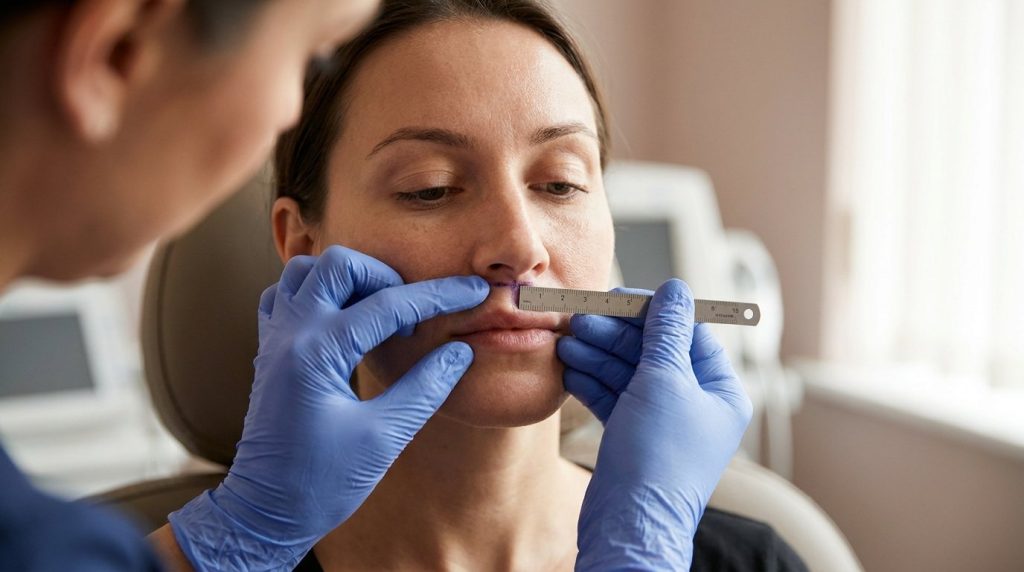
The effect is about proportion, not volume. A lift reduces the long, flat distance under the nose and can let a little more upper tooth show when the mouth is relaxed. One of the most useful things a surgeon checks in consultation is how much of your upper front teeth is visible with the mouth slightly open at rest — a point emphasised in a 2017 paper in Annales de Chirurgie Plastique et Esthétique, which argued that upper lip length should be measured in every facial consultation rather than assessed by eye.
What it will not do is create a plump, filler-style pout. If your lip is already short but thin, lifting it alone may disappoint you. Equally, if your concern is only that the corners of your mouth turn down, a small corner lift addresses that area instead. A 2022 paper in Aesthetic Surgery Journal describing the deep-plane “CUPID” lip lift set out exactly this kind of decision-making: how much to lift, how to protect muscle movement, and when a corner lift should be added rather than more central lifting.
If you are still unsure whether your anatomy fits the operation, our piece on whether you are a candidate for a lip lift when your upper lip disappears as you smile walks through the specific signs surgeons look for.
⚠️ More is not better Over-shortening the lip is the hardest lip lift complication to fix, because skin that has been removed cannot be put back. An over-lifted lip can look permanently surprised, flatten the philtrum (the groove above the lip), or widen the nostril base. Conservative planning matters more than a dramatic before-and-after.
What drives the cost of a lip lift in Turkey
Cost is the question patients raise most often, and the honest answer is that no single figure exists for this operation — the quote is built around your anatomy, the technique and the setting. What we can do is explain which variables actually move the number, so you can read any quote critically rather than compare one headline price with another.
The main drivers are the surgeon’s experience and how much lip lift work they do specifically, whether the procedure is done under local anaesthesia with sedation or general anaesthesia, whether a corner lift or deep-plane technique is added, the standard of the hospital or surgical facility, and whether the plan includes follow-up and any scar treatment. Revision cases — where a previous lift needs correcting — take longer and are planned differently, so they are quoted separately.
There is one thing worth knowing before you compare numbers. Roughly seven in ten of our lip lift patients have it alongside at least one other procedure, most often something else on the face, so the quote many people end up receiving covers two operations in a single anaesthesia rather than a lip lift on its own. That is not an upsell pattern — it reflects the fact that the upper lip is usually only one part of what someone wants addressed. If you plan to budget, budget for the plan you actually want, and ask for the single-procedure price separately so you can see both.
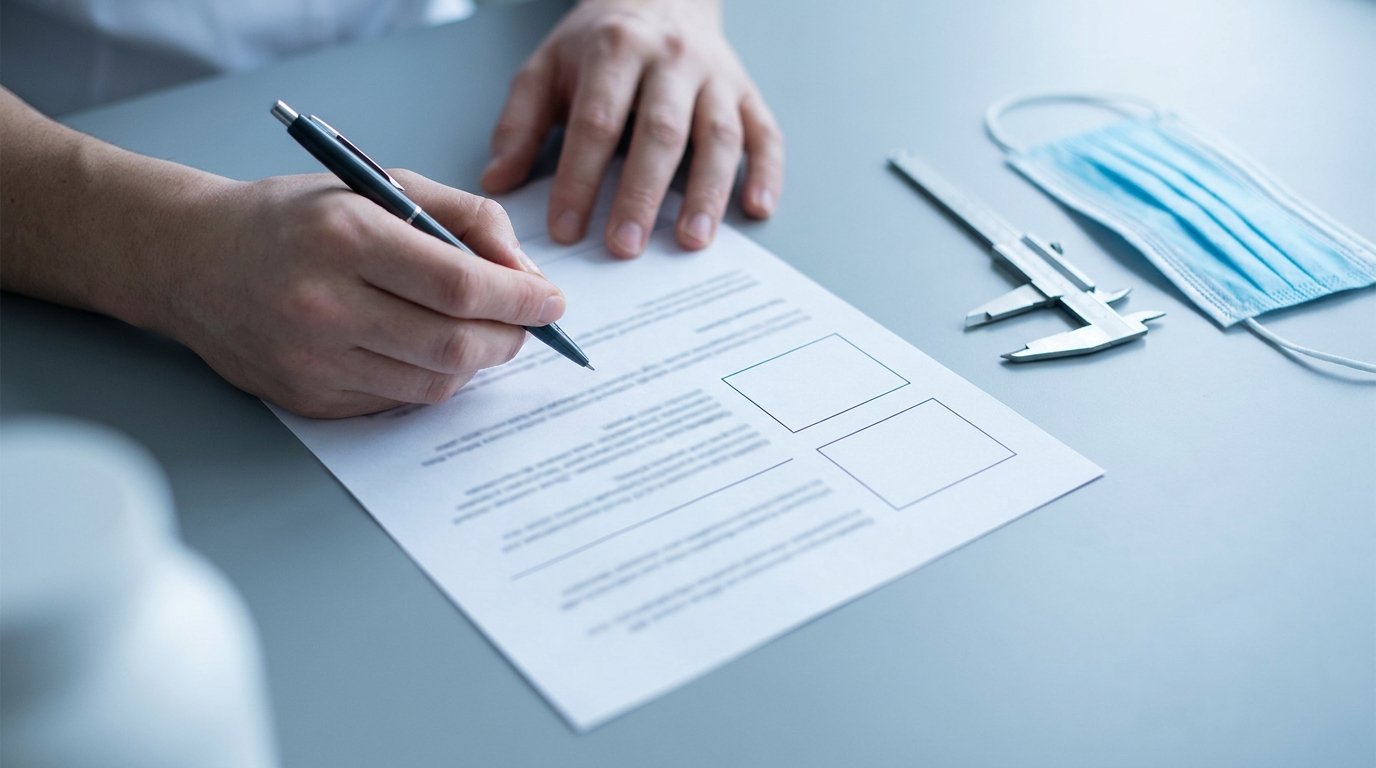
A written quote should make clear what is inside it. Our guide on what an all-inclusive surgery package in Turkey really includes is a useful checklist before you commit. A personalised price can only be confirmed after a consultation and photo assessment, because the technique is chosen from your measurements.
How safe is a lip lift, and what are the real risks?
As surgery goes, this is a small, controlled operation on the skin and sometimes the deeper layer under it. It is often done under local anaesthesia with light sedation, you go home the same day, and you are not bedbound afterwards. That is the reassuring part, and it is genuine.
The risks are mostly local. Swelling and temporary numbness around the lip are expected rather than complications. Less commonly, the scar can heal thicker or slightly uneven, the two sides can settle a little differently, the nostril base can look altered, or the lip can feel stiff for several weeks. Infection is uncommon but possible in any incision. The outcome that worries surgeons most is over-correction, because it is difficult to reverse.
Sensation and movement deserve a word of their own. Most patients describe tightness and odd sensation when smiling, speaking or drinking from a straw in the first couple of weeks. This usually settles as swelling resolves, but a very aggressive lift can leave the smile looking mechanical for longer.
A 2023 systematic review in Aesthetic Plastic Surgery compared the published upper lip lifting techniques — surgical and non-surgical — looking at patient satisfaction, side effects and how much lift each method actually produced. Its practical message for patients is simple: several techniques work, and the sensible question in consultation is not “which is the best lift” but “which lift suits my measurements, and why this one for me”.
Safety also depends on honest screening. Smoking slows healing in facial incisions, recent filler in the lip or upper lip region may need to be taken into account, and cold sore history is worth mentioning in advance so prophylaxis can be considered. None of these automatically rules you out — they change the plan and the timing.
📋 Timing with other treatments If you have had lip or nasolabial filler recently, tell your surgeon the product, the amount and the date. Filler changes how the tissue behaves and how your measurements read, so some surgeons prefer to wait or to plan around it rather than operate on a lip that is still partly swollen.
Recovery week by week: swelling, stitches and the scar
Lip lift recovery is not painful in the way bigger surgery is, but it is visible — and that catches people out. The lip is central, swelling sits right under the nose, and for the first week or two the shape looks exaggerated. Patients frequently describe an overly “rolled” or duck-like upper lip early on, and that appearance is swelling plus tight closure, not the final result.
Stitches under the nose are usually removed or begin dissolving within about a week. Most people are socially presentable, with makeup, somewhere between the second and third week — though the scar line stays pink for longer. Expect the final shape to declare itself gradually over about three months, with the scar continuing to mature for up to a year.
In the first days, keep the area clean as instructed, sleep with your head elevated, avoid stretching the lip with wide smiles or big bites, and skip straws, smoking and strenuous exercise. Once healed, sun protection on the scar is one of the few things genuinely in your control. For a closer look at the swelling curve, see our lip lift swelling week-by-week recovery timeline.

One caveat if you are combining procedures: your recovery is paced by the larger operation, not by the lip. A lip lift added to facial surgery means you plan around the facial surgery’s timeline for swelling, activity and travel.
How long to stay in Turkey, and how the trip is organised
For a lip lift alone, most patients plan around a week in the country. That allows a day for consultation and pre-operative checks, the surgery itself, a quiet couple of days, and a review with suture removal before flying. Flying earlier is often physically possible, but it removes the one appointment where a problem would be caught early — which is the main reason to stay.
If the lip lift is part of a combined facial plan, the stay is set by the bigger procedure, and that can mean closer to ten days. This is worth deciding before you book flights rather than after; our overview of combined surgery in Turkey explains how stay length and recovery shift when two procedures share one anaesthesia.
Practical logistics matter more than patients expect. Ask who meets you at the airport, how far the hotel is from the hospital, whether a translator is present in the consultation itself and not only in messages, and who you contact at 2am if something worries you. Clear answers to those questions are a good proxy for how organised the rest of your care will be.
Choosing the surgeon and the clinic
Two things patients ask about constantly are the surgeon’s experience and seeing honest before-and-after photographs. Both are reasonable requests. Ask specifically for lip lift results on patients with a lip shape and skin type similar to yours, taken from the same angle, at rest and smiling, and at least three months post-operatively — not a glowing day-7 photo.
🚨 When to contact the clinic urgently Spreading redness, increasing pain after day three, fever, pus or a wound edge that separates needs to be assessed the same day — whether you are still in Turkey or already home. Agree on how you will reach your surgical team before you leave the country.
The surgeon measures your lip and shows you the planned millimetres; they explain why they would lift less than you asked for if that is their view; before-and-after photos are consistent, matched in angle and lighting, and include at-rest shots; written quote lists what is included; a named point of contact for follow-up after you fly home.
A price quoted before anyone has seen a photograph; pressure to decide within hours or to add procedures you did not ask about; no clear answer on who performs the surgery; results shown only in heavy makeup or extreme close-up; nobody mentions the scar or the possibility of revision.
Filler can add volume to a thin lip but does not shorten a long upper lip, and in larger amounts it can make the area look heavier. The two treatments solve different problems — our comparison of a [lip lift versus filler for a longer upper lip](https://www.clineca.com/blog/lip-lift-vs-filler-longer-upper-lip/) sets out which concern each one actually addresses.
Setting realistic expectations before you book
A good lip lift result is usually quiet. People notice that your smile looks more open or that the area under your nose looks shorter, without identifying what was done. If you are hoping for a dramatic transformation in photographs, the honest conversation to have in consultation is whether your expectation matches what a few millimetres of skin removal can deliver.
It also helps to accept the scar as part of the deal. It sits in the crease at the base of the nose, it fades considerably in most people, and it is normally hard to see at conversational distance — but it is permanent, and anyone who tells you there is no scar is not describing surgery. Visible scarring is the trade-off you accept in exchange for a change that filler cannot make.
Finally, give yourself a timeline you can live with. The first two weeks look odd, the third week is manageable, and the honest verdict comes at around three months. Patients who book with a wedding or a work event a fortnight away are the ones most likely to feel anxious, so build in more margin than you think you need.
This article is for informational purposes only and does not constitute medical advice. Always consult a qualified surgeon for personalised guidance.
Frequently Asked Questions
References
- 📎Different Techniques and Quantitative Measurements in Upper Lip Lift: A Systematic Review — Aesthetic Plastic Surgery, 2023
- 📎CUPID Lip Lift: Advanced Lip Design Using the Deep Plane Upper Lip Lift and Simplified Corner Lift — Aesthetic Surgery Journal, 2022
- 📎Upper lip lift — Annales de Chirurgie Plastique et Esthétique, 2017
- 📎ASPS — Cosmetic Procedures
Related Articles



You Might Also Like



Related articles


Our specialists
 Clineca SpecialistErkan PinegözPlastic & Reconstructive Surgery
 Clineca SpecialistHakan AktaşPlastic & Reconstructive Surgery
 Clineca SpecialistOrkun UzuneyüpoğluPlastic & Reconstructive Surgery
 Clineca SpecialistSalim İskenderPlastic & Reconstructive Surgery
 Clineca SpecialistEngin SelamioğluPlastic & Reconstructive Surgery
 Clineca SpecialistCem AydınPlastic & Reconstructive Surgery
 Clineca SpecialistAlperen ÖnalEar, Nose & Throat (ENT)