
Have a question about plastic surgery?
In this article
- Documents and Paperwork to Keep in Your Hand Luggage
- Medication: What to Bring and What to Leave at Home
- Clothes That Work With a Fresh Surgical Site
- Procedure-Specific Extras Most People Forget
- Toiletries, Chargers and Hotel-Room Practicalities
- What the Clinic Usually Provides, So You Do Not Double-Pack
- Packing for the Flight Home, Not Just the Flight Out
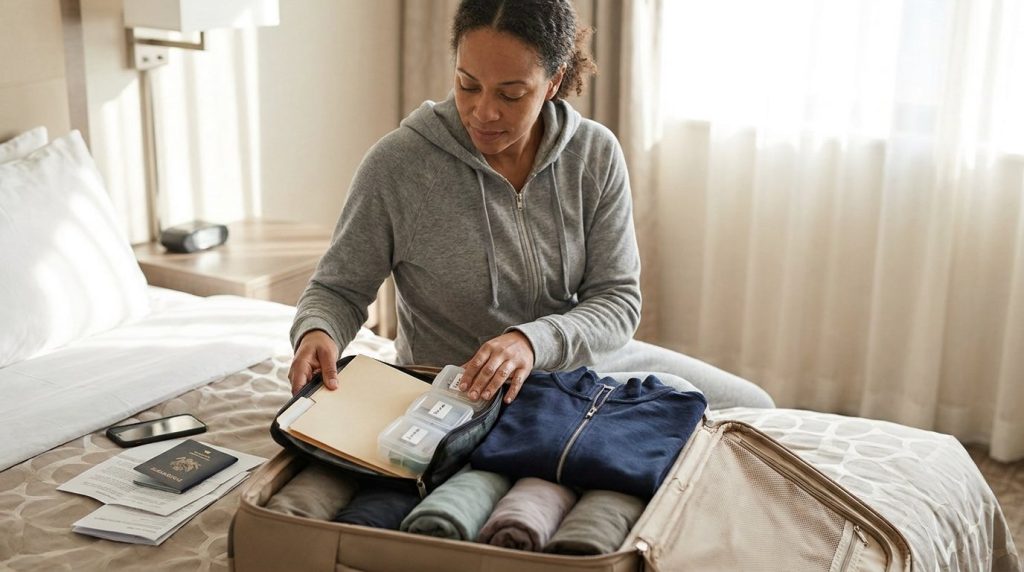
Most people planning what to pack for surgery in Turkey spend hours researching the surgeon and about ten minutes thinking about the suitcase. That order makes sense, but the bag matters more than you would guess, because the first days after an operation are the ones where you least want to be hunting for a pharmacy, an adapter or a shirt you can actually get your arms into. This guide walks through what genuinely earns space in the case, what the clinic usually hands you anyway, and the few items that cause real problems if you forget them.
Documents and Paperwork to Keep in Your Hand Luggage
Paperwork is the one category where a mistake cannot be fixed by a shopping trip in Istanbul. Keep everything in a single folder or wallet in your hand luggage, and keep a photo of each item on your phone as a backup. Travel-medicine reviews, including a 2023 overview in the Indian Journal of Pharmacology, make the same basic point: health travel goes more smoothly when the preparation is done at home rather than improvised at the airport.
This is the list worth checking twice before you leave the house:
- ✓Passport with enough remaining validity for your nationality’s entry rules, plus a photocopy kept separately
- ✓E-visa or entry permit, if your passport requires one
- ✓Flight details, hotel booking and airport transfer confirmation, including the name and phone number of whoever is collecting you
- ✓Clinic confirmation and your written treatment plan or quote, with the surgeon’s full name and the hospital address
- ✓Travel and medical insurance policy with the policy number and 24-hour assistance line
- ✓A one-page medical summary: your diagnoses, allergies, previous operations and every medicine you take with its dose
- ✓Any pre-operative tests the clinic asked for — blood results, ECG, imaging reports
- ✓Prescriptions or a signed letter from your doctor covering the medicines you are carrying
- ✓Two payment methods, as some clinics and pharmacies do not accept every card type
If you are travelling alone, also write your hotel address, the clinic’s emergency number and one contact at home on paper. Phones run out of battery at exactly the wrong moment.
📋 Keep your treatment plan, not just the price A written plan that names the procedure, the surgeon and what is included in your quote is useful at the clinic and essential if you ever need follow-up care at home. Ask for it in English before you fly.
Medication: What to Bring and What to Leave at Home
Bring every medicine you normally take, in its original labelled box, in your hand luggage rather than your checked bag. Split a few days’ supply between two bags if you can. Carry slightly more than the length of your trip, because a delayed flight home should not also mean a missed dose.
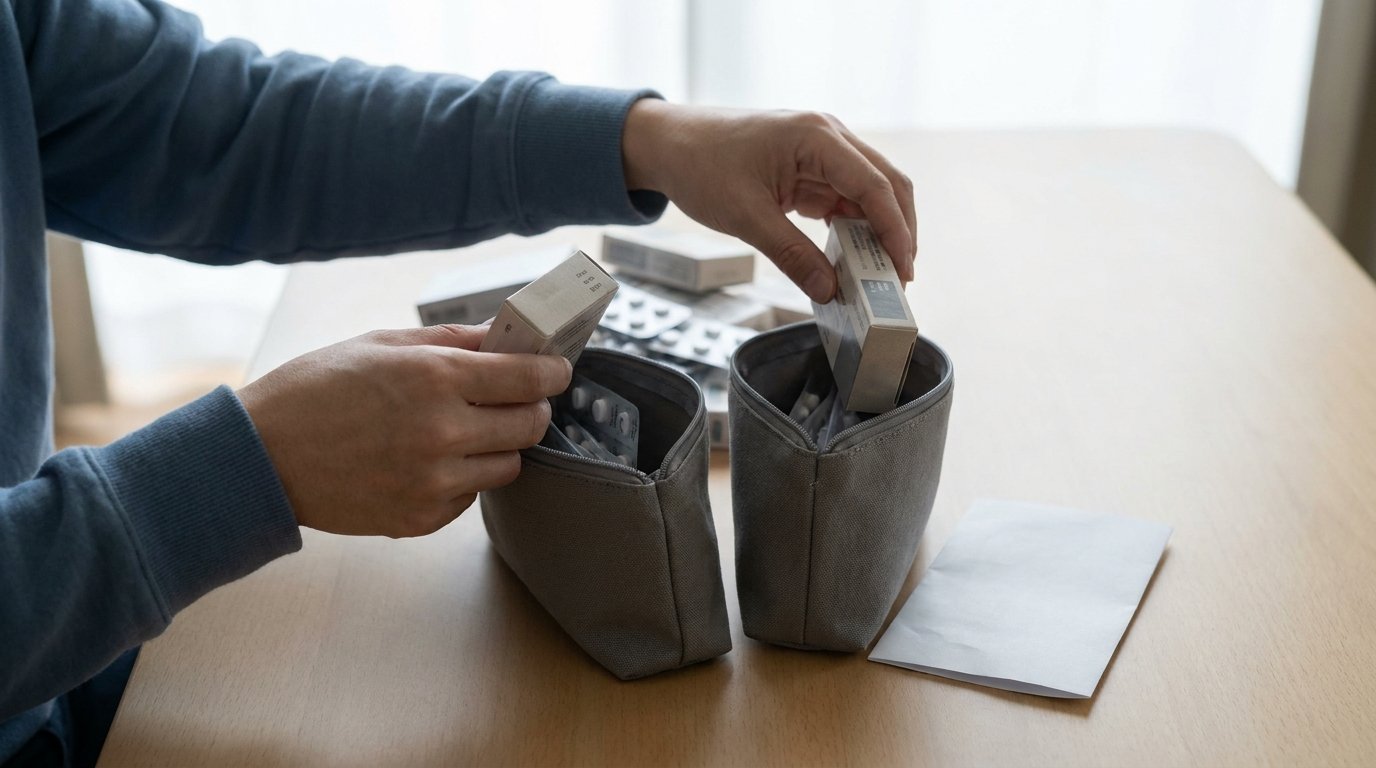
What you stop before surgery is a decision for your surgeon and anaesthetist, not something to work out from a packing list. Blood thinners, some anti-inflammatory painkillers and a long list of herbal supplements can increase bleeding, so declare everything at your consultation and follow the instructions you are given in writing. Vitamin E, fish oil, ginkgo and high-dose multivitamins fall into the same “ask first” category as prescription medicines.
Some medicines that are freely sold in one country are controlled in another, so strong painkillers and sedatives should always travel with their prescription or a doctor’s letter. If you take anything containing codeine or a controlled stimulant, check the rules for Turkey before you pack it. Your own pharmacist can usually confirm this in a five-minute conversation.
⚠️ Do not self-manage your pre-op medication Never stop, restart or double a prescribed medicine on your own because of something you read online. Send your full medication list to the clinic in advance and bring the written answer with you.
Clothes That Work With a Fresh Surgical Site
The guiding rule is simple: nothing that has to go over your head, nothing that presses on the operated area, nothing you have to bend double to put on. For breast surgery, arm lifts or any chest procedure, that means front-fastening shirts, zip hoodies and button pyjamas. For tummy tucks, liposuction and lipo 360, it means soft trousers with a drawstring or a wide elastic waist that sits well away from the incision.
Slip-on shoes earn their place in the suitcase more than any other item. Bending and reaching to tie laces is awkward for days after abdominal, chest or facial surgery, and genuinely uncomfortable after a tummy tuck, when you may be standing up straight only gradually.
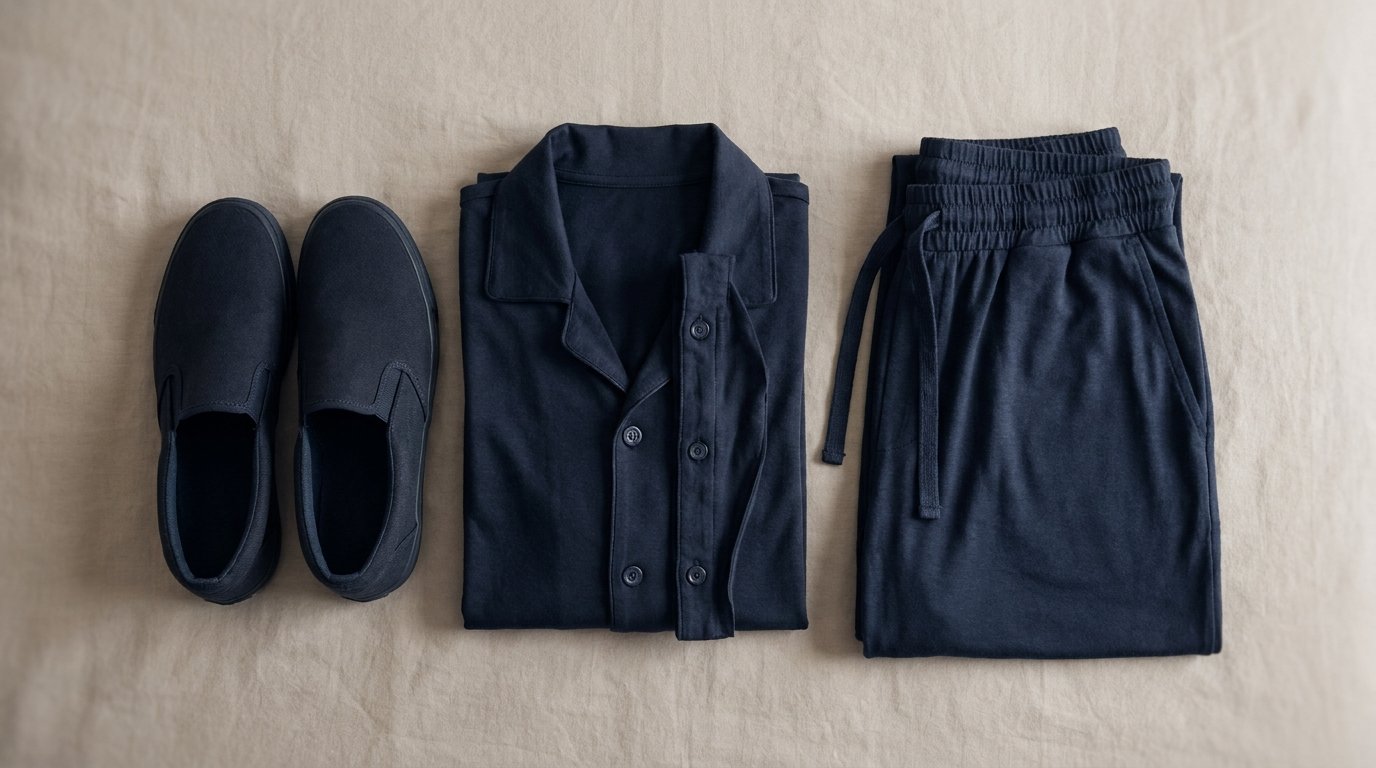
Pack dark colours. Early dressings can leak a little, and antiseptic staining is permanent on pale cotton. Two or three loose outfits are usually enough for a one-week stay, as hotels wash laundry quickly and cheaply. Add one layer for air conditioning, which can feel cold when you are sitting still and recovering, even in an Istanbul summer.
Button or zip tops, loose dark joggers, slip-on shoes, a long cardigan, a scarf, and one comfortable outfit for the flight home that is a size looser than usual.
Tight jeans, underwired bras, anything that pulls over the head, heavy boots, strong perfume near fresh incisions, and a full make-up bag you will not touch for a week.
Procedure-Specific Extras Most People Forget
Beyond the general kit, each operation has two or three small items that make the first week noticeably easier. These are the ones patients most often wish they had brought.
Toiletries, Chargers and Hotel-Room Practicalities
Turkish sockets take the round two-pin Type C and Type F plugs and run on 220 volts, so UK and US travellers need an adapter. Bring a long charging cable too — hotel sockets are rarely beside the bed, and reaching down to the floor is not appealing after chest or abdominal surgery. A power bank is genuinely useful on hospital days.
For toiletries, think gentle and easy. Dry shampoo, unscented wipes, a soft toothbrush, hand sanitiser and a travel-size fragrance-free moisturiser cover most needs. Leave scrubs, retinol, acids and strong perfumes at home until your surgeon clears them. Scar creams and silicone sheets have their moment, but it comes weeks later, not in week one.
Two small things that routinely get overlooked: a reusable water bottle, because hydration helps you feel human again after anaesthesia, and a stool softener or gentle laxative, because constipation after surgery is extremely common once painkillers are involved. Ask your clinic or pharmacist which option suits you.
- ✓Type C/F plug adapter and a long charging cable
- ✓Power bank and headphones for hospital waiting time
- ✓Dry shampoo, unscented wipes, soft toothbrush, lip balm
- ✓Reusable water bottle and a few easy snacks
- ✓Travel-size first-aid basics: plasters, thermometer, hand sanitiser
What the Clinic Usually Provides, So You Do Not Double-Pack
A lot of what people buy in advance is already waiting for them. Most Turkish clinics supply the post-operative compression garment, nasal splints or dressings, the prescribed painkillers and antibiotics for your stay, and the dressing changes before you fly. Buying your own garment in the wrong size before surgery is one of the most common wasted purchases, because the size depends on your final swelling and on the surgeon’s preference.
The only reliable way to know is to ask what your quote covers. What is typically itemised in a package is the surgery itself, anaesthesia and hospital time, standard medication and dressings, airport and clinic transfers, hotel nights, and follow-up checks before departure. The price itself depends on the procedure, whether you are combining operations, how long you stay and the hospital used — which is why a personalised figure only comes after a proper consultation. Our breakdown of what an all-inclusive surgery package includes explains the usual boundaries, and it is worth confirming yours in writing.
Packing for the Flight Home, Not Just the Flight Out
The journey home is the part people under-plan. You will be more swollen, less mobile and more easily tired than on the way out, so the return bag should be lighter than the one you arrived with. Pack so that nothing needs lifting into an overhead locker; a small wheeled case and a seat-under bag is the sensible combination, and airport assistance is worth booking in advance if you have had abdominal, chest or multiple procedures.
Long flights after surgery raise the risk of blood clots in the legs, which is why surgeons commonly ask patients to wear graduated compression stockings, drink plenty of water, skip alcohol and walk the aisle regularly. Some patients are also given blood-thinning injections; if you are, carry them with their prescription in hand luggage. Your surgeon decides when you are fit to fly, and that date is the reason the recommended stay exists — our guides on how long to stay in Turkey after plastic surgery and on aftercare, hotels and flying home go through the typical windows by procedure.
Finally, keep your discharge documents, medication list and the clinic’s emergency contact in your hand luggage rather than the suitcase. If something feels wrong in the first weeks at home, you want that information in your pocket, along with a clear idea of what to do if a complication appears after surgery abroad. Choosing an accredited hospital with a surgeon whose credentials you have checked and a written aftercare pathway does more for your safety than anything in the suitcase.
This article is for informational purposes only and does not constitute medical advice. Always consult a qualified surgeon for personalised guidance.
🚨 Seek urgent help, do not wait for your flight Calf pain or swelling in one leg, chest pain, shortness of breath, a fever, heavy bleeding or sudden severe pain need immediate medical attention wherever you are. Do not board a plane with these symptoms.
Frequently Asked Questions
References
- 📎Travel medicine – A comprehensive guide to safe world travel — Indian Journal of Pharmacology, 2023
- 📎NHS — Cosmetic procedures: advice and going abroad
- 📎Mayo Clinic — Tests and Procedures
Related Articles


You Might Also Like


Related articles

Our specialists
 Clineca SpecialistErkan PinegözPlastic & Reconstructive Surgery
 Clineca SpecialistHakan AktaşPlastic & Reconstructive Surgery
 Clineca SpecialistOrkun UzuneyüpoğluPlastic & Reconstructive Surgery
 Clineca SpecialistSalim İskenderPlastic & Reconstructive Surgery
 Clineca SpecialistEngin SelamioğluPlastic & Reconstructive Surgery
 Clineca SpecialistCem AydınPlastic & Reconstructive Surgery
 Clineca SpecialistAlperen ÖnalEar, Nose & Throat (ENT)